- Posting 18 Oct, items compiled from 4-6 Oct;
- About the drops in crime and conservative fears;
- Alito on what he thinks is “religious liberty”;
- How Christians are attracted to answers from AI;
- Paul Krugman on the administration’s obvious corruption;
- Carl Zimmer: Are babies “conscious”, and whether it matters;
- Francis Fukuyama on why we’re better than our ancestors;
Compiled Tue 6 Oct 26:
In spite of conservative fears, crime is dropping. A recurring theme.

NY Times, 30 Sep 2026: ‘It’s Not an Issue’: Crime as a G.O.P. Line of Attack Loses Traction, subtitled “Across the country, especially in the North Carolina Senate race, Republicans have charged opponents with being soft on crime, even as crime rates plummet.” [gift link]
A central line of attack in the waning weeks of the 2026 midterms comes straight out of the tried and true Republican playbook: Democrats are soft on crime.
But as crime rates plummet across the country, it’s been a hard case to make. In Michigan and Georgia, North Carolina and Texas, Republicans have struggled to pull voters back to the violence and disorder that followed the onset of Covid-19.
\\
But we can always scare conservatives with talk about crime.

Axios, today: Trump says Chicago crime is worsening as homicides decline (via JMG: Demented Liar Lies About Crime Rate In Chicago)
President Trump is again raising the prospect of federal intervention in Chicago, saying the city is suffering an “unprecedented” crime wave that’s “getting worse by the day.” Trump’s renewed focus on Chicago comes as the city is on pace to record even fewer homicides than last year, when killings fell to their lowest level in 60 years.
Trump is lying, of course, as always; he’s riling up his base. But he’s tapping into a bias in human nature — to think the worst of everything, to be afraid. And I’ve said this before: if there were only *one* violent crime in the nation on any given day, conservative media would promote it as a story about how liberals are soft on crime, or whatever. Conservatives do not understand rates.
\\
No, he didn’t.
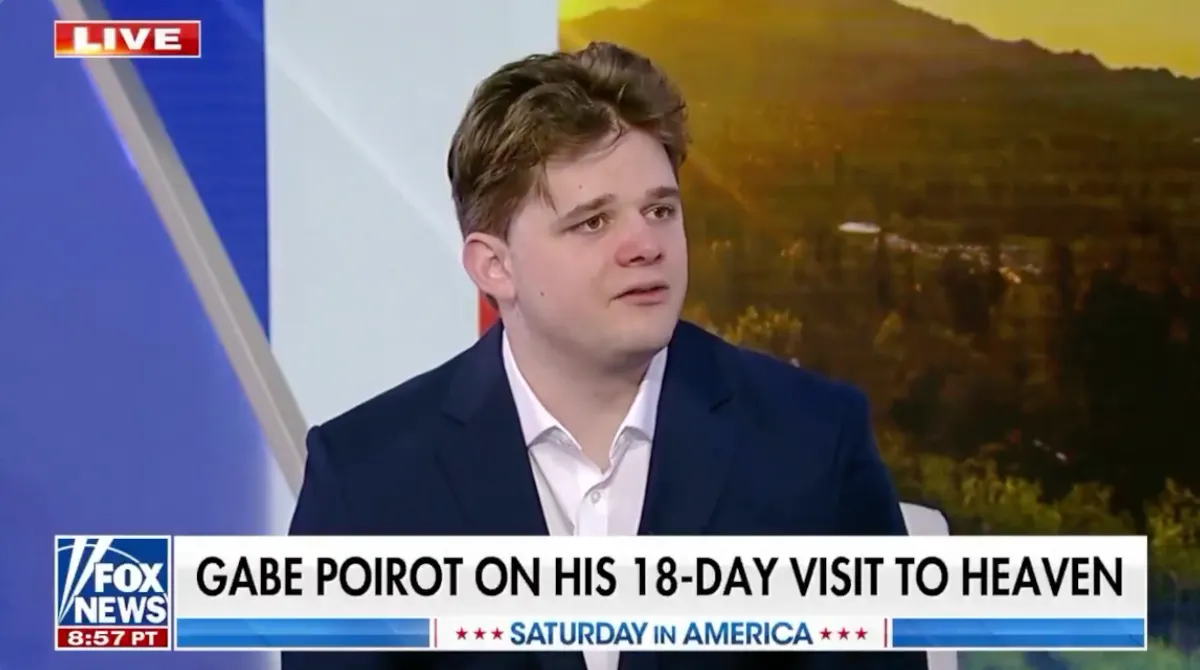
Friendly Atheist, Hemant Mehta, today: A Christian influencer says he went to Heaven and met a testosterone-fueled Jesus, subtitled “Gabe Poirot says he met a fiery, muscular, intolerant Jesus. Fox News is helping amplify the story.”
If you believe this, you are living in a fantasy world.
\\
There is something weird here about conservative thinking.

JMG, via ABC News, today: Alito Calls 2015 Obergefell Ruling “Perhaps Decisive Point In Our Nation’s Turn Against Religious Liberty”
Supreme Court Justice Samuel Alito, the devout Catholic conservative who has long warned of animus against religion in America, says in a new book that he believes the court’s landmark decision extending marriage rights to same-sex couples was “perhaps the decisive point in our nation’s turn against religious liberty.”
I can’t parse this. How does he believe extending marriage rights to same-sex couple is *against* religious liberty? Does he think that unless his own religion is imposed upon everyone, his religious liberty is constrained?
Consider this:
“In dissent from that ruling,” he said in the 2018 address, “I expressed my worry that equating the expression of certain views with bigotry — or, if you like, with dignitary harm — would drive believers out of public life.”
Squinting… so he’s concerned that laws that respect the dignity of all human beings, all that stuff about life, liberty, and the pursuit of happiness, about all men being created equal, would *drive believers out of public life*? And that’s why such laws are against religious liberty??
Actually, that would be a good thing. We need fewer zealots (religious or otherwise) in public life, and more reality-based rationalists.
\\\\\\\\\\\\\\
Items compiled Mon 5Oct26
This is revealing.
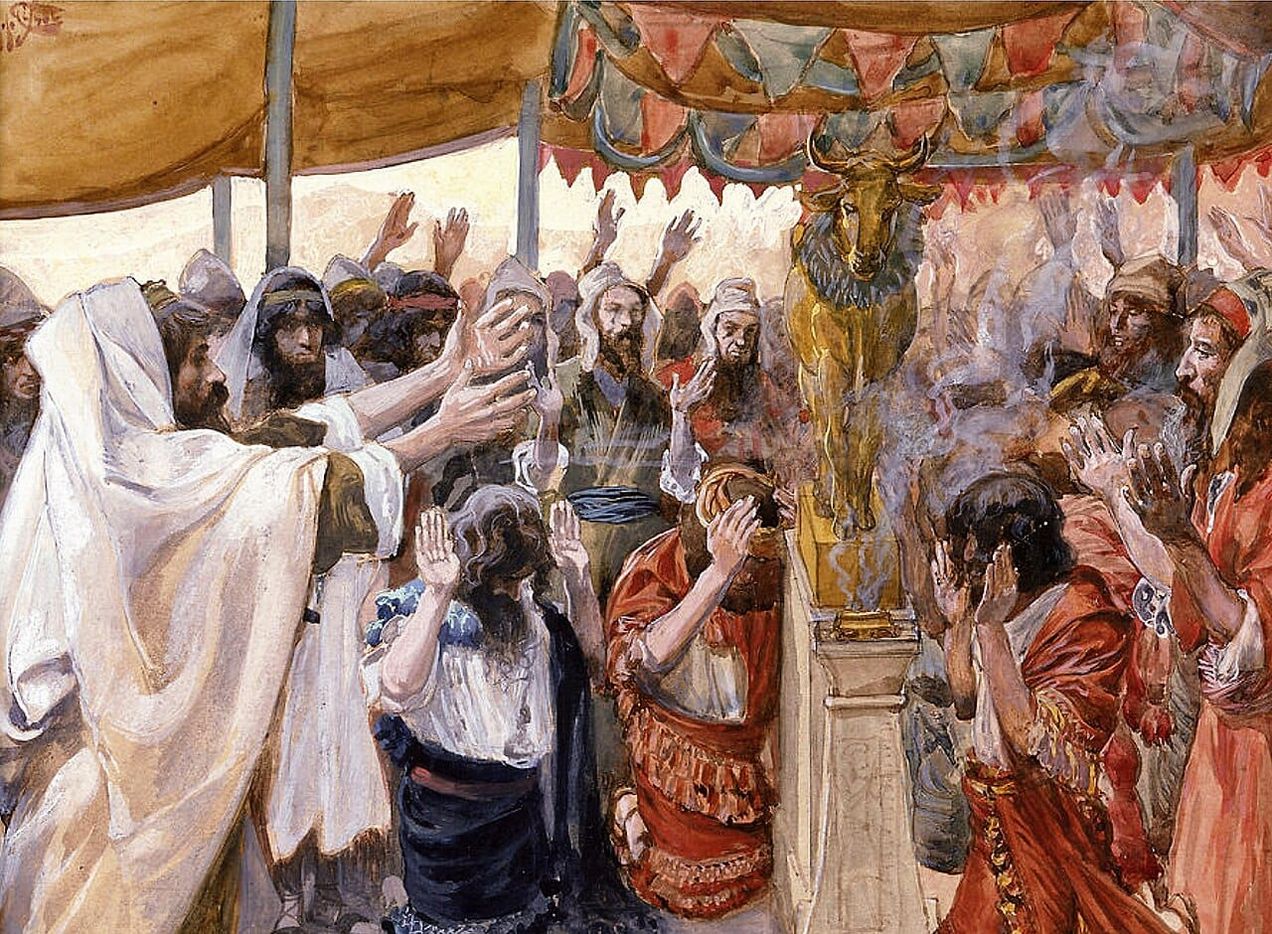
OnlySky, Adam Lee, today 5 Oct: Christians bow down at the altar of AI, subtitled “Artificial intelligence is becoming a competing source of theology.”
Do they not realize that AI just absorbs what thousands or millions of its sources have said and boil them down into appropriate feedback? In other words, it’s telling them what they want to hear.
Our era is going through a massive economic transition, as AI has enabled computers to do jobs that were once the sole domain of humanity. From writing code to churning out books to generating art and music, the explosive proliferation of LLMs threatens to make millions of human workers obsolete.
But here’s one AI-driven layoff you probably didn’t see coming: Artificial intelligence is threatening to put God out of a job.
Where they might once have turned to the Bible or their pastors, millions of devout churchgoers are treating chatbots as sources of spiritual advice and theological wisdom. It sounds almost too strange to be true, and yet it is. What’s going to become of religion when millennia of practice collapse down to the statistical output of a word-prediction model?
From a July 2026 survey by the Barna Group:
Practicing Christians are outpacing nearly every population segment on AI adoption, including pastors, according to Barna’s newest research on faith and AI.
OK, some of them are using AI for mundane questions. Yet (shown in a chart) those who attend church the most often, trust AI the most.
Here I think is the key:
The appeal of religion is that it promises an infallible source of wisdom to tell followers what to do in all aspects of their lives. Whatever secular critics might say about the stifling atmosphere of religious dogmatism, or the cruelty of discouraging curiosity and punishing doubt… the uncomfortable truth is that some people don’t want to think for themselves.
Further down: The Hunger for Certainty. And to the unsophisticated, AI seems infallible.
No, maybe this is the key:
The hunger for certainty
Better still for this purpose, AI is always confident.
For people who care about accuracy, this is a major drawback of AI. LLM chatbots are algorithms that obey a statistical model of word association; they have no inherent concept of truth or falsehood. Sometimes they provide correct information, but sometimes they hallucinate facts. In either case, they speak with the same calm confidence and apparently persuasive reasoning.
However, in the eyes of religious believers, particularly fundamentalists, this is a feature and not a bug.
Religion offers certainty in a chaotic world—that’s always been one of its selling points. It promises immutable truth that holds fast against the shifting tides of culture. It asserts that its doctrines are trustworthy because they never change, no matter what.
Concluding:
How far will this trend go? As churchgoers age and dwindle, will brick-and-mortar churches die off? Will the congregations of the future huddle around the glow of screens, getting spiritual advice and consolation from virtual avatars? Will we craft AI gods and prophets in the likeness of the old pantheons, or will we let the computers dream up brand-new ones for us? It seems bizarre, implausible, ridiculous even to contemplate. But who would have guessed it would play out even to the extent it already has?
\\\
That this is so obvious, and that his fans can’t see it, says something about human nature. The tribal nature thereof, and the inability to see reality for what it is.
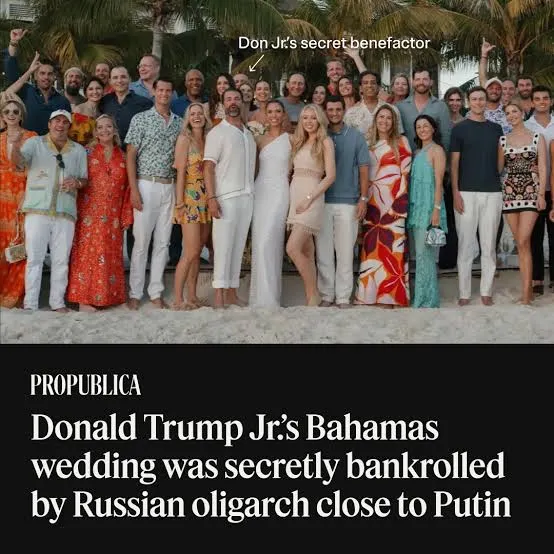
Paul Krugman, today 5 Oct: The Trump Administration is a Cesspit of Corruption, subtitled “And fighting it should be at the heart of the Democratic agenda”
The cesspit of corruption that is Donald Trump’s presidency is finally getting the attention it deserves. It’s about time. And if a massive blue wave sweeps Washington on November 3rd as polls now suggest, Democrats should put corruption front and center of their agenda in Congress.
The level of corruption that Trump has engaged in and enabled in others is completely unprecedented – self-dealing that, as Trump would say, is like nothing anybody has ever seen before. America currently has a Republican president who, along with his family, has raked in billions, possibly close to $10 billion in personal gain from office in less than two years. He has effectively sold criminal pardons to scammers, invalidating the legal claims of their victims for restitution. His son-in-law Jared Kushner has become a billionaire running an investment fund for Gulf petro-state autocrats despite having no discernible investment skills. The Times just reported that Kristi Noem paid hundreds of millions over the reasonable price for 5 aircraft – one of which contains a marble bathroom and luxury bedroom – that were ostensibly for deportations but are instead sitting on the runway. And then there’s Trump’s Secretary of the Commerce, Howard Lutnick, whose family has doubled its net worth to over $7 billion, largely through its investments in Tether, the crypto-currency of choice by Iran, terrorists and rogue states.
\\\
How does it matter…?
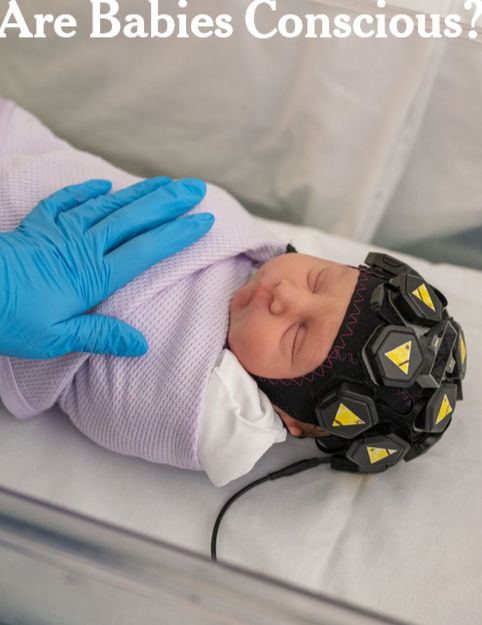
NY Times, the venerable Carl Zimmer, today: Are Babies Conscious?, subtitled “By pinpointing when it begins in young humans, scientists hope to better understand what consciousness is, and how it arises, in all of us.” [gift link]
I’m not going to try to profile the article, so much as consider some of the philosophical issues it raises.
Indeed, there’s an active scientific debate over whether newborns possess consciousness. Resolving it could help solve one of science’s most stubborn mysteries: what consciousness is, how it emerges and how we can know if another being possesses it.
The obvious issue is about the “soul.” The religious think an embryo, no matter how young, possesses a “soul” and so is the equivalent of a full human being and deserves preservation of its life.
This is religious fantasy. There is no evidence that anything like a “soul” exists. It’s all about brain function. (Yet another example of … confusion among realms)
At the same time, this is evolutionary precaution. Humans are wired to protect their children, no matter how young, because those who do have bigger families and larger tribes.
Does the argument change if it’s about “consciousness”? I don’t think so. The drive to protect newborns remains. At the same time, history is full of examples of triage. Among humans, and animals. If an infant isn’t likely to survive, then… let it go.
The modern idea of abortion and its opposition is due to the success of modern medicine. And the philosophical distinction of when an embryo is truly human. The religions play it safe. Thinkers like Carl Sagan suggested that only until an embryo reached a certain limit.
(From his book BILLIONS AND BILLIONS, reviewed here:
A long essay is about abortion, trying to find a middle ground, which Sagan and Druyan conclude to be the point at which the embryo’s thinking becomes barely possible, brain waves, around the 30th week, which is coincidentally where the Supreme Court drew the link (in Roe v. Wade), though on different grounds.
)
Peter Singer took these issues to animals. And his criteria was: do they feel pain?
\\\
Compiled Sunday 4Oct26.

Big Think, Jonny Thomson, 30 Sep 2026: Francis Fukuyama on why we’re better than our ancestors, subtitled “Everyone matters. If you believe that, it’s a good sign.”
Immediate reaction: well of course. Many do believe that now. But certainly the writers of the OT didn’t, nor do Christian nationalists.
Key Takeaways:
- A few weeks ago, John Gray told me that he believed there is no such thing as progress in politics and ethics. This week, Francis Fukuyama fundamentally disagrees.
- For Fukuyama, the fact that most people view all human beings as morally important is a definite sign of moral progress.
- Fukuyama argues that the nation-state is perhaps the best, necessary tool of governance. This can bring benefits and problems.
Recalling historical accounts of indifference to casual violence. Recalls Pinker’s BETTER ANGELS.
The writer recalls a rare case (in science or philosophy) of an opposite opinion.
A few weeks ago, I explained John Gray’s theory that we never make progress in ethics and politics because any advancement we make is short-lived and forever reversible. Technology and science accumulate over millennia. But ethics? Well, we’re no less brutal than we ever were. It only takes a strong wind to push us back into evil.
Recalling those historical accounts,
Fukuyama disagrees. … In other words, [those] societies had devalued another portion of society. They’d dehumanized them. The poor, the criminal, the outsider — these groups were considered below compassion. They were no longer moral subjects.
Fukuyama’s point is that this is no longer the norm. Of course, people still are terrible to each other. Just five minutes on your news app of choice will reveal that. Of course, we all treat people at work, on the street, or in our homes awfully from time to time. That’s a part of being human. But the point is that the norm is universality.
Most people, in most of the world, think that other human beings are at least worth some moral consideration. 73% of people think human rights exist. Most of the countries in the world have abolished the death penalty. Four out of five people think that torture is wrong, no matter what. Today, it’s widely accepted that no one is valueless. And that, for Fukuyama, is progress.
As usual with sharp disagreements, it’s easy to see what’s happening here: different perspectives, and different timelines. Does violence go up and down? Sure, given whatever scale you’re looking at. But compare Fukuyama’s scale, and Pinker’s. Gray might be right that circumstances might “push us back into evil.” Circumstances might make us extinct, too. We try to guard against such circumstances.
The morality of religious fundamentalists, and Christian nationalists, are parts of the problem we must guard against.
A related question is asked, about how far empathy can extend.
I asked Fukuyama a common question about universalism or global cosmopolitanism: Does this mean that we have the same responsibility to those thousands of miles away as to those who live next door? Fukuyama thinks not.
First, it’s psychologically implausible. We grow to love those people we see regularly. We care for those we help and who help us in turn. Communities and relationships are established through real-life, felt actions. To ask someone to hang up these feelings or loyalties in the interests of a faceless, distant name or number is like asking a parent to not love their child.
Second, and most relevantly, it’s politically undesirable. “The nation-state is a necessary political structure,” Fukuyama says.
“They empower police forces and armies to protect the community, and those forms of power have to be territorially limited. If you have a police force that can arrest anybody anywhere in the world for a crime you deem to be a crime, you’re going to be living in a very, very chaotic world.”
Again, these are issues of scope. The same might have been said centuries ago about the feasibility of an entire nation of 330 million people living under one set of governmental principles. Some of us think we can. Many of us would overthrow those principles, if they could, in favor of their tribal priorities.