- Steven Strogatz on the AI crisis in mathematics; is it OK to be given the answers, without figuring them out for ourselves?
- How religious zealots mock scientific understanding, since scientific conclusions can change;
- Briefly: another comment about Rubio’s defense of Western civilization; how David French thinks there is no bottom to MAGA; Heather Cox Richardson recounts how the Republican victories in 1920 led to the 1929 Crash; and Nicholas Kristoff on the pillars of our nation — education, immigration, and legal and social norms — that are on the current ballot.
Humanity only advances by learning from the lessons of the past. No one person can learn everything about modern civilization by themselves, from scratch. But are we now stuck in a cycle of repeated failures, unable to learn?
Is it about the journey, or the destination?
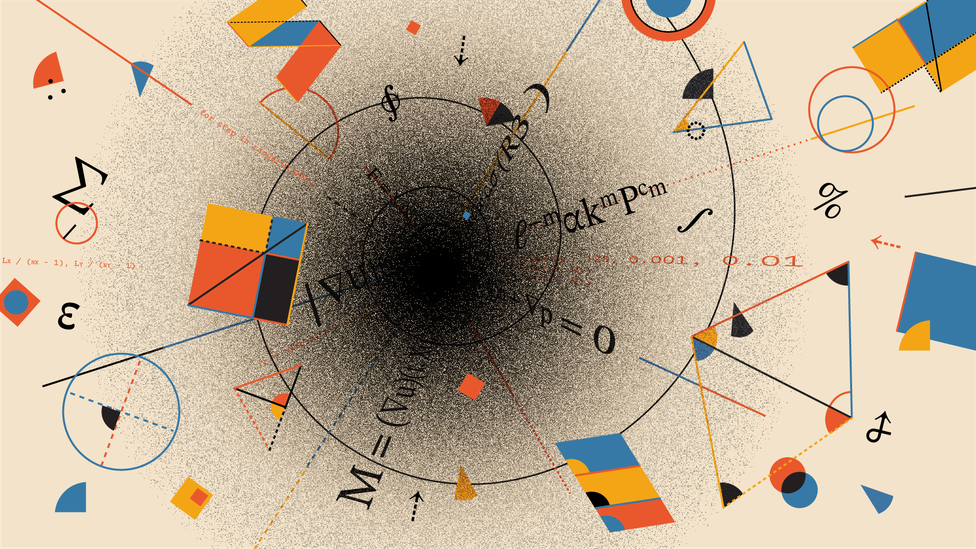
The Atlantic, Steven Strogatz, today: A Mathematician Reads the AI Future, subtitled “My field is as much an expression of the human spirit as music and literature. Is it for the machines now?”
Strogatz is a mathematician and author. I have his book about calculus.
I am a math professor, and my field is in crisis. Nobody in math is ever going to forget the year 2026. Unless this is really the end of the subject, and then nobody will remember anything about math anyway. Well, the machines will remember. But for them, this is something like day one.
He cuts to the core question.
I’ve been trying not to talk like this. It’s really discouraging for the graduate students and undergraduates, who have been dreaming of a life as a mathematician, or maybe a math professor—a life of solving puzzles, asking questions, working with friends who love math too, thinking about our sublime, transcendently beautiful subject that is so misunderstood. Meanwhile, the wider public is confused. Don’t mathematicians want their problems to be solved?
Yes and no.
Yes, for “applied” math; not so much for “pure” math: AI’s truths come “at the cost of robbing us of the struggle and joy of discovering them ourselves.”
Pure math is the study of ideal patterns and structures: numbers and shapes, waves and vibrations, order and chaos, symmetry and infinity. There are no perfect circles in nature, only in our minds. Except—and this is eerie—the truths of mathematics also seem to exist outside of human minds. They inhabit a mysterious Platonic realm, casting shadows on our reality.
Our species has been playing this game for at least 4,000 years. It’s as much an expression of the human spirit as music and literature. If AI continues to bulldoze pure math, it’s going to crush the hopes of the young people who were dreaming of joining this tradition.
And he goes on with three stories that illustrate how people have reacted to the October 6 report that AI solved some 400 landmark open problems in mathematics.
\\\
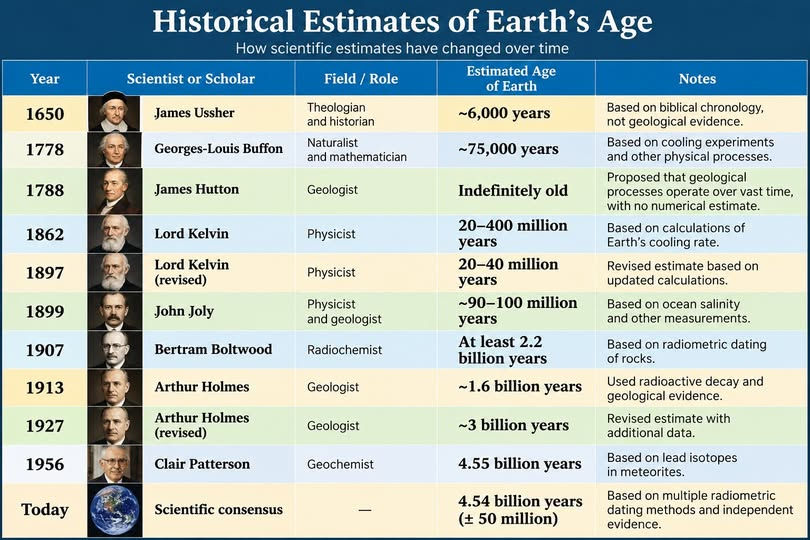
From this Facebook post, by Danny Ellis Jr., from a group called “Christians & Atheists: Exploring The Big Question,” who is mocking the idea of scientific conclusions, since they keep changing.
“If they were wrong, couldn’t you be wrong?” He thinks this is an issue.
Of course. All scientific conclusions are provisional. All personal knowledge is provisional. No one knows everything. This is what the religious folk, who are ever trying to defend their simplistic faith-based answers, don’t understand, or refuse to understand. Some of us can learn, based on new experience and evidence; religious people are happy with their certainty in the truth in ancient holy books, and don’t understand learning.
Comments to his post try to explain this to him. Also, I have no idea where this chart came from, or if it’s accurate. But the gist is certainly true: science keeps updating conclusions based on new evidence.
\\\
More briefly.

- Via Steven Pinker on Facebook.
- The UnPopulist, Cathy Young, 21 Oct 2026: Rubio’s Grotesque Defense of Western Civ
- Subtitled “In his pseudo-history, Caesar and other European conquerors are the models for the US”
- NY Times, opinion by David French, today: Despicable Doesn’t Begin to Cover It
- About the Vivek Ramaswamy political ad in Ohio.
- “Long ago we learned that there is no bottom for MAGA…”
- Which involves elements of tribalism, and failure to learn.
- Some useful history from Heather Cox Richardson, today: October 24, 2026
- How the election in 1920 gave control of the nation to Republicans, who rejected the Progress that followed World War I and turn the government over to businessmen, whose policies worked at first, until they didn’t, resulting in the 1929 Crash.
- There’s a theme here about being unable to learn. That is, repeating mistakes of the past.
- NY Times, opinion by Nicholas Kristoff, yesterday: None of This Is Normal
- “The principles and strategies that over multiple generations have made the United States the world’s leading nation in effect are on the ballot, and these midterms mark a potential turning point.”
- Three pillars that explain our nation: education; immigration; and the norms that govern our politics, economics, and society.
- I’ve commented on this many times: the institutions that established the US, aligned with the Enlightenment, were designed to overcome the tribal instincts that still influence the majority of people. But MAGA is about returning to tribal instincts: replace education with religious indoctrination; resist immigration, mixing with the ‘other’, and prioritize tribal victory over pesky rules and regulations. The gap between the ideals and the reality is education. Learning.
- Are we doomed? Again… we’re making progress, slowly and steadily. The religious zealots are falling away, as they will need to if humanity is to survive.