Is the ability to survive.
- Adam Frank thinks politics can learn from science, about knowing when to change your mind;
- While Jesse Bering explains how we rewrite data to fit our worldview;
- Cases in point: Stephen Miller doubles down; Trump resorts to accusations of election fraud;
- While Ocasio-Cortez admits to having evolved;
- And a Facebook graphic from someone who thinks the Fibonacci sequence is evidence of an intelligent designer (it’s not).
Several items today align along a common theme, one that relates to science, and politics, and religion, and human psychology. And science fiction.

Adam Frank, Everyman’s Universe, 6 Nov 2026: What Can Politics Learn From Science?, subtitled “The art of changing your mind.”
The answer is the subtitle.
One remarkable outcome of Tuesday’s massive political shift has been the election of a record number of Democratic doctors, engineers and scientists. Headlines gave us phrases like “A STEM Wave” or “Revenge of the Nerds”.
With so many science-oriented folks headed to Congress, here is a question to ponder: What can training in science offer in the political arena? Clearly, expertise in scientific and technical issues will matter (I’m looking at you, AI). But beyond that, I want to offer something that may even be more valuable.
Knowing how to change your mind.
Continuing,
The great physicist Neils Bohr spoke of an open world built on science or a “republic of science”. Bohr believed that science naturally transcended national borders, language, and politics. Its methods foster open communication and shared knowledge. In that way he saw it as a model for an open society. Bohr thought that the scientific method – built on transparent debate, peer review, the willingness to be proven wrong – was an ideal blueprint for how human societies can govern themselves.
That last point – the willingness to be proven wrong – is the really important one. The best thing about science is it teaches you how to change your mind when the data call for it. Most important for these partisan times, science shows you how to make that change without shame or regret. It goes like this.
You believed something.
New data arrived.
You evaluated it with openness and honesty.
You saw the old belief needed to be updated.
You changed your belief.
It’s a pretty amazing process. I’ve had to change my mind a bunch of times over the years and I’ve always found it pretty bracing.
Still, as Frank acknowledges, politics is about more than data. And here is where I chime in to invoke human psychology, and the truism that many people (whom we tend to call conservatives), refuse to change their minds, being committed from childhood religious indoctrination to a set of “beliefs” that they will never revise.
(I’ve changed my mind a bunch of times, including away from the idea that if you show people evidence, they will accept its implications. Not true. You can’t argue people out of convictions they did not reach through reason.)
\
Case in point.

Jesse Bering, Bering in Mind, 5 Nov 2026: The Myth of Rational Debate, subtitled “How our moral convictions force us to rewrite the data to fit our worldview.”
Again, the gist is in the subtitle. Bering’s case in point is the botched execution of Christa Pike in Tennessee, and about whether you might be for or against capital punishment. While the morality of the death penalty is not a scientific question,
What is a scientific question, however, is whether human psychology is predictably influenced by arguments and evidence that support or contradict preexisting views on this (and other) hot-button social issues. Ask yourself if there are any empirical facts that would cause you to reconsider your stance on capital punishment. Are you as logically minded about this topic as you claim to be?
He cites a 1979 Stanford study that showed people only dig their heels in when presented with evidence that counters their beliefs. A now familiar observation. Bering concludes:
Ultimately, when it comes to our most deeply held convictions, such as where we stand on capital punishment, abortion, gun control, immigration, or whatever gets people most hot and bothered these days, the facts don’t change our minds—our minds simply change the facts.
This, of course, goes to the limitations of human cognition, and the difference between living tribally and understanding reality.
\
And then there were no fewer than three items in today’s NYT that demonstrate how this point applies to the partisan divide.

NYT, posted 7 Nov, in today’s paper: Unfazed by Midterm Rebuke, Miller Is Poised to Push the Limits of Trump’s Power, subtitled “The president’s new chief of staff has already demonstrated his intention to forge ahead with an agenda that many voters rejected.”
He doesn’t care what voters think. He’s not a public servant. His mind is made up.
\

NYT, posted yesterday, in today’s paper: Trump Veers Back Into Claims of Rigged Election, subtitled “President Trump, who initially said he would accept the midterm results, renewed his unsubstantiated claims that voting was manipulated.”
\
Whereas,

NYT, published 1 Nov, updated yesterday: Ocasio-Cortez Has Evolved. She Wants the Left to Evolve, Too., subtitled “The New York congresswoman, once a bane of establishment Democrats, has tried to nudge her movement in a bigger-tent direction as she weighs her 2028 options.”
The point here isn’t exactly what she thinks, or how she’s changed, but that she is willing to admit that she has changed.
\\
This is related, actually.
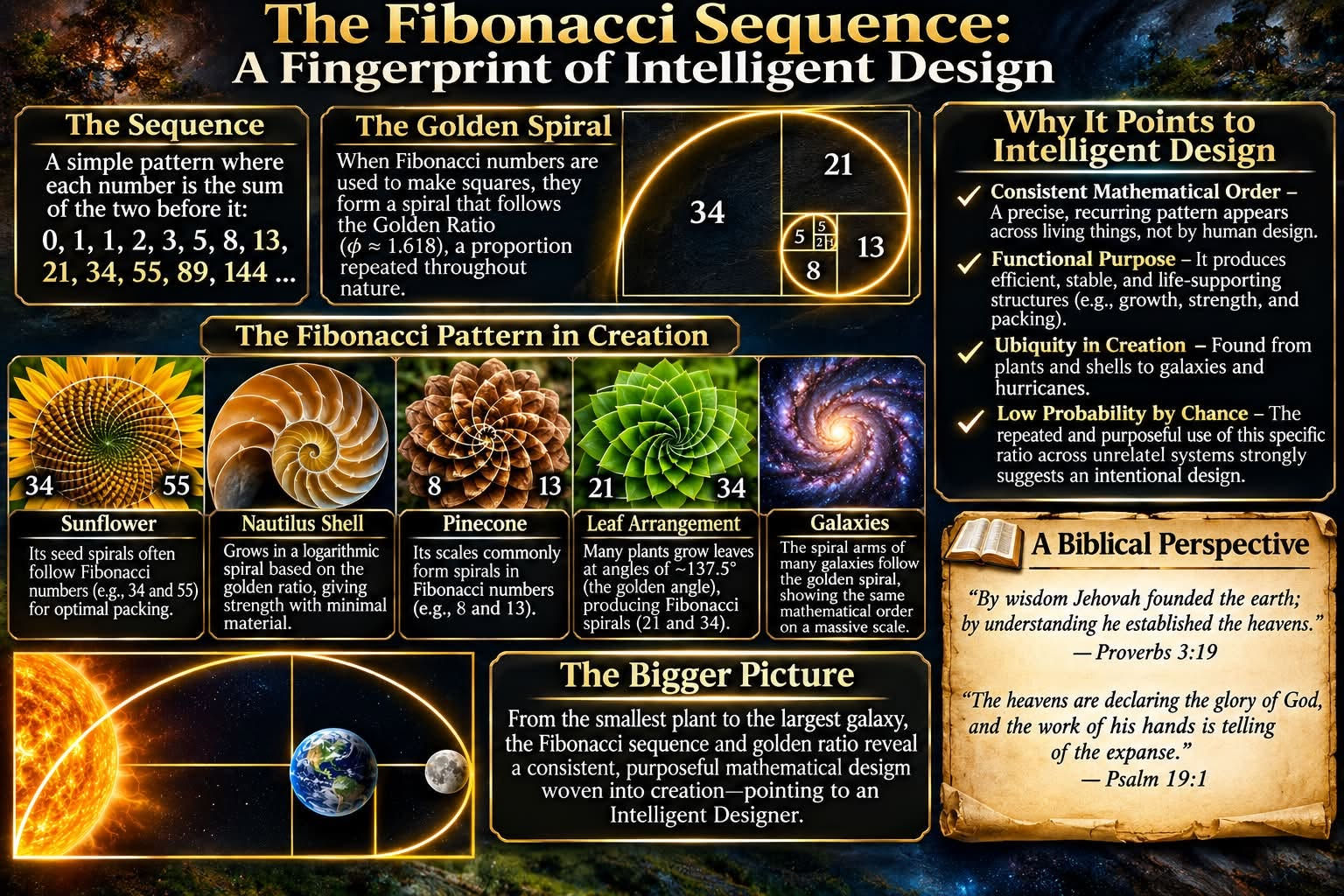
This is a graphic posted on Facebook from some Creationist apologist. It is exactly wrong. (Click on it to see full size.)
The Fibonacci sequence is no more evidence of God, or an intelligent designer, than is 2 + 2 = 4.
Rather, it illustrates the fact that apparent complexity is inherent in the very structure of reality. That some people find it remarkable is evidence of the limitations of human cognition (another example: humans throughout all cultures have intuitive senses of numbers up to three or four, or maybe seven, but no more; after that: many) and of the desperate need for some people to find evidence to support their naive, childish notions of a creator, who would make them feel special and cared for.