Nonfiction Notes: Bobby Duffy, WHY WE’RE WRONG ABOUT NEARLY EVERYTHING

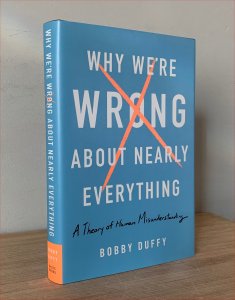
Bobby Duffy, Why We’re Wrong About Nearly Everything: A Theory of Human Misunderstanding (2018) (US edition Nov 2019)

Here’s another book on a seemingly familiar theme: why people so frequently misunderstand the world, and what we can do to correct our thinking. However it’s not aligned with Shermer’s WEIRD THINGS or Shtulman’s SCIENCEBLIND, as much as to Rosling’s FACTFULNESS in its focus on contemporary issues. It actually complements Rosling. Rosling arranges his book by “instinct” and shows how each one affects views of the world; Duffy arranges his book by peoples’ views of the world, and shows which biases or social effects cause them.

Continue reading →

Posted in Book Notes, Changing One's Mind, Culture, Social Progress | Comments Off on Nonfiction Notes: Bobby Duffy, WHY WE’RE WRONG ABOUT NEARLY EVERYTHING

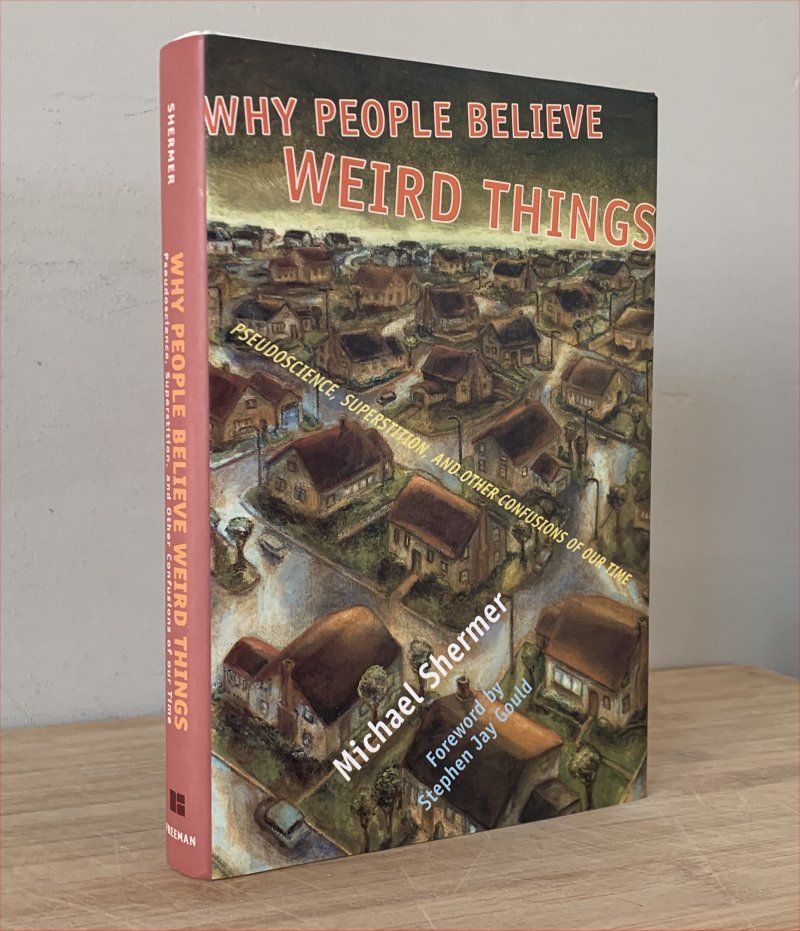
Nonfiction Notes: Michael Shermer: WHY PEOPLE BELIEVE WEIRD THINGS

Michael Shermer: Why People Believe Weird Things: Pseudoscience, Superstition, and Other Confusions of Our Time. (W.H. Freeman, 1997)

Here’s one of the earliest books that address human irrationality in terms of both the evidence against various pseudoscientific beliefs, and the psychological motivations that lead people to believe things that aren’t true. It wasn’t the first such book to do this; Nicholas Humphrey’s LEAPS OF FAITH (SOUL SEARCHING in the UK) did a good job the year before in 1996, and Thomas Gilovich did something similar in HOW WE KNOW WHAT ISN’T SO in 1991. For that matter, Shermer’s book here is as much a collection of  *what* weird things people believe, as much as it is about why they believe them; thus it aligns more with Martin Gardner’s FADS & FALLACIES IN THE NAME OF SCIENCE from 1952 than the other two titles just mentioned. (The weird things are mostly different; the pervasive credulousness hasn’t changed. I’ll have to glance back through Gardner to see if he had any speculations about *why*.)

Continue reading →

Posted in Book Notes, Psychology, Science | Comments Off on Nonfiction Notes: Michael Shermer: WHY PEOPLE BELIEVE WEIRD THINGS

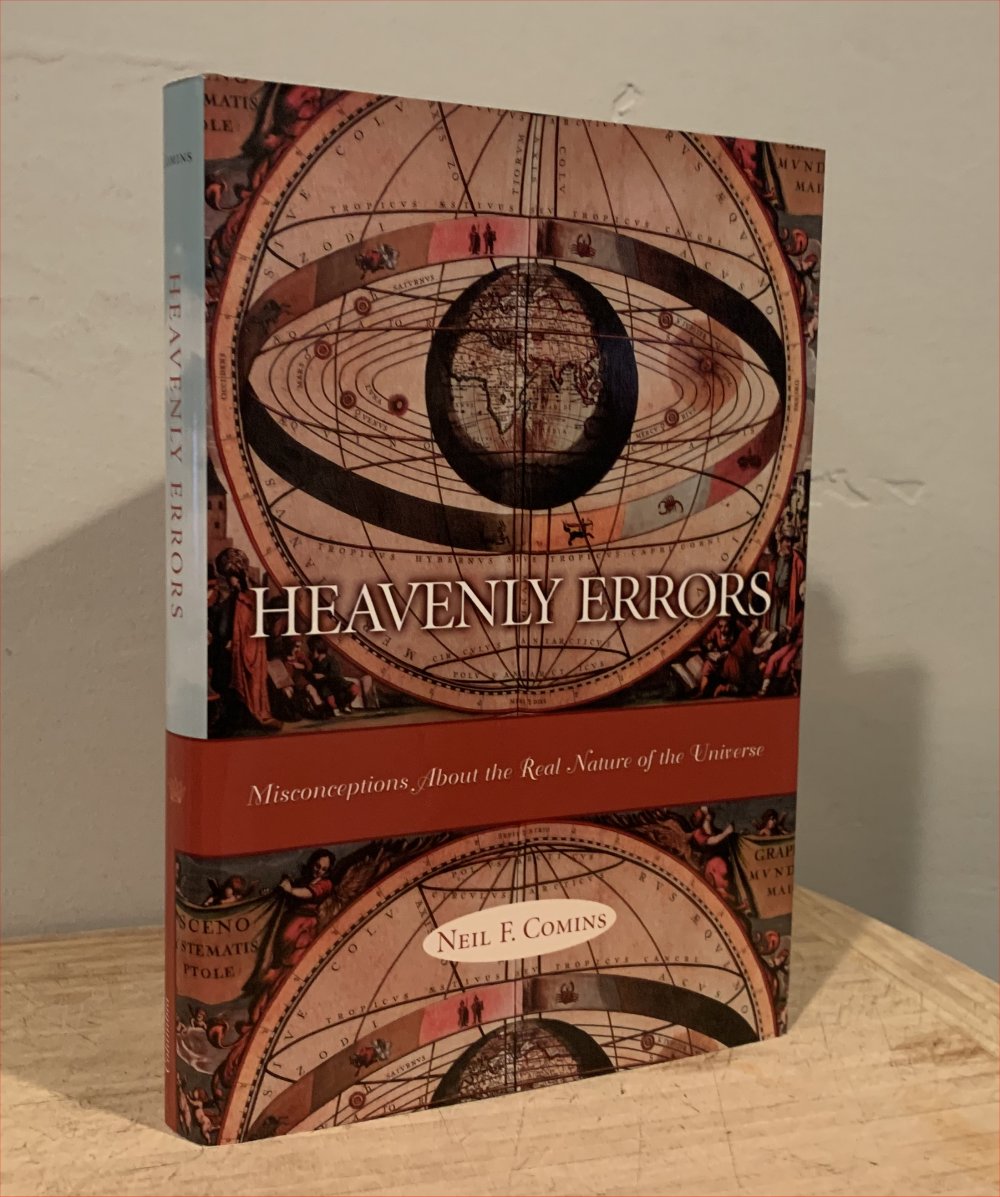
Nonfiction Notes: Neil F. Comins, HEAVENLY ERRORS: Misconceptions about the real nature of the universe (2001)

This is a book I’ve had for nearly 20 years, since its publication in 2001, and finally I sat down last year, 2020, and read it. I had thought it would be a book about common misconceptions of the universe (as the subtitle says) along the lines of: there is no “dark” side of the moon; things fall at the same rate, regardless of weight (disregarding air friction); spaceships do not make sounds in space; and so on.

It’s partly about that, but just as much about *why* people believe incorrect things, with a heavy emphasis on psychological biases, intuitive thinking established in childhood, and social forces encouraging pseudo-science. Thus this book is on the same spectrum from that textbook LOGIC AND CONTEMPORARY RHETORIC, Shermer’s WHY PEOPLE BELIEVE WEIRD THINGS, Bering’s THE BELIEF INSTINCT, Shtulman’s SCIENCELBIND, and the numerous books about human psychology, from Kahneman, Haidt, and others.

Continue reading →

Posted in Book Notes, Psychology, Science | Comments Off on Nonfiction Notes: Neil F. Comins, HEAVENLY ERRORS: Misconceptions about the real nature of the universe (2001)

Links and Comments: Changing Minds; GOP Economics; Liars; Taxonomy of Trump Supporters

Items from NYT (Adam Grant); NYT (David Leonhardt); Slate (William Saletan); The Week, NYT, and Salon about Trump and the GOP; and NYT (Michelle Goldberg).

Continue reading →

Posted in Politics, Psychology | Comments Off on Links and Comments: Changing Minds; GOP Economics; Liars; Taxonomy of Trump Supporters

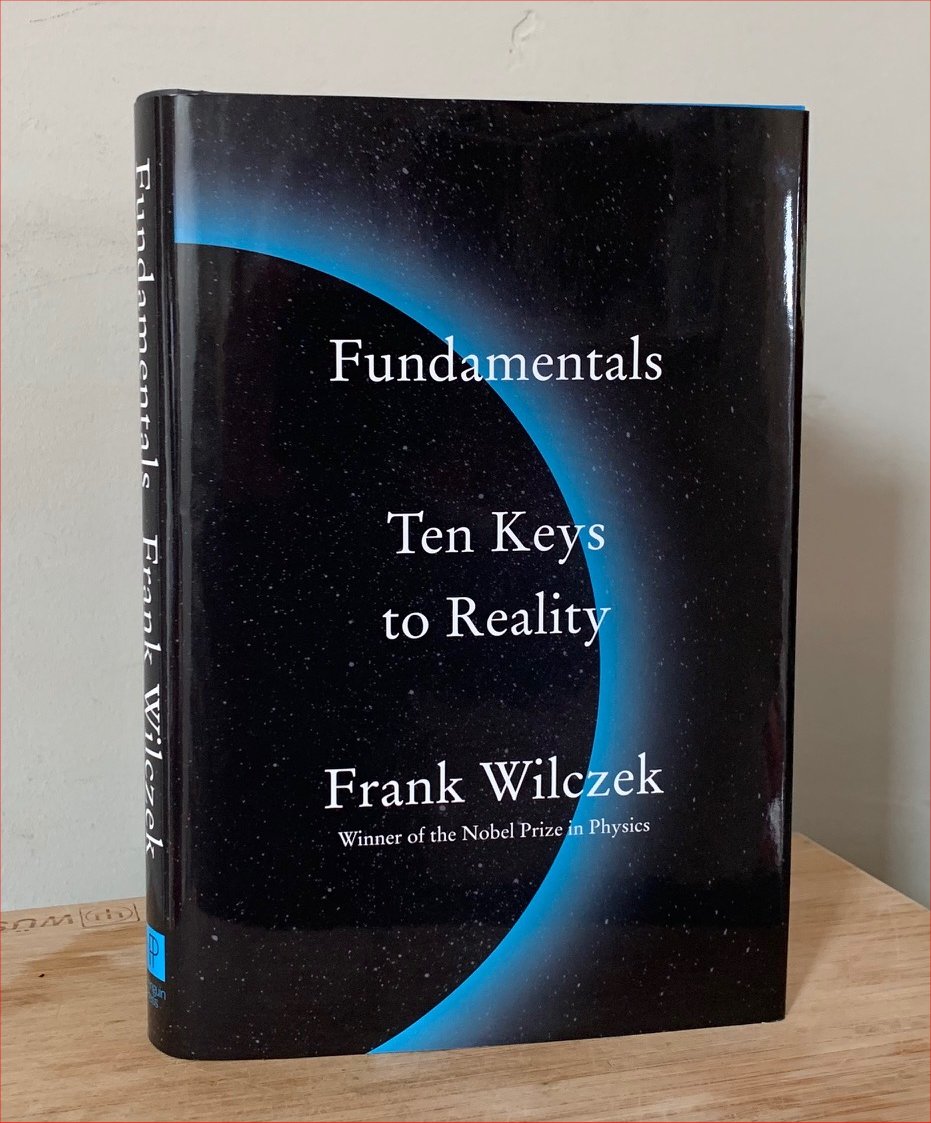
Notes and Quotes: Frank Wilczek’s FUNDAMENTALS: TEN KEYS TO REALITY

Frank Wilczek is a Nobel Prize-winning physicist, whose earlier book A BEAUTIFUL QUESTION: Finding Nature’s Deep Design (2015) I have but have not yet read. (It looks fascinating – the kind big picture book, that tries to understand history or reality in the broadest possible terms, that I find especially compelling.)

His new book is FUNDAMENTALS: TEN KEYS TO REALITY, just published earlier this month. And partly because it’s relatively short, and partly because of my resolution to keep up on significant books as they are published, I read it right away, within the week after it was published.

It’s short and written in deceptively simple prose, some 228 pages of largish type in a book somewhat smaller than the standard hardcover. But that’s because the concepts he describes are often abstruse (as reality is, compared to mundane human understanding). It wasn’t a fast read; I found myself rereading paragraphs to make sure I understood his point.

Continue reading →

Posted in Book Notes, Science | Comments Off on Notes and Quotes: Frank Wilczek’s FUNDAMENTALS: TEN KEYS TO REALITY

Links and Comments: Space Lasers. Being Played. Bizarro.

Nicholas Kristof’s letter to his conservative friends; Paul Krugman on the party of bizarro; CNN on the post-Trump era; The Week’s Ryan Cooper on GOP extremity; Slate’s Jeremy Stahl asks House Republicans if they believe in Jewish Space Lasers.

Continue reading →

Posted in Lunacy, Politics | Comments Off on Links and Comments: Space Lasers. Being Played. Bizarro.

Links and Comments: Law and Order except for T***p; Capitalism except for the rich

Republican motivated reasoning about the legality of the impeachment trial; Thomas L. Friedman (NYT) on “Socialism for the Rich. Capitalism for the Rest.”

Continue reading →

Posted in Lunacy, Politics | Comments Off on Links and Comments: Law and Order except for T***p; Capitalism except for the rich

Links and Comments: Liars, Fear, Motivated Reasoning, Science Denial, Conservatives

Slate’s William Saletan on Republicans vs. liars; NPR on vaccine resistance; Salon on reactions of QAnon to Biden’s inaurguration; a long NYT piece about what goes on inside QAnon chatrooms; how science denial is a form of conspiracy theory; why conservatives hate science.

Continue reading →

Posted in Lunacy, Politics, Science | Comments Off on Links and Comments: Liars, Fear, Motivated Reasoning, Science Denial, Conservatives

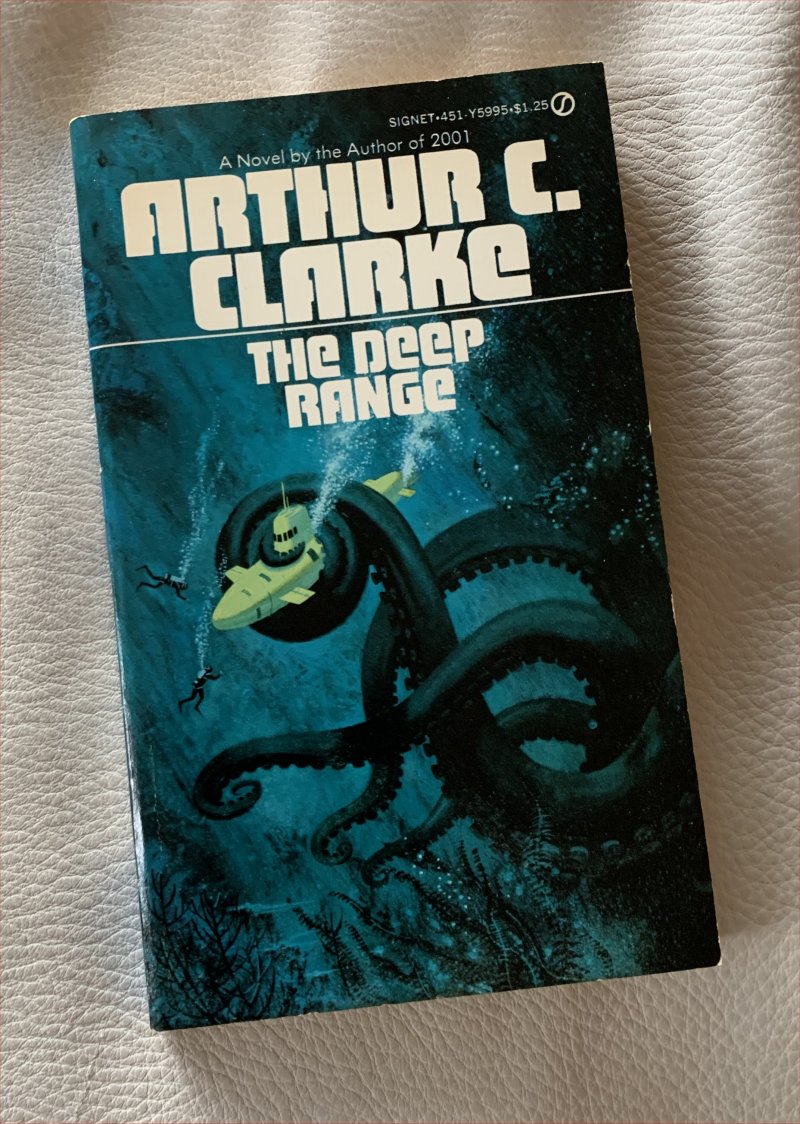
Notes and Quotes: Arthur C. Clarke’s THE DEEP RANGE (1957)

Here’s a relatively quick take on a 1950s novel I reread this past week — not as long or as polished as my Black Gate reviews have been. (I’ll be resuming those in February.)

THE DEEP RANGE was the 8th of 11 novels of Clarke’s early period, which I’ll define as everything before 2001 in 1968. (The 11 counts both AGAINST THE FALL OF NIGHT and THE CITY AND THE STARS, and includes his non-SF novel GLIDE PATH.)

This is Clarke’s major novel of the ocean, set in a future that herds whales and farms plankton for consumption by humans. I think the theme of harvesting whales for their meat would make the novel awkward to reprint today, but I see there have been editions from Warner Aspect in 2001 and from Gollancz as recently as 2011. There are countries that still harvest whales, of course, but they do so to the condemnation of many other nations.

Clarke was of course an avid diver and had moved to Sri Lanka in 1956 (according to SFE), a year before this novel was published. So the descriptions here of diving, of exploring the coral reefs, are likely drawn from first-hand experience.

Continue reading →

Posted in Arthur C. Clarke, Book Notes, science fiction | Comments Off on Notes and Quotes: Arthur C. Clarke’s THE DEEP RANGE (1957)

Memoirs and Site Updates

I’ve updated my Memoirs page with a number of essay posts from the past year, and promoted the whole page to the top level menu. I’ve cleaned up with consistent headers this page and the Family History page.

I began this project with the notion to scan family photos, especially the ‘slides’ in the three metal boxes I inherited from my father, of their family and travels in the 1950s. Yet over the past year, I’ve written many essays of family history and personal memoirs, without having scanned many of the remaining family slides in over a year now. Well, I think the narrative is more important, and I’ll get to the slides eventually; I’ve already done the slides that show family members. There are also photos from my albums, prints of photos taken on various trips, and to conventions, from the 1980s and 1990s, that I may scan to supplement my memoir essays. By the 2000s everything became digital, and I have lots of folders of those photos to post, perhaps, too.

Ironically, one of the people I’ve had most in mind as a target of these family history essays and photos (and perhaps my memoir essays), was my younger brother and his family (in Tennessee). But when I challenged his support for the Plandemic documentary back in, what, April 2020?, after a couple email exchanges, both he and his wife unfriended me on Facebook, and he hasn’t replied to my emails since. (We’ve never kept in touch by phone, over the decades.) So I suspect he will never see or care about this family history, or anything else I have to say.

But whose family history ever survives? A generation at best. And then it will all be forgotten. Try as you might. We will all soon disappear in history.

Posted in Personal history, Website Issues | Comments Off on Memoirs and Site Updates