Posted 17 Oct 2026, items collected 3 Oct:
- Trump in Time;
- How AI could worsen a common cognitive trap;
- Trump’s demand for Fox propaganda;
- People with lower cognitive abilities are more likely to endorse Christian Nationalist claims;
- Shaun Tan and the “thin skin of reality”;
Apparently there’s a new interview with Trump in Time Magazine, and they didn’t sanewash his prose.
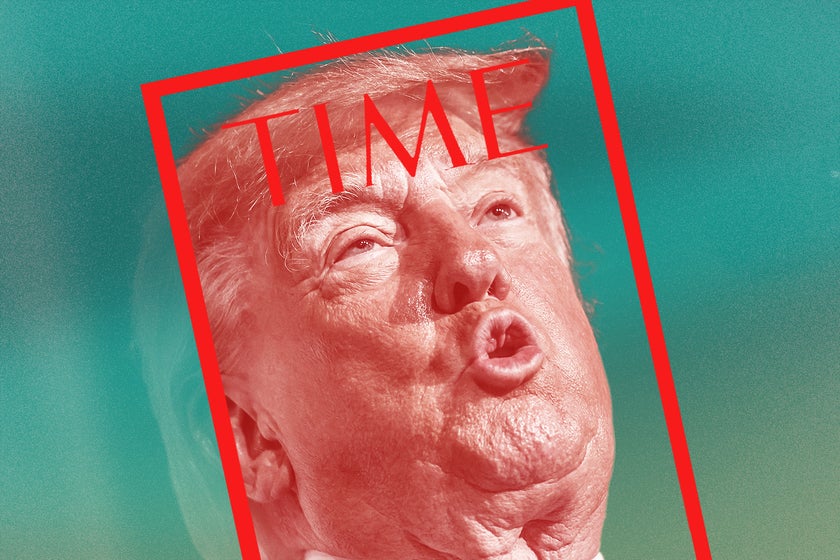
Slate, Ian Prasad Philbrick, yesterday 2 Oct: The Man Is Not Well, subtitled “We just got an unfettered view into the mind of the world’s most powerful person. It’s alarming, to say the least.”
There’s a link here to the transcript, which I haven’t looked at yet.
Donald Trump talks constantly, which makes it a minor miracle that he can still surprise us. But he did Thursday after Time magazine published the full transcript of a 75-minute interview with the president. Conducted this week by correspondent Eric Cortellessa and top editor Sam Jacobs, the 11,000-word interview is in some ways an unremarkable artifact of the president’s usual tics: run-on sentences, bluster, insults, lies. But it also contains moments of confusion, incoherence, and paranoia that look like windows into Trump’s mental state. Far be it from us to diagnose him from afar, but suffice it to say that if any other president—or person—spoke the way Trump does, you’d probably worry about their psychological and perhaps medical well-being.
I’ll just list the subheadings in the Slate piece, as they are numbered.
- Trump immediately gets confused about where he was this week.
- When it comes to Iran, Trump is on another planet.
- He gave an incoherent answer about the future of Gaza.
- His paranoia is reaching mad-king proportions.
- Does Trump know that JFK and LBJ are dead?
And concluding,
The above is just a sampler platter from a long, rambling, grievance-fueled interview with the most powerful person in the world. Much of the ensuing coverage has focused on Trump losing his temper, ripping into the interviewers with lines like “You haven’t asked me one f***ing positive question.” (As the New York Times reports, the president has gotten more publicly profane as he has aged.) It’s easy to become numb to all this; Trump’s incoherence is matched by his ubiquity. But this is the brain responsible for making life-and-death decisions for the rest of us every day. Does anything from this transcript suggest it’s still up to that task?
His fans have to notice eventually, right?
\\\
Science, and epistemology.
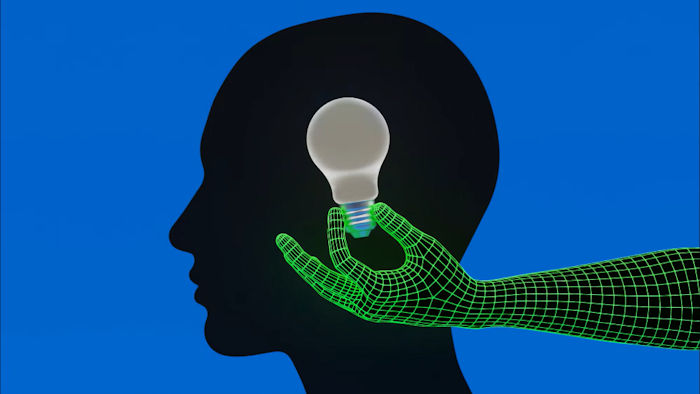
The Atlantic, Tania Lombrozo, today 3 Oct: AI Could Worsen a Common Cognitive Trap, subtitled “Almost everyone knows less than they think.”
The thesis in the subtitle is certainly true. Mostly we know where to find out what we need to know. Or, many people don’t care about knowing much of anything. What is the thesis here? How could AI make this situation any worse?
One of humanity’s most remarkable cultural achievements is the division of explanatory labor. When my daughter came down with a fever, I solved the problem by consulting a pediatrician, who shared a likely diagnosis of the flu. Unlike the doctor, I wasn’t able to tell my daughter much about the mechanism by which the flu leads to fever, or exactly why it was so important for her to keep drinking fluids. But the explanation I acquired—roughly “fever because flu”—was what was needed to treat her.
Society runs on this efficient type of information sharing. Just as coordinating specialized skills can streamline the fabrication of products—be it pins or cars or newspapers—coordinating specialized knowledge can facilitate the answering of questions. You can drive a car even if you don’t have the expertise to manufacture one yourself, and I benefited from the pediatrician’s explanation even though his understanding far exceeded my own.
And so on.
Humans’ sense of whom to ask for what is fine-tuned by evolution, culture, and personal experience. Even 3-to-5-year-olds are more likely to say that you should ask a doctor rather than a mechanic about fixing a broken arm, and a mechanic rather than a doctor about fixing a flat tire. As kids mature, they develop an even deeper understanding of expertise.
The author discusses how easily “a contagious sense of understanding” can appear from superficial descriptions of new phenomena. Then:
As information becomes more accessible through AI assistants, chatbots, and other technology, will these illusions of understanding become even more pronounced? Some early evidence suggests that the answer is yes. Several studies have now found that when people have information available to them through the internet, they overestimate how much they themselves know.
With examples. Well, OK. A problem that already exists might be made slightly worse by AI.
The kinds of errors that AI systems make are likely to change as AI develops, and human intuition about AI will probably evolve alongside these changes. As we expand our community of explainers beyond human experts to chatbots and other forms of AI, we create new opportunities for human understanding. But we also introduce an increased potential for illusion and error.
But these are enduring problems with human understanding, which is already very limited. Most people just “know” things without any kind of understanding.
The writer has a book on this topic: Why We Ask Why, subtitled “The Science of Explanation and the Human Drive to Understand”, that comes out Tuesday. Maybe.
\\\
Again, about propaganda. Trump thinks he can create his own reality.

Media Matters, Matt Gertz, 1 Oct 2026: Donald Trump’s insatiable demand for Fox propaganda
President Donald Trump lashed out at Fox News on Wednesday with a lengthy online harangue that made little sense but demonstrates the network’s impossible task in satisfying the president’s demand for pure propaganda.
“Why does FoxNews always put Chuck Schumer, Hakeem Jeffries, Jessica Tarlov, and every Democrat on, saying bad things about the Republican Party and, of course, me?” Trump posted to his Truth Social account at 12:15 pm ET. “I actually think they get more airtime than Pro Republicans. This is why MAGA, and REAL Patriots, will never like Fox! They repeat a completely negative narrative, on and on it goes, and then we get a quick retort.”
Because he’s completely oblivious to how most Americans, and most of the rest of the world, outside his MAGA base, perceive him. Dunning-Kruger.
\\\
Well *of course.* It’s just that the rest of us non-D-K folks are too polite to point this out.

JMG, today 3 Oct 2026: Study Finds That People With Lower Cognitive Abilities Are More Likely To Endorse Christian Nationalist Claims (from PsyPost)
A new study indicates that Americans with lower scores on a vocabulary test commonly used to measure cognitive ability are more likely to endorse Christian nationalist beliefs, even when accounting for their overall level of education. The findings suggest that the appeal of this political and religious ideology relates to underlying cognitive resources rather than just differences in schooling.
Religion is easy; science is hard. Fantasy is easy; reality is hard. This goes again to my notions about the limits of human cognition, and the appeal of tribalism, which humanity seems not able to escape.
\\\
One more. Here’s a take on why the arts are so significant in understanding human nature, and the reality we cannot perceive.

The Guardian, Tim Byrne, yesterday 2 Oct: Shaun Tan: ‘We’re always only seeing a thin skin of reality’, subtitled “One of Australia’s most cherished and awarded picture book illustrators on what makes a good painting, the mechanics of life and the fine line between utopia and dystopia”
Not just in Australia. He’s won a Hugo — and an Oscar. I met Shaun Tan once, at the Worldcon in Melbourne, back in 1999, IIRC, and I have many of his books. I’m taken by that skin of reality quote. Let’s find some more.
“I have this theory that if a painting is really good a five-year-old can still get something out of it,” Tan says. “A good painting should hit you in an emotional way.” Often he will haul one of his kids into the studio to see their reaction to a piece he’s working on. “A bit happy and a bit creepy? Great, that’s what I wanted. You can go now.”
…
The conversation orbits too, back to the question of reality and the thin veil between worlds that exists for all of us. “I have the same problem as everybody else: it’s hard to penetrate the veneer of familiarity. We’re always only seeing a thin skin of reality, which is what an illustration is, just another thin skin. And that’s the world around us, it’s only paper thin.”
Tan’s enduring interest in the mechanics of life (at one point he envisioned becoming a geneticist) has led him to think of reality as “arbitrary. I was very interested, as a young person, in science and quantum physics. It satisfied my suspicion that this is one reality amongst many.”
And this supports my notion about different realms of reality that have different explanations and ‘meanings.’
\\\\\