Thomas L. Friedman on Anonymous

Brilliant take by Thomas L. Friedman: ‘Anonymous’ Is Hiding in Plain Sight: The G.O.P. crowd who accepted the devil’s bargain is huge.

That’s the anonymous-G.O.P. credo today: We know Trump is a jerk, but you’ve gotta love the good stuff — you’ve got to admit that his tax cuts, deregulation, destruction of Obamacare and military buildup have fueled so much growth, defense spending and record stock market highs that we’re wealthier and more secure as a country, even if Trump is nuts. So our consciences are clear.

This view is not without foundation. Economic growth and employment have clearly been on a tear since Trump took office. I’m glad about that.

But what if Trump is actually heating up our economy by burning all the furniture in the house? It’s going to be nice and toasty for us — at least for a while — but where will our kids sleep?

Is the current economy “a sugar high that not only will be unsustainable but will leave our economy far more vulnerable in the long term?”

I am coming to think that the so-called Faustian bargain Republicans and conservatives have made with Trump –- to accept that such a despicable person should lead the country, in return for control of the Supreme Court to (try to) make abortion illegal and favor Christian interests –- simply means that those long-terms goals are just as ideological vacuous and despicable as Trump himself is. If you can only win by lying and cheating, you don’t have a case, and you don’t deserve to win.

Reality, eventually, will prevail.

Posted in Politics | Comments Off on Thomas L. Friedman on Anonymous

Play and Stranger Danger

From Sunday’s New York Times Book Review:

Does Our Cultural Obsession With Safety Spell the Downfall of Democracy?, by Thomas Chatterton Williams, reviews two books, including THE CODDLING OF THE AMERICAN MIND: How Good Intentions and Bad Ideas Are Setting Up a Generation for Failure by Greg Lukianoff and Jonathan Haidt (the latter being the author of one of my favorite books, The Righteous Mind).

The book,

which expands on a widely circulated 2015 article in The Atlantic, identifies what the authors refer to as “the three Great Untruths” of the current moment: “what doesn’t kill you makes you weaker”; “always trust your feelings”; “life is a battle between good people and evil people.”

An excerpt from their book is in the Sunday Review section of the Times: How to Play Our Way to a Better Democracy.

The key word is play, and the culprit is over-protective parents and the ginning up of fear of strangers by right-wing sites.

Young mammals play, and in doing so they expend energy, get injured and expose themselves to predators. Why don’t they just stay safe? Because mammals enter the world with unfinished nervous systems, and they require play — lots of it — to finish the job. The young human brain “expects” the child to engage in thousands of hours of play, including thousands of falls, scrapes, conflicts, insults, alliances, betrayals, status competitions, and even (within limits) acts of exclusion, in order to develop its full capacities.
…
Another trend that reduced outdoor free play is the grossly exaggerated fear of “stranger danger.” The spread of cable TV gave us more programming focused on rare but horrific cases of child abduction. Those fears, combined with the long, slow decline of trust in neighbors and fellow citizens, gave rise to a belief by the 1990s that persists today: Children who are not in sight of a responsible adult are at risk of abduction, so parents who allow unsupervised outdoor play are bad parents. The authorities should be notified.

This ties in to availability bias, the way TV news, for example, makes us think that isolated examples of child abduction (or terrorist rampages) are to be greatly feared, no matter how rare they actually are.

\\

My own background is curious in this regard; I should document this separately. I grew up with parents who themselves grew up in small Illinois towns, what I think of as Bradbury-esque Green Towns, small enough for everyone to know one another, at least by reputation. (I did in fact live in one of these towns, Cambridge Illinois, for three or four months over one semester and summer.) In my earliest life we lived in a remote desert town, Apple Valley, where I took a school bus to the elementary school at least 5 miles away, and where at home we had virtually no neighbors, let alone neighbors with kids I might have played with. I was an isolated child, and learned how to entertain myself on my own – not with books, at that young age, as far as I can recall, but with toy cars and playing in the desert sands. My father’s career took us to the suburbs of Los Angeles when I was 6 or 7, and once settled there, in Reseda, I would walk to elementary school, about half a mile, and then walk straight home again. The option of going over to other kids’ houses after school to play simply never appeared, not even to those of my best friends at school – Milton Lewis and Gary Wein – because they lived in other directions from my walking straight home. This is the kind of thing you don’t realize until decades later. I’m certain, after all this time, that this was a legacy of my parents’ fears, especially my mother’s, about their children being loose in the big city, where life wasn’t as safe as living in the small towns they grew up in. And so I would always come straight home from school.

(Of course, these days young children aren’t allowed to walk back and forth to school; they are driven by parents. And this is part of the point of the book mentioned above.)

Posted in Personal history, Psychology | Comments Off on Play and Stranger Danger

Le Guin, NO TIME TO SPARE

Ursula K. Le Guin, NO TIME TO SPARE: Thinking About What Matters (2017)

This book is a collection of the best blog posts Le Guin did on her site at http://www.ursulakleguin.com/, from 2010 until her death in early 2018. It was published in December 2017, and won the Hugo Award in August 2018 as Best Related Work (i.e., a nonfiction book about science fiction or fantasy) of 2017. One has to acknowledge that the award was something of a sympathy vote, for while it’s a charming book with many wise thoughts, very little of it is about science fiction or fantasy specifically. The title echoes her reflection on her age, and about a questionnaire that asked what she did in her ‘spare time’. As a full-time writer, she’s constantly busy with “daydreaming, with doing business and writing friends and family on email, with reading, with writing poetry, with writing prose, with thinking… None of this is spare time. I can’t spare it… I’m going to be eight-one next week. I have no time to spare.”

Still, Le Guin is one of science fiction’s greatest writers, and she applied her talent not just to science fiction and fantasy, and it’s well worth spending time sampling her wisdom in this book.

The introduction is by Karen Joy Fowler – note p xiv – xv, “In another essay, in another book, Le Guin has said that so-called realism centers the human. Only the literature of the fantastic deals with the nonhuman as of equal interest and important. In this and so many other ways, fantasy is the more subversive, the more comprehensive, the more intriguing literature.” [[ I’ll have to track down that essay. I agree with this to a point – but think it is science fiction that deals with the nonhuman as of equal interest, and fantasy that more often indulges in human interests and priorities in an indulgent way. ]]

  • She notes that she was inspired to start a blog by reading the blogs of Jose Saramago.
  • P3, dealing with a Harvard survey asking what she does in her ‘spare time’. Writing is what she does; she doesn’t have spare time. She skips some questions with inadequate choices for answers.
  • P8, about old age, rejecting that saying about ‘you’re only as old as you feel’, and being frank about the challenges of getting older
  • P12, more about getting old, and respect, and the young
  • P18, about he she doesn’t drive and neither she nor husband can walk down 10 steep blocks to the market any more; they have to plan weekly shopping
  • P23, Choosing a Cat, at the Humane Society in Portland, picking one out, taking him home, naming him Pard
  • P29, Chosen by a Cat, after four months, how Pard eats, tears around the house, getting into things, eating beetles
  • P35, about cursing in fiction, so unimaginative with only two words these days
  • P39, readers’ questions, she likes only specific ones, like about sparrowhawks; what stories mean is up to the reader
  • P44, kids’ letters, mostly about Catwings, and with charming misspellings
  • P48, about how she never got the proverb about having one’s cake and eating it too; perhaps a confusion over the meaning of ‘have’ which can mean eat. Words matter.
  • P53, about Iliad and Odyssey, the ur-stories about story and the journey
  • P59, about the Sartre Prize for nonacceptance of an award; how she’d won the Nebula for “The Diary of the Rose” but refused it over the SFWA/Lem kerfuffle. [[ This is news: it’s long been known that she withdrew that story from the final ballot, but not that she did so despite the fact that it had actually won; by withdrawing it, she let Asimov win for “The Bicentennial Man” ]]
  • P63, About the great American novel, and how such a notion is parochial and unnecessary; but how her own favorite is The Grapes of Wrath, how the ending made such an impact on her when she read it young
  • P69, what a great novel by a woman? Again, doesn’t take idea seriously.
  • P74, The Narrative Gift as a Moral Conundrum, discusses two books, The Help, a page-turner but troublesome in many ways, and The Immortal Life of Henrietta Sacks, much better. Yet both compulsively readable.
  • “It Doesn’t Have to Be the Way It Is” p80: about imaginative literature, and how it’s different than childish imaginings; it’s not ‘anything goes’ and it’s not ‘it ought to be this way’; it’s ‘it doesn’t have to be the way it is.’ P83t:
    • “As for the charge of escapism, what does *escape* mean? Escape from real life, responsibility, order, duty, piety, is what the charge implies. But nobody, except the most criminally irresponsible or pitifully incompetent, escapes to jail. The direction of escape is toward freedom. So what is “escapism” an accusation of?”
  • And this on the relation of fantasy and science, p84.3:
    • “There really is nothing to fear in fantasy unless you are afraid of the freedom of uncertainty. This is why it’s hard for me to imagine that anyone who likes science can dislike fantasy. Both are based so profoundly on the admission of uncertainty, the welcoming acceptance of unanswered questions. “
    • (Well—it’s easy to see the distinction; science is about what’s real, in a practical way; fantasy is almost by definition about what isn’t real. But that’s not her issue here.)
    • But the passage goes on: “Of course the scientist seeks to ask how things are the way they are, not to imagine how they might be otherwise. But are the two operations opposed, or related? We can’t question reality directly, only by questioning our conventions, our belief, our orthodoxy, our construction of reality. All Galileo said, all Darwin said, was, ‘It doesn’t have to be the way we thought it was.’ “
    • (This is more to the point. The hostility to fantasy, therefore, might come from those, the religious, who are certain in their opinions about the world and resent having them challenged; thus the religious reaction against the Harry Potter books, which supposedly encouraged belief in magic and witchcraft.)
  • P85, Utopiyin, Utopiyang. About dystopias, and the relationship between male and female, yang and yin. Ends with thoughts about the idea of growth as the continuing good, p87b:
    • “My guess is that the kind of thinking we are, at last, beginning to do about how to change the goals of human domination and unlimited growth to those of human adaptability and long-term survival is a shift from yang to yin, and so involves acceptance of impermanence and imperfection, a patience with uncertainty and the makeshift, a friendship with water, darkness, and the earth.”
  • More about Pard: how the cat likes to make some kinds of trouble; how it disappears at times.
  • P101, about the importance of solidarity, and how male group solidarity shapes the world, perhaps, and how it’s much different than the kind of ‘sisterhood’ that characterized early feminism.
  • P107, how the sharp uniforms of earlier eras have given way to the baggy camos of the modern one.
  • P111, written in 2011 (during the last recession): More about the notion that growth is a positive economic goal. It’s plausible, as in a person’s growth; but the person stops growing at some point.
    • 3: “In taking uncontrolled, unlimited, unceasing growth as the only recipe for economic health, we’ve dismissed the ideas of optimum size and keeping the organism in balance.”
    • 6: “Capitalist growth, probably for at least a century and certainly from the turn of the millennium on, has been growth in the wrong sense. Not only endless but uncontrolled—random. Growth as in tumor. Growth as in cancer.”
    • (Long my thought. We may have avoided the pitfalls of the ‘population bomb’ forecast in the 1960s, but, mathematically, the race can’t continue to grow *forever*, or we’ll overload the planet.)
    • 114e: “So what is our new metaphor to be? It might be the difference between life and death to find the right one.”
  • P115, how politicians lie, but how “something has changed,” how Americans sacrificed during World War II and no one can imagine them doing it today; how life was never ‘simple’ for people in earlier times; how we seem to have given up on the long-term view.
  • P120, about the cult of the ‘inner child’ who possesses some essential innocence lost in adulthood; and about a quote attributed to Le Guin that she didn’t remember. Quotes from Wordsworth, about how life is a “sleep and a forgetting” between two poles of eternal being that a soul enters life from.
  • P128, “Modest Proposal” (i.e. a mock serious piece, after Swift) about how even eating vegetables is taking their lives.
  • P130, asking why is ‘belief’ in itself desirable? And why asking about ‘belief’ in evolution, say, is the wrong question. One doesn’t ‘believe’ evolution; one accepts it. P133t:
    • “The whole undertaking of science is to deal, as well as it can, with reality. The reality of actual things and events in time is subject to doubt, to hypothesis, to proof and disproof, to acceptance and rejection—not to belief or disbelief.”
  • P136: About anger, including private anger, including anger at writers she doesn’t respect be so respected by others: Hemingway, Joyce, Roth; because if they are the greatest, “there’s no way I can ever be very good or very highly considered as a writer…”
    • (Of course the solution here is that writers are valued for different reasons, and by different people; there is no singular canon that everyone agrees upon. And surely Le Guin know this; she’s just venting.)
  • More about Pard: bringing mice into the house. The cat knows how to capture, but doesn’t have the instinct to kill.
  • P159: Appreciations of works by Philip Glass, the short opera Galileo Galilei, and John Luther Adams, Become Ocean. (Of the Glass, there are brief excerpts on YouTube.)
  • P166, about her assistant Delores, who handled her mail, until she died; how other writers deal with such assistants.
  • P173, about breakfasts in Vienna, with or without eggs, and what it meant when she declined the egg; and about eating soft-boiled eggs, and egg cups.
  • P179, about a ‘cathedral’ in Portland that is actually a huge warehouse food bank.
  • P184: about their Christmas tree. How cutting down the live tree is a kind of “ritual sacrifice”…
  • P188, about how children learn new ideas, about how a small lie about “horsies” being upstairs can be taken literally; about Santa Claus, about pretend vs real, about how ‘loss of belief’ involves how children believe in falsehoods, and how “Belief has no value in itself that I can see.”
  • P197, Staying at a ranch in Napa and capturing a rattlesnake.
  • P201, About staying in Bend, Oregon, a town with new developments and curved streets that are easily confusing; and about a lynx that had been kept as a pet, declawed, and then abandoned, now at the High Desert Museum.
  • P210, finally, “Notes from a Week at a Ranch in the Oregon High Desert” – poetic descriptions of wildlife, sunrises, landscapes, over several days.


Posted in Science Fiction Nonfiction | Comments Off on Le Guin, NO TIME TO SPARE

Update on SF Definitions

A couple of weeks ago I summarized several interesting panel discussions I saw at the World SF Convention in San Jose in mid-August. One panel was about definitions of SF, not so much good or bad definitions as different types of definitions. It was actually a lecture, not a panel, by a Texas academic named Paul Saka, and it ended with his preferred kind of definition, that as prototype, or exemplar, describing average or best examples. He quoted (on his last slide of his presentation) a long paragraph by Frederik Pohl from the 1978 SFWA-SFRA anthology SCIENCE FICTION: CONTEMPORARY MYTHOLOGY, edited by Warrick, Greenberg, and Olander…a copy of which I’ve now tracked down, so I can provide his Pohl quote in full:

Does the story tell me something worth knowing, that I had not known before, about the relationship between man and technology? Does it enlighten me on some area of science where I had been in the dark? Does it open a new horizon for my thinking? Does it lead me to think new kinds of thoughts, that I would not otherwise perhaps have thought at all? Does it suggest possibilities about the alternative possible future courses my world can take? Does it illuminate events and trends of today, by showing me where they may lead tomorrow? Does it give me a fresh and objective point of view on my own world and culture, perhaps by letting me see it through the eyes of a different kind of creature entirely, from a planet light-years away?

Of course, as Saka stipulated, this is a description of *good* science fiction. It doesn’t identify how we know that a bad, routine, formula story that does none of the things Pohl cites is still science fiction. There are surely many more examples of the latter than of Pohl’s exemplars.

Posted in science fiction | Comments Off on Update on SF Definitions

Movie Review: Crazy Rich Asians

(From Facebook, Sunday 26 August)

Today we saw Crazy Rich Asians, a pleasant if fairly conventional Hollywood comedy romance, the distinctive and attractive feature being that the entire cast is Asian, and it’s mostly set in Singapore among the very wealthy. It’s about an Asian-American NYU economics professor, Rachel Chu (who lectures in an opening scene about game theory, and uses it later in the film), whose (Asian) boyfriend Nick Young takes her to Singapore to meet his family, which she hadn’t realized is fabulously wealthy. The plot proceeds as we meet numerous characters in Singapore, family and friends, in quick succession, as if to illustrate to American audiences the truism that all Asians are by no means the same; and then with the resistance of Young’s mother (played by Michelle Yeoh) to Nick’s marriage to an Asian-American commoner (two strikes). A cultural theme emerges, as the disapproving mother prioritizes family allegiance and generational wealth over individual happiness (and the mere American idea of pursuing one’s dream). How does this theme play out to a conventional Hollywood happy ending? Hmm. It’s a glamorous, lifestyles of the (Asian) rich and famous film, with spectacular views of Singapore (a city I’ve read about but never seen, in person or in film that I recall), and there are some entertainingly eccentric secondary characters, but much of the dialogue is merely serviceable, if not trite (I kept wanting this or that character to say something more…), and the plot reversals that lead to the conventionally happy Hollywood ending are shameless. Still — the acting is good to great, and the depiction of a society foreign to most American moviegoers is laudable. If there are sequels, we’ll go see them.

Posted in Films | Comments Off on Movie Review: Crazy Rich Asians

More San Jose Worldcon Panels

(Long post — from Facebook, 23 August)

Finishing my report on this year’s Worldcon, about the several interesting panels I attended — long post, about panels on SF and philosophy, definitions of SF, evolutionary theory and 19th Century SF, and SF and Futures Studies.

Of the dozens, perhaps hundreds, of panels at this year’s Worldcon, I got in to and sat through only a few, considering how crowded events were by the weekend, with many of the event rooms SRO, all the seats full and people sitting on the floor or standing against the walls.

Sunday afternoon was a panel on “Philosophy Meets Science Fiction,” a subject one might think abstruse, but the room was full, perhaps since David Brin – always an entertaining, provocative speaker – was on the panel. (Despite the program listing, R. Scott Bakker did not show; one substitute was Eric Kaplan, a producer of Big Bang Theory, who said funny things while never cracking a smile; see his Imdb page for pics.) The panel discussed how science fiction works to literalize an idea, any idea, even abstruse philosophical ones, and spent much of the hour around two examples: the “Trolley Problem,” depicted in an episode of “The Good Place” that won a Hugo Award that evening, and the “uplift” concept of Brin’s early novels and in other works by Huxley, Cordwainer Smith, et al. Also on the panel was Susan Schneider, editor of the 2016 book “Science Fiction and Philosophy,” and author of a story that responds to Ursula K. Le Guin’s famous story “The Ones Who Walk Away from Omelas” (they kept getting the title wrong, though). Brin – I saw him on three panels – tends to let others speak and then respond, or react. Here Brin chimed in early, stating that his philosophy was pragmatic: what does the world tell us about our problems? It’s told us that Hobbes on the one hand and Rousseau on the other were wrong; the way to escape the fundamental human condition is to realize that we’re delusional. Novels are honest delusions; bad people (politicians) use delusions to control others; and the way out of this trap is through methods of reciprocal accountability and criticism. Later he responded to the Omelas variations: don’t assume what society tells you, do the experiments and see what actual results are.

Later Sunday afternoon was a lecture by one Paul Saka, of the University of Texas (where he has a webpage), on “The Meaning of Science Fiction and the Meaning of ‘Meaning’”. This one *was* abstruse, and attracted only about 15 of us, maybe 20 as the hour passed. Being systematic, Saka, whose initial impression is of a twerpy academic with an odd haircut, spoke fluently if softly from PowerPoint slides, working his way through different kinds of definitions, each with SF examples. Definition by example (Gernsback and his magazine as being about Wells, Verne, and Poe). Taxonomic (as in genus and species, examples from dictionaries, Pohl in ’92, Hartwell in ’97). Classical definitions, as in a bachelor is an unmarried man, with SF examples including Darko Suvin’s famous definition about cognitive estrangement – a definition Saka has issue with, since it might include any kind of fiction as SF. And so on: ostensive (SF is what I point to…), circular, recursive, causal definitions; those that are stipulations (Pluto is not a planet); those that rely on family resemblances (Wittgenstein, Lakoff, Bleiler in SF THE EARLY YEARS). And finally: definitions as prototypes, as exemplars, describing averages or best examples, with references to Lakoff ’87, the American Heritage Dictionary with its use of the word ‘typically’, Heinlein’s definition in OF WORLDS BEYOND 1947, and especially a couple definitions/descriptions by Frederik Pohl, one in Galaxy magazine in Dec. 1968, another – a long paragraph Saka displayed from the 1978 nonfiction book Science Fiction: Contemporary Mythology, The SFWA-SFRA Anthology – that runs on about the various effects a good SF story should have: “Does the story tell me…?” (Alas, I don’t have the book, so I can’t find that para to quote any farther. But I ordered it.) That was his bottom line. Questions from the audience addressed marginal cases (Heinlein’s JOB and GLORY ROAD) and how definitions might change over time.

And even later Sunday afternoon, at 5pm, was a panel with David Brin, G. David Nordley, Bradley Lyau, Tom Lombardo, and others, on “The Impact of Evolutionary Theory on Nineteenth Century Science Fiction.” The moderator, Lombardo, who’s about to publish a massive volume called Science Fiction – The Evolutionary Mythology of the Future: Prometheus to the Martians (Volume 1) (https://www.amazon.com/Science-Fiction-Evolutionary-Myth…/…/), began by claiming 1861 as the true beginning of science fiction, given novelists’ reactions to scientific events of that era, with results from Wells (who ranks among writers concerned with evolution along with Stapledon and Baxter). Nordley and Lyau talked about Francis Bacon, The New Atlantis, and Herbert Spencer, his popular 10-volume work. Brin chimed in, reacting, with warnings about teleology, both from the leftists, and the libertarians, how the right is a sucker for cycles of destiny and rebirth, citing an Outer Limits episode (I didn’t catch which), and going on to discuss Lee Smolin’s idea of the evolution of universes, and how laws of nature might be inherited from one to the next, including the likeliness to have black holes that would give birth to new universes…

Finally on Monday morning I caught “Science Fiction and Futures Studies,” which ran like a sequel to the previously mentioned panel, again with Brin, Nordley, Lyau, and Lombardo, though not quite so crowded, because Monday. They discussed the differences between the purposes of SF as fiction, and futures studies, which Brin makes half his living by, advising corporations around the world how the world might change and what to expect. Wells did both, in his numerous novels. Again Brin reacted, about how the right has blind faith in markets, and doesn’t believe in foresight; that markets, like sports, need regulations in order to eliminate cheating, and prosper. Lyau recalled futurist bestsellers like FUTURE SHOCK and MEGATRENDS [I have old paperback copies of both] and Brin advised Googling “David Brin idiot plot” to find his essay on the common clichés of most Hollywood films: “I will ruin all movies for you!” he claimed. (Heh; Gary Westfahl has just done something similar about YA dystopian films, and novels, in his review here, https://locusmag.com/2018/08/an-awful-warning-in-more-ways-than-one-gary-westfahl-reviews-the-darkest-minds/, and gotten the usual internet flack.)

I mentioned before that the SF pro’s don’t show up to panels; presumably they’re secure in their careers or too busy making deals. For me, not really an SF professional, just an accomplished fan, I am always looking to learn. That’s why I still keep going to panels, and why, after a six-year break, I think I need to resume going to conventions, at least a couple a year.

https://www.worldcon76.org/

Posted in Conventions | Comments Off on More San Jose Worldcon Panels

San Jose Worldcon Panels

(From Facebook post, 20 August)

Among the highlights of this year’s Worldcon, sadly, were tributes to Gardner Dozois and Harlan Ellison. I posted comments about the Dozois tribute on Friday. Back home now, I’m catching up on notes about the convention, and for now will post this about the Ellison tribute. I’ll have more notes about the convention, and other interesting panels, tomorrow.

I didn’t take notes on the Ellison memorial panel, so I’m writing completely from memory. By Saturday the convention became characterized by overcrowded rooms. I got into this event by going early, by some 20 minutes, and sitting through the end of the previous panel (about Philip K. Dick-ian metaphors, a not uninteresting subject itself). The Ellison panel consisted of Tom Whitmore, moderating, Robert Silverberg, David Gerrold, Chris M. Barkley, photographer and lawyer Christine Valada (whose black & white gallery of photographs of SF authors, though some 30 years old by now I think, is displayed annually at the Worldcon), and Nat Segaloff (author of the Hugo-nominated book A Lit Fuse: The Provocative Life of Harlan Ellison).

The panel was a perfect, balanced, blend of tributes on various levels. Whitmore, understanding that any one of the panelists could fill hours with stories about Harlan, advised them to limit their stories to events they personally were involved in or witnessed. So Silverberg talked about how he and Harlan met in New York City in the early ‘50s and roomed nearby; Gerrold about his personal crisis in the early ‘70s and how Harlan saved his life; and so on. Later Whitmore shifted the theme to Harlan’s work, his stories. Silverberg told of his and Harlan’s very different ideas about fiction, how he dismissed the manuscript of “The Deathbird” – written at Silverberg’s house (but did not throw it into his pool, as rumor has it), yet later wrote a letter to Harlan about how he admired several of his stories as great works of science fiction, including 1974’s “Adrift Just Off the Islets of Langerhans…” Christine told stories about how Harlan had to be held down in his chair to finish a story by deadline.

There was much more. David Gerrold posted on Facebook “The Harlan Ellison Memorial Panel was the best panel I have ever been on at any convention.” And he provided an audio-only link:

http://www.worldcon76.org/audio/HarlanMemorialPanel.mp3

Edit: I have to add Silverberg’s perfect final line, as Whitmore said that we would not see anyone like Ellison again in our time. Silverberg said: “One was enough, Tom.” And the audience cracked up.

Posted in Conventions | Comments Off on San Jose Worldcon Panels

Gardner Dozois memorial, San Jose 2018

(from 17 August Facebook post)

Nice, typical day at a Worldcon. I attended a Locus Foundation meeting as a member of the board, with discussions about various aspects of keeping the magazine, and its attendant projects, going. The GRRM event to benefit Locus, a few days ago in Redwood City, was a big success (to the tune of $40,000+, I can mention because it’s been publicized elsewhere).

Wandering around the convention, through the dealers’ room and the art show (I don’t think I will be bidding on anything there), I of course ran in to many old friends — James Patrick Kelly, F. Brett Cox (whose new book I bought), et al — and a couple virtual friends, such as Henry Lein, whom I somehow connected on Facebook without ever having met him; now I have. We’re LA guys, with arguments about what is really LA. (The Nebulas in 2019 are at the Marriott hotel in Woodland Hills, where I lived for many years before moving up to the the Bay Area 3 1/2 years ago.)

The highlight of the day, though sadly, was the Gardner Dozois memorial, led by GRRM, with John Kessel and Pat Cadigan assisting. The audience overflowed the room. George was deeply affected, as a friend and collaborator of Gardner’s, as was Pat (“who will I call?”, she asked, after describing how she would call Gardner and Susan whenever she had major life events); but George managed to keep the tone upbeat, emphasizing Gardner’s humor and presence at conventions, in contrast to his existentially bleak short stories in the early ’70s when he first came on the stage, and in later stories like “A Special Kind of Morning,” “A Kingdom by the Sea,” “Chains of the Sea,” and “Strangers,” a novella which GRRM made the point that the later novel version was even better, and a brilliant work.

They all told stories about his antics at conventions, about his stuffing peanuts and other things up his nose…. and about his serious, professional personality, for which he won many Hugo awards over his tenure at Asimov’s magazine. Pat Cadigan described Gardner’s expertise at editing by how he rearranged — without changing a word, just rearranging — the last few sentences of her story “Pretty Boy Crossover,” to achieve a much greater effect. They told stories about Gardner’s early job in the Army (when he was thin and wore a long blond ponytail), where he would write up incidents about how soldiers died accidentally — by sleeping along side a tank, or by pissing on the third rail of a train; Gardner wrote up these incidents as advice that would always end with “don’t do this.. or YOU WILL DIE!” This became an audience refrain.

Posted in Conventions | Comments Off on Gardner Dozois memorial, San Jose 2018

George R.R. Martin’s Redwood City event

(Facebook post, Wednesday 15 August, following the event on Tuesday the 14th.)

The onstage interview last night with George R.R. Martin and John Picacio was very good. Both George and John have stage presence; they speak fluently and engagingly and have immediate rapport with the audience. Picacio began with the history of how they met, doing a Song of Ice and Fire calendar a decade ago, and about Martin’s admiration and support of fantasy artists.

The principle interview included discussion of the HBO TV series, how it’s passed the story lines of the books, and how HBO is developing not one, not two, … but *five* potential spin-off series from Game of Thrones, all set in the past and based on the sidebar books George has been writing and publishing. George described the ups-and-downs of his career: his early success as a science fiction writer, in the ’70s, until his unusual book THE ARMAGEDDON RAG didn’t sell and his career crashed; his dalliance in Hollywood, with the 1980s version of Twilight Zone, Max Headroom, and Beauty and the Beast, with his frustration that his elaborate scripts and grandiose visions could not be produced and had to be cut back, and so his career crashed again; and then his channeling those energies to his visions of a world with dragons, beginning with a novella, then a novel and a planned trilogy that grew into an ongoing series of books, which were great successes long before HBO came along. Don’t take on debt, he told aspiring writers.

Martin was especially good taking questions from the audience. He gave every question, no matter how off-hand or frivolous, serious consideration and an often lengthy reply. What was it like working in Belfast? He made a defense of politicians and their decision, for $1 million credit, to bring in a production that’s brought $40 million to the city every year. What’s the most difficult character to write? Bran, because of the difficulty of writing from the point of view of an 8-year-old. There was much more, and I suspect it will be recorded or transcribed and put online.

Posted in Conventions | Comments Off on George R.R. Martin’s Redwood City event

Late Night Notes from the Final Night of This Year’s World Science Fiction Convention

(This post drafted on Sunday 19 August, late night in my hotel room; cleaned up and posted today, Tuesday 28 August.)

I’m in San Jose, late on a Sunday night after this year’s Hugo Awards have been presented, and after I’ve sat in my room for an hour updating my Science Fiction Awards Database, sfadb.com, my one creative endeavour still under my control, with tonight’s results, and thinking to write down, while still fresh in my mind, some impressions from this weekend, before posting reconsidered selections on Facebook, if I do.

I’m at the Hilton adjacent to the Convention Center, the same convention center where the 2002 Worldcon was held, where I won my Hugo. In 2002 though I think I had a room at the Fairmont Hotel, the grand hotel in this area of downtown, whereas the Hilton is a perfectly nice but also perfectly ordinary hotel. The Hilton also happens to be almost directly underneath the flight path of incoming jets to the San Jose International Airport. My room looks out to the west, and so as the jets come in, they’re only a couple hundred feet above and to the west of my hotel window. There’s a Southwest, there’s an Alaska; they’re all smaller jets, likely 737s. I’m so fascinating by watching them fly over, that I think if I lived in such a place, I would be perpetually preoccupied by watching the planes and trying to identify them, that I would not get anything else done.

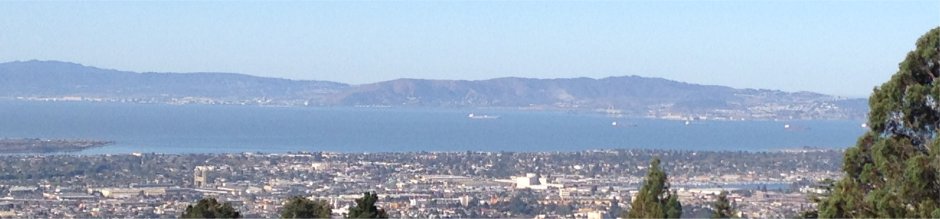
In fact, only a week ago Saturday, Yeong and I and the boys visited one of the boys’ cousins, Angela, at her new place in Foster City, an area along the SF Bay just south of the San Mateo bridge, where, on the flats, a series of canals and small lakes have been excavated, and lined with townhomes. That’s where we rowed a canoe (as I mentioned on Facebook). The location looks up, to the east, at the flight path of incoming planes to SFO, not just 737s, but the big 747s from all around the world. Again, I think if I lived there, I would become preoccupied by learning how to identify the various planes, checking the landing schedules at SFO, and trying to identify specific flights as they arrived…

(Actually, I could do the same from where I live looking out at the Oakland Airport, but I would have to use binoculars.)

I am out of the convention party loop, in part because I’m not staying at the party hotel, the Fairmont, and because as a non-SFWA member and a non-Hugo nominee I am not eligible to get into the really good parties, or even know about them. On the other hand, Locus held a 50th anniversary party last night in the south tower of the Fairmont, but they publicized it so heavily that so many many people showed up and the large suite they’d rented quickly filled to capacity… and they closed the doors, at a point we happened to step out.

The dynamics of conventions have changed for me over the many years since, 30 years ago, I attended the Worldcon in New Orleans in 1988. I’d attended the 1984 Worldcon in Anaheim, not long after abandoning grad school and getting my first industry job, but at that con I was just a spectator. (I have some pics of that con, with 1984 versions of Greg Bear, Connie Willis, and others, that I will try to post here eventually.) In early 1988 I started writing a monthly column for Locus Magazine and by the time of the Worldcon in New Orleans that Fall, I realized these great professional writers whom I admired knew who I was, and had some respect for me (not entirely just because I had liked their stories, but because I wasn’t the kind of reviewer who reflexively liked everything, or only reviewed stories I liked.. I think). The key event that I recall from that entire convention was when I chatted with Connie Willis, I think it was, and she invited me to have lunch with, as it turned out, Kim Stanley Robinson and his wife, Greg Bear (who offered some sage advice about contracts as we ate), James Patrick Kelly, and John Kessel. (I have a journal from that year with a long description of the entire convention.)

Perhaps I was spoiled by that extraordinary lunch in New Orleans; it never got any better. I’m not by nature a party-goer, or a schmoozer, and this year’s Worldcon proved again I’m a terrible meet-up person, the kind of person who’s able to make spontaneous plans for lunch or dinner with someone encountered in the hall after a panel, or in the hotel lobby early evening. After all these decades, my typical convention experience is to have many small passing conversations with professionals (or a very few fannish friends) I know, before they are busy running off to some other engagement. In the early years of my association with Locus Magazine, Charles Brown took me under his arm, inviting me along for meals with various New York editors or big name authors, but only for a time, before he encouraged me to go off on my own, and then in subsequent years would barely speak to me during conventions. Independently of that, for many years there was an annual Locus dinner party at one convention or another, with everyone from Locus, editors and reviewers, attending; but those passed; when Liza came into power she didn’t care. And so in recent years I’ve found myself adrift at conventions, knowing no fans (I’m not a joiner of clubs), having only passing familiarity with many professionals, who always have their own plans to run off to for lunch or dinner. And so the past few conventions I’ve been to, especially in Reno for the Worldcon in 2011, I’ve eaten all my meals, over four or five days, alone, with perhaps only one or two exceptions. In Chicago in 2012, and this weekend, it’s been slightly better because my partner has been there part of the time, someone to have dinner with at least, even thought his interest in science fiction conventions is no more than polite; his being there is a mixed blessing.

\\

I did a Fb post on the Dozois memorial, two days ago, on Friday. Especially on Saturday, perhaps because of single-day memberships, many of the panels were heavily overcrowded. Again and again, I went to a panel I thought interesting, and found the room overcrowded to the point of SRO, Standing Room Only, with people standing along the walls of the room or sitting on the floors. (Supposedly forbidden by fire marshals, but not enforced.)

There was a Harlan Ellison memorial panel on Saturday, the day after the Dozois panel, and the Ellison memorial was so overcrowded that I got a seat only because I sneaked in to the previous panel in that room and sat there for 20 minutes until the Ellison panel began.

The Ellison Memorial was the quintessential convention panel: the audience gathered before a panel consisting of Tom Whitmore (moderator), Robert Silverberg, Chris Barkley (standing in for Adam-Troy Castro, who couldn’t be there), David Gerrold, Christine Valada [widow of the late Len Wein, and project artist of the gallery of b&w photographs of famous SF authors that has been displayed again and again over the decades at the Worldcons], and Nat Segaloff, author of the recent Ellison biography that’s nominated for a Hugo this year [it didn’t win].

And I saw PNH and TNH in the elevator this evening. In 2011, at World Fantasy Con in San Diego, PNH entered an elevator with me, alone, and stared silently at the opposite wall as if I didn’t exist. This time I think he might have made the barest of nods in my direction, without speaking. Progress, perhaps.

\\

I might amend this post as I think of other items.
Posted in Conventions, Personal history | Comments Off on Late Night Notes from the Final Night of This Year’s World Science Fiction Convention