2016 European Tour, Day 8: Barcelona

Monday, 10 October, on our Oceania cruise: Barcelona

The largest of our cruise ports since Lisbon. We did a 4-hour “highlights” bus excursion, part of which was a walking tour, yet saw only a handful of landmarks, beginning with the famous Gaudi basilica, known as Sagrada Familia. (It’s not a cathedral, because Barcelona already had a cathedral when Gaudi started, and there’s only one cathedral per city.) Sagrada Familia is still under construction, after nearly a century, but apparently the pace has accelerated and work on the main structure is expected to be complete by 2026, including a central tower that will be twice the height of any of the existing towers! The structure shows Gaudi’s well-known, primitive grotesque style (which some Americans find resemble Flintstones architecture), and the news for anyone already familiar with it is that a portion on the front, the “Passion façade”, has just been completed in the past couple years — four huge angled pillars, which represent, according to a tour guide we overheard, the tendons of Jesus as he was torn apart by his crucifixion. (How charming.) The entire basilica is a vast instantiation of every religious tradition and belief about Jesus — the birth, the death, the glory — in excruciating detail. To view it is to swing between admiration for its ambition, and disgust for its obsession, to a nonbeliever like me.

Barcelona, we were told, is the fourth largest cruise ship port in the world, the top three being in Florida. It’s also a huge cargo port. And the city and its adjacent environs form a huge view from the hilltop where our bus tour ended, Montjuic. The bus tour took us to the Sagrada Familia, but only for 20 minutes, not long enough to go inside. As it turned out, there are so many tourists anxious to see the inside, that you need to reserve tickets in advance, via the internet, days in advance. (The cruise ship folks might have advised us of that…)

The bus tour took us down the major shopping street, Pg. de Gracia, which was much like the Avenida in Lisbon, but even more grand, wide and lined with shops. We passed by two other well-known Gaudi buildings, one apartments, another commericial. We disembarked from the bus for a walk through the old-town district, one of narrow streets and ancient buildings, as in all these cities, and which took us into the city’s cathedral. Our tour guide was a character; a man who’d grown up in Oklahoma, of a Spanish mother, but who learned the language only after moving the Barcelona as an adult. He spoke fluent Spanish, but in what even I could tell was a flat manner, without the intonation of vowels distinctive of that language. He had an Oklahoma accent.

Our bus tour ending in time for us to lunch on our cruise ship, we returned to shore mid-afternoon, taking a taxi back to Sagrada Familia, only then to discover the ticket situation. We then walked all the way back through the city, down that shopping avenue and through the old town, to the shuttle bus pickup. (We’re getting 15,000 – 20,000 steps each day on this vacation.)

Also notable: a statue of Christopher Columbus, in a large square along the waterfront, famously pointing in the wrong direction.
Posted in Travel | Comments Off on 2016 European Tour, Day 8: Barcelona

2016 European Tour, Day 7: Palma de Mallorca, and Further Sundry Observations

(Running two days behind.)

Sunday, 9 October: Palma de Mallorca. This is the city of Palma on the island of Mallorca, a largish island south of Spain and west of the better known islands of Corsica, Sardinia, and Sicily. Palma, we’re told, expanded considerably in the 1960s, and we saw dozens of high-rise apartment buildings resembling those in Malaga and Alicante; while the rest of the island, which we didn’t see, is apparently traditional and rural. We didn’t take an excursion, though one of those available was a train ride, across the mountains, to an ancient monastery, so we saw only the town.

We took a shuttle bus from the port to a city landmark near the cathedral. Like our previous stops, Palma has a cathedral, a castle on a hill, and an old-town with many tiny narrow streets. A difference here is that the streets aren’t windy, just straight — but intersecting at so many odd angles, we got lost a couple times, even with a map and iPhone, before we got our orientation and found our way to the city center. We had lunch at a sidewalk cafe, an open-faced sandwich and tapas, where the service was slow because there was a lone waiter for the many tourists needing service.

The cathedral in Palma is the largest of any we’ve seen — an enormous structure complete with a rack of flying buttresses — though, alas, closed on Sunday, so we didn’t see the inside. We also visited an “Arabian Baths”, a lone remaining structure dating from when the Muslims dominated the city. It was illuminating: it consists of three rooms, one a circular domed room, with holes in the ceiling, that served as a steam room; and two adjacent rooms, one where you would be soaped down and scrubbed, and a final one where you would take a cold shower to close your pores. It was a facility owned by a wealthy family, and those services were available only to the family and their guests.

Which reminds me of a comment by our guide in Alicante, as we walked through the busy town hall square where two or three wedding parties were gathering: until recent times, residents of the city might take only three baths in their lives: at birth, at death, and for their wedding.

Times change.

We walked the shopping street in the rain, searching souvenir and shoe shops for a particular type of slip-on shoe that Michael’s girlfriend asked us to look for.

Our final stop was the Almudaina Palace, immediately adjacent to the cathedral. Built as an Arab fortress 1000 some years ago, it became a Spanish royal palace in the 14th century. I got a good photo of the interior archways in one of the main rooms.

Palma is apparently a busy tourist destination; the flight path into the airport was over the bay where we docked, and there was an incoming plane roughly every two minutes.

More general notes:

  • Tourism is now a major industry of many of these cities, and I wonder how far this trend will go. We visit these many towns and cities, and think how charming it might be to live there — until realizing, your neighborhood would be overrun by tourists most of the year. Is this the future of all unique places around the globe? On the other hand, perhaps most people live in the suburbs, which might be just as pleasant as the downtowns, and never see the tourists. That’s our situation back in California.
  • In Palma, many of the shops and cafes were indeed closed on Sundays, as we were advised might be true. But not all, at least not in the tourist areas, which meant the entire old town area of the city.
  • There are indeed American fast food restaurants in all these cities — especially McDonald’s and Burger King, and less frequently KFC and Domino’s; and there seems to be one Hard Rock Cafe in each city, at the center of the tourist area.
  • I was going to mention how unexpectedly warm it had been on this trip, October in Europe; we brought mostly long-sleeved shirts and worried about inclement weather. Instead, it was unseasonably warm and sunny the first several days of our trip — until Palma, and again Monday in Barcelona, when it was mostly overcast and sprinkled a bit both days. We even broke out our umbrella in Palma.

Monday we were in Barcelona; today, Tuesday, in Marseille. Notes on those to come.

Posted in Travel | Comments Off on 2016 European Tour, Day 7: Palma de Mallorca, and Further Sundry Observations

2016 European Tour, Day 6: Alicante; Sundry Observations

Saturday, 8 October–

The Spanish port city of Alicante. Short version: another port city, another castle, another cathedral, more old-town narrow streets filled with cafe tables, another bullfighting ring.

We did an excursion here, i.e. a bus tour, and the first stop was the castle on the hill, up a narrow road originally designed for donkeys, as the guide pointed out, and which allows for only one bus at a time, alternating uphill and downhill. This castle isn’t as old as the two we saw in Lisbon and Málaga; its famous moment in history was that it was severely damaged during the Spanish civil war in the 1930s, and sections of it have only been partially rebuilt. We spent over an hour there, then the bus took us through parts of town, the shopping district, past the bullfighting ring (they’re like football stadiums but circular, and increasingly used for other things than bullfights, our guide explained), and then let us off for a walking tour, past the city’s rather plain cathedral, the town center plaza full of wedding ceremonies in preparation and some kind of handball tournament, then leaving us at the esplanade along the waterfront, a palm tree lined walkway decorated with two million tiles in curved patterns, for an hour of free time. We found a cafe on a side street to eat paella and fried sardines. We’ve noticed that on the one hand, the cliche that Europeans don’t do ice in drinks (as Americans do) seems no longer an issue, in our experience so far; they provide ice with soda or cold tea without being asked. On the other hand, we still have to beg for the bill (check), even when we’re on a deadline to catch our tour bus; you’d think the local vendors, especially in tourist areas, would be a bit more attentive in that regard.

Now I have several observations about our whole trip that I’ve neglected to mention so far — I’ve been collecting them in my iPhones notes.

  • I should have mentioned that the historical significance of our first two ports, Cádiz and Málaga, is that they were the westernmost settlements of the Phoenicians, the first great civilization to sail the Mediterranean and establish an empire, albeit commercial rather than militaristic; and this hundreds of years before the Romans came along and took over those settlements and renamed them. Alicante, in contrast, has no pre-Roman history.
  • Cod is everywhere on the Portuguese menus but, one waiter explained to us, it is not a local fish. It’s all imported from Norway.
  • The cars they drive: In Portugal and in Spain, they’re mostly German and French. Lots of VWs, lots of BMWs (though smaller models, nothing larger than a 3 series), quite a few Mercedes, even a few Audis. Then the French: Citroen and Peugeot. Japanese cars, Toyotas and Hondas, though usually models you don’t see in the US. Virtually no American cars, though I have seen a couple Fords, again models you don’t see in the US. And then makes and models unfamiliar to me: Toledo, Clio, Ibiza, Skoda. I could look them up.
  • In Portugal, there’s an item on every restaurant tab for “couvert”. It’s a charge for the bread, olives, and whatnot that would be ‘complementary’ anywhere else.
  • In Málaga, but no other city we’ve been to, the stoplight pedestrian signals display an animated walking man when it first turns green. There’s also a count-down counter in seconds. As the counter passes 30 or so, the walking man animation starts running. When it gets down to 10 seconds or so, the animation runs really fast. When it turns red, the counter resets and counts down the red light.
  • Especially in Málaga, all the young men have beards.
  • Tapas, we’ve been told, is a term that originally described complementary pastries set on a plate that covered your drink.
  • The sommelier’s story: Anyone who’s been on a cruise probably knows about the work conditions of the staff — working round the clock for months or years without a break. On our ship, the first night we had dinner in the Grand Dining Room, and ordered wine, a sommelier came to help us choose. He’s a young man with a red beard, a maroon vest, and big chain around his neck that signifies his status. I asked casually about how long he’d been with the ship, and he explained that he’s on his third contract, how each contract is for six months, and how he never has a chance to leave the boat — like living in a prison, he explained cheerfully, and then went on to service other guests.
     
    We saw him again two nights later, and he remembered our stateroom number and the bottle of wine we hadn’t finished (a Spanish white) and had saved for our next meal there. (A useful function of cruise ships!) We’d also noticed how the dining room hostess had remembered us, and complemented him on his memory. He explained that he had trained as a classical pianist, and was good at memorizing scores.

I’m posting this Sunday morning, local time, while we do our own laundry in the provided laundry room. We’re in Palma, on the island of Mallorca, and will head out in an hour or two to explore on our own.

Posted in Travel | Comments Off on 2016 European Tour, Day 6: Alicante; Sundry Observations

2016 European Tour, Days 4-5: On the Boat; Cádiz; Málaga

Wednesday, 5 October: Last morning in Lisbon, we found a sidewalk cafe for croissants and coffee. I did a bit of computer work, then we checked out of the hotel and taxied to the cruise ship.

We’re on an Oceania cruise this time; our two previous cruises, to Alaska in 2008 and Hawaii in 2010, were on Norwegian. When we planned this cruise I’d thought the Oceania ships were somewhat smaller and more exclusive. Turns out this Oceania ship, Marina, is virtually identical to the Norwegian ships we’ve been on; apparently, I’ve gathered, the two companies are the same at some level. The difference between those earlier cruises and this one is that this is geared toward adults, without activities or events for children, and so there are virtually no children, or hardly couples under 40, in view. It’s a boatload of geriatrics…

The ship is well-furnished, with the usual buffets and specialty restaurants, bars, a small casino, a spa and workout area, and a quite decent library. The library has the usual array of bestsellers, but also shelves of classics, travel books, quite a bit of fiction, with a smattering of SF. There are even two Greg Egan books! (OCEANIC and ZENDEGI.) And recent nonfiction from my own shelves, by Shermer, Wilczek, Mlodinow, Hidalgo. The ship also has a DVD library with several hundred selections.

We booked with a promotional package that includes free wi-fi — but it turns out the free wi-fi applies to only one device *at a time*. Between us, Yeong and I have five devices, two laptops and three iPhones. So we alternate, which can be irritating. An extra paid account runs almost $1/minute.

We’re in a different port every day on this cruise.

Thursday, 6 October, was Cádiz, a Spanish port city west of Gibraltar, that sits on a spit of land shaped like a fishhook, once an island but now connected by narrow peninsula to the mainland. We booked a “highlights of” excursion that drove us around the area in a bus before we disembarked to walk among the narrow streets, browsing through the city museum, and being set free to do some shopping. The town has its cathedral, ruins of a Roman theater, still being excavated, and the familiar cobblestone streets.

Friday, today the 7th, we’re in Málaga, note the accent on the first syllable, a larger port city east of Gibraltar — and since we sailed overnight, we had no chance to see the big rock as we cruised by. We didn’t book an excursion here; we wandered the city on our own, with a map and advice from an advisor on the boat. The city is famous as Picasso’s birthplace, and has a decent if small Picasso museum. As in Lisbon there’s a castle, the Castle of Gibralfaro, and below it a large palatial fortification called the Alcazaba, a vast maze of stairs, open courtyards, and enclosed rooms running half-way up the hill — though without any way out at the top to continue on to the castle! We had to descend through the maze and find a parallel road from the bottom to make the not inconsiderable climb up to the castle (only to discover a bus can take you were via a back road). Gibralfaro is larger than the Lisbon castle if more of a shell, without much detail, but offers spectacular views of the coast and city in every direction.

And Malaga has a cathedral, and a roman theater (in much better shape than the one in Cadiz) and narrow streets full of shops and sidewalk dining, and street vendors selling almonds. We had lunch in a crowded plaza across from the theater and beneath the Alcazaba. (Note again: a tiny cafe at the castle called itself a bar and serves hard liquor; the sidewalk lunch spot had a considerable bar, outside by the tables and umbrellas.)

We changed time zones between Portugal and Spain, losing an hour. Sunrise this morning was at 8:30! Maybe that’s one reason people rise late, lunch late, and dine late…

Posted in Uncategorized | Comments Off on 2016 European Tour, Days 4-5: On the Boat; Cádiz; Málaga

2016 European Tour, Day 3: Lisbon: The Tour, the Tower, the Castle, and Dinner

Tuesday 4 October. We had an extensive breakfast buffet at the hotel to get started. I mentioned last time the cocktail stand at the giant food court– We’ve also seen various cocktail kiosks along the riverfront and the avenue near our hotel. Gin and tonic to go! Never seen such things in other European cities, let alone in the US. At the breakfast buffet in the hotel, there was a bottle of sparkling wine, and champagne flutes, for the taking, along with the usual spread of cold cuts, scrambled eggs, pastries, and juices.

It’s a tourism cliche, but taking a bus tour is actually a decent way to get an idea of the layout of an unfamiliar city, I think. We took a Yellow Bus tour, the kind where your ticket is good for 48 hours and you can get off and on any bus along a particular route as often as you like. Our route took us north of the Avenida where we’re staying, past various museums, department stores, government facilities, and parks, then eventually westward along the river to the Belém Tower, a 16th century tower built as a fortification at the mouth of the Tagus River. We climbed narrow spiral staircases to the top level.

Leaving the tour bus around 4pm, we headed up into the windy streets of the Alfama district, in search of the brown castle we could see from the avenue below. It was tricky to find, since the iPhone maps failed in the hills; eventually we just followed the other tourists. The Castelo de São Jorge was built in the 11th century during a time when the city was run by the Moors, or Arabs (depending on which plaque you read), and the site has been occupied as far back as 600 BC. It’s the most castly castle I ever remember being in, complete with turrets and ramparts and steep stone steps and inner, now empty, courtyards. There is also a museum of artifacts there, some gardens, and a closed archaeological site.

The final highlight of the day was to venture west from our avenue back into the Bairro Alto, another older area of tiny narrow streets (though not so windy as in Alfama), packed with dozens of bars and restaurants with seating outside on the cobblestones. We tracked down a place called Põe-Te Na Bicha, a tiny place with red walls in a building whose interior stone arches suggested a long history. The place was still half empty, but apparently reserved, when we finished at 9:30, which reminds me of another general observation about Lisbon: late to rise, late to lunch, late to dine, apparently.

Posted in Travel | Comments Off on 2016 European Tour, Day 3: Lisbon: The Tour, the Tower, the Castle, and Dinner

2016 European Tour Days 1-2: Lisbon

A two-day start considering only a couple hours fitful sleep on the plane overnight. We flew out of SFO Sunday morning, changed in Philadelphia, and landed Lisbon about 9am local time (1am West Coast time) on Monday. (I read Ian McEwan’s NUTSHELL on the plane; clever and trenchant. Parts I’ll quote here later.) Clear and sunny. Disembarked down steps on the tarmac; a tram ride; an hour’s lengthy line through passport control; then a taxi into the crowded city center. We’re in a Bessa Hotel on the main avenue, Liberdade, a hotel recently remodeled, very chic and high-tech past the point of convenience — it took us repeated attempts to figure out how to control the temperature in the room.

Lisbon impressions: cobblestone streets and sidewalks everywhere. Sunny and warm. This broad avenue, to the NW of city center, is a transition from tourist places to the south and high-end shopping to the north (Gucci, Versace, Prada, etc. shops a few blocks from our hotel). Pedestrian traffic a mix of office workers, lady shoppers, and tourists, where the heavyset ones in shorts with cameras around their necks seem to be the Americans. French, German tourists; only a few Asians. The locals smoke a lot. Most everyone understands at least a little English.

Restaurants near the hotel didn’t open for lunch until 12:30. We had a nice meal at Ad Lib — including Entrecôte, a cut of beef that seems to be on every menu here, along with cod.

Then a one-hour nap, to tide us over.

Then walking to the river, through the tourist streets, to the recently renovated riverfront, where the cruise ships dock, and alongside the huge Praça do Comércio (Wikipedia has a good overhead photo), a city square with a huge memorial statue in the middle, surrounded by government buildings.

From there we strolled west, into the setting sun, views of a Golden Gate-like bridge in the distance, and the Cristo-Rei monument on the southern bank of the Tagus River (resembling the iconic Rio de Janeiro monument), until we reached the Mercado da Ribeira, a huge indoor market/food court, full of booths selling seafood and Portuguese specialties and sweets, and even cocktails from a central stand. We had tapas and oysters and a glass of wine.

Then back north, up the Rua do Alecrim, topping a hill and skirting the trendy Bairro Alto district (maybe we’ll get back there tonight), until we walked down a descending tram path back to our Avenida. Another little rest, then out again, determined to stay awake to the current day/night schedule, to hunt down a power converter (the hotel was out), and dine at a tourist place for clams and octopus.

21442 steps on the pedometer from our first full day.

Then we went to sleep at 8:30 and slept nearly 12 hours.

Today there is a castle looming on a nearby hill I think we need to check out.

Posted in Travel | Comments Off on 2016 European Tour Days 1-2: Lisbon

Links and Comments: Cognitive Biases, Trump, and Reality

A recurrent theme: human mental habits do not perceive reality accurately.

Here on Huffington Post is a huge circular graph, a Cognitive Bias Codex, grouped into four quadrants and 20 ‘buckets’. Here’s a link to an enlarged version of the graph.

From the HP article:

“You look at this overwhelming array of cognitive biases and distortions, and realize how there are so many things that come between us and objective reality,” Manoogian told The Huffington Post. “One of the most overwhelming things to me that came out of this project is humility.”

\\

And via another Facebook post, here’s an essay by the creator of that chart: You are almost definitely not living in reality because your brain doesn’t want you to, with a breakdown of his categories and links to Wikipedia explanations.

Somewhere in here, surely, is an explanation for Donald Trump.

\\

And certainly for the common perception that the world, and the US is so much worse off than before. Nicholas Kristof had a good column the other day, The Best News You Don’t Know:

The world is a mess, with billions of people locked in inescapable cycles of war, famine and poverty, with more children than ever perishing from hunger, disease and violence.

That’s about the only thing Americans agree on; we’re polarized about all else. But several polls have found that about 9 out of 10 Americans believe that global poverty has worsened or stayed the same over the last 20 years.

Fortunately, the one point Americans agree on is dead wrong.

Posted in Uncategorized | Comments Off on Links and Comments: Cognitive Biases, Trump, and Reality

Obduction, 2

Rather more quickly than I expected, I am back to report completing Obduction, the new computer game from the makers of the Myst franchise, about which I previously blogged, for reasons that slightly soured me on the entire game. I was closer to the end than I’d thought. Indeed, gameplay implied that the central world, Hunrath, had access to three additional worlds, all of which had to be ‘connected’ in order to find the solution about the abducted humans from, mostly late 19th and early 20th century Arizona. This central plus three or four additional worlds has been the structure of all the Myst games.

But the third of the external worlds in Obduction turned out to be trivial, not a world to explore and figure out, just a world to enter to ‘connect’ another Tree and enable the game’s completion. After finishing I resorted to skimming fan sites and other sites via Google, including Reddit forums, and saw a couple comments suggesting that the creators — who crowd-funded the entire project — ran out of money and cut development of that third external world short.

I was also slightly peeved by something I could not figure out yesterday morning, and which, ironically considering my previous post, I resorted to searching online for a hint. Turns out the device I couldn’t figure out was a red herring, and perhaps I might have detected that with better graphics, since apparently some wording on that device, suitably translated, suggested its spoof existence.

The game, like all the earlier Myst games, has multiple endings, though not in quite the same way as those. The original Myst involved two brothers competing for your loyalty; Riven, the best of the Myst games, involved an encounter with a diabolical character at the end offering you various choices, which entailed your death, or a couple better resolutions. Later games worked similarly, in that they involved characters and decisions by the player about what to do… and resulted in ‘good’ or ‘bad’ endings, usually more than two.

Obduction has three endings, and there is character interaction of a sort, but not in a way as strong as all the earlier Myst games. (There is, by the way, explicit connection in Obduction to the Myst games, via a couple books in the Mayor’s bedroom that we can pick up and examine.) Again, these options feel like an unrealized potential.

So overall– a bit disappointed, but still a fan of these world-immersive puzzle games. If there is an Obduction 2, I’m there; yet I almost wish for an expanded completion of Obduction itself, which would be better.

Posted in Games, Uncategorized | Comments Off on Obduction, 2

Obduction, 1

For anyone who’s wondered about my lack of posts here lately — it’s because I’m recovering from my obsession with the game The Witness by becoming obsessed with the new Myst-like game Obduction, which I’ve been preoccupied with since its release on August 24th. Interrupted by weekends, a business trip to SoCal, time each day for Locus Online posts, and now actual paid work from home for my old company.

As I’ve said, I’m not a regular player of video games, and it’s unprecedented in my life for there to be two games that interest me in one year. These games are beautiful and compelling in many ways, but the downside is that everything else I might be doing with my retirement ‘free time’ — project work, reading, scanning old family photos — moves to the back burner. I need to finish this game asap, in order to get back to those productive endeavors. Life is short.

Obduction is much like the Myst games, including Uru, in that in entails a ‘world’ on which the player first appears, followed by access to three or four additional worlds, with links among them, in order to complete some overall mission. Obduction is more sf-nal than the Myst games; the premise is that aliens of some kind have abducted humans from various times in history, and plopped them into some self-enclosed world, or cell, called Hunrath. But when the player arrives in Hunrath, everyone is gone, the place is deserted — so the game play involves (again typically) turning on the power to access various devices, open various doors, and subsequently access these several other worlds, in order to figure out where these abducted people have gone, and how to save them.

All with great graphics, reportedly. As I said earlier, games like these are designed for high-end PC or gaming systems at any one time, and I’m always rather behind the curve. To play this game on my several-years’-old average PC, I have all the graphics settings set on low, and still the game hangs for minutes at a time, when trying to move too quickly. Also, all the games in the Myst franchise are notorious for gameplay that involves back-and-forth traffic of some sort. In this game, it’s required to ‘teleport’ from one world to another multiple times, and each teleport takes anywhere from 2 to 15 minutes! I gather this is an issue of loading content from the harddrive into the game, rather than repeatedly downloading content from some server — Obduction is hosted by Steam — but even so, I can’t understand why these transitions take so g*d* long.

So I usually have the game running in the background, and do something productive on another computer in the foreground.

I think today I have finished the third of the four worlds in this game. I have not had to consult online walkthroughs since the very beginning, for hints, though I do check some of the walkthroughs, of areas I’ve already finished, just to see if I’ve missed anything. (The first of these I saw was so horribly written I could hardly tell the writer had been to the places I’d visited. A second one is better.) As of now, I can’t find a walkthrough that’s gone past what I’ve completed by myself.

However, I am now at a new impasse — having completed the third world this morning, I now have no idea how to access the fourth. I reach such an impasse about once a day of gameplay, and generally I go to lunch, or sleep over night, and when I resume it occurs to me…. did you check that path? Did you return to the area you haven’t been back to since the beginning? What was the point of that elevator call-button, if not to use it at some point? And so on. And something occurs to me, and I move on, without having to resort to online hints.

So I expect tomorrow morning, something will occur to me, about where that fourth world can be accessed. I need to find it soon, so I can get back to my various sorts of work.

I’ll have at least one later post, Obduction 2, to summarize what I think about the game once I’ve finished it.

Posted in Games | Comments Off on Obduction, 1

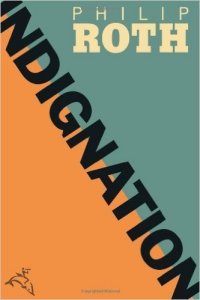
Philip Roth, INDIGNATION

I saw the film Indignation a couple weeks ago, and here’s what I posted about it on Facebook:

—
We saw the film Indignation today, based on a short Philip Roth novel that I’ve not read. It’s about a Jewish boy from Newark who attends a conservative Christian college in Winesburg, Ohio, in 1951, to escape an overbearing father and the dangers of the Korean war. Being based on a novel, the story isn’t any kind of ordinary Hollywood melodrama or romance, and the tension until the end is whether this story will end happily, tragically, or in a mixture of both — much like life. And to contemplate the meaning the title. It’s the first film directed by James Schamus, well-known as a producer for dozens of films from The Ice Storm to Brokeback Mountain. The star, Logan Lerman, is excellent, and the story features a college dean played by Tracy Letts who is surely the most subtly sadistic authority figure in movies since Nurse Ratched. Recommended! If you see it, pay attention to the first two scenes; the story eventually circles around to explain their significance.
—

Since then I discovered I had a copy of this Philip Roth novel (in the overstock I’d put into the garage!), and read it last week. The film adaptation is very faithful to the extent of reproducing many scenes and dialogue exactly from the book. (And I commend actor Tracy Letts for his portrayal of that “subtly sadistic authority figure” — who is by the way a playwright) At the same time, the film version omits a couple themes (e.g. about one of Marc’s roommates being homosexual), and completely omits a key scene at the end of the novel, about an infamous “panty raid” at this Ohio university, triggered by a snowfall and snowball fight. And there is no epilogue about Olivia being in an old-folks’-home, as in the film.

And I appreciate the novel’s, and film’s, commitment to the character’s atheism; in both, he quotes passages from Bertrand Russell’s Why I Am Not a Christian, that dismisses the common arguments for the existence of a god. A book that was also very influential in my early life.

What the novel does that the film does not is… tell us that the narrator — SPOILER! — is already dead, and that he is somehow revisiting the memories of his life. In Roth’s novel there is an extraordinary passage beginning on page 54 (of a 233 page book):

And even dead, as I am and have been for I don’t know how long, I try to reconstruct the mores that reigned over that campus and to recapitulate the troubled efforts to elude those mores that fostered the series of mishaps ending in my death at the age of nineteen.
…
Is that what eternity is for, to muck over a lifetime’s minutiae? Who could have imagined that one would have forever to remember each moment of life down to its tiniest component? Or can it be that this is merely the afterlife that is mine, and as each life is unique, so too is each afterlife, each an imperishable fingerprint of an afterlife unlike anyline else’s?

I think the film transformed this theme very effectively — via those opening and closing shots I noted in my Fb post. I think this film should get nominations, in whatever awards apply, for effective translation of a source to a screenplay.

On final note… the book captures its title, “indignation”, in scenes in which the narrator resents the forced attendance to chapel, by singing to himself a Chinese anthem, and replacing a passage by that word.

This is the best kind of literary fiction. I’ve been deeply impressed by every Philip Roth novel I’ve read. Why hasn’t Philip Roth won a Nobel Prize?

Posted in Book Notes | Comments Off on Philip Roth, INDIGNATION