Parents and Children

On Sunday I posted this link and comment on Facebook:

Major New Study Finds Kids Raised by Same-Sex Couples Are ‘Healthier and Happier’

Contrary to the right-wing funded studies in the US, such as the debunked Regnerus study, that have financing and prejudice to conclude otherwise.

Of course, all scientific studies are provisional until confirmed by follow-ups, but I find this conclusion plausible, for this reason: gay couples who have children go to considerable effort (and sometimes expense) to do so. They do not take their children for granted. They do not get pregnant by accident. There is certainly a proportion of straight couples who cannot say the same. And that contrast is likely the difference in these results.


Today, Monday, there have been numerous other online articles covering this study, including this one on Slate by Mark Joseph Stern, who identifies another factor that might explain the results: that gay parents are not as constrained as straight parents are by rigid gender roles.

These reactionaries don’t care how much your silly peer-reviewed “studies” contradict their anti-gay views, since “the factors that really matter” are their own breathtakingly antiquated (and totally unscientific) views of gender stereotypes.

And Stern goes on to expose an irony: that children of gay parents are not disadvantaged by their parents; they are harmed when their interaction with the outside world exposes them to the animus of conservatives, who debase their families.

Gay parents don’t disadvantage their children—but conservatives’ smear campaigns against gay parents do. This insidious harming of children at the hands of conservatives is pretty easy to understand. Anti-gay activists debase gay families as a whole by opposing equal rights for same-sex couples, singling them out for disfavored treatment and thus marking them as inferior or defective. Children begin to wonder why their parents are subject to such opprobrium and legal impediments, and translate legal inequality into moral deficiency. Their status as children of gay parents hangs like an albatross around their necks, impairing healthy development and fostering grief, anger, and depression.

Note the Top Comment block, which echoes my first reaction: that gay couples value their kids because they (virtually) never have them by accident….

If conservatives were really concerned about *the children* — as so many arguments against same-sex marriage focus on — then they should lighten up and accept the reality that gay people do have children, have always had children — despite laws forbidding the legal recognition of their own relationships — and are as capable of raising their children as anyone.

My own contribution to this controversy is this: It’s not about whether the parents are of the same sex or not. It’s about there being two of them. An infant or child learns about the world through the interaction with those around them. Does an infant, toddler, or child, know or care about gender? The range of personality types among males and females is so broad that they overlap substantially; it’s magical thinking that a child must be exposed to some one iconic ‘male’ and another iconic ‘female’, in order to properly develop. (Added 8jul14: And as for sex itself– the last thing a child wants to think about is their parents having sex. This has always been true, about traditionally straight parents. Kids want to discover this for themselves. In this context, it doesn’t matter whether their parents are straight or gay — kids don’t dwell on how their parents have sex, no way, no matter.)

Two parents are better than one, because that exposes the child to multiple dimensions of human interaction. And for that matter, exposure to *more* adults in early childhood is even better, I would think. (Though it’s the two who have authority over the child who matter the most.)


A final irony, on a related subject but which I don’t think I’ve had a chance to mention on this blog.

Being gay may not be strictly genetic, but there is plenty of evidence that there is a genetic component. (There is much fascinating research about why this must be so.)

Throughout much of history (at least American history), gay relationships have not been recognized, and have even been criminalized.

This has obliged many gay people to conform to societal standards and marry people the opposite sex. And have children. (I have an uncle who did exactly this.)

This propagates their genes. To the extent that homosexuality is genetically based, this introduces into the next generation a propensity to be gay.

If conservatives who disapprove of gays, in their rigid biologically-compelled view of the world in which propagation of the species, rather than individual human happiness, is the ultimate goal, want to make gays go away — then they should *approve* of gay marriage. To the extent that that reduces the number of straight marriages that result in children (that pass on the genetic potential toward homosexuality), gay marriage would reduce the incidence of homosexuality in each generation.

It’s the disapproval of gay relationships, and the social obligation toward heterosexual relationships, that has promulgated the gay gene, such as it is.

I’ve had this thought for some years, and never seen it expressed anywhere. Ironically, these days, in our advanced technological civilization, this argument is being undercut by advanced fertilization technology. Because it seems — and I have commented about this before — that being gay is entirely independent of the desire to have children. And now that these fertilization and surrogacy technologies are available, more and more of the gays are having children, one way or another. So there.

Posted in Culture, The Gays | Comments Off on Parents and Children

We’ll ride on the rain… we’ll worship the wind

We watched Pedro Almodovar’s Law of Desire the other night, a 1987 film possibly set earlier, since there is a scene in which a famous 1960s pop song, “If You Go Away”, is sung [in Spanish] to a stage performance. This triggered a memory: that song is one that imprinted deeply on me, at age 10 or 15, and hearing it again, now in several versions on the web, it doesn’t strike me as corny or dated, but still quite beautiful… yearning, hopeful at the same time, though ultimately heartbreaking.

If you go away, on this summer day
then you might as well take the sun away
All the birds that flew in the summer sky,
When our love was new and our hearts were high;
When the day was young and the night was long,
And the moon stood still for the night bird’s song.
If you go away, if you go away, if you go away.

But which version did I hear? Which was the most famous? YouTube has dozens of recordings, and Wikipedia has this entry about the song and some of its most notable cover versions. (It was written by French composer Jacques Brel, and translated into English by Rod McKuen.)

But if you stay, I’ll make you a day
Like no day has been, or will be again
We’ll sail the sun, we’ll ride on the rain
We’ll talk to the trees, we’ll worship the wind.

Then if you go, I’ll understand,
Leave me just enough love to fill up my hand,
If you go away, if you go away, if you go away.

One of most popular according to Wikipedia was by Jack Jones — and this one has a nice video:

This doesn’t quite strike the exact memory chord, though I’m pretty sure the version I heard so many times as a kid was by a male voice. Wikipedia OTOH indicates that one female, Damito Jones, placed highest on the charts with it.

If you go away, as I know you will,
you must tell the world to stop turning
Till you return again,
if you ever do,
for what good is love without loving you
Can I tell you now, as you turn to go,
I’ll be dying slowly till the next hello,
If you go away, if you go away, if you go away.

Mm, I don’t think that’s what I heard over my parents’ radio in the mid or late ’60s.

But everyone from Nina Simone to Glen Campbell to Neil Diamond to Julio Iglesias has covered it.

But if you stay, I’ll make you a night
Like no night has been, or will be again.
I’ll sail on your smile, I’ll ride on your touch,
I’ll talk to your eyes that I love so much.

But if you go, go, I won’t cry,
Though the good is gone from the word goodbye,
If you go away, if you go away, if you go away.

Which version imprinted on me? Don’t know. In any event, Frank Sinatra, as always, does the song credit… if a tad sluggishly.

If you go away, as I know you must,
There’ll be nothing left in the world to trust,
Just an empty room, full of empty space,
Like the empty look I see on your face.

I’d have been the shadow of your shadow
If I thought it might have kept me by your side.
If you go away, if you go away, if you go away.

[updated 9jul14 with complete, rather than sampled, lyrics. though different versions of the song have slightly differently rearranged lyrics.]

Posted in Music, Personal history | Comments Off on We’ll ride on the rain… we’ll worship the wind

Grayling on Ehrenreich

Yet another review of a review.

There has been discussion on various sites in recent weeks, including Andrew Sullivan’s The Dish, of a recent book by staunch unbeliever Barbara Ehrenreich, Living with a Wild God: A Nonbeliever’s Search for the Truth about Everything. The book is about an experience she had during adolescence that she now perceives as some sort of mystical experience, outside rational thinking.

I haven’t read this book or anything earlier by Ehrenreich, but I suspect I would respond as does A.C. Grayling, in the Los Angeles Review of Books (via)

Ehrenreich is well known for her atheism as well as her other publicly-avowed stances. As a highly talented writer and a powerful advocate for social justice causes, she has a standing in American life that will make this spiritual — or quasi-religious — turn a subject for debate. The explanation she gives of what she means by her “animism” is only sketchily offered, for the reason mentioned: the difficulty of expressing the inexpressible. All those who report having the kind of experiences she has had have had to resort to poetry, allusion, hand-waving, or metaphor to convey what these experiences are like.

…

We should always remember that the mind is a great player of tricks: one can induce Ehrenreich-type experiences in the lab, or by popping certain kinds of pills, no Other and no Mystery required. It is accordingly a surprise and — let it be confessed — a disappointment to find so doughty a heroine of her causes sliding away from Athens to — well, if not to Jerusalem than to some other Eastern locus of the ineffable, the unnamable, and the smoky.

I repeat: it is a disappointment when a rational person’s thinking about the unusual, the unexpected, the extraordinary, the amazing experiences of transcendence and unity that many of us have at heightened moments of life, suffers a declension into quasi-religious or supernaturalistic vagueness. The human brain is complicated enough to produce all these experiences from its own resources; we need no fairies in the garden to explain how roses bloom.

All that said, Grayling concludes,

That disappointment registered, my admiration for Barbara Ehrenreich the author and campaigner remains, as it does for the book itself: it is so beautifully written, so full of pungent insights on matters other than a putative Other, and so fascinating as a portrait of an intense and hypersensitive mind, especially in its youth, that it must surely count as one of the best reads of the year.

Posted in Book Notes, Religion, Thinking | Comments Off on Grayling on Ehrenreich

Prothero on The Unpersuadables

Another review of a review: Donald Prothero (a geology professor at Occidental College in LA, and a lecturer at Caltech), has a review of a new book by Will Storr, The Unpersuadables: Adventures with the Enemies of Science, that develops the argument of recent months that evidence simply will not dissuade true believers from any number of dogmatic beliefs, from UFOs to homeopathy to Holocaust denialism to creationism.

According to the review, the author spends considerable time interviewing and hanging out with deniers of various sorts, letting them speak, and eventually – but let me quote his words:

He describes the events in a non-judgmental way, and lets the people speak for themselves—and hang themselves with their own words, especially as his questions lead them to say weirder and weirder things. This is especially apparent as he spends many days with Holocaust denier David Irving and his pack of neo-Nazis, watching them delude themselves as they spout one racist statement after another—and then they claim they’re not prejudiced or anti-Semitic.

And the author arrives at the current understanding that

As many other people have shown, despite our best efforts our brains are not “objective” or “rational” in any way. Instead, we form a “belief network” around ourselves, and use confirmation bias to resolve the inherit conflict caused by the cognitive dissonance of what we want to be true, and what the world shows us. We easily fall for anecdotal thinking.

What makes this review notable is that reviewer thinks the author goes a bit too far; the author is skeptical of the skeptics. The reviewer quotes the author:

His monoculture we would have, if the hard rationalists had their way, would be a deathly thing. So bring on the psychics, bring on the alien abductees, bring on the two John Lennons—bring on a hundred of them. Christians or no, there will be tribalism. Televangelists or no, there will be scoundrels. It is not religion or fake mystics that create these problems, it is being human.

Then everything is relative to personal preference and nothing is true? I am on the side of the reviewer, who concludes,

Storr seems to be saying that since no individual has a clear view of the world, therefore there is no reality out there, and any truth or view is as good as the next. Unfortunately, he misses a key point here. Yes, individual scientists are not perfect, and have a viewpoint limited by their backgrounds and assumptions. Yes, small communities of scientists could be wrong. But Storr never discusses the real reason that he (and most people in the world) accept that there is a scientific reality outside of us: because it works. Science is the only method we know to get past individual blind spots, and subject our cherished ideas to the harsh gantlet of peer-review. Scientific ideas are unlike anything that an individual believes, because they are scrutinized and tested and criticized by the rest of the scientific community. Scientific ideas lead to predictions about the real world that can be tested, which would not be true if the scientific world were only a construct of our brains (as some allege). Only if ideas survive this intense testing phase do they eventually become part of our canon of “scientific reality”—and thanks to that scientific reality, we can launch spacecraft into the unknown and predict what they will do; we can conquer most diseases and physical ailments; we can have technology and inventions that were not possible before the scientific revolution, and our world is vastly different since then.

Science is the way to overcome individual human imperfection. Because (again quoting the author):

We are all creatures of illusion. We are made out of stories. From the heretics to the Skeptics, we are all lost in our own secret worlds.

Except for those willing, and having demonstrated, that they are capable of changing their minds, because evidence. Says I.

Posted in Book Notes, Lunacy, Religion, Science | Comments Off on Prothero on The Unpersuadables

Rereading Gene Wolfe’s “The Fifth Head of Cerberus”

Gene Wolfe is one of the most intelligent, albeit ambiguous in effect, writers in science fiction (and fantasy). He was an industrial engineer, famously for having partly invented the machine that made Pringle potato chips, before he began writing in the late 1960s. He had early successes, including the short story “The Island of Doctor Death and Other Stories” in 1970, which famously lost the Nebula Award to “no award”. (You can look it up.)


Aside from that story and a couple others, Wolfe’s earliest big hit was the novella “The Fifth Head of Cerberus”, published in 1972, in the anthology Orbit 10, edited by Damon Knight. Wolfe later that year published a “novel”, The Fifth Head of Cerberus [cover image and link at right], which added two additional novellas to the first one, associated stories that played off the first one to achieve a more complex vision. Not exactly a novel; a trilogy of novellas that provided different perspectives on a common theme and subject.

The original novella, by itself, is still regarded as one of the best SF novellas of all time. As I’m reading through classic short fiction these past few months, it’s fascinating to revisit this story (some 40 years since I first read it!), since it both challenges and appeals to my current concerns, on this blog.

Here’s a rough summary [spoiler alerts, obviously].

The story is a first-person account by a young boy, whose name is avoided, who lives with his brother David in a big house in the city of Port-Mimizon, on a planet that has a sister planet, Sainte Anne. The opening line:

When I was a boy my brother David and I had to go to bed early whether we were sleepy or not.

Wolfe is a sophisticated, well-read writer, and this opening, as many have noted, is an obvious allusion to the opening of Marcel Proust’s A Remembrance of Things Past [in the traditional English translation]. Which isn’t gratuitous; it’s a nod to a theme in this story about memory.

The narrator and his brother have a tutor, Mr. Million, a robot who glides on wheels and whose screen displays a face like the narrator’s father’s. It develops that this large house is a brothel.

Wolfe’s narrative is brilliant, as it is in so many other stories, in that the main character describes his surroundings at face value, leaving it up to the reader to understand, or not, and make value judgments, or not.

This technique recurs through most if not all of his works, IIRC; a first person narrator, or at least central point of view character, from whose point of view we are told the story. And almost always, there is an *underlying* story, a ‘real’ story, that the pov character does not necessarily understand, but which Wolfe counts on the reader to being able to deduce.

Some readers have seen this as trickery, but today as I write, I think perhaps this is a very honest way of telling a story. Because all stories are about the experience of one person in the life that they lead. The ‘third person omniscient’ narrative of many authors is in some sense a fantasy; it does not replicate the real world experience of actual people.

It is difficult to find a paragraph in any of Wolfe’s works that is not both precise and poetic. I will page through this story and quote a paragraph almost at random:

This, then, was my world at seven of our world’s long years, and perhaps for half a year beyond. Most of my days were spent in the little classroom over which Mr Million presided, and my evenings in the dormitory where David and I played and fought in total silence. They were varied by the trips to the library. I have described or, very rarely, elsewhere, I pushed aside the leaves of the silver trumpet vine occasionally to watch the girls and their benefactors in the court below, or heard their talk drifting down from the roof garden, but the things they did and talked of were of no great interest to me. I knew that the tall, hatchet-faced man who ruled our house and was called “Maitre” by the girls and servants was my father. I had known for as long as I could remember that there was somewhere a fearsome woman — the servants were in terror of her — called “Madame”, but that she was neither my mother nor David’s, nor my father’s wife.

The narrator is summoned to a series of late-night interviews with his otherwise remote father, who dubs him “Number Five”, and who subjects him to drug-induced episodes to impress the father’s own episodes of memory. He meets his aunt, the “Madame” of the establishment, who tells him about “Veil’s Hypothesis”, the idea that the aboriginal natives of the sister planet Sainte Anne are perhaps shapeshifters, who killed off the earliest human settlers on these planets and took their places. (This is a reality-check hypothesis worthy of Philip K. Dick. What is real? How do we know who we really are?)

And then there is a visitor to the house, an anthropologist, Dr. Marsch, supposedly from Earth, who has come to investigate the rumor about the Sainte Anne aborigines. Near the end of the novella, the narrator accuses Marsch of being an abo from Sainte Anne–an imposter.

The reveal [again, spoiler alert], is that the narrator is a clone of his father, in fact the fifth generation clone of a series of ancestors [thus the title], generated to understand his family’s place in this society.

But why? For what purpose? When I first read this story, some 40 years ago (I have not re-read it again until now), I was left with the impression that the clone/guardian theme was in place to *protect* the human society on this planet from the aboriginal danger on Sainte Anne. Rereading it now, I don’t think that idea is in the text. Rather, I gather from various commentaries, the idea of the abos having replace humanity, or not, is deliberately left ambiguous. Which may or may not be clarified by the two subsequent novellas in the book of the same title.

The one exegesis I have at hand of this story is by Joan Gordon, author of a thin Starmont Press paperback about Gene Wolfe’s works, published way back in 1986. She has a whole chapter about this novella, and book. She focuses on the idea that the story depicts a family that has stagnated, that the reason for the repeated clones is to try to understand the family’s influence (or lack thereof) in society. The father, through the late-night drug sessions, tries to remove any aspect of individually from his clone, the narrator, “Number Five” — in order to replicate his own experience in life. Here is where the theme of memory is cued. Gordon goes on to explain how the novella’s theme of denying human individuality is underscored by small details in the text: the address of the house at 666… as one of several clues about what the author implies is evil, principally the denial of human individuality.

And I can appreciate this interpretation. The human motivation of parents is to reproduce exactly their life experience in their children; they don’t want them to learn, exactly, or to change; they’d rather overlay their children’s experiences with their own traditions. Religion! Thus the scenes in which Number Five’s father is instilling him with video and drug-induced impressions of the father’s own experiences.

This is a powerful theme, and certainly brings a closure to this novella. Yet I am still wondering… was I reading too much in to the idea that the generations of clones was built with the intent of protecting the colonists from the abo invaders?

Setting this aside for the moment, here is my take away, as Joan Gordon suggests. In Gene Wolfe — I think in general in his works, and not just in this one story — it’s not about absolute understanding. It’s about living with uncertainty, and ambiguity. And that’s a value that, in fact, is aligned with science and humanist values, more than the certain values of religions.

OTOH, it’s well known that Wolfe is a dedicated Catholic, and that his faith infuses his works, especially his grand four volume The Book of the New Sun, widely regarded as one of the great extended SF novels of all time.

Does this mean I am misinterpreting his works? Or more likely, as I’d like to think, that he is a skillful enough writer to leave his works ambiguous enough to allow themselves open to multiple interpretations?

And yet—I gather that Wolfe does have very specific ideas behind his works, yet likes to leave them ambiguous for readers. Is this a tease, or a challenge? Or an invitation to investigate, and explore? I remember that many SF readers in the ‘70s, when Wolfe’s best works were published, were frustrated and dismissive of his works. His is not the same style of story-telling as the plain-speaking texts of Asimov, Clarke, and Heinlein. And that is why Wolfe is perhaps a prime example of how science fiction can be literature, and not just a mere pulp genre.

For a perspective on Wolfe, by Kim Stanley Robinson, see his introduction to The Very Best of Gene Wolfe, at this NYRSF link.

Posted in science fiction | Comments Off on Rereading Gene Wolfe’s “The Fifth Head of Cerberus”

Two Books to Look Forward to

From reviews a couple days ago in Publishers Weekly.

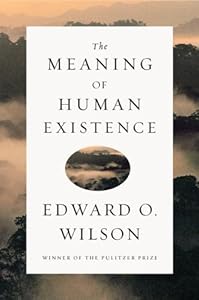
Coming in October: E.O. Wilson’s The Meaning of Human Existence.

Wilson, Harvard biologist, is one of the most intelligent people on the planet, author of On Human Nature, Consilience and many, many other books. I’m looking forward to a more philosophical summary of his worldview.


Coming in September: Steven Pinker’s The Sense of Style: The Thinking Person’s Guide to Writing in the 21st Century, from Viking.

Pinker is the Harvard evolutionary/cognitive psychologist and author of The Language Instinct, How the Mind Works, and most recently The Better Angels of Our Nature, which argues that the arc of human history is toward less and less violence, and humanity’s state is thus improving. It will be fascinating to see how he applies his intellect to ideas about effective writing.

Posted in Book Notes, Thinking | Comments Off on Two Books to Look Forward to

Nature’s God

Book review sections, especially the weekly ones in the Los Angeles Times and New York Times, are useful for reading glosses on books of interest that I know I’ll never find the time to read in their entirely. Nonfiction books, especially, because reviews of nonfiction books tend to be largely (sometimes too largely) summary, without much evaluation, in contrast to reviews of novels, which tend to be more analytical and judgmental.

Here’s an LA Times review from last Sunday of a book by Matthew Stewart called Nature’s God: The Heretical Origins of the American Republic, published by W.W. Norton.

Checking, I see that Stewart is a philosopher with degrees from Princeton and Oxford.

A few passages from the review:

Matthew Stewart wants to make one thing perfectly clear: The United States was not founded as a Christian nation. The principles that inspired the American Revolution, he argues in “Nature’s God: The Heretical Origins of the American Republic,” belong to an intellectual tradition dating to ancient Greece and reviled by every variety of Christian — early church fathers, Catholic clergy and Protestant divines alike.

…

His main point is serious. The tradition the deists honored was opposed to the religious doctrines of their day, and they knew it. Epicurus asserted that nature operates according to laws that can be discovered and defined. As Copernicus and Galileo learned, discovering natural laws that contradicted Catholic dogma was a risky business, and Protestant sects were equally insistent on divine judgment as exempt from explanation.

Jefferson was one of many deists appalled by the Calvinist God, doling out salvation and damnation in a manner human beings must accept but could not understand. In place of this punitive figure, deists proposed “Nature’s God … a God of publicly promulgated laws, not of private and inscrutable acts.” For them, Stewart states, “belief [was] a matter of evidence, not choice.” When American deists applied that concept to the civil sphere, they found contemporary political systems as unsatisfactory as revealed religion.

The first thing to note, of course, is that this contradicts the dogma of the religious right, who (see previous post) are happy to twist history and evidence and facts to fit their own pre-conceived worldview — and justify their own self-righteousness.

The second thing to note, and my main reason for noting this review and this book, is how contemporary the themes of these “deists” who founded the US in opposition to religious tradition are. Another passage from the review:

Natural law was the basis for the core ideas of the Revolution: People are free and equal in nature. Government is a compact between human beings, not something handed down from above.

Most important, we must always have the liberty of thought to examine received wisdom, evaluate its utility, and change our ideas — and our institutions. This freedom is the essence of what Stewart unabashedly and repeatedly calls liberalism. “A genuinely liberal political system,” in his view, aims to “hold the actions of an entire collective accountable to reason. … It is both a republic of learning and a learning republic.”

Stewart spells out the present-day implications of all this in his closing chapter, “The Religion of Freedom.” The government created by our deist Founding Fathers does of course protect religious belief, he writes, “but only insofar as that belief is understood to be intrinsically private. It does not and ought not tolerate any form of religion that attempts to hold the power of the sovereign answerable to its private religious belief.”

These ideas, the valuation of “liberty of thought”, the notion that ideas are subject to examination and change, and that religious belief should be private and not thrust into the public sphere– are not new. But these are enlightenment ideas, ideas of maturity and education, and they will forever struggle against ignorance and tribalism and religious inculcation. Because every new child is born fresh, subject and prone to its culture and beliefs, and education to a larger worldview is hard — and rare.

Posted in Book Notes, Culture, Humanism, Religion | Comments Off on Nature’s God

Lies and False Witness

There’s a theme here, in three posts from last week.

Salon: Rise of a right-wing quack: Faux-historian David Barton’s shocking new influence

This is the quality of constitutional scholarship that pervades the conservative movement these days: simple, outright lies that allege that this country was not founded on certain Enlightenment principles and the hard won experience of men and women who were exceedingly familiar with the bloody consequences of church and state being entwined.  It was, in their reckoning, conceived as a straight-up Christian nation, full stop.

David Barton marches on. There are some people you can fool all of the time, apparently.


Patheos: Another Christian Movie All About How Christians Are Persecuted in America

Rarely is an entire movie invalidated by the first few seconds of its trailer.

But that’s the case with One Generation Away, a film produced by Rick Santorum‘s EchoLight Studios that’s all about how Christians are being “persecuted” because they don’t get to push their faith in places like public schools.

(Just one example of many, documented on several websites I follow, about Christianity’s persecution complex.)


Alternet: Why Do Right-Wing Christians Think ‘Religious Freedom’ Means Forcing Their Faith on You?

Christian conservative circles have become awash in legends of being persecuted for their faith, stories that invariably turn out to be nonsense but that “serve to bolster a larger story, that of a majority religious group in American society becoming a persecuted minority, driven underground in its own country.” This sense of persecution, in turn, gives them justification to push their actual agenda of religious repression under the guise that they’re just protecting themselves.

…

You can see this play out in the legends that PFAW details out. Do Christian conservatives want to force their religious hostility to gays onto the military? Tell a lie about how a sergeant was persecuted for simply holding that religious belief to paint yourself as the “real” victim. Want to justify forcing non-believing kids to pray to your god in school? Tell lies about how kids are being punished for having private prayers all to themselves. Want to force people in the VA hospital to sing your religious songs and worship your god? Spread a false tale claiming that people aren’t allowed private ownership of religious cards. Tell enough of these stories and people on the right can convince themselves the only way they can protect their own right to worship is to force their religious practice on everyone else.

Posted in Culture, Religion | Comments Off on Lies and False Witness

Primitive Values, Mature Ethics, and the Failure of Religious Texts

A point that bears repeating: there is nothing in the Bible that couldn’t have been written by ordinary people

On the point of the previous post: it has been frequently observed that the Bible contains nothing that could not have been written by the people who lived at the time of its writing.

The values of those “Ten Commandments” reflect a primitive tribe’s values for surviving and cohesiveness. It is hardly a mature ethic for maximal human happiness. (At the same time, their values can be seen as an evolutionary-validated strategy for success. Their values *have* succeeded into becoming one of the largest set of values in the world. Though not the only one. Another topic for another time.)

Atheists are sometimes asked, is there any evidence that would convince you of the reality of God? A few say nothing can. But in this context, it’s easy to speculate that, if the Bible, or any other holy book, contained passages which, though perhaps inexplicable at the time of its writing, later became apparent messages about the reality of the universe that those living at the time could not have perceived. Trivial examples: the actual value of pi (there is some passage in the Bible, I gather, that defines it as 3, exactly), the fact that the Earth orbits the sun, and not vice versa — and that it’s not *flat*; the idea that basic hygiene, like washing hands following certain activities, would reduce disease. But the fact of the matter is, there is nothing like this in the Bible. (The New Testament gospels are preoccupied with validating earlier prophecies, and advising people on how to live given the assumption the world would end within their lifetimes.) Which is why there’s no reason to think the Bible is divinely inspired, rather than, as should be obvious, a hobble gobble of myths and histories from oral traditions selected to validate the tellers, and so on and on.

Posted in Atheism, Culture, Religion | Comments Off on Primitive Values, Mature Ethics, and the Failure of Religious Texts

Another Ten Commandments – Actually, Two

Ten Commandments That Would Have Changed the World

Who knew? Valerie Tarico points out, in this post, that there is a second set of Ten Commandments a bit later in Exodus following the ones from Exodus 20 most often cited. According to Wikipedia, Ten Commandments (scroll down, and down), this second set is regarded as “The Ritual Decalogue”, in contrast to the familiar “Ethical Dialogue”.

My point here is that neither version of these 10 commandments demands very much respect in contrast to the many, many other ethical proscriptions that have been created over the centuries. Replace the traditional ten with “Do unto others….”, and you would have a more ethical, humane society.

I’ve blogged before about a couple other alternate 10 commandments, and the blogger here has how own, written in Biblical language…

1. This above all shall ye take as my first command: Thou shalt treat living beings as they want to be treated. And the second commandment is like unto it:

2. In as much as be possible, thou shalt avoid afflicting pain or sorrow, which shall be unto thee my signs of ill and evil.

3. Thou shalt honor and protect all of creation, for I the LORD have created it that thy days may be long upon the land which the Lord thy God giveth thee.

4. Thou shalt have sexual relations with neither human nor beast who chooseth not freely what pleasures thou mayest offer.

5. Thou shalt not beat the child, but by admonition and instruction with kindness shall teach both wisdom and skill.

6. Thou shalt do unto members of other religions and tribes as thou dost unto thine own.

7. I, the LORD your God, forbid thee to own other persons be they woman, man or child; neither shall ye subject any gender nor race one to another, but shall honor my image in all.

8. Thou shalt not destroy the lands of thine enemies, nor poison their well, nor salt their earth, neither shalt thou cut their shade tree nor burn their vineyard, nor wantonly slaughter the beast of their field.

9. Thou shalt wash thy hands before eating and shalt boil the drinking water that has been defiled by man or beast.

10. Thou shalt ask the questions that can show thee wrong, so that through the toil of many, from generation unto generation, ye may come to discover the great I AM.

These commands, she notes, might have “changed the course of history. Think Crusades, or the Inquisition, or Salem, or the American Holocaust, or the slave trade, or Northern Ireland, or the Iraq War.”

The 56 percent of Americans who think the Bible is “the actual or inspired word of God with no errors” are stuck, anchored to the Iron Age. Many, when they get trapped by the ugly contradictions inherent in this position, do whatever moral gymnastics are necessary to defend the Book.

Posted in Culture, Religion, Ten Commandments | Comments Off on Another Ten Commandments – Actually, Two