

How the Supreme Court decision about Roe v Wade suggests that no laws can be made about anything that was not recognized as an issue two or three centuries ago. The US is forever anchored to past standards, it seems. It cannot learn.
How the Supreme Court decision about Roe v Wade suggests that no laws can be made about anything that was not recognized as an issue two or three centuries ago. The US is forever anchored to past standards, it seems. It cannot learn.

As I’ve observed before, conservatives, especially the Christian ones, seem to be about constraining rights (for others) and expanding rights (for themselves), while liberals are about expanding rights for everyone to the extent they don’t conflict with each other. Why are conservatives so intent on running other peoples’ lives?
The better question might be, why are so many conservative states so anxious to pass laws that restrict the freedoms of many of their citizens? Are that they addled with religious superstition? With magical thinking about the “personhood” of a just-fertilized embryo?
Why do they not care that these laws they’re passing are restricting the religious rights of *others*? Isn’t this religious dictatorship by Christians?
Continue reading

Another quick post. Ed Yong, the science writer, has a new book out today — in fact my copy is running late, and will be delivered tomorrow — called An Immense World — about how animals perceive the world much differently than do humans. This relates to one of my favorite themes — how what humans intuitively perceive as “real” is actually a small part of reality.
Two links: an interview at Slate; an essay in NYT. Will cover these in detail shortly.

We did a walk yesterday along a path by the Port of Oakland, along the backside of all those huge gantries that are seen from all across the bay, but especially from the Bay Bridge. (Expand the pic, and you can see “Port of Oakland” on the gantry.)
Brief post, since I’m working hard on expanding and refining my Rocketdyne essay. Need to get it done.

NYT, Pamela Paul, 21 June 2022: She Wrote a Dystopian Novel. What Happened Next Was Pretty Dystopian.
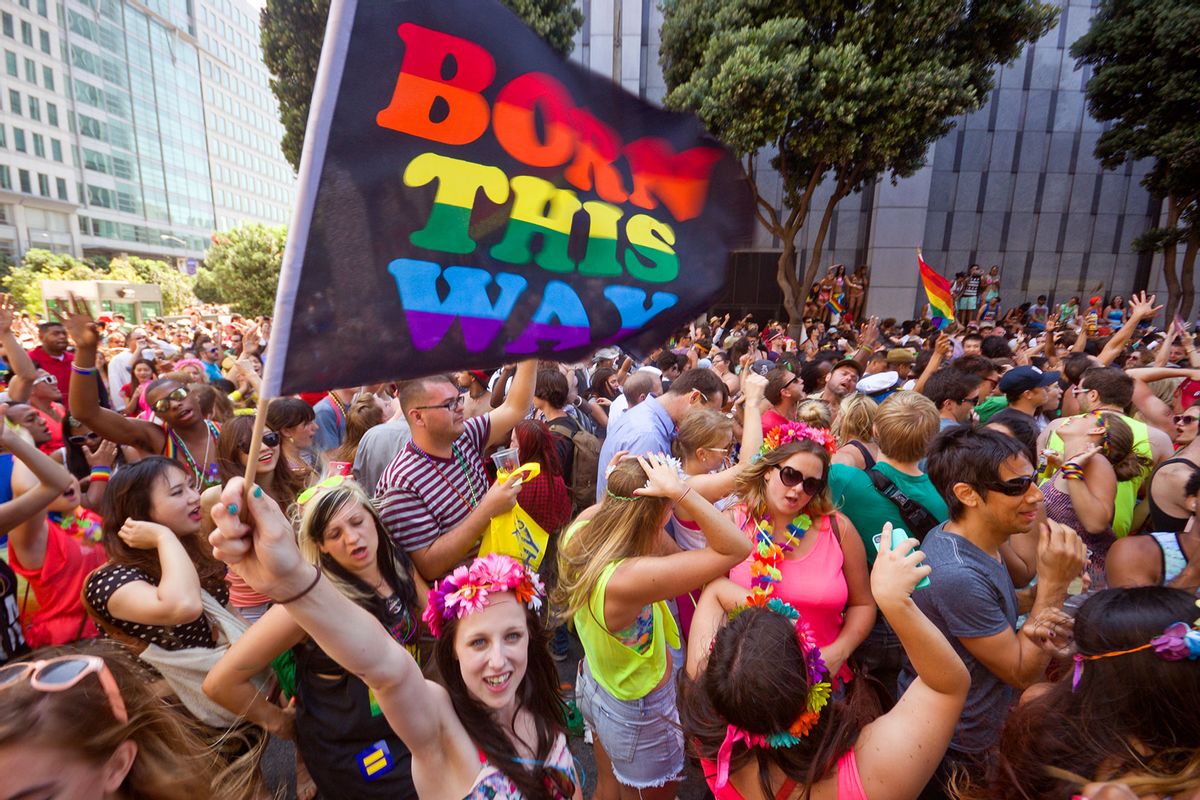
Here’s an article that makes good points about the changing demographics of gays and lesbians and transgenders, but for me misses the key reason that the “born this way” argument is irrelevant.
Salon, Julia Serano, 17 Jun 2022: It’s time to rethink “born this way,” a phrase that’s been key to LGBTQ acceptance
There’s a graphic meme going around on Facebook — no, of *course* I can’t find it now, or a link to it — that compares America’s possible future as being Star Trek’s or The Handmaid’s Tale‘s.
The former’s vision of a wise, technocratic, egalitarian society, expanding humanity’s knowledge and range beyond Earth, vs. the latter’s vision of a theocratic authoritarian society in which women are forced to bear children they do not want.
I think for a while, from the 1960s when Trek began, maybe up through the ’90s, it was possible to believe we — the entire human race — was on a path toward the Trek future. Since then, we’re going the other way. Further comments at the end.


Home is the place where, when you have to go there,
They have to take you in.
Robert Frost