Links and Comments: Science, Abortion, Trump v Reality

Here’s a great statement by Neil deGrasse Tyson: What Science Is and How and Why It Works

The scientific method can be summarized in one sentence, which is all about objectivity: “Do whatever it takes to avoid fooling yourself into thinking something is true that is not, or that something is not true that is.”

…

Objective truths exist outside of your perception of reality, such as: the value of pi, E=mc2, Earth’s rate of rotation, and that carbon dioxide and methane are greenhouse gases. These statements can be verified by anybody, at any time, and at any place. And they are true whether or not you believe in them. Meanwhile, personal truths are what you may hold dear, but there exists no simple way of convincing others who disagree except by heated argument, coercion, or by force. These are the foundations of most people’s opinions. Is Jesus your savior? Is Mohammad God’s last prophet on Earth? Should the government support poor people? Is Beyoncé a cultural queen? Kirk or Picard?

…

Note further that in science, conformity is anathema to success. The persistent accusations that we are all trying to agree with one another is laughable to scientists attempting to advance their careers. The best way to get famous in your own lifetime is to pose an idea that is counter to prevailing research and which ultimately earns a consistency of observations and experiment. This ensures healthy disagreement at all times while working on the bleeding edge of discovery.

Worth reading in full.

\\\\\

This essay summarizes my thoughts about the incoherence and hypocrisy of the pro-life movement [aside from the fundamental biological issues about how an embryo is not a human being] —

Slate: Why Do Pro-Life Activists Seem Only to Care About Unborn Lives?

If pro-life advocates genuinely saw saving unborn children as their top priority, then a significant number of them would also fight for a world in which all women and men can be confident that their children’s future will include education, food, and housing. Many would reject a political platform that cheers taxpayer funding of the military while simultaneously trying to cut health care funding—health care that might allow women to feel secure enough to bring a baby to term. And many would make contraception a central issue, instead of allowing religious prudery to take precedence over the unborn babies they are fighting for.

And yet, once children are born, conservatives have no concern for social welfare programs that might help them thrive. More fundamentally….. I think the revulsion against abortion is about the human compulsion to expand, to reproduce, to grow the tribe. Quantity over quality.

\\\\\

Salon: Trump’s “proof” of voter fraud is an anecdote from a golfer who may have committed voter fraud himself

Trump watches TV, especially Fox News, and watches social media, and reacts with impulsive tweets. From a larger perspective, this is about how stories — in the worst case, mere anecdotes — shape human perception and belief; while systematic investigation, statistical studies, science, while not intuitively easy for human cognition, actually leads to objectively verifiable facts.

And reality will prevail, as Jeffrey Kluger says in Time Magazine, Why Trump Will Lose His War on Science.

Science, it’s worth remembering, doesn’t read your Tweets. It doesn’t care about the size of your Electoral College victory. When rising oceans swamp coastal communities or unvaccinated children fall to outbreaks of measles or mumps or whooping cough, you can’t pin that on a crooked media or a rigged election. It’s simply the way the fact-based world works. That’s a lesson the Trump Administration had best learn — before we all pay the price.

\\\\\

Is Trump a liar or delusional, or something worse? In the past day or two, some clever person registered the domain alternativefacts.com with an automatic redirect to this piece of Psychology Today: Gaslighting: Know It and Identify It to Protect Yourself.

The idea of ‘gaslighting’, taken from the title of the 1944 film Gaslight, in which a man tries to drive his wife insane by insisting that things she hears and remembers aren’t true, has become more familiar in recent months. Are Trump’s insistence about things that are apparently not true deliberate attempts to ‘gaslight’ the public, in an Orwellian fashion? I’m not sure he’s that clever. I just think he’s a megolamaniac delusional.

But the Psych Today article lists 11 points, and Trump matches several of them, at least.

\\

On a similar theme, Vox, Matthew Yglesias: The best theory for why Trump tells such obvious lies.

In short, Trump doesn’t care about truth or reality, he cares about tribal loyalty. He forces others to tell lies, or support his lies, as a mean of enforcing their loyalty to him.

Any Republican who is willing to publicly echo Trump’s lies does two things. One is that he proves he is willing to incur costs to his personal reputation in order to defend Trump. The other is that having in fact borne costs to his personal reputation, he objectively ties up his success with Trump’s.

In the context of my ‘provisional conclusions’, this echoes the way religions work. Religions are only incidentally about making factual claims about cosmic reality — whether gods exist and control human destiny, etc. — but are more about creating communities [tribes] of like-minded people who, through their religious commitments, trust and support one another. The test of this commitment is about whether they support the supernatural narrative of the tribe…no matter how implausible it might be. The smart ones of the tribe understand that those supernatural claims are ridiculous, serve a social purpose without being actually true, and keep this understanding to themselves. Cultural commitment is more important. That is human nature, and that is why its hijacking by anecdote is easy and dangerous.

Posted in Uncategorized | Comments Off on Links and Comments: Science, Abortion, Trump v Reality

The Stars Have Names

Here’s an interesting article from the December 6th, 2016 New York Times, Twinkle, Twinkle Little [Insert Name Here], by Dennis Overbye (the print title was “Twinkle, Twinkle, Who?”), about how the International Astronomical Union (IAU) has finally sat down to compile an *official* list of named stars. No, those certificates you bought naming some random star for your boyfriend or girlfriend don’t count.

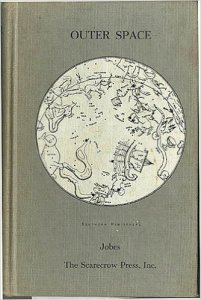
This subject fascinated me for a period of several years in my teens, and college years. It overlapped my interest in genuine amateur astronomy — looking at Jupiter’s moons, Saturn’s rings, the nebulae, the globular clusters, the double stars, and double doubles like Epsilon Lyrae, and all the Messier objects, all through my three-inch refractor telescope, a 6th grade birthday gift) — but also tickled my interest in the mythologies and histories of how several hundred stars got the rather odd names they came to have, centuries ago, and still have. (Principle idea: most of the names are Arabic, from a time when Christian Europe wallowed in the Dark Ages and the Arabs were the scientists of the world.) It also appealed to my list-compiling instinct. I poured over three books in particular: a hefty Dover trade paperback called Star Names: Their Lore and Meaning, by Richard Hinckley Allen; a just-published hardcover, in September 1971, called What Star Is That?, by Peter Lancaster Brown, mostly an observer’s guide with constellation descriptions and maps, but which happened to include many proper names of individual stars [I can’t find a clean cover image of that book online just now, and my scanner is down, but will fill this in later]; and Outer Space: Myths, Name Meanings, Calendars: From the Emergence of History to the Present Day, by Gertrude and James Jobes, which I poured over in the Victorville Public Library during summers in Apple Valley, and which decades later I found a copy of for myself via Abebooks.

The first and third of these especially delved into history and mythology, citing names of constellations and stars from cultures worldwide. The Brown book compiled star names commonly used by astronomers, and over several years I sought out other volumes of star maps, astronomical guides, official dictionaries, and whatnot, and compiled hundreds (yes, hundreds) of handwritten, then typed, pages of lists of star names, by source and by constellation, cross-referenced (though, alas, all on paper; no way to easily digitize). Though the brightest and best-known stars have familiar names, even they have variations in spelling due to the translations from Arabic, over the centuries. There are one or two hundred name very commonly repeated in many sources, and another couple hundred less frequently cited, some of them contemporary appellations.

Seeing the IAU site, which has this homepage for the naming stars project, and several related pages with the official names in various orders, I this afternoon found, deep in my file cabinet, several folders of the data I compiled some 40 years ago, and am tempted to sort through it and see if the IAU is missing anything obvious. I cross-referenced all my sources… and can provide a bibliography of them.

Will follow up here if I do. As if I don’t have enough other projects underway…

(Quiet day today, staying home with a lingering cold or flu — last week it was a ticklish throat, and nothing else, no congestion or sneezing, but enough to trigger a cough. This week it’s transmuted to a mild chest congestion, enough to trigger a cough of a different kind. Still no temperature, or sinus congestion, but still a cough that it would be impolite to be out in public with.)

Posted in Astronomy, Personal history | Comments Off on The Stars Have Names

Not a Facebook post about Trump

I am not watching the inaugural this morning. I can’t bear it. I’ve even stopped watching most TV news, in the last week or two.

For decades, I have watched the Today Show every morning, on NBC, for at least the first half hour (before, especially in recent years, it devolves into consumer reports and fluff in the 2nd half hour, and in later hours). It was when I turned on the Today Show on 11 Sep 2001 at 7am West Coast time that I saw the second tower fall; it was on a Saturday morning in 2003 on the Today Show that I saw news of the Space Shuttle Challenger’s breakup as it descended over Texas.

I’m not sure I can still keep watching the TV news, including the Today Show. I cannot stand watching the vile, despicable person with his fourth-grade vocabulary who seems to be our new president, nor the simpering propaganda minister Kellyanne Conway, who, if Trump really did shoot someone on 5th avenue, would come on TV the next morning to explain how what he did was perfectly appropriate, and, anyway, Hillary.

There seems to be nothing that Donald Trump can say or do, however vile, that his supporters will not defend, and condemn anyone who does not.

I’ve tried hitting mute. It doesn’t work. I don’t think I can watch at all.

Posted in conservatives, Lunacy, Politics | Comments Off on Not a Facebook post about Trump

Links and Comments: Right-Wing Prediction Failure; Why to Doubt; Culture Can’t be Rational

Conservatives, especially religious extremists, seem given over to paranoia and prophecies of doom, and they never learn.

10 Right-Wing Predictions About Obama That Never Came True

Among those implicated: Michele Bachman, Sarah Palin, Joseph Farah, Michael Savage, Glenn Beck, Larry Klayman, Janet Porter, Wayne LaPierre, Rafael Cruz, Rush Limbaugh, Alex Jones. These people never lose their audiences, no matter how repeatedly wrong they are.

\\

On the more cerebral topic of belief in ‘god’.

A post by Robert V.S. Redick:

And a comment by Jesse Bering to one of his own posts, yesterday:

From an atheist’s perspective informed by psychological science, it’s not simply an absence of evidence for God. There is a plethora of evidence of innate cognitive biases that generate the sort of recalcitrant illusions (misattributions of agency, intentions, continuity of mind after death, etc) underlying the commonsense belief in God and the afterlife.

Bering wrote a whole book about this — The Belief Instinct: The Psychology of Souls, Destiny, and the Meaning of Life — one of the best books on reasons to set religious faith aside as a kind mental illusion.

\\

And from Connor Wood’s “Science on Religion” blog: Trump shows why Rationalia would fail. I haven’t read this completely yet, but it seems to dovetail with a recurring theme in some of my reading, including having just finished Yuval Noah Harari’s Sapiens, where he emphasizes the human need for “imagined orders” including religions, political systems, and money, systems of shared trust among large groups of people, without which large societies could not function. Culture based on purely rationalistic terms (Neil DeGrasse Tyson’s “Rationalia”) would never work, Wood says. Will pursue.

Posted in Uncategorized | Comments Off on Links and Comments: Right-Wing Prediction Failure; Why to Doubt; Culture Can’t be Rational

Fb review of The Girl on the Train

We saw THE GIRL ON THE TRAIN today, an excellent thriller, starring Emily Blunt. It’s a mystery about a murder that Emily Blunt’s character, an alcoholic who has blackouts, fears she might have committed. It’s a complex story about several men and several women, in that New York suburb, visible from the train that Emily Blunt’s character takes every day, that takes some sorting out about who is involved with whom, for nearly half the movie. Eventually, everything comes into focus, and revelations ensue. The directing and acting is all very good to excellent (I didn’t recognize any of the other actors aside from Blunt, but they were all very good), and the eventual revelation is justified by numerous scenes about the various characters’ background — the baby in the bathtub; the dinner party. Perhaps it’s all a bit too contrived..? But if you like mystery/thriller stories about not just who-dun-it, but about what-really-happened, this is terrific.

http://www.imdb.com/title/tt3631112

Posted in Films | Comments Off on Fb review of The Girl on the Train

Fb review of Moonlight

So we saw Moonlight today, the low-budget art-house film that’s been getting lots of media coverage in the past couple weeks, about a young boy struggling with his identity as he grows up in a drug-infested ghetto of Miami. The story is told in three episodes, and in each, the boy is played by a different actor–as Chiron avoids his drug addicted mother; suffers schoolboy bullying at school; finally as a buff adult trying to find a connection in his life. The acting and cinematography and musical cues are all excellent, but by Hollywood standards the film is very slow and introspective. It might get some Oscar nods, but it will never be a box office hit. Finally, I have to say, without being any way spoilery, it has a subtly heartbreaking ending, in a way you almost certainly will not anticipate.

Note the movie poster image is a collage of the three actors playing the boy at different ages.

As an aside, the AMC theatre where we saw this showed at least 6 trailers before the film, including those for two violent action pictures, which seemed completely at odds with the tone of the film we were there to see. But all six film trailers involved black actors in leading roles.

https://en.wikipedia.org/wiki/Moonlight_(2016_film)

Posted in Films | Comments Off on Fb review of Moonlight

Fb Review of Manchester by the Sea

Yesterday we saw Manchester by the Sea, the new film written and directed by Kenneth Lonergan, starring Casey Affleck, Michelle Williams, and Lucas Hedges, about a distraught man (Affleck) returning to his hometown after the death of his brother, where he discovers he’s been named guardian of his brother’s son (Hedges). Affleck’s character is withdrawn, sullen, and reluctant to commit, seemingly resistant to any kind of human connection, and as the film progresses we get his backstory and understand why. (So the theme of the film recalls that of Lonergan’s first, You Can Count on Me, about two siblings (Laura Linney and Mark Ruffalo) trying to reconnect after a family tragedy.) Manchester is a calm, elegant, deeply felt film, not exactly fun family holiday fare, but ultimately moving and insightful into the way people can break, and perhaps can be brought to try to repair themselves.

There’s a nice review by Anthony Lane is the latest New Yorker.

https://en.wikipedia.org/wiki/Manchester_by_the_Sea_(film)

http://www.newyorker.com/…/manchester-by-the-sea-and-fantas…

Posted in Films | Comments Off on Fb Review of Manchester by the Sea

Film Reviews: La La Land and Hidden Figures

A couple belated capsule film reviews, from the holiday week — La La Land and Hidden Figures.

I loved La La Land, for its charming cheerful songs, its tour of LA locations — especially Griffith Park, that freeway ramp along the I-110, and that hillside road overlooking the valley lined with valet parked cars, where the first dance between Ryan Gosling and Emma Stone takes place — but especially for the alternate history time-loop that appears at a key point in the film. The theme of sacrificing for your dream is hardly unfamiliar, as is the self-reflective idea that maybe you just aren’t good enough to succeed (I think everyone feels that to some degree; it’s more about how long you keep trying), but that those ideas might undermine the film’s easy romance gives the film a slight edge.

We also saw that week Hidden Figures, the movie set in the early 1960s about several black women who played key roles in the early space program, working for NASA in an age when not only women, but certainly ‘colored’ people, were mostly unseen and disregarded by the white male wonks in central control. This is of the Hollywood genre that reflects on history through the filter of contemporary values, in such a blatant way that you can’t quite trust its retelling of history; and its three parallel narratives are obvious and too often played for laughs (as when Taraji P. Henson’s character has to repeatedly run to another building, 1/4 mile away, with the only available ‘colored’ restroom). At the same time, it’s great to see a film recalling our nation’s glory days, when we accomplished great things– launching men into space, later reaching the moon. (Despite my reservations — worth seeing.)

http://www.imdb.com/title/tt3783958/

http://www.imdb.com/title/tt4846340/

Posted in Films | Comments Off on Film Reviews: La La Land and Hidden Figures

Some Links from Facebook: Asimov; California; Google Sky; Haidt

I keep ‘saving’ links or posts on Facebook that I don’t get around to right away, to read or post. Here are a few from the dozen I’ve saved in the past month or so.

NPR: Adopting a Sci-Fi Way of Thinking About the Future.

Posted on January 2nd, on what has apparently become National Science Fiction Day as it correponds with Isaac Asimov’s birthday. The piece quotes a key excerpt from a 1978 Asimov essay:

No sensible decision can be made any longer without taking into account not only the world as it is, but the world as it will be — and naturally this means that there must be an accurate perception of the world as it will be. This, in turn, means that our statesmen, our businessmen, our Everyman, must take on a science fictional way of thinking, whether he likes it or not or even whether he knows it or not. Only so can the deadly problems of today be solved.

\\

On California, perhaps a refuge from Trumplandia, on Tim Rutten’s site: The Right’s Hatred of California Is Really Fear of a Future that Already Is Working.

What’s really at work in the right-wing’s demonization of California is not really loyalty to Trumpism or traditionalist devotion to the Electoral College. It’s fear of the future. When Trump vowed to “make America great again” the right read his rhetoric as a promise to take us back in time—to the years when white men went off to work and white women stayed home with the kids and minority races were just that, minorities who kept to themselves.

California, by contrast, already is what more of America will look like in the years to come. No single race is in the majority or enjoys a lock on political or economic power. Seventeen percent of all Americans live in California and 38% of them are non-Hispanic whites, 38.8% are Latinos, 14.7% are Asians, 6.5% are African American, 1.7% are Native Americans—numerically, the country’s largest concentration of indigenous people—and 3.8% describe themselves as of mixed race. More Californians—43%–speak a language other than English in their homes, though it will confound Trump supporters to know that immigration from Mexico slowed long ago and the majority of new immigrants come from Asia, mainly China.

And despite conversative fears of how the country is changing, it hasn’t harmed California:

If the Golden State were an independent country, according to the most recent World Bank ratings, it would have the globe’s sixth largest economy.

So there.

\\

Via David Brin: Google Sky

\\

Wall Street Journal: Jonathan Haidt (one of my favorite authors, based on the one book of his I’ve read) and Ravi Iyer on How to Get Beyond Our Tribal Politics. Have not read this, but I presume in condenses the lessons of his singular book.

Posted in Uncategorized | Comments Off on Some Links from Facebook: Asimov; California; Google Sky; Haidt

Index to Reviews

I’ve built a page here for reviews, books and films, that I’ve posted here since mid-2013, when the “Views from..” blog was established, succeeding the earlier Locus Online editorial blog. The link is in the header above. I’ll go through the earlier blog eventually, though I don’t think there are nearly so many substantial reviews there. Also, I occasionally post film reviews on Facebook that aren’t always copied here; I’ll track those down too.

I might also add, for anyone who cares, that I read many more books than ever get written up here. I almost always take notes as I read, and type them up into a Word file (I’ve been doing this for 20 years), but I less often go the next step and condense my notes into any sort of posted review. (At the moment, I do intend a post or two about Robert Silverberg’s short fiction through 1975, which I read late last year, and which covered many books; and James Gleick’s recent nonfiction Time Travel, which I finished last week; and Hugo Gernsback’s notorious ‘classic’ SF novel Ralph 124C 41+, which I finished yesterday.)

Posted in Uncategorized | Comments Off on Index to Reviews