
- Francis Fukuyama, responding to Marco Rubio, on how Western Civilization is more about the Enlightenment than religious faith;
- And Boston Globe via Steven Pinker on that Tennessee congressman’s anti-Muslim screed;
- Briefly noted items about Trump’s shoe tests and their Soviet odor, Trump’s disconnect with reality, video games, non-Protestant events, forcing student-led prayer, destroying DC architecture, more about the Beha book, dismantling a renowned science lab, Trump’s sons cashing in on drones, weakening limits on a cancer-causing gas, and the eternal sea of misinformation about vaccines.
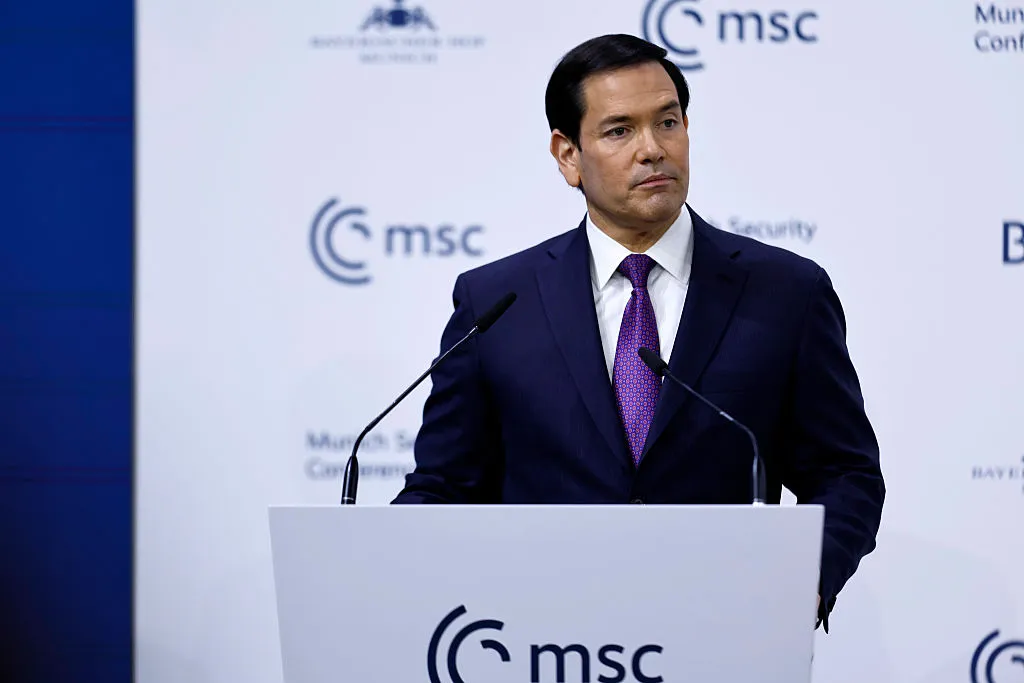
Persuasion, Francis Fukuyama, 3 Mar 2026: What “Western Civilization” Really Means, subtitled “It has less to do with faith — and more to do with the Enlightenment — than Marco Rubio thinks.”
This via a Facebook post by Steven Pinker. It’s a response to that Marco Rubio speech about the superiority of Western Civilization, covered almost a month ago here.
Secretary of State Marco Rubio got a standing ovation at the end of his talk at the Munich Security Conference in February, largely for his assertion, quoted above, that the United States and Europe are all part of a single “Western Civilization.” His listeners were doubtless gratified that he backed away from the aggressive nastiness towards Europe displayed by Vice President JD Vance the year before, and that he seemed to be anchoring the trans-Atlantic relationship in values, as countless American leaders had done in the years before the rise of Donald Trump.
But what is the “Western Civilization” to which Rubio was referring? His version of it is likely to be quite different from the understanding of most contemporary Europeans, and from mine as well. (Rubio did manage to get in a dig at me and the “end of history.”)
Rubio forgets that Western Civilization has been determined as much by the Enlightenment as any particular religious tradition. Even the Christian religions have splintered, over and over again, over the past few hundred years.
Many important thinkers, from Alexis de Tocqueville to G.W.F. Hegel to Friedrich Nietzsche, have understood that Christianity spawned modern liberal democracy. Most people who defend human rights today do not do so in religious terms, but there is no question that modern understandings of rights descend from Christian religious beliefs.
But in making this transition, Western civilization detached itself from any overt identification with religion. The reasons for this were historical: following the Protestant Reformation, Europeans spent the next 150 years killing each other over differing interpretations of Christian doctrine, over ideas like transubstantiation or childhood baptism. Since Medieval times, there has been no monolithic Christian doctrine; Protestantism spawned a “way of life” quite different from Catholicism.
And thus:
As a result of this disagreement over final ends, the Enlightenment founders of modern liberalism agreed to push religion into the realm of private belief, and to focus politics on life itself rather than the good life as defined by a particularly religious doctrine. In addition, early natural scientists were engaged in a prolonged struggle with the Catholic Church; it was only with the separation of empirical inquiry from religious dogma that modern natural science, and the economic world it made possible, emerged.
And the economic world natural science made possible.
So there is in fact a very different understanding of Western civilization from the one that Rubio advances, one that is built around liberalism itself, encompassing Enlightenment values like openness, tolerance, and skepticism about received ideas. This version of Western civilization downgraded the role of religion in politics. We can fully acknowledge the Christian origins of many of our ideas about democratic rights without defining our shared civilization in religious terms. Indeed, societies were very diverse with regard to religious belief not just in the current era of mass migration, but all the way back to the sixteenth century.
\\\
Steven Pinker also linked this item today, commenting
The US is not an ethnostate, and adherents to any religion, or no religion, can be full Americans. “‘E Pluribus Unum’ isn’t a lie. A Tennessee congressman’s anti-Muslim screed is vile. His attack on pluralism itself is worse.”
But I don’t subscribe to the Boston Globe, so I can’t see much of the article.
\\\
Recent links, in brief.
- Slate, Christina Cauterucci: Big Shoes to Fill, subtitled “Donald Trump has an interesting way of testing his acolytes’ loyalty.”
- The Bulwark, Cathy Young, 12 Mar 2026: If the Shoe Fits: Trump and the Florsheim You Can’t Refuse, subtitled “The strangely Soviet odor of the week’s weirdest story.” Soviet odor.
- Salon, Brian Karem: With Iran war, reality doesn’t matter to Trump, subtitled “The war will end when Trump feels it in his bones. In the meantime, he says everything is fine”
- Vox, Zach Beauchamp, 13 Mar 2026: The Iran war is not a video game, subtitled “Based memes, real blood.”
- JMG, 13 Mar 2026: Hegseth’s Pastor: Ban All Non-Protestant Public Events
- Friendly Atheist, Hemant Mehta, 13 Mar 2026: Alabama House passes bill forcing public schools to begin day with student-led prayer, subtitled “No wonder the state is currently ranked 45th in the nation when it comes to education”
- NY Times, guest essay by Paul Goldberger, 13 Mar 2026: Trump Will Destroy Washington if It’s the Last Thing He Does. About architecture, and echoes of Mussolini.
- Free Inquiry, Ronald A. Lindsay, 12 Mar 2026: Another Lament About Atheism. Another take on that Christopher Beha book: “[A]lthough Beha ventures some arguments against atheism, when examined they are transparently invalid and operate as nothing more than an expression of his disappointment that atheism did not provide him direction on how to live.”
- NY Times, 13 Mar 2026: Trump Administration Readies Plans to Dismantle Renowned Science Lab, subtitled “Proposals include transferring a supercomputer to the University of Wyoming and shifting a space weather lab to a private company.” Further destruction, in the name of saving money short term. They seem not to understand investment, or risk avoidance.
- JMG, 9 Mar 2026: Trump Sons Cash In On Pentagon’s Demand For Drones. Of course they did.
- NY Times: E.P.A. Moves to Weaken Limits on a Cancer-Causing Gas, subtitled “The gas, ethylene oxide, plays a crucial role in sterilizing medical devices. But long-term exposure is linked to several types of cancer and other ailments.” Further destruction of safety measures in favor of short-term profits.
- NY Times: In Talking to Parents About Vaccines, Pediatricians Navigate a Sea of Misinformation, subtitled “Practitioners nationwide are striving to do what’s best for children’s health, while staying supportive in the face of mistrust and confusion.” Not news, of course, just another sign of the cognitive limitations of the human species.





