
- RFK Jr. illustrates the hypocritical standards of conservative motivated thinking: “Can I believe it?” (one example is fine) vs. “Must I believe it?” (no amount of evidence will do);
- David Brin ridicules NASA’s new plan to build a Lunar base;
- Laura Miller on how tech barons like Elon Musk love science fiction but misunderstand it completely;
- Short items: Trump only knows what his staff shows him; Veterans are horrified that Trump is treating the war like a joke; Beware anyone who claims God has told them what to do.
- Radiohead: Exit Music (For a Film).
Psychological biases and fallacies are most clearly demonstrated by conservatives.

Washington Post, Editorial Board, 24 Mar 2026: RFK Jr.’s hypocritical quackery, subtitled “FDA scientists warn that some popular peptides are ineffective and potentially dangerous.”
Beginning with the point:
No amount of rigorous academic research or testing ever seems good enough to quell Health Secretary Robert F. Kennedy Jr.’s doubts about vaccines. Yet for products he favors, anything goes.
This evokes a common observation in books about the fallibility of human reasoning, e.g. way back in 1991’s HOW WE KNOW WHAT ISN’T SO by Thomas Gilovich, which I reviewed here, and which I mentioned includes a discussion of
the notion of reacting to confirming or challenging evidence as being about “can I believe” vs “must I believe”
And in Jonathan Haidt, here (from 2015):
When we *want* to believe something, we ask, *Can* I believe it? For this you need only a single piece of pseudo-evidence. Whereas if you’re not inclined to believe something, you ask *Must* I believe it? And then no matter how much supporting evidence you find, if you find a single reason to doubt the claim, you dismiss it. This is the essence of motivated reasoning, and Haidt illustrates it by observing that conspiracy theories operate on the former strategy (*can* I believe it? give me one example) while science operates on the latter (if all the evidence supports an idea, you must believe), and non-scientists are adept at finding some reason to quibble.
And how you can Google to find support for whatever you ‘want’ to believe.
Back to the article about RFK Jr.:
The hypocrisy is especially rank as RFK pushes the Food and Drug Administration to loosen restrictions on peptides, an experimental fad among wellness influencers who scorn traditional medicine.
With details about what peptides are, alternative “therapies” that are not FDA approved (because no evidence supports them), and how they’re bought on the black market anyway, to RFK Jr.’s apparent blessing. Ending:
Contrast that with Kennedy’s stance on vaccines: He has alleged that federal advisory panels have acted as “rubber stamps” in approving shots, repeatedly demanding better safety data for immunizations, even though the approval process already required extensive reviews. He has required better testing protocols for vaccines, including the use of placebos even when such study designs are impractical or unethical.
That inconsistency is bad for medical innovation. Drug manufacturers should be confident that the government will review their products with the same rigor all others receive. No entrepreneur should need to do business at the whims of a government quack.
\\\
You can’t trust the current administration about anything. Now NASA is wildly changing course about what it wants to accomplish in the next decade. A lunar colony!
Here is David Brin, who *can* be trusted.
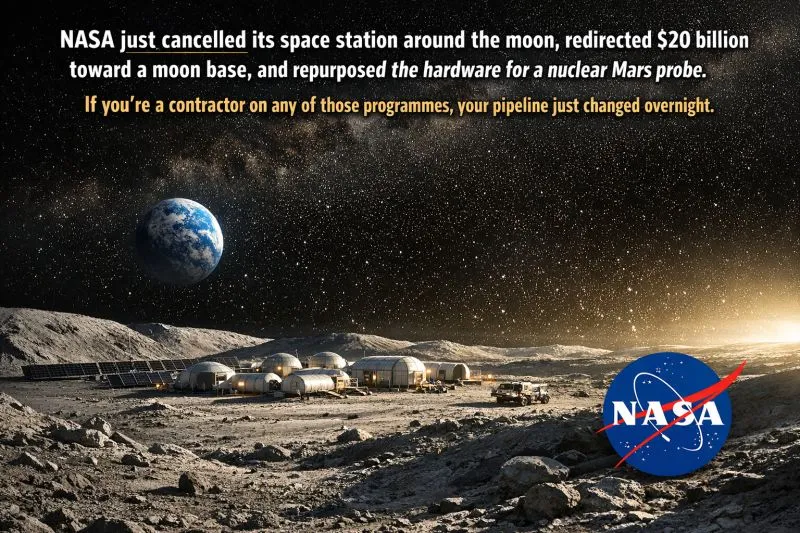
Contrary Brin, 25 Mar 2026: Cancel the useful Lunar Gateway and drop the modules down to the lunar surface? Are you $%@#! kidding?
There are no levels where the cancellation of Gateway – in favor of jibbering fantasies about a near term, surface “moonbase” – is not an utter betrayal of science, reason, NASA and the nation and humanity.
ALL of the science advisory panels preferred Gateway orbital station, for a dozen reasons (see below). But the absurd notion of putting modules designed for a zero-gee station down onto the lunar surface… are you freaking kidding me? Even if it would work (and it can’t), have you a plan HOW to do that?
And he explains in detail why all the expert panels supported Gateway. The most outrageous part, in my reading, is that modules that are being designed for zero-G are now to be dropped, somehow, onto the Moon.
\\
Not precisely related, but close.
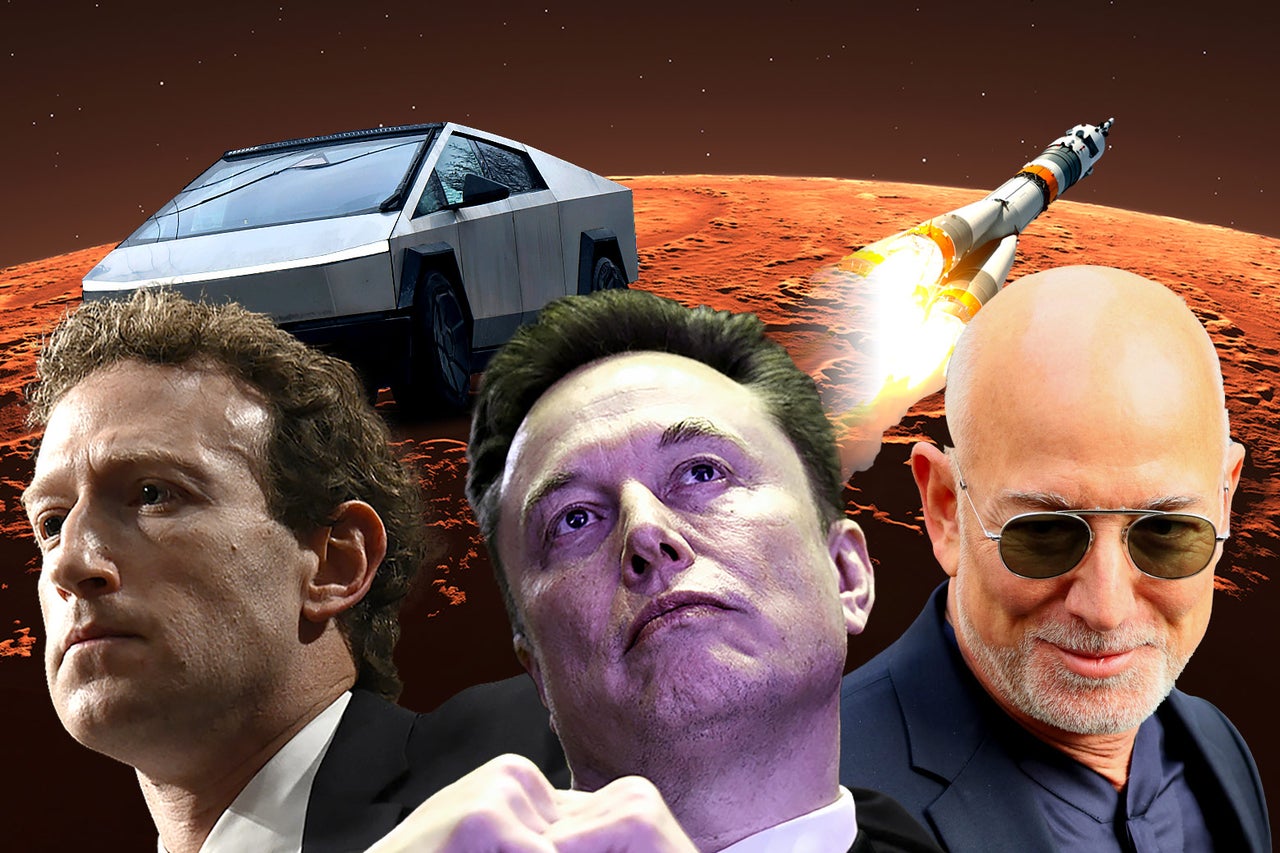
Slate, Laura Miller, 24 Mar 2026: How Silicon Valley Borrowed Ideas From Sci-Fi and Bastardized Them, subtitled “Tech barons like Elon Musk love science fiction. They also misunderstand it completely.”
It is a truth universally acknowledged that technology barons both love science fiction and chronically fail to understand what science fiction is trying to tell them. The late Iain Banks’ Culture novels, about a utopian socialist society run by artificial intelligences, is often cited by Elon Musk, no socialist, as an inspiration for his Neuralink brain-implant company. Mark Zuckerberg so admires Neal Stephenson’s 1992 cyberpunk novel Snow Crash that he used to require all Facebook product managers to read it, and he named his unenthusiastically received virtual world, Metaverse, after the one in Stephenson’s book—this despite the fact that Snow Crash takes place in a corporate-dominated dystopia where average citizens are forced to live in shipping containers, with dips into the metaverse as their only relief. Upon the launch of ChatGPT-4o, OpenAI CEO Sam Altman tweeted one word, “her,” a reference to the 2013 Spike Jonze film Her, in which a man falls in love with an A.I. voiced by Scarlett Johansson, an attachment that ends badly—though not as badly as some real-life instances of A.I. psychosis.
As Ray Bradbury once said about Fahrenheit 451, he wasn’t trying to predict the future, he was trying to *prevent* it.
Why are these moguls—men whom the business media have been praising as geniuses for the past 40 years—so dumb? Musk may very well be the dimmest of the lot in this department. He described the armored Cybertruck as “what Bladerunner would have driven” even though “blade runner” is a job description and not a character, and, as Max Read has written, the hero of the 1982 Ridley Scott movie, Rick Deckard, spends all of Blade Runner recognizing that his work is soul-crushing and inexcusable, even in the context of the urban hellscape he inhabits. “You don’t need the truck that ‘Bladerunner [sic] would have driven,’ ” Read explains for the obtuse (which apparently includes Musk), “because you don’t live in the world of Blade Runner.”
You’d think that would be self-evident, but Silicon Valley persists in trying to realize fictional inventions that are meant to be understood as terrible ideas, apparently just because they look cool. The industry that has been propelling the developed world into the future is dominated by the mentality of a 12-year-old boy. Science fiction has a long history of anticipating and even inspiring technological change, and the genre’s authors have at times been consulted by government—usually the military or security forces—to model potential threat scenarios and ways to respond to them. That work has presented its own moral conundrums, but at least they were the dilemmas of adults, not the overgrown manchildren shaping so much of our daily lives.
Then visiting an essay by Argentinian novelist Michel Nieva.
Nieva wrote the essay “Capitalist Science Fiction,” the only piece on this subject in his book, to express “my puzzlement as a reader at finding that my favorite literary genre, science fiction, should have been transformed into one of the mythological engines of contemporary capitalism.” Yet both science fiction and capitalism come in more varied forms than Nieva seems to realize in his vitriolic and sometimes muddled essay.
With examples. There are many ways to think about science fiction, which is why it’s such a vital genre. Ending:
For people who claim to champion disruption and creativity, tech barons seem intent on eliminating any inconvenience and unpredictability from their lives, along with all the unexpected experiences that lead to fresh ideas. Is it any wonder, then, that when it comes to the books they claim to love, these people have become experts at surgically extracting the bits they find pleasing and discarding anything they don’t want to hear? Science-fiction authors can issue all the warnings they want. In Silicon Valley, they will always fall on deaf ears.
\\\
Briefly noted.
Bubble.

NBC News, today: Inside Trump’s daily video montage briefing on the Iran war, subtitled “The montage, which typically runs for about two minutes, has raised concerns among some of the president’s allies that he may not be receiving the complete picture of the war.”
Via JMG: Trump Gets Daily Video Montage Of “Stuff Blowing Up”
Trump only knows what he sees on TV. The only TV he sees is what his staff shows him. His staff only shows him “stuff blowing up.” Which gives him the impression he’s winning, or has won, his war.
\\

Washington Post, Drew Harwell, today: In Trump’s war messaging, veterans see something new — and disturbing, subtitled “Service members and families who lost loved ones say the Trump team’s memes and jokes trivialize combat and sacrifice. Trump aides say the backlash sends views soaring.”
Via AlterNet, Thomas Kika, today: Veterans ‘horrified’ and ‘disgusted’ as Trump White House treats war ‘like a big joke’
The Trump administration has aggressively deployed memes and jokes on social media to spin the war in Iran as a major success, but according to a new report from the Washington Post, veterans and military families have been “horrified” by these “disturbing” memes that trivialize the sacrifices of service members.
In a report published Wednesday, the Post shared the reaction of retired U.S. Army colonel Joe Buccino, who felt “disgust” after seeing official Trump administration sources sharing “posts mixing Iran war footage with clips from cartoons and video games.”
These are deeply unserious people.
\\
The first sign that there’s something wrong.

Friendly Atheist, Hemant Mehta, today: Ché Ahn says God told him to run for governor. California says he can’t be on the ballot., subtitled “The New Apostolic Reformation leader’s campaign faces collapse after failing to file required tax returns. He’s now suing for ballot access.”
Never believe or trust anyone who says they’ve been told by God what to do.
\
The devil’s best work was convincing white evangelicals that a racist man who makes fun of dead soldiers, has 5 kids with 3 wives, gropes women, incites violence, and never tells the truth… was sent here by God.
\\\
Now going through Radiohead albums. Pablo Honey: you can keep your Creep; nothing else interesting. The Bends: I like “High and Dry,” “Fake Plastic Trees” especially (even though the lyrics are evocative but incoherent), and “Street Spirit (Fade Out)”. But it was songs like this one, on their third album, OK Computer, that brought me on board.
It’s about Romeo and Juliet. And the next song, “Let Down,” is pretty good too.





