
As I begin this post Artemis II mission, named Integrity, while the spacecraft itself is called Orion (if I’m following this correctly), is about 20 minutes from splashdown. Here’s an essay on the chasm between those who understand and do, and those who believe and don’t.
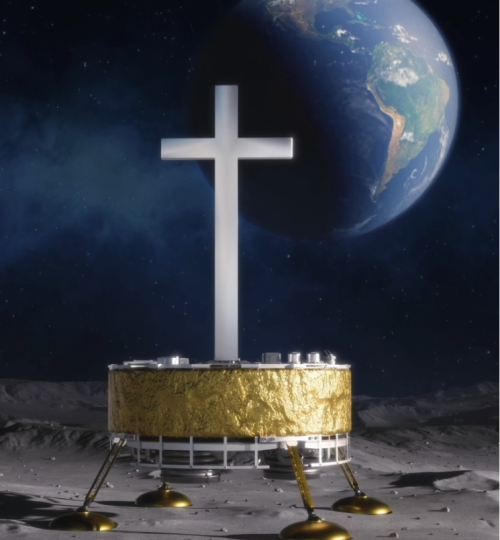
Free Inquiry, Ronald A. Lindsay, 9 April 2026: Reaching for the Stars, But Mired in Oppressive Fantasies
So, the news this week featured headlines about how the Artemis II crew had traveled farther away from the Earth than anyone else in prior lunar missions. An amazing achievement, and a testament to the rigorous application of scientific principles and evidence.
In the same time frame, however, we had reminders of how much of humanity remains trapped in detrimental religious fantasies.
Example at hand this week: each side in the Iran War thinks God is on its side.
Perhaps it is not surprising that the leadership of some countries invoke religion to justify their actions given that in these same countries religious fundamentalism still has a grip on much of the population. And in the United States, right-wing legislators are doing their best to ensure many Americans continue to be indoctrinated into Christianity. Various state legislators continue to push the posting of the Ten Commandments in public schools, Texas is going to require students to study passages from the Bible, and public tax dollars are now subsidizing religious indoctrination in several states. Of course, the indoctrination has to be in the right type of religion; Islamic schools are being excluded from the handouts in the United States.
And what are they trying to accomplish? Conformance? What else *can* they accomplish? What *have* religions accomplished in 2000 years except interfere with those who can and do?
Ever since the Enlightenment, reliance on empirical evidence and application of the scientific method have brought us marvelous achievements, unimaginable in prior times. But throughout the past couple centuries, there has been an unresolved tension between the reliance on science for specific projects and solutions and the persistent influence religion has exercised over the minds of many, which, in turn, results in religious beliefs and doctrines affecting public policy and private actions—usually with harmful consequences. As the late physicist Victor Stenger once remarked, “Science flies you to the moon; religion flies you into buildings.”
\\
Here’s an essay by the author of a recent book about the moon, Our Moon: How Earth’s Celestial Companion Transformed the Planet, Guided Evolution, and Made Us Who We Are, first published two years ago.

The Atlantic, Rebecca Boyle, today: A Different Moon From the One We’ve Known, subtitled “NASA’s Artemis II mission is bringing home a view of the moon unlike any humanity has seen before.”
[[ As I type: Integrity seems to have made it through its blackout; the critical issue of heat shield integrity is past. ]]
The writer recalls Galileo. Then:
This week, we got a different moon—the Artemis moon. The moon captured by America’s first mission there in generations is not the moon I look for every time I step outside. It is not the moon I grew up with or the one my parents learned about during the Apollo missions.
On Monday—the moon’s day—we were introduced to a brown, battered world. Whole regions of its scarred far side did not appear a brilliant lunar white, but a much more familiar, homey hue. Mushroom, chestnut, hazel, cocoa, coffee, tea-stained, russet, brown: earth tones. Straight lines running over the moon’s surface; concentric rings that look like companion coffee-cup rings.
The new view comes from a combination of technology, orbital motion, and human nature, all of which are part of the point of the Artemis II mission. The camera quality on Artemis, let alone the ability to livestream the views, was inconceivable during the Apollo era. Film from cameras that were specially built for Apollo had to get home first, then be developed, before the images could grace the front pages of newspapers on Earth. During Artemis, we are getting at least a few of them straight from astronauts’ Instagram Stories. Many more stunning images will arrive home with the astronauts this evening, when their Orion capsule is scheduled to splash down in the Pacific, off the coast of San Diego.
\
Meanwhile there were essays about how spending all this money was pointless, and Fb posts about how it was all a fraud, because in space there’s no oxygen for the rockets to burn their fuel. Dummkopfs. There will always be dummkopfs. (Relying the scourge of “common sense,” which is exactly the notion of extrapolating how the local familiar world works onto circumstances where those notions don’t apply. And Dunning-Kruger: they don’t realize how dumb and uneducated they are.)
\\
Only time to note these items briefly. And tomorrow I’m attending a wedding, so there’ll be likely no post at all.
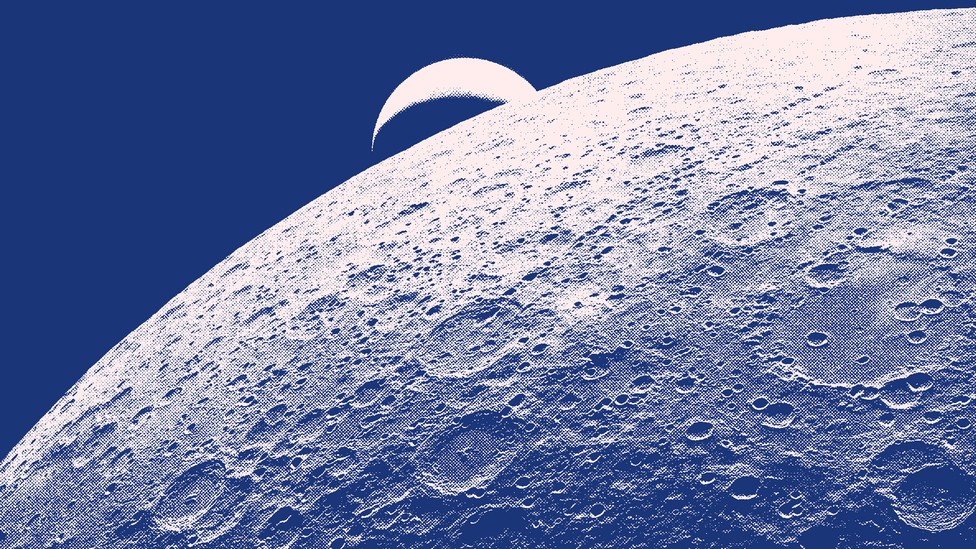
- The Atlantic, Stephanie Bai, yesterday: What Will Humanity Do With the Moon?, subtitled “As the Artemis missions work to build a permanent lunar home, we should remember why we keep going back.”
- Concluding,
In a message recorded before his death, the Apollo astronaut Jim Lovell welcomed Artemis II’s astronauts to “my old neighborhood.” Koch, Glover, Hansen, and Wiseman listened to his tape before their lunar flyby, more than 200,000 miles from home. “I’m proud to pass that torch on to you,” Lovell said. “It’s a historic day, and I know how busy you’ll be. But don’t forget to enjoy the view.” His words were a reminder to his fellow space travelers that they come from a short line of people who have peered out at the swirling mass of the universe, and also a reminder to us: to look up instead of down, if only for a little while.
- Slate, Molly Olmstead, yesterday: J.D. Vance Is Stumping for a Dictator. The Reason Should Make Us Very Nervous., subtitled “He wants Hungarians — and Americans — to stand for ‘the God of our fathers.'”
- So supporting dictators is about defending Western Civilization? Well, that makes a kind of sense, if you believe Western Civilization should be modeled after the Old Testament. But most of us do not believe that. We’re part of a culture that has grown up.
- More about the Christian right’s perpetual victim complex.
- Salon, Amanda Marcotte, today: The Christian right’s victim complex fuels Trump’s Iran war, subtitled “For evangelicals, there’s no limit in defending the president’s cruelty”
- NY Times, Gail Collins, today: Contemplating Trump at 80
- “President Trump is giving old people a bad name.”
- Feedback to that government Easter message. Not all of us are Christian zealots.
- CNN, today: Agriculture secretary’s religious Easter message to all employees sparks internal backlash and a formal complaint
- Not a new idea, but confirmed yet again.
- Paul Krugman, today: Losing the World’s Respect, subtitled “The Iran War looks like a tipping point”
- Text and video. “Sir, you are a loser.”
\\\
No music today. Watching the video feed.