
- Adam Serwer on our “gullible, cynical” America, a condition he dubs “gullicism”;
- And how this is an absence of “literacy” about how the world actually works;
- Why everyone thinking “God is on our side” is a problem;
- John Pavlovitz answers overseas friends worried about America: Yes, it’s worse than you think.
- And my position living in a cosmopolitan city, and fortunately rarely experiencing what John Pavlovitz has observed.
As I’ve realized recently, ‘literacy’ isn’t just about being able to read and write, it’s about understanding how the world works, which understandings about it are true and which are just stories and are not true, and how the human mind works and is biased to believe certain things and reject others in the name of tribal survival and solidarity.
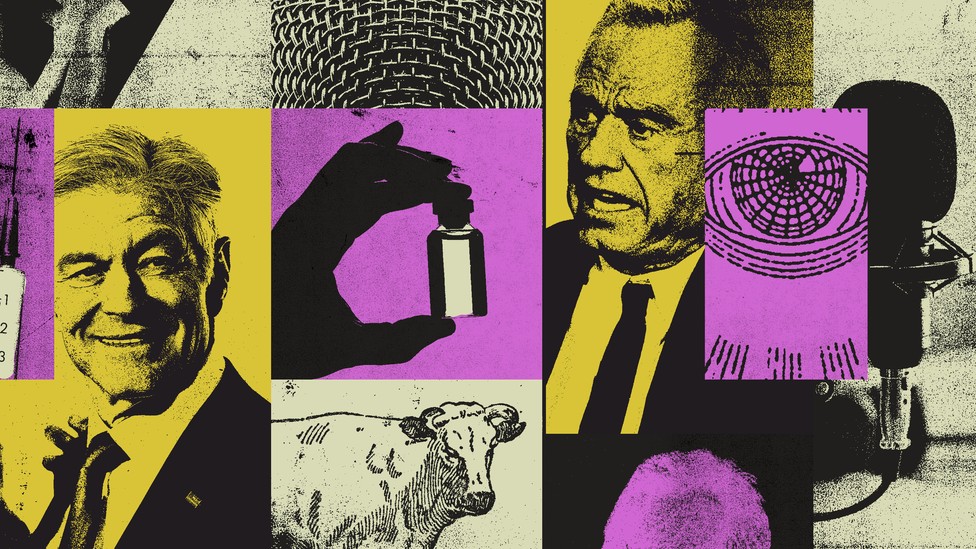
The Atlantic, Adam Serwer, 9 Mar 2026: Gullible, Cynical America, subtitled “The trouble with believing anything and nothing at the same time”
Many Americans believe that vaccines are unsafe, but will jab themselves full of performance enhancers. They think seed oils cause chronic disease, but beef tallow is healthy. They’ll say you can’t trust federally insured banks, but you can trust the millionaires who want you to invest in their volatile vaporware crypto tokens. They think food additives are toxic but support an administration removing all restrictions on pumping pollutants into the air and water. They’ll insist that you can’t trust scientists, because they’re part of the conspiracy. The podcaster selling you his special creatine gummies, though? He seems trustworthy.
A lot of this goes to errors of human nature, and the appeal of “common sense”, which both are based on evolution in a primitive environment that isn’t applicable to the modern complex world.
The coronavirus wasn’t the only epidemic to hit the United States in the past decade. Americans are also facing a bizarre epidemic of gullibility and cynicism—gullicism, if you need a portmanteau—that is drawing people into a world of conspiracism and falsehoods, one where facts are drowned out by a cacophony of extremely loud and wrong voices. Reliable information is both more available and harder to find than ever—and those who spread misinformation have been rewarded with positions of power, platforms they can exploit to further pollute the information environment.
RFK Jr. Measles. Dr. Oz.
Our problem, though, is unfortunately bigger than the measles outbreak, bigger even than anti-vaccine sentiment. The spread of anti-vax conspiracy theories is just another example of the gullicism that defines our age. The cynicism is highly selective: Gullicists see everyone’s hidden motives—except when they don’t. They are able to reject any claim rooted in actual evidence—whether in science, politics, or history—while embracing the most breathtakingly absurd assertions on the same topics. Indeed, documentation is often taken as further evidence of conspiracy, while assertion (that this or that will “detoxify” your blood or that COVID deaths were exaggerated) is taken as gospel.
This rejection of empiricism makes selling falsehoods easier and contradicting them harder, which creates a fertile environment for anyone with something to sell, whether shady businesses or authoritarian governments.
And this:
Gullicism creates not just a void but also an opportunity. It creates an ideal business opportunity for snake-oil salesmen to peddle products whose whole appeal is that they’re not scientifically validated. What is ultimately being sold is the feeling that consumers can prove they’re smarter than those snooty experts who think they know everything—and who probably are in on the conspiracy to deprive you of the truth.
Andrew Wakefield. A lot of people are saying. People selling you snake oil.
But here’s what I’m calling real-world literacy. It’s not that the experts are always right. It’s more nuanced (which is why conservatives don’t understand it).
To some extent, all information is based on trust. We were not present for the Constitutional Convention of 1787; we have to trust that the records of that era are being interpreted accurately by historians—and that the records are accurate to begin with. The reality is that no matter how intelligent you are, if everyone you trust is telling you something false, you are likely to believe it. And if everyone you distrust tells you something true, you are likely to disbelieve it. As the writer Will Wilkinson wrote in 2022, “Building a relatively accurate mental model of the world doesn’t have all that much to do with your individual reasoning capacity. It’s mostly about trusting and distrusting the right people.”
Yes, exactly. All beliefs are provisional and culturally bound. (That’s why scientists of centuries ago all “believed in God” as today’s religious like to claim, misunderstanding this.)
That’s not to say that experts are always right. Plenty of ballyhooed studies have been later discredited—the “red wine makes you live longer” one comes to mind. Historians revise their assessments of past events all the time. As Oliver Wendell Holmes Jr. once wrote, “Time has upset many fighting faiths,” including those of people with graduate degrees. Revising one’s views when we have access to new information—actual, validated information—is not nefarious.
And this is why people who believe their particular religion is the absolute truth, because they *just know*, are almost certainly wrong. (See next item.)
Examples from Trump and his minions about Iran. And:
A culture of gullicism is ideal for MAGA. First, it lets the government off the hook for actually governing, because if you believe, as Kennedy does, that you can fix most Americans’ health problems with diet and exercise, then there’s no need for state interventions in poverty or health care. And second, it undermines trust in empirical evidence, making the peddling of self-serving lies far easier.
And again, many people, especially conservatives, want simple answers (where none actually exist). As I’ve been saying. Another running theme here.
Part of what’s going on here is that people want a simple explanation for their troubles in a complicated world. Autism? It’s vaccines. Disease? Some foods are “poison.” Trouble with your kid? Must be brainwashed by … novels? Video games? Rap music? (This one depends on the decade.) The One True Reason trains a mind not only to reject complexity but to accept bigotry—which is why it’s so ideal for reactionary politics. No housing? Immigrants. No job? Immigrants. Inflation? Immigrants. Immigrants? It’s the Jews.
Mentioning right-wing activist Christopher Rufo, then concluding:
We have a data economy that thrives on selling products we don’t need for problems we don’t have, and a public that falls for these ploys—even as we think ourselves much too clever to be fooled.
\\
This dovetails.

LGBTQNation, Dr. Warren J. Blumenfeld, 8 Mar 2026: The U.S. thinks God is on its side in Iran. Here’s why that’s a problem…, subtitled “Can Jesus really help ‘save’ the Muslims and gay people like me?
So, a Christian Nationalist regime with their Jesus on their side, allied with a Jewish Nationalist regime with their HaShemon their side, have gone after an Islamic Nationalist regime with their Allah on their side, while each Nationalist regime believes they have morality on their side. And religious wars continue to bring humanity to the brink!
He quotes Bob Dylan’s song “With God on Our Side.” Then relates a lecture he gave on homophobia.
Following my presentation, two students came up to me — one woman and one man — to continue the discussion. The young woman began by telling me, “I’m really sad to hear about the abuse that you and others have received because you are gay or lesbian. I am here to tell you that I have a way to prevent that from ever happening to you again.”
“I believe that Jesus Christ can help you,” she said with a cheery expression across her face. “If you ask Jesus and pray hard, Jesus will save you from your homosexual feelings and help you to achieve the life that is meant for you, in his service, as a happy and healthy heterosexual. This will save you from the abuse you have suffered.”
The writer responds about how this seems to him like oppression.
She responded with surprise and claimed that what she was saying was not oppressive. She reiterated that she knew the “truth,” and that if I accepted that truth, I would be granted salvation and happiness. If I rejected that truth, I would continue to suffer earthly and, eventually, eternal torment.
Because she *knows.*
I think this kind of certainty is a mental atavism, or at best an illiteracy about how the world, and the human mind, works.
And then! The second person, a guy, comes up and insists that the Quran, as a sort of third “draft” (after OT and NT) of religious truth, is “The real truth. The ultimate truth. The only truth.”
The writer responds.
The essay goes on, at the end quoting John Lennon’s “Imagine.”
These people are why. As I’ve been discussing.
\\\
People get used to whatever circumstances they’re in, no matter how terrible. It’s a survival technique, so as not to simply give up. Outside perspectives help.

John Pavlovitz, 8 Mar 2026: Yes, World, It’s Worse in America Than You Think
Earlier this week, a friend from Australia sent me a text.
He’d been watching the news and said he wanted to check on me.
“We’re heartbroken to see what’s going on there.” He wrote. “Is it really as bad as it looks?”
Another sweet reader from England emailed me this morning with similar concern for our nation and for me, based on what she’s been reading and seeing in the media.
Over the past year, many kind-hearted people from all over the world have made similar inquiries about America, asking if it is as dire and alarming up close as it appears from a distance.
Yes, yes it is.
Pavlovitz goes on and on. I’ll quote a bit more.
But here on the ground, this malignant sickness has a distinct face, one that is far too familiar:
It’s the face of family members whose newly revealed racism is continually confronting us around the dinner table.
It’s the face of former church friends, who have completely abandoned the Jesus they claim faith in and chosen the vilest of idols.
It’s the face of once pleasant neighbors who casually regurgitate extremist propaganda in sidewalk conversations.
It’s the face of childhood friends spewing anti-immigrant filth on their social media profiles.
It’s the face of storeowners and hair stylists and restaurant workers, the interactions with whom have become careful walks through conversational minefields.
And it’s the face of relatives cutting you off from Facebook because they don’t want to hear your challenges to positions they can’t defend. Or so I gather.
\\\
I am fortunate enough to live in a relatively civilized, progressive, corner of the US. (Oakland CA, across the bay from San Francisco.) I feel relatively free to mention political issues without being afraid that my neighbors, or people in shops, would be upset or challenge me. There’s a cosmopolitan attitude in big cities like SF/Oakland that I’d like to think portends a future of mankind, a global society in which religious and partisan differences have become swamped and diluted by the goals of a species that needs to survive existential crises, and move on to greater things. I know there are ups and downs in human progress: but human progress is real, even if it’s a three steps forward, two steps back matter. And there’s still the potential for apocalypse at any moment. Trump and his fans seem to cheer bringing it on.