- The World Bank thinks better of free-market absolutism;
- For some, every thing the least bit unusual is *meaningful*.
A couple non-political items today.
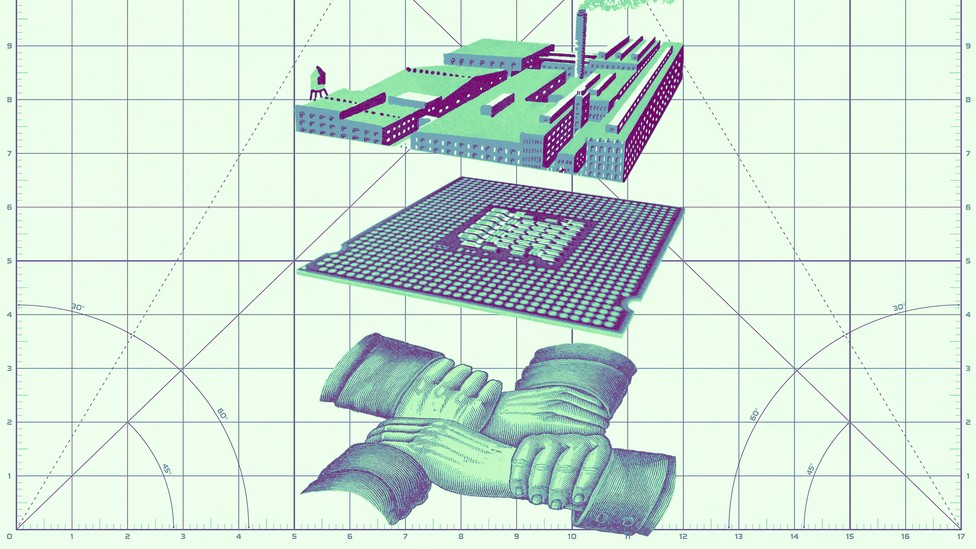
The Atlantic, Rogé Karma, 16 Apr 2026: A Pillar of the Economics Establishment Admits That It Was Wrong, subtitled “In a new report, the World Bank thinks better of its old free-market absolutism.”
For anyone or any institution to admit they were wrong, to have learned from evidence, is progress. And rare. Note “simple”:
How does a country get rich? For decades, the economics establishment generally agreed on a simple answer: Embrace free markets and avoid “industrial policy”—state-led efforts to shape what an economy produces—at all costs. No institution embodied this viewpoint, widely known as the “Washington Consensus,” quite like the World Bank. Established in 1944 to provide low-interest loans to developing countries, the bank soon became the intellectual center of development economics. In the 1990s, it took a hard stance against industrial policy, turning the concept almost into a taboo.
But now industrial policy is back, and it has a surprising new champion: the World Bank. A report issued last month argues that the bank’s previous stance had things backward: Government intervention, when done right, can actually be an essential ingredient of economic success. Industrial policy “should be considered in the national policy toolkit of all countries,” the report concludes.
\\\
And this strikes me as completely wrong-headed. Things just happen. They don’t need to “mean” anything. You’re making it up. It’s subjective. It’s arrogant.

Washington Post, opinion by Theodore R. Johnson, 15 Apr 2026: Not everyone notices the signs in life. Do you?, subtitled “A mother turkey and an unusual photo were the meaningful moments I needed.”
Fine, if it makes you feel better. But you’re imbuing “meaning” onto random events.
Late one spring afternoon a few years ago, I braked for a large turkey that had cautiously stepped into the street. Seeing that the coast was clear, it dipped back into a patch of tall grass and quickly emerged with chicks, no more than a couple of weeks old. As the seven birds filed across, it felt like a sign. Less than a minute later, with my teenager looking up possible meanings of birds in your path, a rabbit darted in front of us. We could hardly believe the timing. Then, a second one appeared, like an exclamation point to ensure the message hadn’t been missed.
While seeing either animal isn’t uncommon in Virginia, the double encounter felt too unlikely to be random — a nudge from somewhere to pay special attention. Legends have it that turkeys are signs of bounty and blessings, and rabbits bring good fortune. That summer promised to be an anxious one, with each member of my family awaiting a big decision on either sports, school or work. So I was in the market for a little luck when symbols for it found me.
But this is human nature, and finding “meaning” and “purpose” in random events is arguably what has kept the species alive. That is, you can be wrong about seeing “meaning” 90% of the time, but the remaining 10% could be valid associations that inform about the world and thus promote survival. Where wisdom chimes in is in understanding why those other 90% happen anyway.
Psychologists call this a meaningful coincidence, experiences where chance events feel connected or symbolically significant. One study notes they’re most common among people in stressful situations and those who consider themselves spiritual or religious. That made me an easy mark twice over. I was raised on folklore and parables that give special meaning to the things happening everywhere: Cardinals appear when angels are near, and double rainbows are a sign of heavenly promise. Neither are rare, but sometimes their appearance feels tailor-made to the moment. For some, our roadside encounter might’ve been unremarkable, forgotten by day’s end. But for me, dismissing it as coincidence was selling it short.
And this aligns with studies of why people latch on to conspiracy theories — in times of uncertainty and stress. Humans are not rational animals.