Earlier posts: Post 1; Post 2; Post 3; Post 4; Post 5; Post 6; Post 7; Post 8; Post 9; Post 10.
Chapter 12, To What End?
Wilson’s final chapter ponders options for humanity’s future, and comes down on the side of “existential conservatism.” And since it is about humanity’s future, the chapter has some things to say about the themes of science fiction.
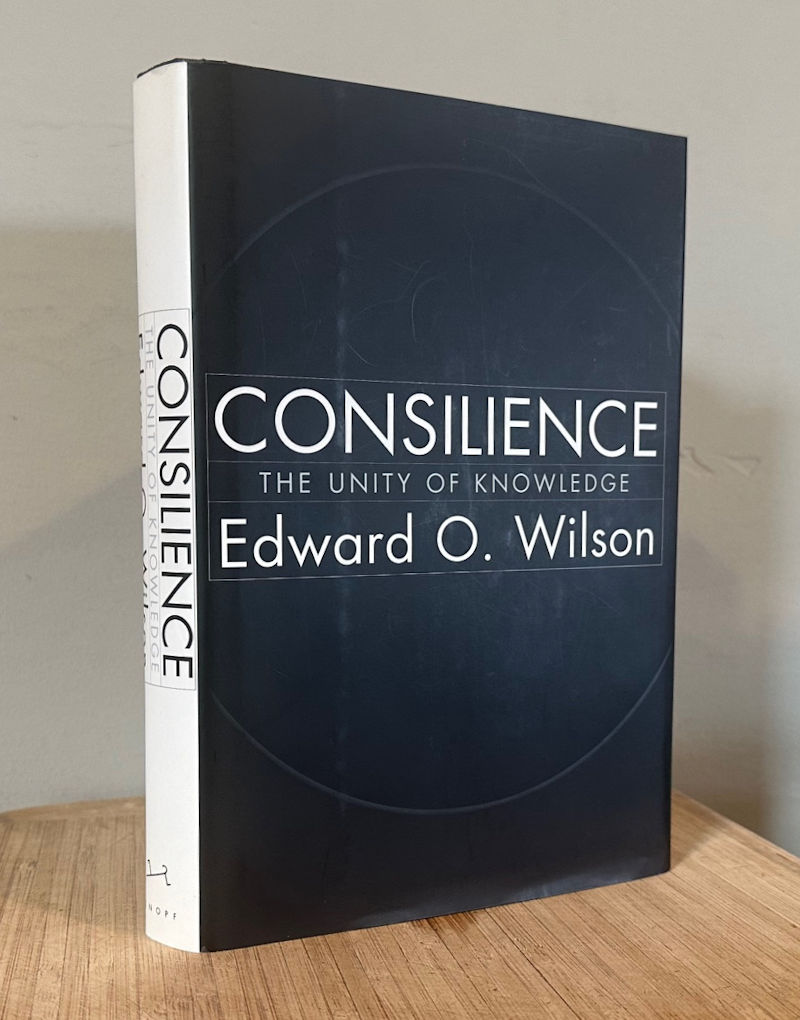
Key points in this chapter:
- The big questions are: what we are, where do we come from, and how shall we decide where we go. Neither theology nor western philosophy has done well answering them.
- There are two risks in gaining this understanding. One: knowledge leads to increase in numbers, the diminishment of the natural world, and technology become a prosthesis. Two: it brings the prospect of altering the biological nature of the human species.
- Natural selection isn’t really still at work among humans. What is happening is a global homogenization.
- We face an age of ‘volitional’ evolution, in which with gene therapy we can both cure diseases and engineer improvements. What ‘improvements’ will people choose?
- The answer will reflect our environment ethic: do we think we are adapted to one specific environment? Or that we are outside the natural world and are able to overcome any limits?
- Wilson summarizes the current state of the environment [remember this is 1998]: global population rising, eating up the planet’s resources, nearing the limits of food and water supplies, changing the environment. Exceeding the carrying capacity of the planet.
- It’s too late to return to Paleolithic serenity; the goal must be sustainability. Economists, who preach endless growth and pretend the environment doesn’t exist, are part of the problem.
- Wilson pleads for preserving “Creation,” i.e. the environment, the biodiversity. Humanity is driving other species to extinction.
- “The legacy of the Enlightenment is the belief that entirely on our own we can know, and in knowing, understand, and in understanding, choose wisely.”
- What does it all mean? Considering our deepest roots, Wilson comes down on the side of existential conservatism. “This is what it all means. To the extent that we depend on prosthetic devices to keep ourselves and the biosphere alive, we will render everything fragile. To the extent that we banish the rest of life, we will impoverish our own species for all time. And if we should surrender our genetic nature to machine-aided ratiocination, and our ethics and art and our very meaning to a habit of careless discursion in the name of progress, imagining ourselves godlike and absolved from our ancient heritage, we will become nothing.”
Comments: