
- The world worries about presidential insanity and nuclear war until Trump backs down, yet again;
- AI and “cognitive surrender”;
- With some perspective about electronic calculators and other forms of new technology over the millennia;
- And how the surrender of critical thinking aligns with the credulity of religious faith;
- Paul Krugman on MAGA’s war against science; that Trump and Hegseth think “overwhelming violence is Biblical” is a problem with the Bible.
- “The moral arc of the universe bends toward finding out.” (via Mary Doria Russell)
- Ennio Morricone: Once Upon a Time in America.
No surprise really: Trump put off his threats against Iran. This is after he said, just this morning, “A whole civilization will die tonight, never to be brought back again.” And reports of senior military officials considering disobeying his orders. But nothing from Republican politicians.

Washington Post, today: Trump agrees to suspend attacks for ‘two weeks’ if Iran opens Strait of Hormuz, subtitled “Amid threats to bomb civilian infrastructure, the president said he had received a 10-point proposal from Iran that formed a ‘workable basis’ for continued negotiations.”
Just 90 minutes before President Donald Trump’s 8 p.m. deadline to “wipe out a whole civilization” with massive strikes on Iran’s energy infrastructure and bridges, he granted a two-week extension for diplomacy to continue.
\
Meanwhile I’ll note some comments from earlier in the day.
Robert Reich, 6 Apr 2026: Trump has really, seriously, frighteningly lost his mind, subtitled “His latest threat is bonkers”
Paul Krugman, today: Our Darkest Hour, subtitled “The civilization we destroy may be our own” (Video and text)
The Atlantic, David A. Graham, today: Trump Threatens to Destroy an Entire Nation, subtitled “The president’s position is that if he wants to wipe out a ‘whole civilization,’ then that is his decision to make.
That’s as much as I’ll dwell on this today.
\\\
Two related items.

The Guardian, 2 Apr 2026: Pupils in England are losing their thinking skills because of AI, survey suggests, subtitled “Two-thirds of secondary school teachers report a decline in core abilities such as writing and problem-solving”
Pupils using artificial intelligence are losing their capacity for critical thinking, according to a survey of secondary school teachers in England.
Two-thirds said they had observed the decline among children who they also said no longer felt the need to spell because of voice-to-text technology.
“Students are losing core skills – thinking, creativity, writing, even how to have a conversation,” one teacher told the National Education Union poll.
“AI is destroying what ‘learning’ – problem-solving, critical thinking and collaborative effort – is,” said another. A third anonymous contributor added: “Children no longer feel the need to spell as voice-to-text replaces knowledge.”
And
Ars Technica, Kyle Orland, 3 Apr 2026: “Cognitive surrender” leads AI users to abandon logical thinking, research finds, subtitled “Experiments show large majorities uncritically accepting ‘faulty’ AI answers.”
When it comes to large language model-powered tools, there are generally two broad categories of users. On one side are those who treat AI as a powerful but sometimes faulty service that needs careful human oversight and review to detect reasoning or factual flaws in responses. On the other side are those who routinely outsource their critical thinking to what they see as an all-knowing machine.
Recent research goes a long way to forming a new psychological framework for that second group, which regularly engages in “cognitive surrender” to AI’s seemingly authoritative answers. That research also provides some experimental examination of when and why people are willing to outsource their critical thinking to AI, and how factors like time pressure and external incentives can affect that decision.
In “Thinking—Fast, Slow, and Artificial: How AI is Reshaping Human Reasoning and the Rise of Cognitive Surrender,” researchers from the University of Pennsylvania sought to build on existing scholarship that outlines two broad categories of decision-making: one shaped by “fast, intuitive, and affective processing” (System 1); and one shaped by “slow, deliberative, and analytical reasoning” (System 2). The onset of AI systems, the researchers argue, has created a new, third category of “artificial cognition” in which decisions are driven by “external, automated, data-driven reasoning originating from algorithmic systems rather than the human mind.”
This last paragraph is, of course, alluding to the title and categories of Daniel Kahneman’s foundational book (partly reviewed here).
Perspective: when electronic calculators came out in the early 1970s (I remember a high school science teacher brought one in, a Texas Instruments I think, to pass around class, in 1972 or so), no one bothered to divide by hand anymore, or calculate square roots, though there were pencil and paper techniques for both. So now children don’t learn to spell because voice recognition and correction software exists to spell for them? That might be slightly different. Literate adults, I think, *should* be able to spell themselves, if only because correction software only works to a point and isn’t available everywhere. Also, ability to spell is a sign of intelligence; that’s how we can conclude things about the MAGA/anti-science crowd that waves around placards at protests, and posts screeds on Facebook, with obvious misspellings.
That said, there’s an inevitable shift in human society as tools replace more and more individual human effort. As has been happening for millennia. (The Greeks worried that capturing words on scrolls would undermine the human ability to memorize.)
And yet, the points about critical thinking are genuinely worrisome, because that means people are abandoning, even renouncing, their ability to think and to solve problems when given easy answers by the machines (that aren’t always correct). I like the term “cognitive surrender,” because I would extend that term to what I’ve thought for some time about religion. A person who is inculcated from an early age to believe in religious myths, to think there’s virtue in believing things without evidence, and especially to take as real various fantastical stories (as in the Bible) that violate any number of scientific principles that have been discovered and proved over and over again in recent centuries, has essentially abandoned reason in favor of fantasy. They surrendered cognitively. And that’s why they’re subject to conspiracy theories and beliefs in demons and teleportation, as in recent stories. They can’t tell reality from fantasy.
\\\
Briefly:
And thus, there’s no need for studying reality; just believe what you want to ‘believe’. Whatever makes you feel good.
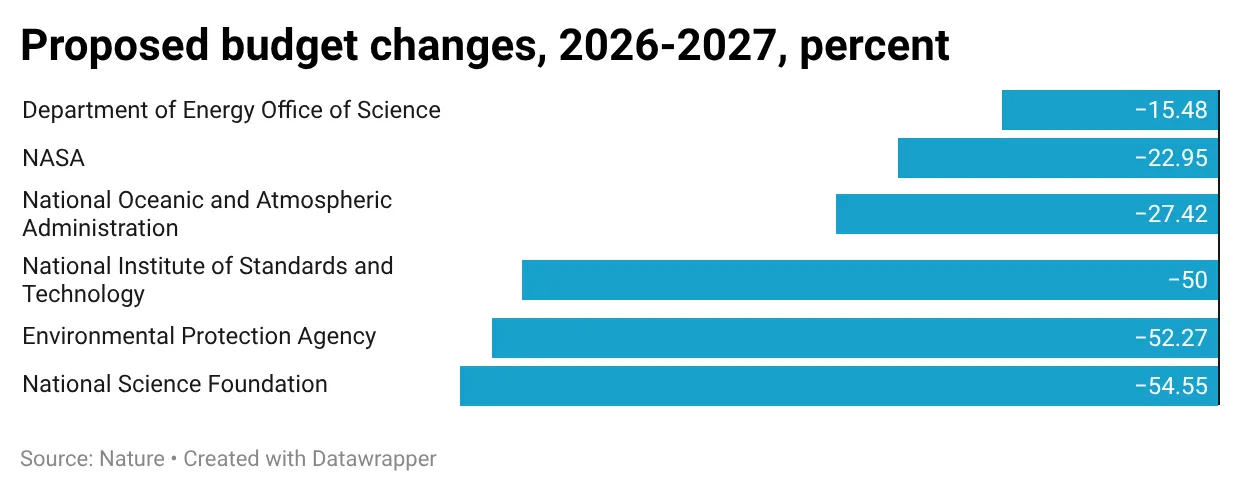
Paul Krugman, today: MAGA Is Winning Its War Against U.S. Science, subtitled “When a political movement believes that ignorance is strength”
\

JMG, today: MAGA Pastor: Trump And Hegseth Are “Ordained By God, Praying For Overwhelming Violence Is Biblical”
This is a problem with the Bible. Why do so many people think it’s the fount of all wisdom, just because it’s the oldest book still in print? That nothing has been learned since it was written?
\
Mary Doria Russell today on FB
The moral arc of the universe bends toward finding out.
She credits someone named Alex Norris, but I don’t know which Alex Norris that is.
\\\
And now I’m into Ennio Morricone. Beginning with his score for the 1982 version of The Thing, the other night, as I was writing up the 1951 version; then Marco Polo; today Once Upon a Time in America.
This doesn’t seem to be the full soundtrack, but it’s a taste.