- The decline of reading, and all that that means;
- And how MAGA folk don’t understand why the rest of us aren’t pretending anymore. It’s about conscience.
Things that generations take for granted can change and be gone.
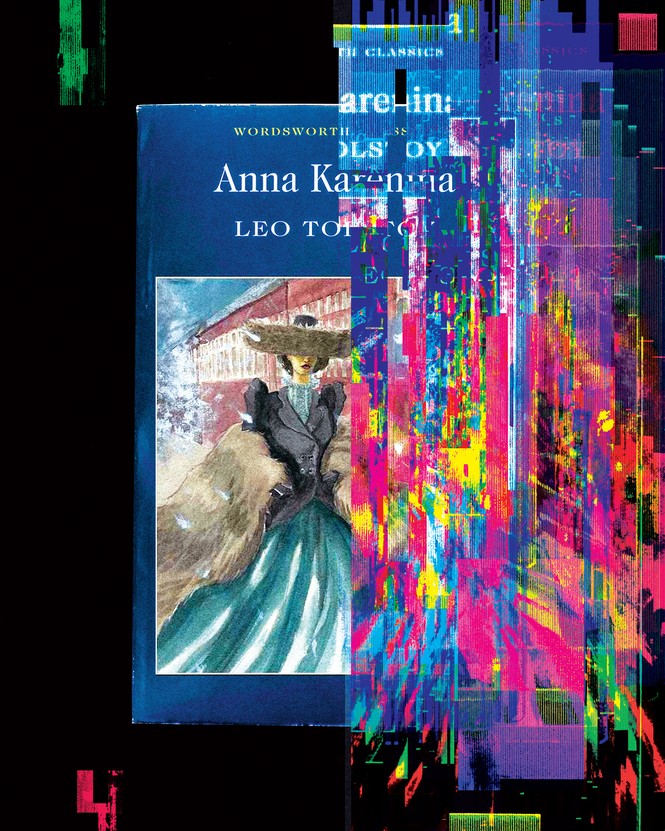
The Atlantic, Rose Horowitch, today: The End of Reading Is Here, subtitled: Optimists once believed that universal literacy was inevitable. Now it seems that the age of reading might be a short anomaly in human history. [gift link]
The article begins by recalling the Library of Alexandria.
Twenty-three hundred years ago, the legend goes, King Ptolemy I of Egypt asked his court adviser to assemble a comprehensive collection of the world’s written works. Ptolemy, who had served under Alexander the Great, envisioned a library that would safeguard the sum total of humanity’s knowledge. His successors inherited this mandate. Royal forces ransacked every ship that arrived at Alexandria, searching for scrolls. These were stored at the Mouseion, a shrine to the Muses modeled after Aristotle’s Lyceum. Aristotle’s own book collection was said to be among the holdings.
Much of the history of the Library of Alexandria has been lost. But we know that it was the site of many of the premodern world’s greatest intellectual achievements. The king paid scholars to live and work in the library, and the collection was available to anyone “eager to study, an encouragement for the entire city to gain wisdom,” a visiting Greek rhetorician wrote. It was at the library that Eratosthenes calculated Earth’s circumference and Zenodotus edited the earliest manuscripts of Homer’s epics. Euclid, who wrote the Elements of geometry, may have studied there as well.
The library disappeared due to war, sacking, and neglect. “Humidity, mice, and insects slowly ate away at the papyrus scrolls.”
“It is not that the disappearance of a library led to a dark age, nor that its survival would have improved those ages,” the classics scholar Roger Bagnall has written. The fact that the library was allowed to die showed that the dark age had already arrived.
And now here we are.
Some 2,000 years later, under very different circumstances, the darkness is gathering again. Americans, once members of a proudly literate society, read much less than they used to. According to the National Endowment for the Arts, which conducts the most comprehensive survey of the nation’s reading habits, fewer than half of all adults reported having read a book of any kind in 2022. Only 38 percent read a novel or short story. A study analyzing 236,000 responses to the American Time Use Survey found that the proportion of Americans who read for pleasure on any given day fell from 28 percent in 2004 to 16 percent in 2023. (The study looked at people who had read a book, magazine, or newspaper; listened to an audiobook; or read an e-book.) Gambling has become a more common leisure activity than reading a book: Last year, 57 percent of Americans placed a bet. The decline in reading cuts across age groups, gender, and education levels. Even the demographics that traditionally read the most—retirees, women, and college graduates—have seen a collapse.
And, books are shorter and simpler than they were only decades ago. And arguably less well-written. Dominated by genre and graphic novels. Literacy crisis?
And yet, strangely, Americans are probably reading more words than ever before. What has changed is what they read, and how. People are bombarded with emails, text messages, X posts, Reddit threads, Instagram captions. This explosion of textual fragments has come at the expense of devoting sustained attention to longer written works that convey rich and complicated information. Maryanne Wolf, a cognitive neuroscientist at UCLA, argues that people are losing the ability to think deeply about writing. That doesn’t mean they are forgetting how to decode individual words. Rather, they are losing the higher-order abilities of comprehension and synthesis. America, in other words, isn’t illiterate. It’s postliterate.
Things are about to get worse, and fast. …
Kids read less. They rely on ChatGPT. Long article: I’m only skimming. Am I part of the problem? Or is part of the problem is that with the internet we have access to so much more that we *can* read. I’m happy to read nonfiction books very closely, and take detailed notes, as I post here. For items online, I’d rather the writer publish a book than a 10,000 word essay. Topics in the essay at hand:
A Clockwork Orange. Gutenberg. The Founders. Dickens. Marshall McLuhan. Neil Postman. Digital devices. People’s brains will change. As will their attention spans. Video is passive, and does not stimulate deeper thinking. College students. Dickens again. Trump’s communication style. AI. Orwell.
At the same time Barnes & Noble is opening more stores; book clubs are popular; audio books are popular. Some perspective:
We’ve been here before. When society first transitioned from orality to literacy, only a small minority could read. As the only individuals who possessed this valuable skill, they occupied a privileged position, and were paid handsomely for their work. At the Library of Alexandria, scholars in residence lived in the city’s royal complex.
Today, reading is again clustered among a small minority of the population, but being a person of letters confers less status than it once did. The remaining readers are marginalized, mocked, and in many ways irrelevant.
And.
Books used to be an essential source of knowledge, memory, wisdom, and morality. They were written by older generations and passed down to the young in a vertical transmission of culture, the social psychologist Jonathan Haidt told me. Now information moves horizontally, from young person to young person. This dynamic makes figures such as MrBeast and TheBurntPeanut the guardians of American culture. The decline of reading didn’t turn the world upside down. It turned the world sideways.
And finally concluding,
When the Library of Alexandria disappeared, the knowledge inscribed on its scrolls was lost forever. We can only guess what else Eratosthenes and Euclid might have written. The text turned to dust. That won’t happen today; all of the words in the great library could be stored on a single computer chip. Nowadays, even the most obscure academic monographs are scanned and digitized. Google Books and the Internet Archive represent libraries of unfathomable proportions. We can navigate to them with a few keystrokes, not a perilous journey across the Mediterranean. There’s little risk of their texts succumbing to humidity or mice.
But the threat of apathy remains. What we’re losing is the ability and inclination to read those texts. An astonishing wealth of information and wisdom has been bequeathed to us. What we’ll do with this inheritance is up to us.
I think it’s fair to say that books, and related texts like short stories in magazines, have been a major interest and preoccupation of my life. Not as a hobby, not to kill time, but because they contain great insights and truths about the world outside one’s immediate experience. As reading passes, what’s to allow people to escape the influence of political and religious zealots? Or ordinary religious inculcation?
Coincidentally, the past couple years has seen the apparent decline of the last three print magazines that have, for decades, published science fiction and fantasy stories, magazine I’ve read for decades. They all mysteriously have problems with their printers. Two of the three publish electronic issues. But none appear on sale in bookstores or newsstands (not that there are any newsstands anymore), where I had bought them since the early 1970s.
I think this passing of the age of literacy will become a theme in my grand outline. Which no one will ever read.
\\
One more long-form piece today. An essay. More reading!
This particular essay has been linked by several of my Facebook friends. Thom Hartmann is a political commentator whom I’ve been aware of, along with many others, even if I don’t often cite him here. But this piece seems to have resonated.

The Hartmann Report, Thom Hartmann, 6 Jul 2026: They’re Shocked We Won’t Pretend Anymore, subtitled: The real divide isn’t political; it’s between those willing to normalize modern fascism’s cruelty and those who refuse…
The “partisan split” of Americans showed up in a big way at Fourth of July celebrations and backyard barbecues last week, but the media, while noting or even complaining about it, rarely mentions exactly why it’s happening.
A few weeks ago Louise and I were having coffee with an old friend who’s known us since the early days of the radio show, and somewhere between the second cup and the muffins she said something that’s been rattling around in my head ever since. Her sister, a three-time Trump voter, had finally called — after months of silence — and demanded to know why our friend had stopped returning her calls.
“It’s just politics,” the sister said. “Why are you taking this so personally?” Our friend, who is queer and married, listened for about thirty seconds and then said, very quietly, “Because you voted for the people who want me to disappear, and you knew that when you did it.”
Then she hung up. She told us she felt awful about it for about an hour, and then she felt nothing at all, and the nothing was almost worse than the guilt would’ve been.
I’ve heard variations on that story dozens of times in the past year, and apparently so have a lot of other people, because a piece making the rounds on Daily Kos a few weeks ago by the writer Vyan put words to something that’s been building in millions of American households since January of 2016.
It goes on. They truly don’t understand.
OK, here’s a later bit:
[Greg] Gutfeld and his colleagues want to frame all of this as “Trump Derangement Syndrome,” as a kind of emotional incontinence on the left. But there’s a much older word for refusing to extend warmth and intimacy to people who’ve signed off on the persecution of your neighbors and those who stand for democracy against authoritarianism, and it’s not derangement.
It’s conscience.
And that’s all for this evening.