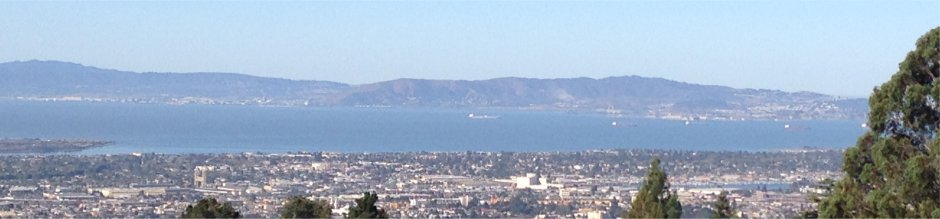
Wonder is freely available, in reality, for people who bother to look up from their holy books and political screeds and capitalist efficiency mandates.
The Atlantic, Ian Bogost, today: The Missing Ingredient of Modern Life, subtitled “Why we need wonder”
The writer discusses the current idea of “maxxing” and the culture of optimization ever since industrialism emphasized efficiency and productivity, summarizing:
Optimization is terrific if you want to get somewhere else in the future. But it’s terrible for being where you actually are right now. When goals overtake experience, you lose the freedom to encounter your life as it happens. And when you lose that ability, you are no longer living in full. We used to optimize work so we could do everything else. Now we optimize life as though living were another job. Too many of us seem to be maxxing our way out of the experiences and perspectives that give us maximum meaning.
Here we are with meaning, again. Then:
I’ve come to believe that wonder, the most immense of our sensations, is the antidote. Wonder can rise up anywhere. It might arrive after you hike to Hopi Point, nearly a mile above the Grand Canyon’s river floor. Or as you take in the northern lights from Tromsø, Norway. Or, on a different scale, wonder might be expected while you hold your newborn child for the first time, recognizing human life in its primal form and knowing that your own has now changed entirely. For children themselves, wonder remains abundant—in the bigness of a Tyrannosaurus rex in a museum, or the flicker of fireflies in the summer dusk. But for many adults, wonder is too often compartmentalized: a feeling we associate with extraordinary and rare experiences, banished to a realm outside the mundanities of daily life.
Then more about the problem. And then recognizing that wonder can be found even in the little things in modern life, like the “a bit more” button on a toaster. More generally: appreciating reality. The writer asks people, and concludes:
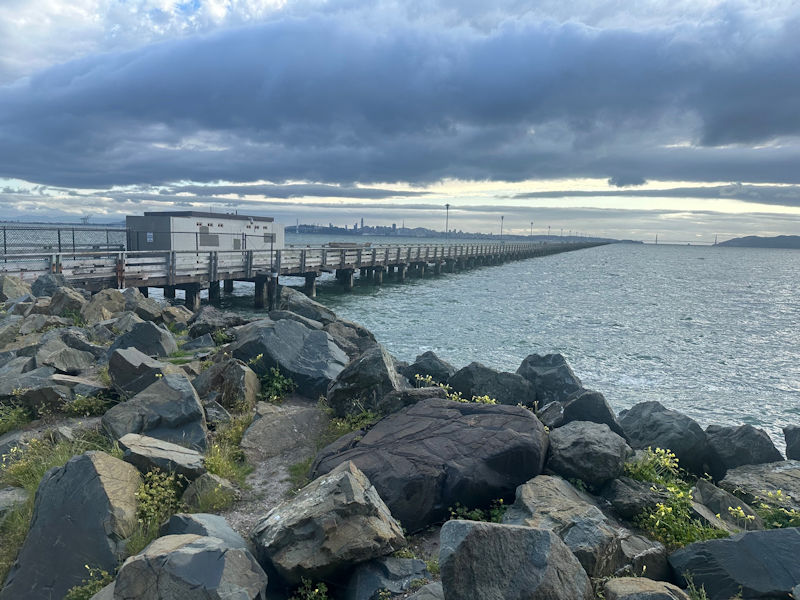
Many people did describe the familiar icons of awe—the moment when an airplane breaks through the clouds, and all you can see is the great expanse of sky ahead; the experience of strangers gathering silently along a shoreline to watch the sun vanish below the horizon. But just as many have told me that they’ve found wonder in the mundane—watching a procession of ants carrying things they value, for instance. I’ve corresponded with people who described their affection for an old refrigerator; a sewing machine whose hums and clicks became a friend’s familiar voice; pots and pans that carried decades of family meals; and even a toilet whose owner began to admire it after a repair revealed its elegant method of operation.
Whenever you cease treating the world as scenery or equipment, you’ll find that you encounter the world as something inexhaustibly, constantly present. Oceans and ants, sewing machines and sunsets, strangers and screen doors, microwaves and mountains, rocks and racquets, lamps and laughter all prove equally worthy. Our expectations for wonder sometimes wane, but it is with us all along, waiting to be rediscovered.
I’m thinking about scale-blindness and realm-blindness and how awe and wonder come from the abrupt realizations of things that exist outside our ordinary intuitive experience, which occurs at relatively restricted scales and realms. This is the source of science fiction’s “sense of wonder” and “conceptual breakthrough,” too.
\\\
This is significant, in more ways than one.

CNN, today: UN votes to adopt new map that makes our world look very different
First, it’s long been known that the Mercator Map — still seen in the background of Saturday Night Live’s “Weekend Update” segment, for example — grossly distorts the world. It makes Greenland look as big as Africa — which may in fact have caused Trump to overvalue it.
But the second way is that, in the UN vote, the United States was the only country to vote *against* adopting this map. Why? You can guess.
Personally, I like the Goode homolosine projection, the so-called orange peel map, which leaves relative sizes intact and doesn’t pretend the globe can be flattened onto 2D map. Though, as it happens, it splits Greenland in half.
No projection is perfect. Use a globe.
\\\
I have items today about how conservatives are against education, how Texas is eliminating gender and climate change courses, and how conservatives are obsessed with contamination and degradation (concerning the blood supply). Same ol, same ol. Let’s skip them for now.
Also, items about Wendell Berry and an evangelical defending herself. I’ll check these out later. I’m curious how the evangelical defends her faith while evangelicals demonize Muslims. Meanwhile, I’m finishing up a post about MERE CHRISTIANITY.