About FTX and effective altruism; political examples in the spirit of the recent Borowitz book; examples of how the media covers events; and a perspective on the American economy under Republicans and Democrats.
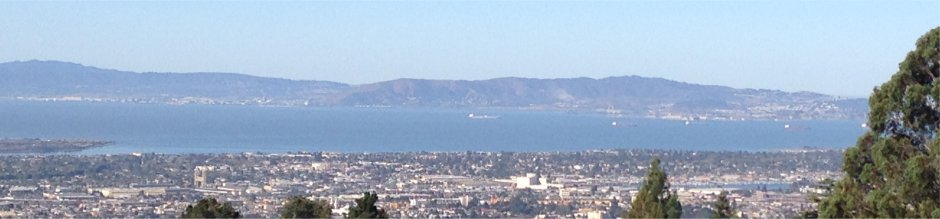
Image here: today’s sunset.
About FTX and effective altruism; political examples in the spirit of the recent Borowitz book; examples of how the media covers events; and a perspective on the American economy under Republicans and Democrats.
Image here: today’s sunset.
It’s been obvious for a couple decades that fantasy is outselling science fiction, and dominates the books critics speak of when compile lists of the “best science fiction and fantasy” of the year.
Today’s post is about how that is playing out in 2022.
Today’s items are inspired by a new Pew Survey on how religion influences Americans’ views on the environment, and by the UN announcement that Earth’s human population has reached eight billion.
I hesitated reading this book, because I’ve seen and heard for myself over the years the vacuous platitudes of Ronald Reagan, the jejune idiocies of Dan Quayle, the conspiratorial lies of Donald Trump. So what would be gained by reading it…?

Two notable items today from the Tor.com website. About stories; about crashed spaceships (loosely).

Context; Where we are; Connie Willis; Christian dictatorships; More MAGA than ever; Russian delicacy; Lagniappes.
Review:
Rather similarly to a couple three other nonfiction books I’ve read lately –- Ari Wallach’s LONGPATH (review here, Jim Al-Khalil’s THE JOY OF SCIENCE (review here), and even Justin Gregg’s IF NIETZSCHE WERE A NARWHAL (review here) -– this book is another basic, entry-level book covering ideas familiar to forward-looking thinkers of all kinds, but especially to scientists and to science fiction readers.
The difference between this and those other books is that Tyson is a major cultural figure, probably the best-known scientist in the nation. He’s done TV shows (Cosmos), he does the lecture circuit, and he has lots (hundreds of thousands? Don’t know exactly) of followers on Twitter. He pokes fun at the bad science in sci-fi movies. (And in the latest Top Gun.)
Charles Mackay was a Scottish poet who lived from 1818 to 1889. He was the author of the book Extraordinary Popular Delusions and the Madness of Crowds, in 1841.
Posted yesterday on Facebook. To the extent that there’s a difference, apparently I should have said streetworks, not roadworks. You can look it up.
About free markets, the fundamentals of biology, and unsustainable growth.
And I probably won’t read them simply because I have so many other books to read, such as the few on a bookcase just to the left of my computer desk. Image turned sideways. (And others all over the house.)
First is this one, seen in a Publishers Weekly review this past week.