2016 European Tour, Days 4-5: On the Boat; Cádiz; Málaga

Wednesday, 5 October: Last morning in Lisbon, we found a sidewalk cafe for croissants and coffee. I did a bit of computer work, then we checked out of the hotel and taxied to the cruise ship.

We’re on an Oceania cruise this time; our two previous cruises, to Alaska in 2008 and Hawaii in 2010, were on Norwegian. When we planned this cruise I’d thought the Oceania ships were somewhat smaller and more exclusive. Turns out this Oceania ship, Marina, is virtually identical to the Norwegian ships we’ve been on; apparently, I’ve gathered, the two companies are the same at some level. The difference between those earlier cruises and this one is that this is geared toward adults, without activities or events for children, and so there are virtually no children, or hardly couples under 40, in view. It’s a boatload of geriatrics…

The ship is well-furnished, with the usual buffets and specialty restaurants, bars, a small casino, a spa and workout area, and a quite decent library. The library has the usual array of bestsellers, but also shelves of classics, travel books, quite a bit of fiction, with a smattering of SF. There are even two Greg Egan books! (OCEANIC and ZENDEGI.) And recent nonfiction from my own shelves, by Shermer, Wilczek, Mlodinow, Hidalgo. The ship also has a DVD library with several hundred selections.

We booked with a promotional package that includes free wi-fi — but it turns out the free wi-fi applies to only one device *at a time*. Between us, Yeong and I have five devices, two laptops and three iPhones. So we alternate, which can be irritating. An extra paid account runs almost $1/minute.

We’re in a different port every day on this cruise.

Thursday, 6 October, was Cádiz, a Spanish port city west of Gibraltar, that sits on a spit of land shaped like a fishhook, once an island but now connected by narrow peninsula to the mainland. We booked a “highlights of” excursion that drove us around the area in a bus before we disembarked to walk among the narrow streets, browsing through the city museum, and being set free to do some shopping. The town has its cathedral, ruins of a Roman theater, still being excavated, and the familiar cobblestone streets.

Friday, today the 7th, we’re in Málaga, note the accent on the first syllable, a larger port city east of Gibraltar — and since we sailed overnight, we had no chance to see the big rock as we cruised by. We didn’t book an excursion here; we wandered the city on our own, with a map and advice from an advisor on the boat. The city is famous as Picasso’s birthplace, and has a decent if small Picasso museum. As in Lisbon there’s a castle, the Castle of Gibralfaro, and below it a large palatial fortification called the Alcazaba, a vast maze of stairs, open courtyards, and enclosed rooms running half-way up the hill — though without any way out at the top to continue on to the castle! We had to descend through the maze and find a parallel road from the bottom to make the not inconsiderable climb up to the castle (only to discover a bus can take you were via a back road). Gibralfaro is larger than the Lisbon castle if more of a shell, without much detail, but offers spectacular views of the coast and city in every direction.

And Malaga has a cathedral, and a roman theater (in much better shape than the one in Cadiz) and narrow streets full of shops and sidewalk dining, and street vendors selling almonds. We had lunch in a crowded plaza across from the theater and beneath the Alcazaba. (Note again: a tiny cafe at the castle called itself a bar and serves hard liquor; the sidewalk lunch spot had a considerable bar, outside by the tables and umbrellas.)

We changed time zones between Portugal and Spain, losing an hour. Sunrise this morning was at 8:30! Maybe that’s one reason people rise late, lunch late, and dine late…

Posted in Uncategorized | Comments Off on 2016 European Tour, Days 4-5: On the Boat; Cádiz; Málaga

2016 European Tour, Day 3: Lisbon: The Tour, the Tower, the Castle, and Dinner

Tuesday 4 October. We had an extensive breakfast buffet at the hotel to get started. I mentioned last time the cocktail stand at the giant food court– We’ve also seen various cocktail kiosks along the riverfront and the avenue near our hotel. Gin and tonic to go! Never seen such things in other European cities, let alone in the US. At the breakfast buffet in the hotel, there was a bottle of sparkling wine, and champagne flutes, for the taking, along with the usual spread of cold cuts, scrambled eggs, pastries, and juices.

It’s a tourism cliche, but taking a bus tour is actually a decent way to get an idea of the layout of an unfamiliar city, I think. We took a Yellow Bus tour, the kind where your ticket is good for 48 hours and you can get off and on any bus along a particular route as often as you like. Our route took us north of the Avenida where we’re staying, past various museums, department stores, government facilities, and parks, then eventually westward along the river to the Belém Tower, a 16th century tower built as a fortification at the mouth of the Tagus River. We climbed narrow spiral staircases to the top level.

Leaving the tour bus around 4pm, we headed up into the windy streets of the Alfama district, in search of the brown castle we could see from the avenue below. It was tricky to find, since the iPhone maps failed in the hills; eventually we just followed the other tourists. The Castelo de São Jorge was built in the 11th century during a time when the city was run by the Moors, or Arabs (depending on which plaque you read), and the site has been occupied as far back as 600 BC. It’s the most castly castle I ever remember being in, complete with turrets and ramparts and steep stone steps and inner, now empty, courtyards. There is also a museum of artifacts there, some gardens, and a closed archaeological site.

The final highlight of the day was to venture west from our avenue back into the Bairro Alto, another older area of tiny narrow streets (though not so windy as in Alfama), packed with dozens of bars and restaurants with seating outside on the cobblestones. We tracked down a place called Põe-Te Na Bicha, a tiny place with red walls in a building whose interior stone arches suggested a long history. The place was still half empty, but apparently reserved, when we finished at 9:30, which reminds me of another general observation about Lisbon: late to rise, late to lunch, late to dine, apparently.

Posted in Travel | Comments Off on 2016 European Tour, Day 3: Lisbon: The Tour, the Tower, the Castle, and Dinner

2016 European Tour Days 1-2: Lisbon

A two-day start considering only a couple hours fitful sleep on the plane overnight. We flew out of SFO Sunday morning, changed in Philadelphia, and landed Lisbon about 9am local time (1am West Coast time) on Monday. (I read Ian McEwan’s NUTSHELL on the plane; clever and trenchant. Parts I’ll quote here later.) Clear and sunny. Disembarked down steps on the tarmac; a tram ride; an hour’s lengthy line through passport control; then a taxi into the crowded city center. We’re in a Bessa Hotel on the main avenue, Liberdade, a hotel recently remodeled, very chic and high-tech past the point of convenience — it took us repeated attempts to figure out how to control the temperature in the room.

Lisbon impressions: cobblestone streets and sidewalks everywhere. Sunny and warm. This broad avenue, to the NW of city center, is a transition from tourist places to the south and high-end shopping to the north (Gucci, Versace, Prada, etc. shops a few blocks from our hotel). Pedestrian traffic a mix of office workers, lady shoppers, and tourists, where the heavyset ones in shorts with cameras around their necks seem to be the Americans. French, German tourists; only a few Asians. The locals smoke a lot. Most everyone understands at least a little English.

Restaurants near the hotel didn’t open for lunch until 12:30. We had a nice meal at Ad Lib — including Entrecôte, a cut of beef that seems to be on every menu here, along with cod.

Then a one-hour nap, to tide us over.

Then walking to the river, through the tourist streets, to the recently renovated riverfront, where the cruise ships dock, and alongside the huge Praça do Comércio (Wikipedia has a good overhead photo), a city square with a huge memorial statue in the middle, surrounded by government buildings.

From there we strolled west, into the setting sun, views of a Golden Gate-like bridge in the distance, and the Cristo-Rei monument on the southern bank of the Tagus River (resembling the iconic Rio de Janeiro monument), until we reached the Mercado da Ribeira, a huge indoor market/food court, full of booths selling seafood and Portuguese specialties and sweets, and even cocktails from a central stand. We had tapas and oysters and a glass of wine.

Then back north, up the Rua do Alecrim, topping a hill and skirting the trendy Bairro Alto district (maybe we’ll get back there tonight), until we walked down a descending tram path back to our Avenida. Another little rest, then out again, determined to stay awake to the current day/night schedule, to hunt down a power converter (the hotel was out), and dine at a tourist place for clams and octopus.

21442 steps on the pedometer from our first full day.

Then we went to sleep at 8:30 and slept nearly 12 hours.

Today there is a castle looming on a nearby hill I think we need to check out.

Posted in Travel | Comments Off on 2016 European Tour Days 1-2: Lisbon

Links and Comments: Cognitive Biases, Trump, and Reality

A recurrent theme: human mental habits do not perceive reality accurately.

Here on Huffington Post is a huge circular graph, a Cognitive Bias Codex, grouped into four quadrants and 20 ‘buckets’. Here’s a link to an enlarged version of the graph.

From the HP article:

“You look at this overwhelming array of cognitive biases and distortions, and realize how there are so many things that come between us and objective reality,” Manoogian told The Huffington Post. “One of the most overwhelming things to me that came out of this project is humility.”

\\

And via another Facebook post, here’s an essay by the creator of that chart: You are almost definitely not living in reality because your brain doesn’t want you to, with a breakdown of his categories and links to Wikipedia explanations.

Somewhere in here, surely, is an explanation for Donald Trump.

\\

And certainly for the common perception that the world, and the US is so much worse off than before. Nicholas Kristof had a good column the other day, The Best News You Don’t Know:

The world is a mess, with billions of people locked in inescapable cycles of war, famine and poverty, with more children than ever perishing from hunger, disease and violence.

That’s about the only thing Americans agree on; we’re polarized about all else. But several polls have found that about 9 out of 10 Americans believe that global poverty has worsened or stayed the same over the last 20 years.

Fortunately, the one point Americans agree on is dead wrong.

Posted in Uncategorized | Comments Off on Links and Comments: Cognitive Biases, Trump, and Reality

Obduction, 2

Rather more quickly than I expected, I am back to report completing Obduction, the new computer game from the makers of the Myst franchise, about which I previously blogged, for reasons that slightly soured me on the entire game. I was closer to the end than I’d thought. Indeed, gameplay implied that the central world, Hunrath, had access to three additional worlds, all of which had to be ‘connected’ in order to find the solution about the abducted humans from, mostly late 19th and early 20th century Arizona. This central plus three or four additional worlds has been the structure of all the Myst games.

But the third of the external worlds in Obduction turned out to be trivial, not a world to explore and figure out, just a world to enter to ‘connect’ another Tree and enable the game’s completion. After finishing I resorted to skimming fan sites and other sites via Google, including Reddit forums, and saw a couple comments suggesting that the creators — who crowd-funded the entire project — ran out of money and cut development of that third external world short.

I was also slightly peeved by something I could not figure out yesterday morning, and which, ironically considering my previous post, I resorted to searching online for a hint. Turns out the device I couldn’t figure out was a red herring, and perhaps I might have detected that with better graphics, since apparently some wording on that device, suitably translated, suggested its spoof existence.

The game, like all the earlier Myst games, has multiple endings, though not in quite the same way as those. The original Myst involved two brothers competing for your loyalty; Riven, the best of the Myst games, involved an encounter with a diabolical character at the end offering you various choices, which entailed your death, or a couple better resolutions. Later games worked similarly, in that they involved characters and decisions by the player about what to do… and resulted in ‘good’ or ‘bad’ endings, usually more than two.

Obduction has three endings, and there is character interaction of a sort, but not in a way as strong as all the earlier Myst games. (There is, by the way, explicit connection in Obduction to the Myst games, via a couple books in the Mayor’s bedroom that we can pick up and examine.) Again, these options feel like an unrealized potential.

So overall– a bit disappointed, but still a fan of these world-immersive puzzle games. If there is an Obduction 2, I’m there; yet I almost wish for an expanded completion of Obduction itself, which would be better.

Posted in Games, Uncategorized | Comments Off on Obduction, 2

Obduction, 1

For anyone who’s wondered about my lack of posts here lately — it’s because I’m recovering from my obsession with the game The Witness by becoming obsessed with the new Myst-like game Obduction, which I’ve been preoccupied with since its release on August 24th. Interrupted by weekends, a business trip to SoCal, time each day for Locus Online posts, and now actual paid work from home for my old company.

As I’ve said, I’m not a regular player of video games, and it’s unprecedented in my life for there to be two games that interest me in one year. These games are beautiful and compelling in many ways, but the downside is that everything else I might be doing with my retirement ‘free time’ — project work, reading, scanning old family photos — moves to the back burner. I need to finish this game asap, in order to get back to those productive endeavors. Life is short.

Obduction is much like the Myst games, including Uru, in that in entails a ‘world’ on which the player first appears, followed by access to three or four additional worlds, with links among them, in order to complete some overall mission. Obduction is more sf-nal than the Myst games; the premise is that aliens of some kind have abducted humans from various times in history, and plopped them into some self-enclosed world, or cell, called Hunrath. But when the player arrives in Hunrath, everyone is gone, the place is deserted — so the game play involves (again typically) turning on the power to access various devices, open various doors, and subsequently access these several other worlds, in order to figure out where these abducted people have gone, and how to save them.

All with great graphics, reportedly. As I said earlier, games like these are designed for high-end PC or gaming systems at any one time, and I’m always rather behind the curve. To play this game on my several-years’-old average PC, I have all the graphics settings set on low, and still the game hangs for minutes at a time, when trying to move too quickly. Also, all the games in the Myst franchise are notorious for gameplay that involves back-and-forth traffic of some sort. In this game, it’s required to ‘teleport’ from one world to another multiple times, and each teleport takes anywhere from 2 to 15 minutes! I gather this is an issue of loading content from the harddrive into the game, rather than repeatedly downloading content from some server — Obduction is hosted by Steam — but even so, I can’t understand why these transitions take so g*d* long.

So I usually have the game running in the background, and do something productive on another computer in the foreground.

I think today I have finished the third of the four worlds in this game. I have not had to consult online walkthroughs since the very beginning, for hints, though I do check some of the walkthroughs, of areas I’ve already finished, just to see if I’ve missed anything. (The first of these I saw was so horribly written I could hardly tell the writer had been to the places I’d visited. A second one is better.) As of now, I can’t find a walkthrough that’s gone past what I’ve completed by myself.

However, I am now at a new impasse — having completed the third world this morning, I now have no idea how to access the fourth. I reach such an impasse about once a day of gameplay, and generally I go to lunch, or sleep over night, and when I resume it occurs to me…. did you check that path? Did you return to the area you haven’t been back to since the beginning? What was the point of that elevator call-button, if not to use it at some point? And so on. And something occurs to me, and I move on, without having to resort to online hints.

So I expect tomorrow morning, something will occur to me, about where that fourth world can be accessed. I need to find it soon, so I can get back to my various sorts of work.

I’ll have at least one later post, Obduction 2, to summarize what I think about the game once I’ve finished it.

Posted in Games | Comments Off on Obduction, 1

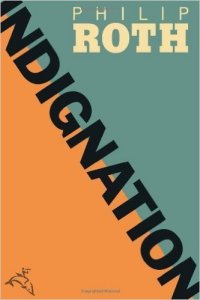
Philip Roth, INDIGNATION

I saw the film Indignation a couple weeks ago, and here’s what I posted about it on Facebook:


We saw the film Indignation today, based on a short Philip Roth novel that I’ve not read. It’s about a Jewish boy from Newark who attends a conservative Christian college in Winesburg, Ohio, in 1951, to escape an overbearing father and the dangers of the Korean war. Being based on a novel, the story isn’t any kind of ordinary Hollywood melodrama or romance, and the tension until the end is whether this story will end happily, tragically, or in a mixture of both — much like life. And to contemplate the meaning the title. It’s the first film directed by James Schamus, well-known as a producer for dozens of films from The Ice Storm to Brokeback Mountain. The star, Logan Lerman, is excellent, and the story features a college dean played by Tracy Letts who is surely the most subtly sadistic authority figure in movies since Nurse Ratched. Recommended! If you see it, pay attention to the first two scenes; the story eventually circles around to explain their significance.

Since then I discovered I had a copy of this Philip Roth novel (in the overstock I’d put into the garage!), and read it last week. The film adaptation is very faithful to the extent of reproducing many scenes and dialogue exactly from the book. (And I commend actor Tracy Letts for his portrayal of that “subtly sadistic authority figure” — who is by the way a playwright) At the same time, the film version omits a couple themes (e.g. about one of Marc’s roommates being homosexual), and completely omits a key scene at the end of the novel, about an infamous “panty raid” at this Ohio university, triggered by a snowfall and snowball fight. And there is no epilogue about Olivia being in an old-folks’-home, as in the film.

And I appreciate the novel’s, and film’s, commitment to the character’s atheism; in both, he quotes passages from Bertrand Russell’s Why I Am Not a Christian, that dismisses the common arguments for the existence of a god. A book that was also very influential in my early life.

What the novel does that the film does not is… tell us that the narrator — SPOILER! — is already dead, and that he is somehow revisiting the memories of his life. In Roth’s novel there is an extraordinary passage beginning on page 54 (of a 233 page book):

And even dead, as I am and have been for I don’t know how long, I try to reconstruct the mores that reigned over that campus and to recapitulate the troubled efforts to elude those mores that fostered the series of mishaps ending in my death at the age of nineteen.

Is that what eternity is for, to muck over a lifetime’s minutiae? Who could have imagined that one would have forever to remember each moment of life down to its tiniest component? Or can it be that this is merely the afterlife that is mine, and as each life is unique, so too is each afterlife, each an imperishable fingerprint of an afterlife unlike anyline else’s?

I think the film transformed this theme very effectively — via those opening and closing shots I noted in my Fb post. I think this film should get nominations, in whatever awards apply, for effective translation of a source to a screenplay.

On final note… the book captures its title, “indignation”, in scenes in which the narrator resents the forced attendance to chapel, by singing to himself a Chinese anthem, and replacing a passage by that word.

This is the best kind of literary fiction. I’ve been deeply impressed by every Philip Roth novel I’ve read. Why hasn’t Philip Roth won a Nobel Prize?

Posted in Book Notes | Comments Off on Philip Roth, INDIGNATION

Links and Comments: World maps; religions as movies; movie physics; flat-earthers; Trump and his followers; webs v walls; wrong about the future; negativity bias

Catching up.

Washington Post: Six maps that will make you rethink the world.

I’ve always been fascinated by these sort of ‘alternate history’ maps. Khanna is the author of the new book “Connectography: Mapping the Future of Global Civilization,” in which he argues that the arc of global history is undeniably bending toward integration. Instead of the boundaries that separate sovereign nations, the lines that we should put on our maps are the high-speed railways, broadband cables and shipping routes that connect us, he says. And instead of focusing on nation-states, we should focus on the dozens of mega-cities that house most of the world’s people and economic growth.

\\

From a Facebook post by Adam-Troy Castro (where he links to someone else’s photo), about the world’s major religions:

Think of it like a movie. The Torah is the first one, and the New Testament is the sequel. Then the Qu’ran comes out and it retcons like the last one never happened. There’s still Jesus, but he’s not the main character anymore, and the Messiah hasn’t shown up yet.

Jews like the first movie, but ignore the sequels. Christians think you need to watch the first two, but the third movie doesn’t count, Muslims think the third one was the best, and Mormons liked the second one so much that they started writing fanfiction that doesn’t fit with ANY of the series canon.

It’s all fiction. Well, crude history, optimized to advantage whatever tribe is telling the story.

Retcon, of course, is an abbreviation for “Retroactive continuity”, in which TV or movie series establish

\\

This is a ‘clickbait’ site, annoying for all the ads and pages you need to click through, but which has many valid points.

CAN’T HAPPEN: 33 Scientifically Implausible Things That Movies Still Want You To Believe

These examples partly illustrate ‘intuitive physics’ but also illustrate why almost all sf movies are nonsense –- they’re appealing to how we think the world works, not how it actually does.

\\

This is revealing about how human nature and intuition works:

Meet the People Who Believe the Earth Is Flat

Their reasons are often personal insights that somehow override the rational understanding they might get from others. (I went up in a balloon and the horizon was still flat!) Some are religious. And commitments to vast conspiracy theories are pervasive.

“I want them to know that NASA and all the astronauts and all of NASA are liars,” Patrice said.

Because, you know, they perpetuate the fraud that the Earth isn’t flat.

\\

Trump doesn’t read; neither, I suspect do many of his supporters, being relatively uneducated.

The New Yorker: The Donald Trump–Roger Ailes Nexus

Nevertheless, Trump, who admits that he reads almost nothing and gets his information from “the shows,” adopted Fox rhetoric, Fox fury, and Fox standards of truth and falsehood, all with a dollop of Trumpian nativist flair. The Republican Convention in Cleveland last week was like a four-day-long Fox-fest, full of fearmongering, demagoguery, xenophobia, third-rate show biz, pandering, and raw anger.

More: Donald Trump’s Ghostwriter Tells All.

\\

A genuinely useful insight from Thomas L. Friedman, in New York Times: Web People vs. Wall People. It’s not about Democrats vs. Republicans; it’s about those who would build walls vs. those who understand the world is necessarily becoming more interconnected.

…the instinct of Web People is to embrace the change in the pace of change and focus on empowering more people to be able to compete and collaborate in a world without walls. In particular, Web People understand that in times of rapid change, open systems are always more flexible, resilient and propulsive; they offer the chance to feel and respond first to change. So Web People favor more trade expansion, along the lines of the Trans-Pacific Partnership, and more managed immigration that attracts the most energetic and smartest minds, and more vehicles for lifelong learning.

While the wall people, afraid of change, want to cower within their walls and shut out the outside world.

\\

A review several weeks ago Chuck Klosterman’s BUT WHAT IF WE’RE WRONG?, by Jim Holt: The Good, the True, the Beautiful and Chuck Klosterman

I bought the book and have skimmed it, and while many details seem interesting, it’s point would be obvious to anyone who intellectual mindset has been honed by science fiction: *of course* much of what we presume will be true in the future, won’t. The reviewer’s summary:

1. We are not special. We are neither at the twilight of an era nor at the dawn of a new one.
2. The future will resemble the past.
3. Reality will always turn out to be bigger than we think it is.
4. Nine-tenths of everything is crap. (“Sturgeon’s law”)

\\

Adam Lee On Human Negativity Bias.

Why are so many people, despite clear evidence of relative peace and well-being in the world – compared to any past era – so inclined to believe we’re on the brink of social and political collapse? Statistics show crime rates have decreased, as have poverty, child mortality, and illiteracy.

(I said before this is partly a common misunderstanding of how the news media works; if the world were entirely peaceful except for one traffic accident, that one accident would dominate the “news cycle” for days, and rabble-rousing politicians would demand investigations into the corrupt auto industry and accuse the current administration of gross negligence, if not conspiracy to bring down the nation, and a certain segment of the population would become greatly alarmed a convinced the end of times was upon us.)

Lee:

The question, then, is why so few people realize this. Year after year, surveys show that most people believe, inaccurately, that crime is increasing. (The violent crime rate in the U.S. has plunged in the last several decades.) Even people who’ve personally lived through far more violent times often suffer from this illusion.

This is negativity bias, the human tendency to pay more attention to bad news than to good. It manifests in all kinds of ways, not just beliefs about crime rates: for instance, most people are far more sensitive to a potential loss than a larger potential gain. We overrate the odds of stock-market crashes and terrorist attacks.

Posted in Uncategorized | Comments Off on Links and Comments: World maps; religions as movies; movie physics; flat-earthers; Trump and his followers; webs v walls; wrong about the future; negativity bias

522+135+6

I completed The Witness’ Challenge yesterday, after some 50 tries over this past week. Following over 600 other puzzles on the Witness island to solve the primary game, which can be done at leisure, the Challenge is a timed set of randomly-generated puzzles, 14 puzzles to solve in 7 minutes, while music by Grieg plays, ending with “In the Hall of the Mountain King” for mounting tension as time threatens to run out before finishing. Because the puzzles are randomly generated, no online solution site serves as a guide — rather, you have to develop an instinctive response to the various kinds of puzzles already seen in order to solve new ones quickly. My strategy was to bail, reset the timer and start over from the beginning, anytime any puzzle took too long to solve. Even so, some 50 tries before getting all the way through.

One reason for this strategy is that the puzzles are a sequence, where you need to solve one in order to activate the next one. If you solve a puzzle incorrectly, it deactivates — goes black — and you have to return to the previous puzzle and re-solve it to reactivate the puzzle you missed — and in that case the reactivated puzzle is *different*. Sometimes you fail deliberately and go back a step, to get a new hopefully simpler puzzle to replace one that’s not immediately obvious.

As in the entire Witness game, variations of puzzle presentation come regularly. In the middle sequence of the Challenge there are four puzzles that activate in random order. In the next sequence there are two sets of three puzzles where two of the three are impossible to solve, and much of the problem here is about deciding, as quickly as possible, which one can be solved at all. And since the puzzles are all randomly generated, sometimes they’re very simple, sometimes unusually complex, even though each puzzle in the sequence is of the same type. Ironically, the very last two puzzles, wrapped around columns, don’t deactivate if you solve incorrectly, and for their type are relatively simple… at least that’s my impression from the three or four times I’ve gotten that far.

Alas, Challenge aside, I am still one puzzle short of the total possible in the entire game, which is 523+135+6, for various categories of puzzles; my score is 522+135+6, and I have no idea, despite having examined a couple online guides to easily-overlooked optional puzzles, what I missed.

But I need to step away from the computer-as-game-device and get some work done… (at least for a couple weeks until Obduction arrives — this is unprecedented for me, there being two new compelling games in one year!)

The article here at Kotaku.com includes a video showing the writer’s attempt — he doesn’t quite finish.

Wrestling With The Witness’ Most Difficult, Divisive Puzzle

Here’s another walk-through on a PS4, where you can pause the machine and solve puzzles offline from screenshots, which isn’t possible on a PC. He does finish.

I did it on a PC.

Posted in Games | Comments Off on 522+135+6

You Will Love This One

It’s been a while since I’ve posted a favorite song.

These are times that come
Only once in your life
Or twice if you’re lucky

Posted in Music | Comments Off on You Will Love This One