- Trump’s surrender;
- Trump can’t sell his lies in Versailles;
- Why people see scientists as oddballs;
- Vangelis’s “Memories of Green.”
Some of us have memories of the before time. Before all this.

The Bulwark, Jonathan V. Last, today: Trump Admits Surrender, subtitled “There were no alternatives.”
President Trump’s G7 remarks yesterday were striking because they represented the administrations first candid appraisal of the Iran war since bombing commenced. For months, every single member of the administration, from Trump on down, has insisted that everything was going great.
Followed by a list of how things were going great, and then a list of opposite things that yesterday “the president essentially admitted.”
It was shocking to see Trump admit these truths, plainly and without artifice. In part because he hung out to dry every insipid Quisling who has dutifully dissembled on his behalf for the last four months. Trump just told the world that JD Vance, Marco Rubio, Pete Hegseth, Mark Levin, Marc Thiessen—the whole lot of them—have been lying about the war.
The other shocking part was the reaction in some quarters of the Republican party and Conservatism Inc. They are furious that Trump finally acknowledged the reality of the war.
Why is that? What do they think Trump’s options are?
The writer goes on to consider Trump’s options. Also, he and “Tim” (?) do a live reading of JD Vance’s “awful” new book.
\\\
Related.
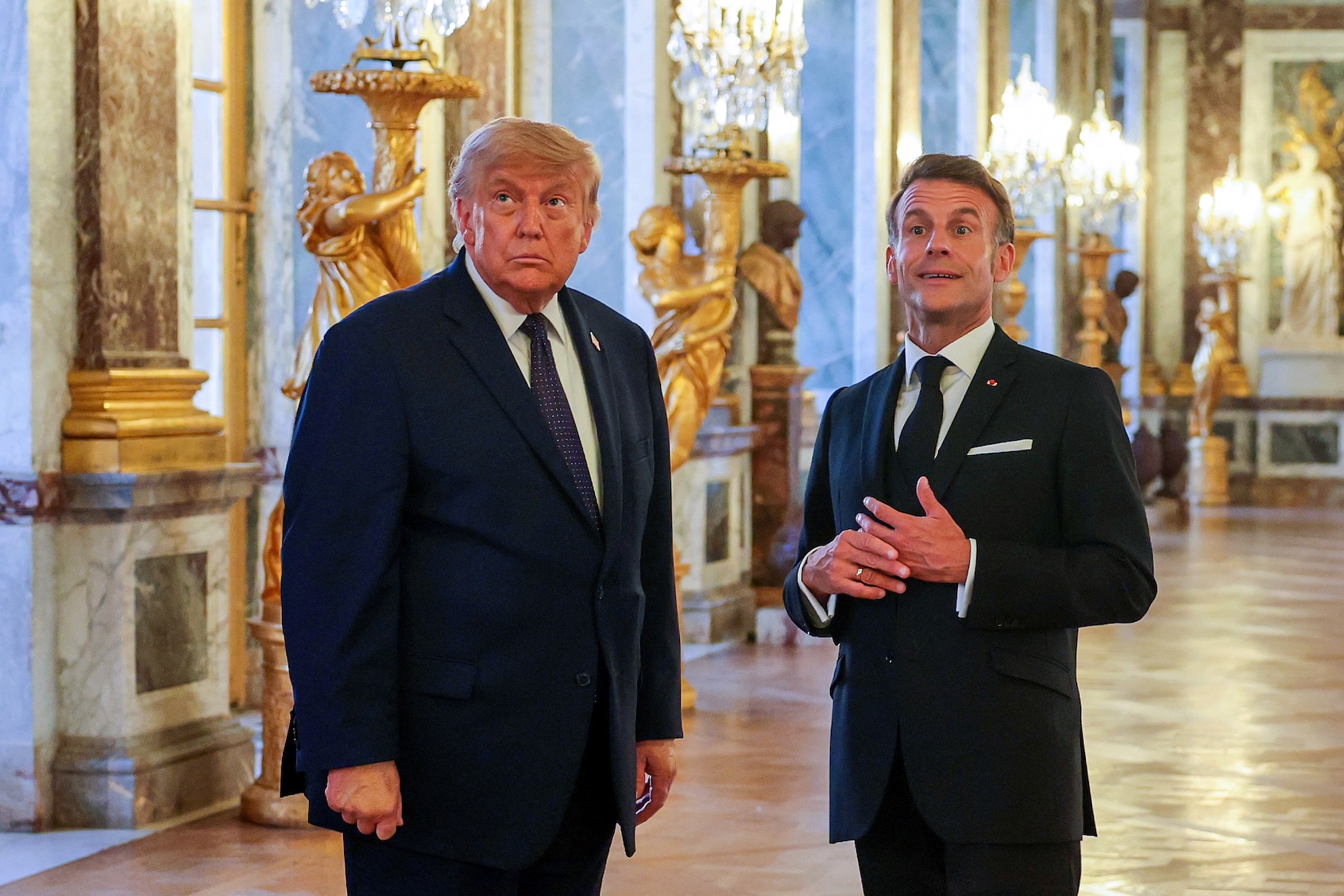
Salon, Heather Digby Parton, today: Trump can’t sell his lies, even in Versailles, subtitled “President arrives in France promising peace in our time. Problem is, no one believes anything he says”
For a man who has trouble staying awake on camera these days, Donald Trump is really pushing the envelope. After staying up into the wee hours celebrating his birthday last Sunday at the UFC spectacle on the White House lawn, our 80-year-old president hopped on a plane to France for his sixth meeting of the G7. He arrived bearing a “memorandum of understanding” between the U.S. and Iran’s governing regime that supposedly opens the Strait of Hormuz and extends the current ceasefire for another 60 days while the parties hammer out a hypothetical long-term agreement to end hostilities.
…
Trump really looks worn out. On Tuesday, he appeared to have forgotten his usual bronze makeup, which was a startling sight. His energy is notably low, especially for a gathering like this one; meetings with Europeans usually turn him combative and hostile. Back in 2017, he announced his presence on the world stage by lecturing European leaders about their failure to “pay their dues” to NATO and accusing them of unfair trade practices. In other first-term trips, he was generous and gracious to the presidents of Russia and China, making it abundantly clear who he respected and who he didn’t.
And there were videos on Facebook showing Trump wandering around aimlessly, or walking into a conference and casually saying “I am the boss!”
Is the survival of humanity a race between tribalism (the MAGA voters who support Trump whatever) and the minority who perceive reality?
\\
This is perhaps related, since it can be seen as another conflict between the uninformed and the informed.
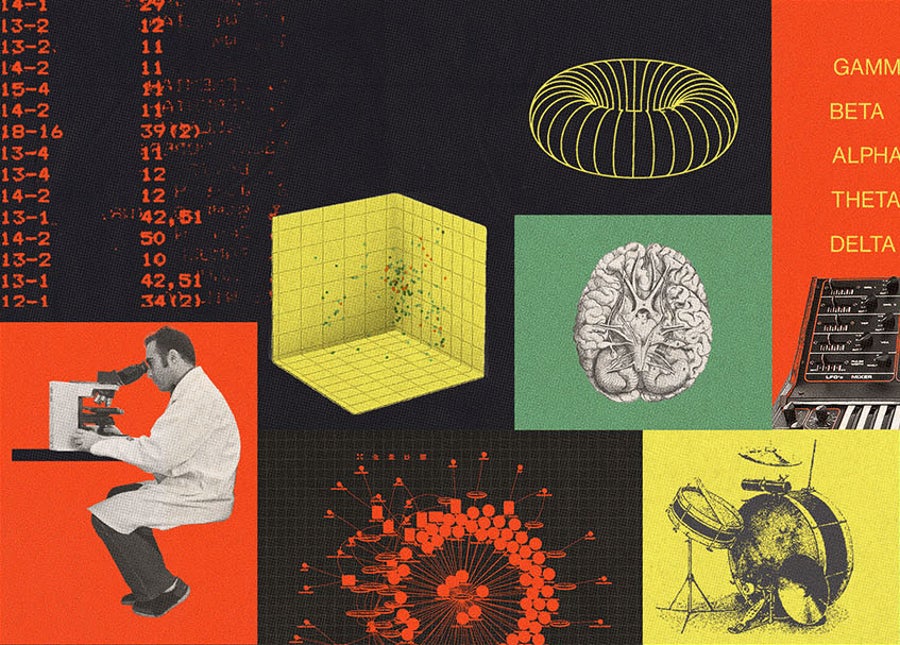
Scientific American, Dava Sobel, 16 Jun 2026: What people get wrong about scientists, subtitled “Scientists are seen as oddballs, and that’s a problem”
(Dava Sobel is the author of many books.)
Scientists, in the popular imagination, are oddballs. A chemist or geologist may be a genius, it is generally agreed, but the heightened mental acuity comes at great social and emotional cost, rendering the scientist a misfit, a weirdo, a robot in human clothing. This perception troubles me.
In a 50-year career spent writing about science, I have interviewed hundreds of scientists, from young postdocs to elderly laboratory directors, including several Nobel Prize winners. None of them fit within the confines of the stereotype. True, a few proved obnoxious, even insufferable, but not in a stereotypical way. So why do I continue to bump into this cliché wherever I go?
The following statement, for example, jumped out at me from a New York Times obituary for slain Massachusetts Institute of Technology physicist Nuno Loureiro: “Far from the stereotypical scientist holed up in his lab with little to say to the outside world, Dr. Loureiro was known for being warm, down to earth—even stylish.” Apparently such attributes are so out of place in the personality of a scientist as to merit special mention.
I’m tempted to see this attitude as again that same conflict between the two extremes of human nature. Between those who want to explore and understand, and those who wonder, why bother?
\\\
Have spent a couple days listening to various versions of the Blade Runner soundtrack. Without getting into why there are so many versions, of both soundtrack and film, I will just note this. A key track in the soundtrack, “Memories of Green,” was actually an existing track on Vangelis’s album See You Later in 1980, four years before the movie was released. Perhaps Ridley Scott had heard it? Or perhaps Vangelis took it as a template for the film score anyway?
Here’s a YouTube video. The audio doesn’t match the video. Ignore the video. Perhaps I can find a better version on YouTube. But we’re off to dinner in the city…