
- Adam Frank on the new UFO data;
- Thoughts about being savvy, and reality-literacy, and the lack of evidence for both UFOs and God;
- Carlo Rovelli denies there is a “hard problem” of consciousness.
One more about the new UFO data, since it’s by Adam Frank.
The Atlantic, Adam Frank, today: Just Show Us the Spaceships Already, subtitled “Until the U.S. government has data or samples of alien material that can be shared, the story of extraterrestrial visitors is just a story.”
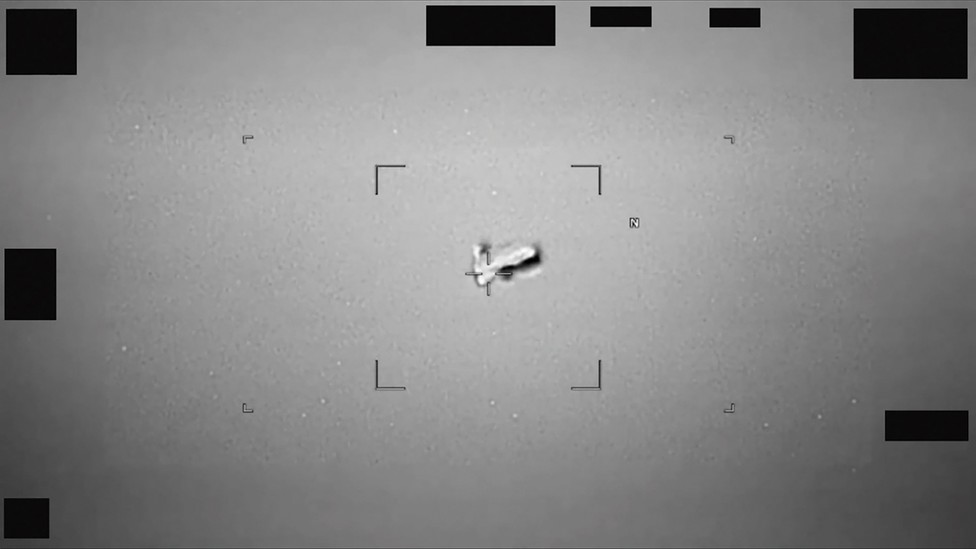
Spaceships. That’s all I’m asking for. Just one actual stinking spaceship. I’d also take an actual alien body—I’ve been told that the government has some of them as well. Instead, the first “alien files,” released yesterday, appear to be the same old, same old: stories, but no hard evidence—certainly not of the kind I’d want to see as a scientist, or that could truly advance the debate about UFOs and their alien connection.
I am disappointed.
But not surprised.
The history of UFOs and claimed government conspiracies hiding their alien origins goes all the way back to the Roswell incident, in the late 1940s, when the first UFO report made national headlines. Then in 1956, Edward Ruppelt, an Air Force captain who led early Air Force UFO studies, published a book claiming the existence of a document ominously called “Estimate of the Situation.” Ruppelt asserted that this top-secret report concluded that UFOs were of extraterrestrial origin. No version of the document, however, has ever been found. Still, Ruppelt’s claims set the stage for decades of fever-dream UFO- and government-conspiracy mongering. UFOs became a kind of shorthand for “kooky”—so much so that the false association between UFOs and the scientific search for extraterrestrial intelligence nearly killed all such government research.
With examples of videos that were explained prosaically.
It’s easy to imagine that a decade from now, we’ll still be rehashing the same claims and the same arguments about those claims.
Yes, we will.
\
Part of thinking about this issue is whether you’re “savvy” about how the world works. Whether you have any basic education in physics, chemistry, biology, and geography and history; whether you have any basic understanding of the possible v the impossible. There are plenty of people who don’t. Recently I’ve floated the idea of “reality-literacy,” which captures the idea too. Most people aren’t.
Furthermore, at the risk of shocking the easily-offended religious folks, the UFO controversy and the existence of God pose similar quandaries. Not about existing evidence exactly, but about how, if either were real, the evidence and/or the world would be much, much different. If alien spacecraft were buzzing around our planet, *why* aren’t there any better photos compared to those of 70 years ago? *Why* isn’t there any physical evidence?
And if some god created the entire, vast universe for the purpose of creating a race of people to worship him, *why* is the vast majority of the cosmos so inimical to life? (It’s all vacuum and planets that humans couldn’t live on, and so on.) Why aren’t humans etherical beings, like angels, who float around in the sky, shorn of any resemblance to those messy animals (why should there be any animals?), with no thought other than to worship their creator? Even using the word “sky” presumes something that wouldn’t necessarily need to exist. Why is it God would arrange a vast universe in which physical evidence exists, on a planet, that makes humans look like any other animals, with all the same messy biological functions, and evidence that they evolved over millions of years? The religious excuses are all special pleading, and suffer lack of imagination of other possibilities.
\\\
This is not directly related, but there’s a similar issue here.

NOEMA, Carlo Rovelli, 7 May 2026: There Is No ‘Hard Problem Of Consciousness’, subtitled “Consciousness is not separate from the physical world — our “soul” is of the same nature as our body and any other phenomenon of the world.”
I’ll quote a bit.
A fierce debate is raging around the slippery notion of consciousness. It retraces a trotted pattern of cultural resistance: We humans are often scared by anything that may disturb our image of ourselves.
Famously, Darwin’s realization that we have common ancestors with all living organisms on our planet met ferocious resistance. Many felt confounded or degraded by the idea of sharing a family tree with donkeys. The cultural history of modernity is dotted by similar ideological rearguard battles, wherein old worldviews fight in retreat against novel knowledge to save some concept held dear. Amid the current cultural backlash against progressive ideas, today’s debate on consciousness reflects our human fears of belonging to the same family as inanimate matter and losing our dear, transcendent souls.
Long essay, that captures many of the issues about the debates about consciousness. For example,
It is time to give up the pernicious dualism introduced by the debate on consciousness and embrace the reality that our soul, or our spiritual life, is consistent with our fundamental physics.
I’m not going to presume to take any stance on this issue. Yet. I suspect, only suspect, that many of these unresolved issues in science derive from human intuitions, which evolved in local circumstances over hundreds of thousands of years, now encountering a reality of the cosmos that exists at larger scales and so does not conform to those intuitions. Putting this another way: some scientific conundrums are resolved simply by re-framing the question. Our original question presumed something that wasn’t true.