- A new version of Lord of the Flies, which I think I might watch;
- The idea of peer review, and my professional background;
- Cory on Rebecca;
- What religious tribalists mean by “going against the grain”.
I’ve read the book, more than once (see my 2017 review), but have never seen any movie version. But I think I’ll watch this.

Slate, Rebecca Onion, today: The First TV Adaptation of Lord of the Flies Is Here. It’s Gripping—and Heartbreaking., subtitled “The co-creator of Adolescence does something unexpected with one of literature’s darkest novels.”
Especially because the writer here has heard of Rutger Bregman and the real-life counterpart to Golding’s story. And because the filmmakers apparently also understand some of that. (And because of the Adolescence tie.)
You might expect Jack Thorne, best known in the United States for co-creating the hit limited series Adolescence, about a schoolboy who is arrested on suspicion of killing a female classmate, to deliver a Lord of the Flies adaptation full of despair. William Golding’s 1954 novel and Thorne’s 2025 Emmys juggernaut share some grim themes: Apparently upstanding tween boys can break bad out of nowhere, and with disastrous consequences. Possibly, there is something in British culture or modern life that enables boys’ worst instincts, but fixing that thing will be incredibly difficult. But, unexpectedly and happily, Thorne’s gripping new series—on Netflix as of Monday after debuting on the BBC earlier this year—does something else with this seven-decade-old story: It pulls out the sense of humanity and heartbreak at its core.
And then the Bregman check.
Would a pack of British boys, between the ages of 6 and 12, stranded via plane crash on a tropical island, turn on one another, form factions, and kill the weak among them, in an orgy of carnivalesque violence? Lord of the Flies, which tells a story in which they do, was written in the aftermath of World War II, and since its publication it’s been a useful point of reference for people who want to argue for the inherent darkness of the human heart. Counterarguments—Lord of the Flies was an indictment of Western culture, not of human nature; Lord of the Flies has to be read as a novel inspired by the horrors of one particular war, rather than as a timeless tale—can get little traction in the face of this brutal story. The historian Rutger Bregman found the real tale of a group of six Tongan boys who, half a century ago, survived for a year and a half on an island after a shipwreck, and did so in perfect harmony, and used that story to try to chip at the edifice of common-sense doomthink that Lord of the Flies is partially responsible for perpetuating. Human beings, Bregman argued, want to cooperate. But, compared to the seductive allure of dark-hearted savagery, this kind of narrative just doesn’t have the juice. Nobody’s writing an Iron Maiden song about that.
And this fits neatly with the item from The Week noted yesterday about how Americans are perpetually alarmed by crime, yet are addicted to movies and TV shows depicting crime. (I reviewed that Bregman book here.)
Society has advanced through cooperation. Crime and violence are an atavistic worry. To the extent we *understand* this, as this new version of Lord of the Flies might be doing, this is progress.
\\\
Personal background here. In my professional career as a software developer for a large engineering firm, I participated in a strictly defined process for software engineering, which included the sequence from system requirements, software requirements, design, code, and test, with adjacent processes of QA and CM and…peer review. (Detailed here.) The last being a very strict procedure that included identifying reviewers, distributing material in advance of the meeting, compiling feedback, holding meetings to discuss and either approve or deny each point of that feedback, making corrections as needed, and doing a final check with the reviewers to make sure corrections were properly incorporated.
I think the idea of peer review might be somewhat looser in other fields. My essay for Gary Westfahl went to some kind of “peer review,” which I gather meant only sending the essay (and the other essays in the book) out to other professionals familiar with the field, and Westfahl responding to comments, without the original writers being involved.
Here’s another take about peer reviews.
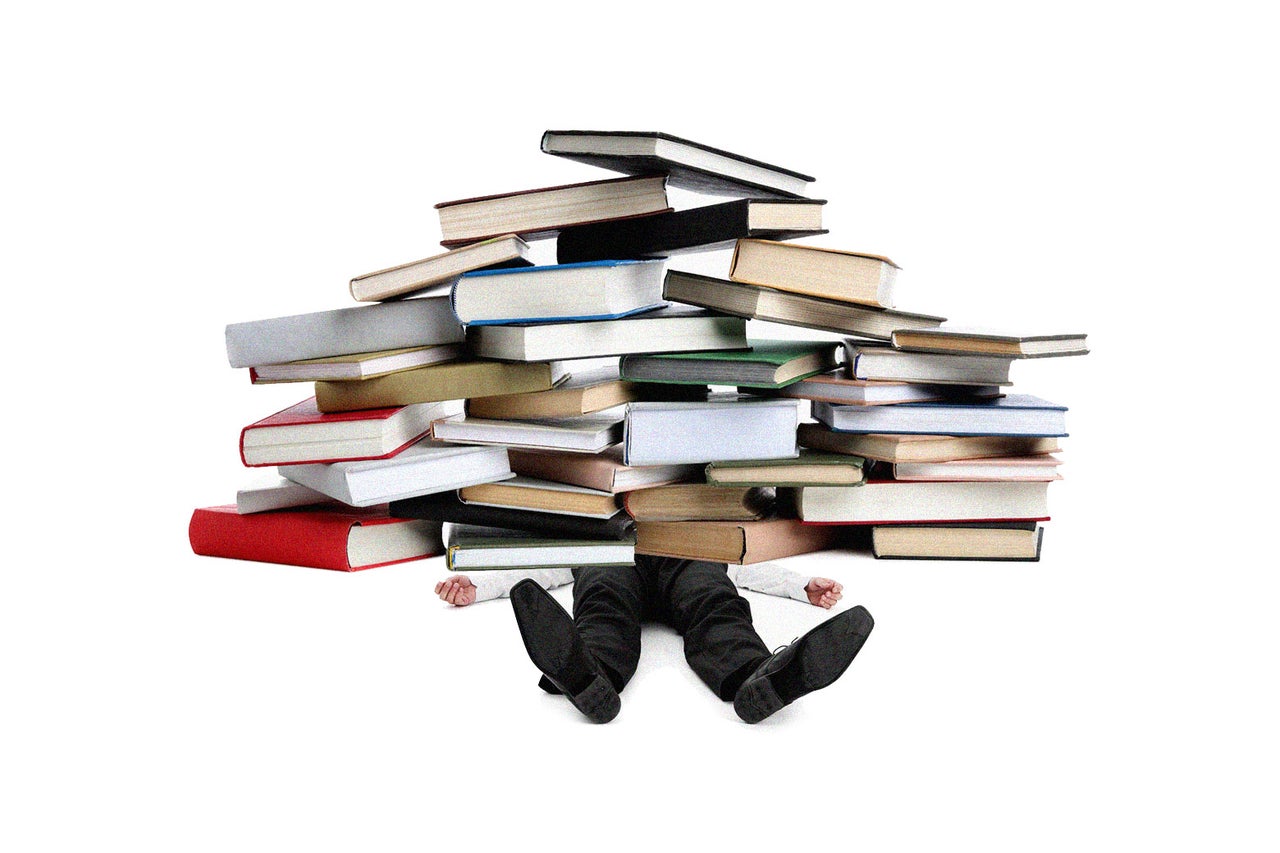
Slate, Steve Midway, yesterday: Publish and Perish: subtitled: “I’m the editor in chief of a scientific journal. There’s a disastrous imbalance happening with the labor around manuscripts.”
Recently, an ordinary manuscript landed on my desk. Nothing flashy—the solid work that represents another brick in the wall of science. The hard part wasn’t deciding whether it belonged in a journal that I oversee as editor in chief. The hard part was finding anyone willing to review it. After a month of emails, I managed to uncover two helpful souls.
That experience is no longer unusual. Peer review—the quiet process in which independent experts vet scientific work—is the quality filter behind safe medicines, infrastructure standards, and daily technologies. It is imperfect, but it is the best system we have for turning raw claims into reliable knowledge. When peer review slows or weakens, science doesn’t just become slower. It becomes noisier, more error-prone, and easier to distrust.
The problem is not that scientists have suddenly become less careful. Rather, the volume of manuscripts has outgrown the capacity of the people who are supposed to evaluate them. One study found that the number of published articles increased by nearly 50 percent from 2016 to 2022.
I am beginning to formulate the notion that humans cannot handle the increasing complexity of the world.
Peer review was never meant to be perfect—just good enough to keep us honest. Somewhere along the way, we stopped asking whether the system was working and started asking how much we could overload it. We’re going to find out.
\\\
Briefly noted.

- Cory Doctorow on Rebecca Solnit, today: Pluralistic: Demand destruction vs fuel-superseding infrastructure
- “No one is better at keeping hope alive than Rebecca Solnit, the historian and essayist whose Hope in the Dark got me through the first Trump administration and whose A Paradise Built In Hell inspired my novel Walkaway…
- I note this primarily because I’ve discovered Rebecca Solnit only recently, and then discovered that folks like David Brin and Cory Doctorow have been following her all along. I am forever coming up to speed.
\\

- JMG, today: Hate Pastor: “Virtuous Masculine Men Will Forcefully Take Away Democracy” And Install Christian Theocracy
- What strikes me is this passage: “I don’t see any path aside from the full removal of feminism. So long as we have democracy coupled with universal suffrage, you’ll constantly be going against the grain.”
- “Against the grain”? Of tribal human morality, I take it.
- “You’ll constantly have half of the population voting for temperance, tolerance, suicidal empathy.” Which he presumes are anti-Christian sentiments.
\\

- A lot of motivated thinking going on here.
- Salon, Amanda Marcotte, today: Young men’s religious revival is a myth: subtitled “New polling suggests the recent ‘converts’ care more about gender than Jesus”