- Pondering how to live in a era without religious assumptions;
- A related theme in Arthur C. Clarke’s The Songs of Distant Earth;
- Timothy Snyder on superpower suicide; distrust of the current administration; confused thoughts about racism from the right;
- And Philip Glass’ opera Kepler.
I understand, mostly from secondary sources, that folks in small towns across America typically greet newcomers by asking, which church do you belong to? That being more important and fundamental than, say, what job you have (“what do you do?”) or even, where do you come from. But is this still true? I don’t know. I do know it’s certainly not true in big cities. Except perhaps at certain political rallies. Well, probably not even there. Everyone at such rallies assumes they’re all the same side.

OnlySky, Bruce Ledewitz, today: Living in a future ‘After God’, subtitled “We live in an era without religious assumptions, but do we know how to live without them?”
I’ll sample the beginning of this essay.
Most readers of OnlySky may be unfamiliar with the German philosopher Peter Sloterdijk and the American theologian David Bentley Hart. That is unfortunate, because Sloterdijk is the preeminent secular thinker in the world today. His collection of essays, published in English in 2020 as After God, teaches us a great deal about the perils and pitfalls of secular life.
Meanwhile, Hart is a great liberal Eastern Orthodox voice of anti-Christian nationalism who reviewed After God in Commonweal magazine in 2021, in an essay entitled “No Turning Back.” Hart’s reflections not only clarify Sloterdijk’s thought for us, but offer a window on the future of Christianity.
The essay is mostly a contrast of views. But there’s a central issue.
The conclusions of these two thinkers concerning our current context, which Hart calls “the cultural and historical situation of modern humanity,” are expressed in the titles of both Sloterdijk’s book and Hart’s review. For Sloterdijk, modern humanity lives after God. Whatever anybody’s personal religious beliefs may be, secular assumptions form the current boundaries of political, social, and economic possibility. Hart assents to this description of our current situation, calling it “an evident fact of history.” That is why Hart agrees that there is “No Turning Back” to some imagined golden age of greater Christian influence. As Hart puts it, “innocence yields to disenchantment, and disenchantment cannot revert to innocence.”
But neither thinker regards our current situation as positive. As Hart observes, “there is nothing triumphalist” about Sloterdijk’s atheism, which is critical of the Enlightenment’s slide into “metaphysical nihilism” and a humanism that is anthropocentric, egoistic and oblivious to “the mystery of the world.”
So I’ll interject here. The mystery of the world is how it does not comply to human intuition and the “need” for “meaning.” The mystery of the world is what has been discovered by science that is precisely non-intuitive to humans, and thus rejected by conservatives. Yet is there.
\
Relevant aside. I just finished re-reading, after 40 years, Arthur C. Clarke’s novel The Songs of Distant Earth, from 1986. It concerns, somewhat coincidentally to the recent book and film Project Hail Mary, an imminent death of the Sun that, in this case, has led to huge generation ships fleeing Earth to settle planets of nearby stars.
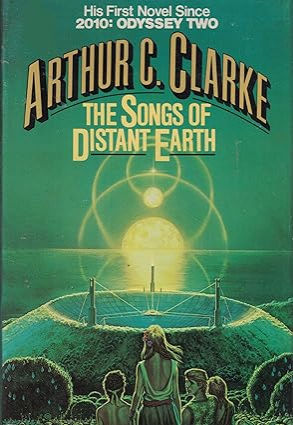
The story is set on one of these planets, Thalassa, and the point is made that the settlers on this planet have made a decision to strip their records of Earth history and culture from all harmful influences — beginning with holy books, but also much of literature, and some music, that relied on religion for their understanding. And that the culture on this planet has matured cleanly, without all that sunk-cost baggage of primitive human culture. (But then, as a passing starship stops at this planet, one of the starship folks has to explain these ideas to one of the locals…)
This is another example of the sunk-cost fallacy, the idea that if culture has invested so much in primitive thinking, it might never escape it. The best way would be to start from scratch.
–Though actually, I think this premise of Clarke’s is wishful thinking. Human nature will prevail, and would bring religion back.
\\\
Back to our briefly noted format.
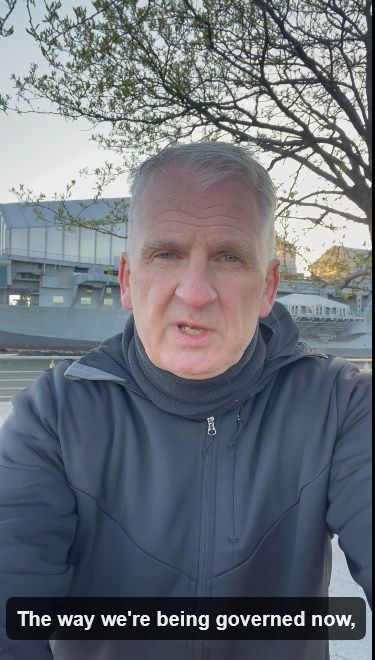
- Timothy Snyder on Substack, 21 Apr 2026: Superpower Suicide, subtitled “The geopolitics of our moment”. A video.
- He’s the author of On Tyranny, a short book that has now resided on extended bestseller lists for years; my review here.
- “We are fighting a war for no reason we can name, losing it, and covering our defeat with genocidal and apocalyptic propaganda. This is bad enough on its own; but I think this performance is symptomatic of something deeper — a systematic undoing of American power by Americans.”
\

- The Guardian, Francine Prose, today: Shrugging at calamity: America is reacting in strange ways to our chaotic times
- Subtitle: The reaction to the Washington DC shooting shows that Americans are swinging between outrage, exhaustion and numbness
- More about the distrust of the current administration.
\
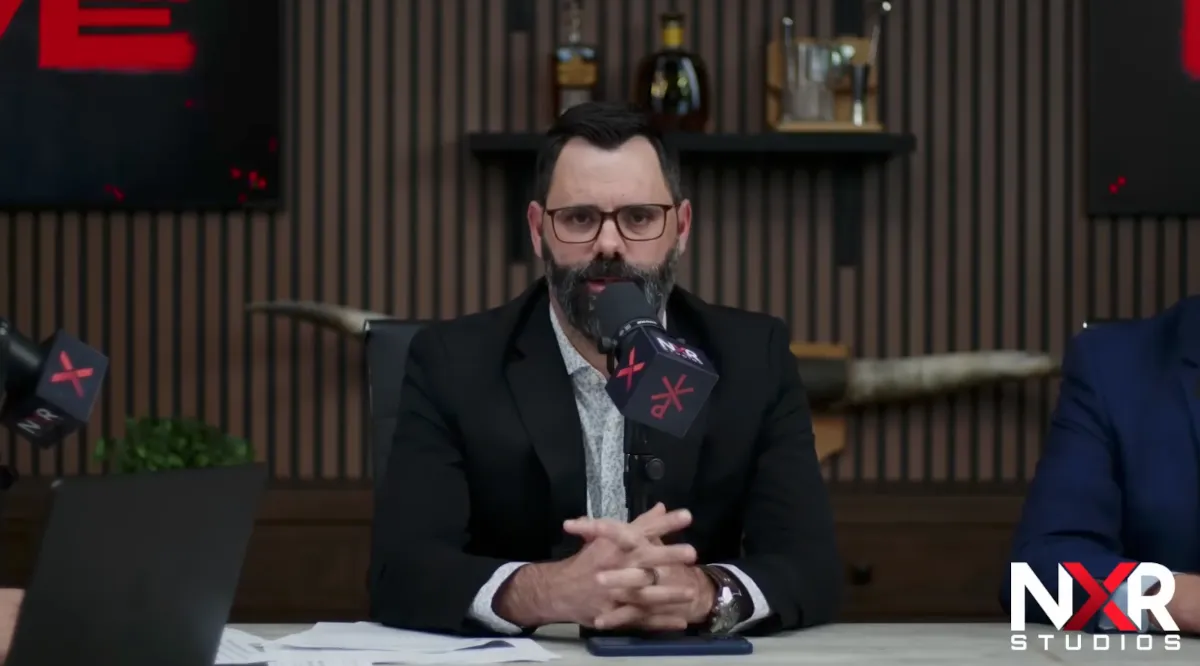
- Racists insist racism is not real. Yet, more racism is needed!
- Right Wing Watch, Kyle Mantyla, yesterday: Joel Webbon Claims SPLC Indictment Proves Racism Is ‘Not Real’
- And: Friendly Atheist, Hemant Mehta, today: After baseless attacks on the SPLC, Pastor Joel Webbon says America needs “more racism”
- Subtitled: His comments, tied to the Southern Poverty Law Center indictment, expose a white Christian movement eager to rewrite history
\
Still listening to Philip Glass’s Kepler. I can only find a couple of 8-minute samples on YouTube. Here’s one.