- Trump’s cancellations, which I can’t keep up with;
- How Trump’s Big Beautiful Bill will impact public schools;
- How UFOs are interpreted by the religious as demons;
- Preisner’s “Silence, Night & Dreams”
I’m not sure I’m keeping up with all the things Trump has planned and then cancelled, all the people he’s hired (he only hires the very best people, remember) and then fired, all his back-and-forths about the war with Iran.
Today, apparently, he’s withdrawn his idea for the $18 billion dollar fund to compensate law-breakers who think they were unfairly prosecuted by the Biden administration. When a judge forced him to remove his name from the Kennedy Center, he renounced control of it. So many musical groups cancelled his 250th anniversary party, he cancelled the party, and will instead hold a rally. (Who were those musicians anyway? All of them obscure to me. Surely there were much better acts at the 1976 celebration?) While his cage match in front of the White House, an embarrassment on many dimensions, is still a go.
Everything Trump does is a tear-down. This is consistent with the conservative project to reverse the social and moral progress of the past two centuries. In favor of base, primitive, Biblical morality.
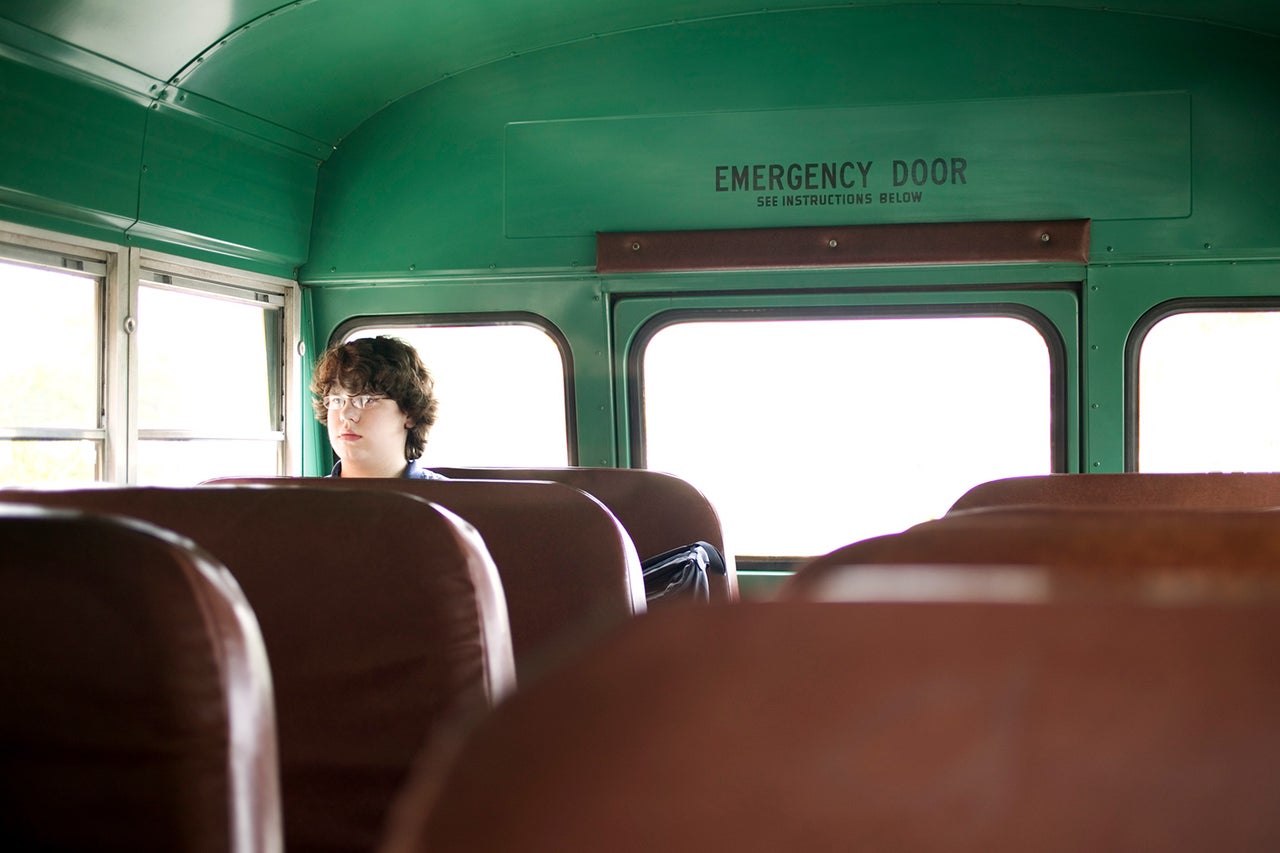
Slate, Adam Laats, today: Wave Goodbye to the Last Normal Year for American Schools, subtitled “Thanks to Trump’s ‘Big, Beautiful Bill,’ the ’26–’27 school year will look wildly different.”
As schools send children home for the summer, we need to recognize a frightening fact: This could be the last year of public schooling the way we’ve known it. Donald Trump’s new school funding scheme, pushed through as part of the One Big Beautiful Bill Act, will kick in during the middle of the next school year, in January 2027. It’s going to create a financial tsunami for public schools. The real tragedy is that there’s no mystery to it: We already know what will happen, because the scheme is not really new at all. It brings us back to the bad old days, to the failed and inadequate divided school budgets from before the Civil War. Trump’s plan brings back the devasting problem that our modern public school systems were designed to fix.
\\\
This is a significant piece, though I’m not sure why it was published today.

NY Times, Ruth Graham, yesterday: In U.F.O. Files, Some Christians See Vexing Questions — and Demons, subtitled “The prospect of intelligent life elsewhere in the universe raises unsettling theological implications.”
This is the problem with acquiring a worldview as a child, and then imposing that worldview on everything that follows.
The dozen or so pastors and podcasters who arrived at the Airbnb in Nashville one night in February weren’t sure exactly what they were in for. An organizer asked them to turn their phones on airplane mode. Snacks were served. Then, for at least two hours, two mysterious men presented a slide show laying out the evidence, as they saw it, for some kind of extraterrestrial life and the spiritual confusion that coming revelations could sow among Christians.
“It was the weirdest meeting I’ve ever been a part of,” said Alan DiDio, a pastor in North Carolina who attended. “You’ve never seen that many Pentecostals in a room that quiet.”
For many of the pastors in the room, and some other Christians, there’s only one possible explanation for extraterrestrial beings: They are not neutral visitors from other planets or dimensions, but demonic entities.
Nonsense. This kind of limited, closeted, unimaginative thinking, in which every new discovery about the world can only be understood in terms of childhood religious stories, is what led me to abandon religion early on. Human intelligence is better than that.
Christians in the United States are significantly less likely than the general public to say intelligent life exists on other planets, according to a 2021 survey by the Pew Research Center. Among atheists and agnostics, 85 percent say their best guess is that intelligent life exists outside Earth. Among white evangelicals, only 40 percent say the same.
“The U.F.O. topic in particular is a big challenge to any religious worldview,” said Jeffrey Kripal, a professor of religion at Rice University, where he has compiled an archive on paranormal subjects, including accounts from U.F.O. “experiencers.”
The religious, especially Christians, look out at the vast universe that has been perceived in recent centuries, and can’t overcome their faith that “it’s all about me!” Humans are at the center of the universe! God created the universe for us! Or at least, the humans who follow their religion. People who follow those other religions are irrelevant.
\\
A portion. Zbigniew Preisner, who wrote many admirable film scores, also did at least three albums of contemplative orchestral music. Here’s the second, which I’ve been listening to today. Based on Job, apparently.