
- Jonathan Chait thinks they’re bad;
- Jerry Coyne echoes his animus;
- Robert Reich sees a different trend, more exciting than democratic socialism;
- While Paul Krugman thinks “most of us are social democrats”, which seems to exhibit the way these words are variously used;
- The books on the new Air Force One are fakes; how the reflecting pool is especially captivating; how the Capital is a mess; how Christians spread false Christian Nationalist history (with many links to examples).
OK, so what are Democratic Socialists and why do even some Democrats think they’re bad? Jonathan Chait seems skeptical.

The Atlantic, Jonathan Chait, today: There’s Nothing Democratic About These Socialists, subtitled “The DSA was formed in opposition to the very thing it has become.”
After all, I’m thinking, ‘socialist’ is such a broad term that it can describe a society like ours that provides free libraries and fire departments. Not libertarian, where everyone is on their own and everything is paid for individually. And it can mean anything that conservatives don’t like, with vague ideas about the difference between socialist and communist.
Looking at the essay.
The general idea that Democratic Party loyalists seem to have about members of the Democratic Socialists of America is that they’re a lot like Democrats, but perhaps a bit more passionate. Voters in New York City are “not afraid of the term democratic socialism,” Joy Behar recently said on The View, to applause. “Social Security is democratic socialism. Partly, unemployment insurance is. The people who pick up your garbage, the people who take the fire out at your house—all of these things are democratic socialism.”
At this point I would say there’s little recourse in consulting the dictionary definitions of democracy or socialism. Especially when in combination. People use words and coin word phrases to mean whatever they want them to mean. From farther down in the essay:
The organization is still called democratic socialists, of course, but the term does not necessarily mean “liberal democracy” as Americans have traditionally defined it. Many socialist thinkers define what they call “true democracy” as a system in which capitalism has been overturned and the proletarian classes have seized political power through their representative vanguard (that is, them). Totalitarian states such as the Democratic People’s Republic of North Korea and the German Democratic Republic (East Germany) accordingly labeled themselves “democratic.”
It’s a long article and I’m not going to absorb it. A lot of history of various movements.
\
Let’s move on to this comment about Chait’s article, from Jerry Coyne.
Why Evolution Is True, Jerry Coyne, today: Why Democrats should spurn and revile the DSA
At least he quickly provides a brief summary of DSA positions:
They favor open borders, an end to incarceration and most policing, and, to a man and woman, they are strongly anti-Israel. These stands, which come close to antisemitism, used to bar candidates from election, but now are de rigueur for DSAers.
DSA candidates are “progressive,” but in an authoritarian way, and in that respect they are no advance over classic liberals or the “mainstream” Democratic Party—if there still is one! Zohran Mamdani, the Mayor of NYC and a DSA member, has been dubbed a “kingmaker”, as the candidates he’s endorsed have won by substantial margins in the primaries.
Now Jerry Coyne is Jewish, so can be expected to reflexively oppose any group that is anti-Israel. Coyne says Chait says more than half of DSA members identify as communists, which mean they want authoritarian power…
Coyne quotes the end of Chait’s piece, which finds an analogy between DSA and MAGA.
What the DSA demands of the Democrats is not merely to advocate more generous social policies, or more cautious foreign affairs, but to welcome, or at least accept, authoritarians as their coalition partners. Democrats are likely to face the same kind of pressure that Republicans confronted with MAGA’s hostile takeover: first to ignore their allies’ sinister goals, and then to rationalize and eventually justify them.
As authoritarian elements gain strength, they become more essential to the success of a political coalition, and the price of confronting them rises. The Republican Party has long since passed the point of no return. The easiest time to draw clear moral lines against the encroachment of illiberalism within one’s own camp is at the beginning.
\
I’ll pass no judgment for the moment. Instead let’s look at this.

Robert Reich, yesterday: It’s the Next America, subtitled “The source of the new energy taking over the Democratic Party isn’t democratic socialism. It’s something far more exciting.”
He summarizes recent DSA wins, then says,
Pundits eager to declare a new movement or sound the alarm about socialism are having a field day.
But they’re wrong.
I don’t mean to minimize the role of the DSA or the significance of democratic socialism. But that fact is, voters who have supported these candidates haven’t done so because they’ve been particularly attracted to the idea of democratic socialism. Most don’t even know what democratic socialism is.
(Just as most people, especially conservatives, are confused about all those isms — communism, socialism, fascism. Just that they’re all bad.)
In reality, voters have been attracted to vigorous young people who are committed to getting stuff done. Voters have had it with incumbents who have been in their jobs for decades. At a time of record inequalities of income, wealth, and opportunity — when billionaires are behind much of what our government is doing — voters want fighters who will get big corporate money out of our politics and go to the mat for average working people.
Then Reich examines the career of two recent DSA winners, Milat Kiros in Colorado and Manny Rutinel, also in Colorado. And Lewis George in D.C. Reich concludes,
These new young Democrats have also won because they inspired armies of young activists to knock on doors and work the phones for them. They didn’t rely on big money; they relied on big excitement.
Two final things about them. Most are the children of immigrants, and they’re disproportionately female. They’re living illustrations of the diversity, equity, and inclusion America can foster, at its best. They’re the opposite of the white, male, Christian, nationalism that has overtaken the Republican Party.
At a time when Trump and his regime have cast a dark pall over America, a new generation of Democratic politicians is shining a bright light. The source of the energy and excitement they’re generating isn’t democratic socialism. It’s the emergence of the next America.
\
And another take.
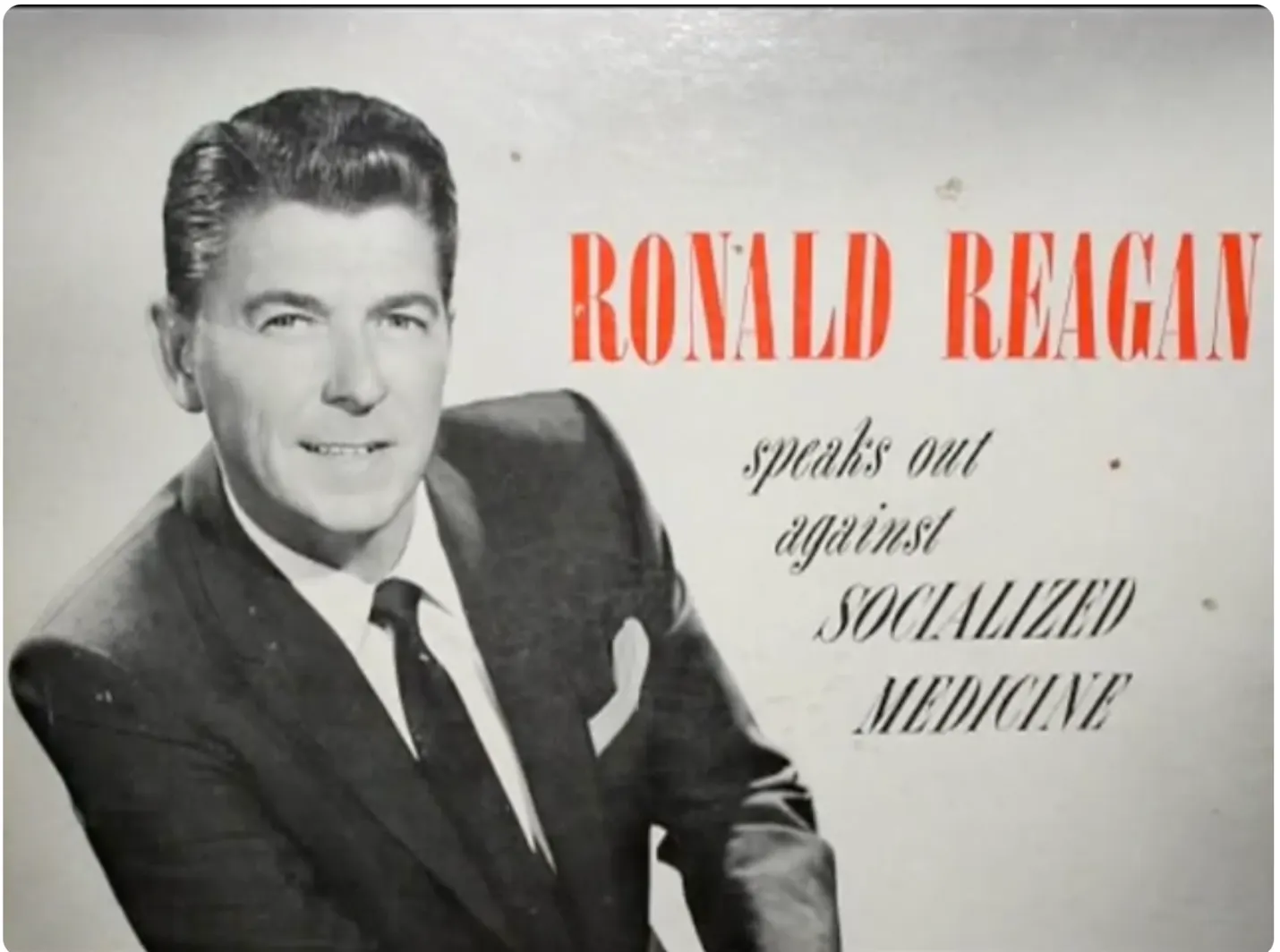
Photo caption: “He was trying to stop Medicare” (In favor of capitalism, presumably.)
Paul Krugman, today: There Are Very Few Socialists in America, subtitled “But most of us are social democrats”
Here again, we seem to be dealing with different definitions of common words.
Fox News has a poll supposedly showing “socialism gaining ground with young voters.” But I don’t believe it. Young people may be more receptive to the word socialism, but that’s only because right-wingers constantly use that word to smear policies that have nothing to do with real socialism — i.e., government ownership of the means of production.
The fact is that very few Americans — even among politicians who call themselves “democratic socialists” — are really socialists. What many, I’d say a majority, of Americans support is what Europeans call social democracy — an ideology that is OK with living in a mostly market-driven economic system in which some people make much more money than others, but one that advocates policies to tame markets and inequality with progressive taxation, safety net programs, and regulations.
And,
Right-wingers often try to portray social democratic policies as somehow un-American. But social democracy is as American as sliced bread, invented in 1928. The Social Security Act, which created a safety net for the disabled and the unemployed as well as retirees, was passed just a few years later, in 1935. A national minimum wage was established in 1938. The big healthcare programs, Medicare and Medicaid, weren’t established until 1965 — but even that was 60 years ago.
With graphs.
\\\
Briefly noted.

- AlterNet, Sarah K. Burris, today: Critics tear apart Trump for using ‘fake’ books to decorate ‘Grift Force One’
- The books on the shelves of Trump’s Qatari-donated 747 are fakes. Of course.
- “Of course, a plane full of people who have never read a book has a bookshelf of fake books with titles like ‘Library,'” quipped Dr. Nick Mark.
- Slate, Christina Cauterucci, today: It’s All About the Reflecting Pool, subtitled “In an ever-worsening hellscape of Trump blunders, a wretched tourist destination has captivated us like no other.”
- Title on the homepage: “Trump Has Made America Worse in Countless Ways. One of Them Has Captured Our Attention Like No Other.”
- And this.
- The Atlantic, Matt Viser, today: The Capital Is a Mess, subtitled “Chain-link fences, construction cranes, armed guards, and portable toilets everywhere”
- Right Wing Watch, Kyle Mantyla, yesterday: ‘Truth Is On Our Side’: Alex McFarland Spreads False Christian Nationalist History
- No, it isn’t. Countless religions before yours has assumed possession of the absolute truth.
- RWW keeps notes. “As Right Wing Watch has noted multiple times in the past, one of the defining characteristics of Christian nationalist activists is a willingness to misrepresent history, as time after time they spread debunked myths and blatant falsehoods in defense of their right-wing ideology.”