
- A new NYT newsletter called Gravitational Pull;
- Remembering Roger Williams, an early American advocate of religious liberty;
- And about early American philosophers Jonathan Williams and Benjamin Franklin;
- And revisiting Richard Einhorn’s Voices of Light, after 30 years; it’s still beautiful.
So what is this?

NY Times, The Morning newsletter, Melissa Kirsch, today: Gravitational Pull, subtitled: “We think and dream and fuss and project entire worlds into existence. Meanwhile, the earth’s orbit continues and the sun goes on shining.”
Beginning:
Earlier this week, the earth reached its greatest distance from the sun, a point known as “aphelion.” It seems counterintuitive that Earth reaches aphelion in summer, but it’s the planet’s tilt, not its proximity to the sun, that gives us the season.
At aphelion, we’re about 94.5 million miles from the sun, a distance so vast as to be unfathomable. What we can fathom: our two feet pressing into Earth, taking up just inches of space. We’re here, now, in this room, in this house, in this town, a body and a mind and five senses taking in as much as we can. We’re so small, but so powerful that we can think and dream and fuss and project entire worlds into existence. And then we think those worlds are the entire universe. Meanwhile, the earth’s orbit continues, the sun goes on shining.
And about the upcoming film “The Odyssey.” Musing about the midpoint of the year. So is this a periodic musings about nature and science, mindfulness-style? A companion to The Atlantic item I noticed yesterday? We’ll see.
\\\
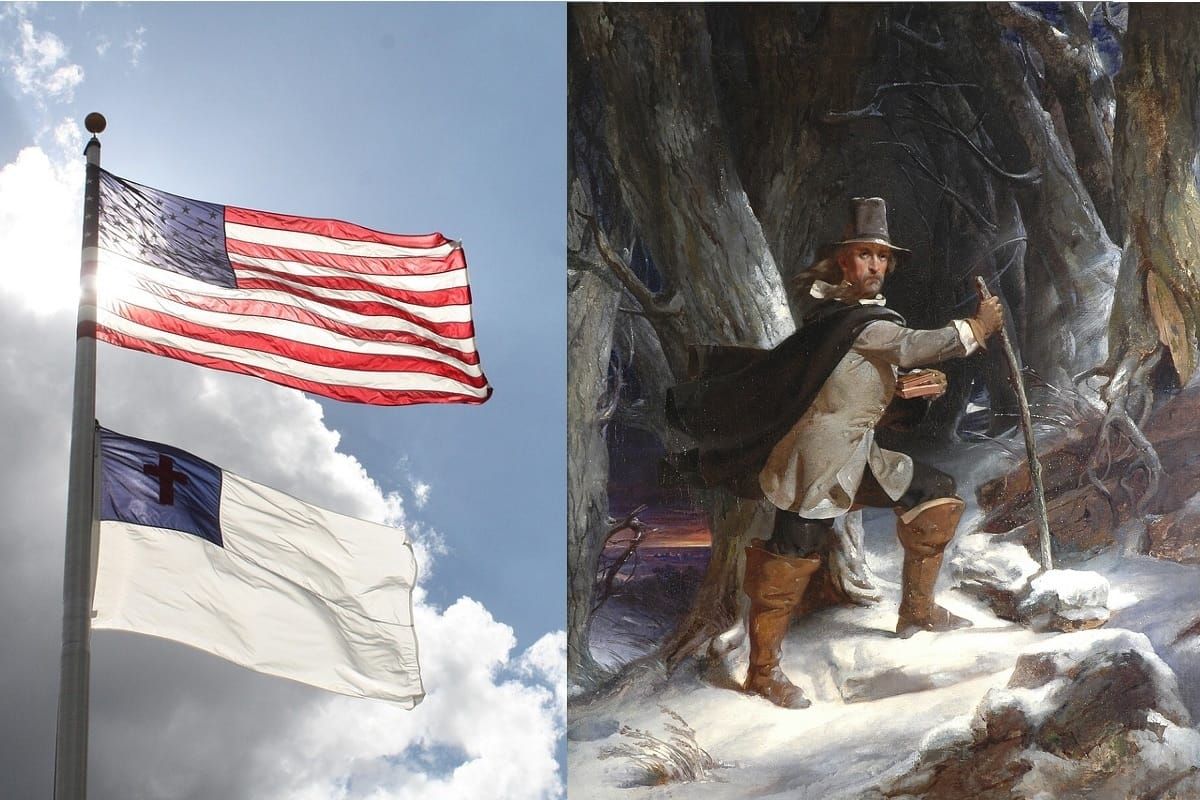
OnlySky, Becky Garrison, 10 Jul 2026: On America’s 250th anniversary, let’s remember Roger Williams, subtitled “A pioneer of religious liberty reminds us why secularism is the better way.”
Donald Trump and his Christian nationalist cronies envision a cramped future of religious coercion and enforced uniformity for America. But one of our nation’s founder figures preached a better way, and his lesson still has value for us. If we learn from him, we have the chance to build a future that’s freewheeling, fearless, and gloriously unorthodox.
Warren Throckmorton, author of The Christian Past That Wasn’t: Debunking the Christian Nationalist Myths that Hijack History observes, “During the nation’s 250th anniversary celebration, the current presidential administration seems intent on fostering an ever-closer relationship between Christianity and state. Vice President JD Vance recently declared that ‘Christianity is America’s creed.’ President Trump’s Department of Labor posted to social media a fictitious portrait of George Washington praying in Pennsylvania snow. It regularly depicts images which suggest that worship in America takes place only on Sunday, ignoring members of other faiths who worship on other days of the week. Early in his term Trump told a prayer group, ‘They say separation between church and state, I said, “All right, let’s forget about that for one time.”’”
Roger Williams, the writer’s 12th-great-grandfather, founded Rhode Island. He
proclaimed that “forced religion stinks in one’s nostrils.” That sentiment could easily be applied to this politicized and militarized form of Christianity that’s more reminiscent of the Handmaid’s Tale than anything.
And
The myth of American exceptionalism, the claim that America should set an example for the world as a stronghold of the Protestant Christian faith, is at least as old as the original thirteen colonies. The first governor of the Massachusetts Bay Colony, John Winthrop, coined the phrase “a city upon a hill” as early as 1630.
In contrast to Winthrop, Williams chafed at the notion of a “Christian nation” because, in his view, those who call themselves Christians should be guided in their convictions by faith and repentance, not by government authority or coercion. He advocated liberty of conscience—the belief that one should be free to worship as they please, without having their beliefs dictated or forced upon them by any governing body. Such views, radical for his era, resulted in him being banished from Massachusetts by Winthrop. Williams fled in the dead of winter to the wilds of Rhode Island, where he crafted the first constitution in the Western world that granted religious freedom even to “heretics” who chose to reside in the new colony.
Rather than a groupthink consensus where everyone follows a particular form of orthodoxy, Williams preferred the cacophony of free thinkers arguing passionately in the public square. He engaged in vigorous theological debates and was tolerant of opposing views, in comparison with other Puritan religious leaders who demanded strict conformity in their faith communities.
How have things turned out?
Even though the Founding Fathers wrote the principle into the First Amendment, they differed on what “freedom of religion” really meant. While a few hewed closer to Williams’ vision, more often it was Winthrop’s style of coercion and authority that dominated the early U.S. political landscape. Even today, conservative religious leaders are still trying to impose their particular brand of religion on the rest of the nation—and the world—with events such as the National Prayer Breakfast, CPAC, America Reads the Bible, Freedom 250, Freedom Con, and Freedom Night in America. Progressive-minded believers counter this narrative with their own version of a City on a Hill by promising, “if we build a better church, they will come.”
Yet the statistics tell a different story, one that accords with neither the religious left nor the religious right. The Public Religion Research Institute reported in 2016 that “one-quarter of Americans claim no formal religious identity,” which makes this group larger than any single religion in the United States. Moreover, the number of those who list their religion as “none” is continuing to rise.
Religion is essentially tribal: it provides a sense of belonging, a shared set of beliefs (the more irrational the better) that guarantee fellow believers can be trusted. Some kind of group function like this is likely to last forever. But one reason religion has faded is that their supernatural claims have been increasingly refuted, or debunked, by all that humanity has learned in the past two millennia. Religions shift to pretend it’s all just allegory. But some believers still believe literally.
\\\
This, too, is about how human culture perpetuates, even progresses.

Big Think, Jonny Thomson, 9 Jul 2026: “Live deliberately”: The origin of America’s first philosophy, subtitled “How a culture of independence gave rise to a philosophy of self-reliance, solitude, and inner authority.”
Key Takeaways
- We don’t choose our beliefs from scratch: People and societies inherit ideas before they learn to challenge them.
- Figures like Jonathan Edwards and Benjamin Franklin helped America step out from Europe’s intellectual shadow and begin thinking on its own terms.
- With transcendentalism, the young nation found its first major philosophy — one that prized self-reliance, solitude, nature, and inner authority over old-world institutions and traditions.
Well, of course. A social species like our grows by learning from the experience of our ancestors. Each person can’t learn about the world from scratch.
As much as we might hate the idea, many of our values are inherited rather than consciously chosen.
But the reason humanity has progressed is because some people do think beyond what they’ve inherited. The article goes on about the first strands of “American philosophy,” with Jonathan Edwards and Benjamin Franklin. The writer compares his situation with theirs.
I feel a great affinity with Edwards and Franklin — a strange thing to hear from someone schooled in the British university system — because I never enrolled in a postgraduate philosophy program. I do not have a PhD. In some European circles, that’s a badge of shame. “Dr. Thomson” would open doors — often centuries-old and bolted with medieval iron — that “Mr. Thomson” cannot. And yet, here I am as the “lead philosopher” of Big Think, writing for a successful and prestigious American company. It doesn’t matter that I don’t have a 50,000-word thesis on late Wittgenstein on my bookshelf. It matters that I can write about philosophy well and get it (mostly) right.
This is for good reason. American culture celebrates the self-taught hustler and the side-door entrant, from the self-made men of the early republic to the college-dropout CEOs of Silicon Valley, and the two dominant figures in 18th-century American philosophy lived, wrote, and excelled outside of formal academia.
\\\
This evening listening to an album I loved 30 years ago, but have been afraid to listen to again. Would it be outdated, somehow trite? My hesitation was partly because this composer, Richard Einhorn, seems never to have done anything substantial since this album. Wikipedia shows he’s done some film scores, from the late ’70s through the ’90s, for minor films I’ve never heard of.
But this piece is still really good. It’s on YouTube, but in the obnoxious format the splits each track into a separate post, with commercials.