
- How the deep questions in life may not be the right questions, and a long essay by Jim Palmer about the crucial function religion served in human evolution;
- Trump’s latest corruption: insider trading;
- World Cup: Trump makes it about himself (photo);
- Resisting change: trying to punish Brazil for adopting a better payment system;
- Vance on Satan and the separation of church and state;
- A Christian condemns an Arapaho tribe for “idol worship”;
- There are some people who still worship the ancient Greek gods.
The more I read on a wide range of topics that touch on various deep questions — is there a God? do we have free will? — I’m thinking that these are probably the wrong questions. Considering the biases of the human mind, the limitations of our senses, the limitations of our intuitive senses of time and space (i.e. ‘scale-blindness’), and idea of different levels of reality (e.g. how understanding physics and understanding biology work in completely different ways, while both being valid). These deep questions expect an answer at one level of reality, e.g. the cosmos, where the only apparent answer is at a different level, e.g. human existence. Example: What is the meaning of life? As another example, asking Is religion true? is likely beside the point. Of course it’s not; its internal contradictions and variance from reality make that obvious. The question is, why does religion exist, and why does it have such a hold on so many people?
For now, let me note another guy I’ve seen on Facebook, one Jim Palmer. He has no Wikipedia page, but has a lot of books for sale on Amazon. And he has a Substack, called Deconstructionology, on which he posts, virtually every day, very long pieces about religion and psychology and “existential health.” Perhaps a key point is that he’s a former believer. His posts are so long I’ve not read any of them through. But for today I’ll note this one, since it seems aligned with my thoughts just expressed about religion.
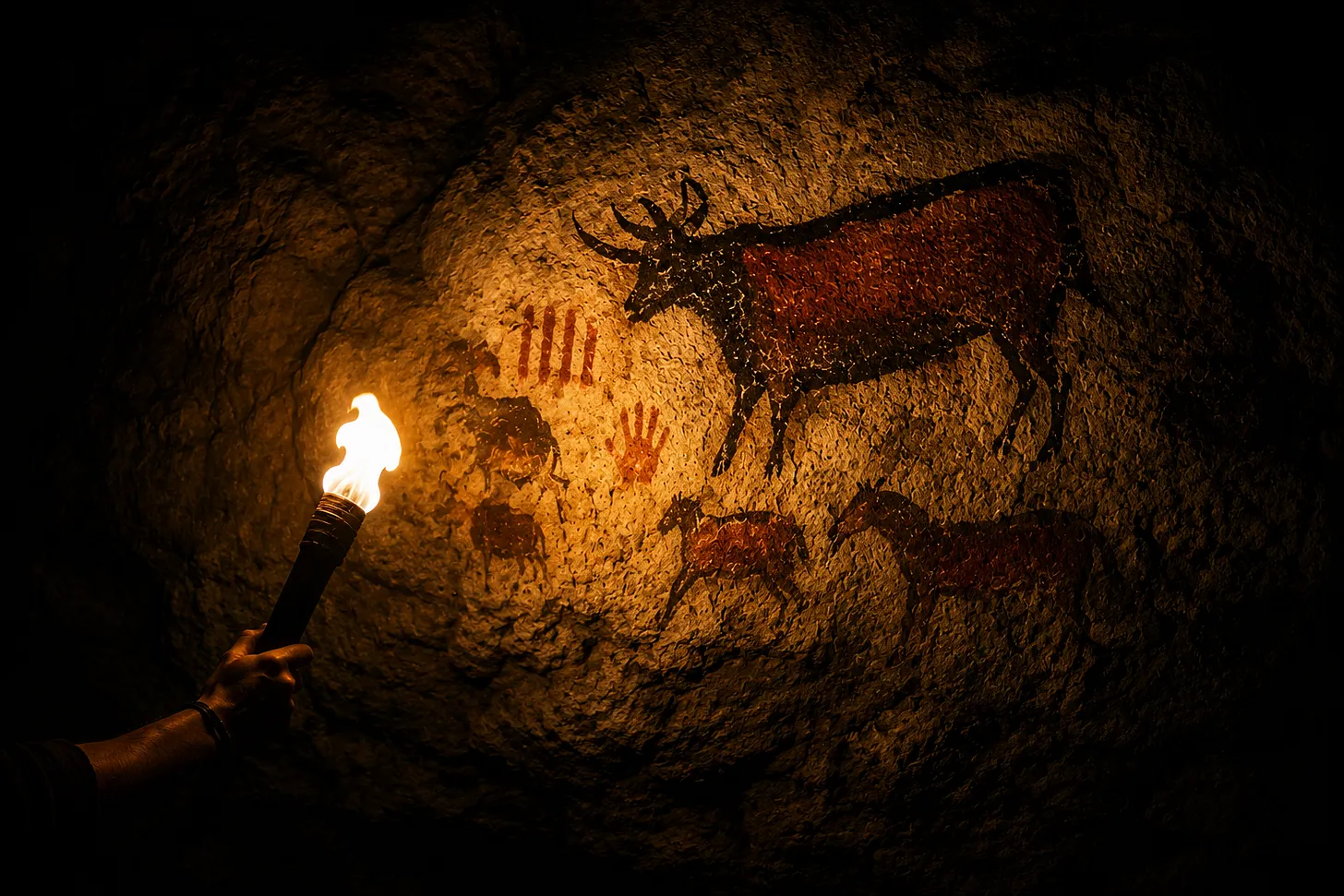
Deconstructionology, Jim Palmer, 2 Jul 2026: How Religion Saved Our Species, subtitled “Why Big-R Religion Was Humanity’s Greatest Evolutionary Innovation”
I’ll quote the first few paras. The entire post is 38 of my screens long.
For many years, much of my writing has explored the ways religion can distort, constrain, and sometimes wound human lives. I do not regret that work. Many of those critiques remain important, and I believe they still need to be made.
Over time, however, I found myself asking a different question. Rather than asking only where religion failed, I began wondering why it appeared everywhere. Why did every known civilization develop something remarkably like it? What human problem was it solving?
The more seriously I explored those questions, the more my understanding evolved. I no longer see religion primarily as humanity’s greatest mistake or simply as divine revelation. I have come to see it as one of the most remarkable evolutionary innovations our species ever produced.
This article is my attempt to explain why.
Before There Were Religions
If religion had never existed, our species might never have survived.
That sentence will disappoint some atheists and alarm some believers. The former often regard religion as humanity’s greatest mistake, a long detour through superstition that delayed our intellectual maturity. The latter frequently understand religion primarily as divine revelation, believing its significance rests upon the truth of its doctrines and the authority of its sacred texts. Although these perspectives differ profoundly, they share an assumption that has shaped almost every modern conversation about religion: both treat religion primarily as something people believe.
I want to suggest something much older, much broader, and, I think, far more interesting.
Long before religion became Christianity, Islam, Judaism, Buddhism, Hinduism, or any of the traditions we recognize today, it was already performing an extraordinary function within human evolution. Before there were creeds to confess, doctrines to defend, or institutions to preserve, there existed a uniquely human capacity to construct shared symbolic worlds. That capacity transformed small bands of vulnerable primates into civilizations capable of cooperating across generations, organizing millions of strangers, preserving knowledge, confronting mortality, and creating cultures that could outlive the individuals who built them.
That’s enough quoting. These thoughts align with Harari, in his many books: religion, like money, is a kind of story that everyone agrees to believe in because it’s useful.
Thus, ironically, the persistence of humanity’s tribal inclinations, and its religions, are evidence of its evolutionary past, never mind all the direct evidence for biological and cultural evolution. Since they are inconsistent and contrary to the evidence of the actual natural world, religions cannot be true. What are they there for, then? Basically: religions are parochial stories that blend intuitive perception of the natural world as agent-driven, serving as binding agents to unify the tribe and fortify it against other tribes with different stories/religions. Shared symbolic worlds, as the essay says.
Remember, human nature evolved, complete with its biases and confabulations, to promote human survival. Which only occasionally overlapped with understanding the real world. Which most people still don’t. Or, arguably, need to.
Yesterday Palmer posted this: If You Read Only Fifteen Things I’ve Written, subtitled “Articles that best capture my exploration of meaning, spirituality, existential health, and what it means to be human.”
The list includes the item I posted above.
P.S. the undermining of convention wisdom, the potential of new realms of understanding, is what the best science fiction attempts, and sometimes succeeds.
\\\\
And now for the usual batch of political items, which inevitably reveal tribal, religious thinking, and rarely considers evidence-based, logical thinking about the real world.

- The Bulwark, Jonathan V. Last, today: Truth Social Legalizes Insider Trading
- Subtitled: “Trump corruption machine go brrrrrrrrrrrrr!”
- MAGA doesn’t care about corruption.
\
We actually watched the World Cup final, though only as I walked around the house and occasionally paused.

- Robert Reich, yesterday: He Can’t Resist
- Subtitled: “This photo is worth a thousand words”
\
I had never heard of this PIX app.

- Paul Krugman, today: Trump’s War on the Future, Monetary Edition
- Subtitled: “Trying to punish Brazil for adopting a better payment system”
- This isn’t just Trump, it’s conservatives, who always resist and resent any change to their order.
\

- JMG, today, from Christian Post: Vance: Satan Is Behind Separation Of Church/State
- Argh. How to say this. He is living in a simplistic fantasy world of good and evil, God and Satan; a childish theological cosmology.
- It’s another sign, as if needed one, not to take anything he says seriously, ever again. He is religion-addled.
\
This is rich.

- Friendly Atheist, Hemant Mehta, yesterday: Arapaho tribe tells pastor to leave reservation after she trashes their sacred traditions
- Subtitled: “Sarah Lucas condemned Northern Arapaho ceremonies as ‘idol worship’—then portrayed herself as a persecuted Christian when tribal members pushed back”
- Aren’t all religions equally arrogant?
\
The headline earlier today, when I captured this link, was about how these worshipers objected to The Odyssey.
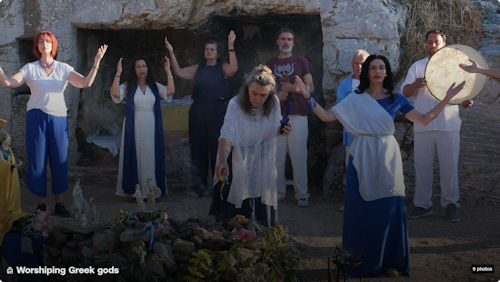
CNN, Joe Baur, yesterday: These people say worshiping ancient Greek gods is a route to modern happiness
I’m not going to quote. The point is the same as above.