
Testing provisional conclusions. Is this just about primitive tribal priorities for survival, in a world that doesn’t actually need more children? Or something else?
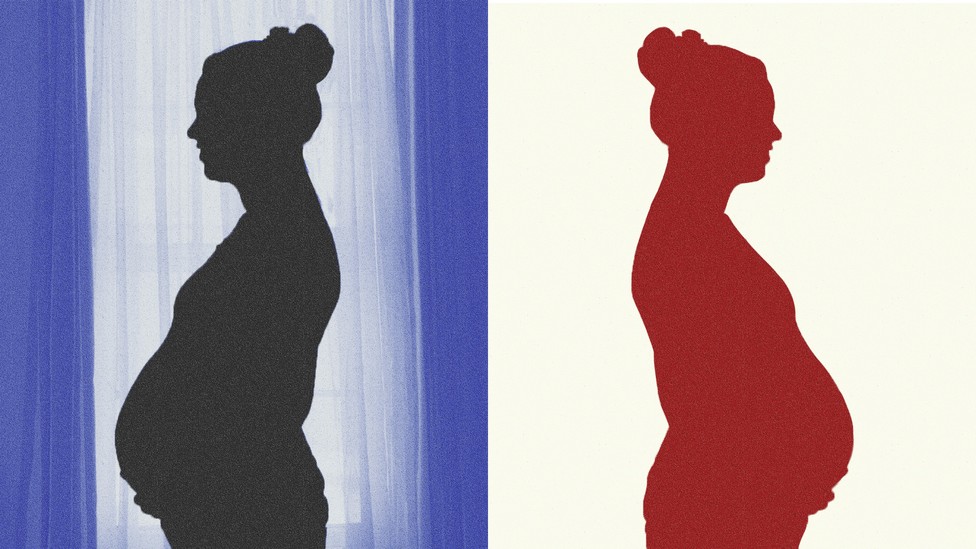
The Atlantic, Olga Khazan, today: Another Big Difference Between Liberals and Conservatives, subtitled “People on the right tend to have more kids than people on the left. Why?”
…several academics told me that research conducted in the past few years has shown a fairly strong association between ideology and fertility. The latest evidence comes from a June report by the Institute for Family Studies, a think tank that promotes marriage and family life, which polled more than 7,000 Americans aged 18 to 54 and found that self-identified conservatives had 1.4 kids, on average, to liberals’ 1.09, a statistically significant difference. The study also found that liberals were more likely to not have children. The ideological fertility gap remained even after controlling for other variables that may influence family size, such as religion, race, income, age, marital status, and education.
Several theories. Liberals are more anxious about the state of the world. Liberals and conservatives have different values. And both sides tend to live in bubbles. The rest of the article expands on these.
On the first point, complexity.
More than a third of the liberals said they thought parenting is “very complicated, difficult, and stressful,” compared with less than a quarter of conservatives. And 19 percent of liberals thought their mental health was “not good enough to have children right now,” compared with 10 percent of conservatives.
And,
…liberals are more likely to follow a broad array of mainstream news sources, which may make them more aware of societal problems such as climate change or rising authoritarianism, and thus more concerned about bringing children into a world with such seemingly intractable challenges.
And, conservatives are sure they will prevail. On values:
Conservatives and liberals, Rackin said, seem to have different answers to the questions “What does it mean to be an adult?” and “What does it mean to live a good life?” According to various studies and surveys, she said, “conservatives are more likely to see people as embedded within traditions and obligations and social roles, and parenthood is a role.” Liberals, Rackin added, seem more interested in self-definition, and in “constructing and expressing your own identity and aspirations. You don’t just accept roles because of tradition.” In one recent Pew Research Center poll, for instance, Republicans were more likely than Democrats to say that having children was “highly important” for living a fulfilling life, and in another, Democrats were more likely than Republicans to say that creative activities were “one of the most important things” to them. Democrats, then, may be less willing to choose parenthood when it competes as a priority with career, friendships, travel, and other pursuits.
Religion explains much of this values gap. Some 80 percent of conservatives are Christian, for example, compared with 37 percent of liberals, and many denominations of Christianity encourage having children. But even in studies that control for religiosity, some of the difference in desired fertility between the parties remains. Something about the conservative worldview seems oriented toward family life. “I think even if you took nonreligious conservatives and nonreligious liberals and compared them,” Rackin said, they’d still have different definitions of the meaning of life, which would in turn give them different perspectives on whether to have children.
And then more about partisan sorting and bubbles.
None of this contradicts my very broad provisional conclusion above. Many and perhaps most writers, on politics or sociology or whatever, do not have the perspective of evolutionary psychology, or the forces that created human nature, in mind. I’ve mentioned this about some books, too. In a sense, many academics and professionals are stuck in bubbles, experts in their own fields, but naive in most others. I’ve been trying to read much more widely.
\\\
Shorter items.

- JMG, today: Johnson: Midterms Are GOP Vs “Literally Communism”
- No, they’re not “literally” communism. There’s a special place in Dante’s hell for people who use the word “literally” to mean figuratively.
\
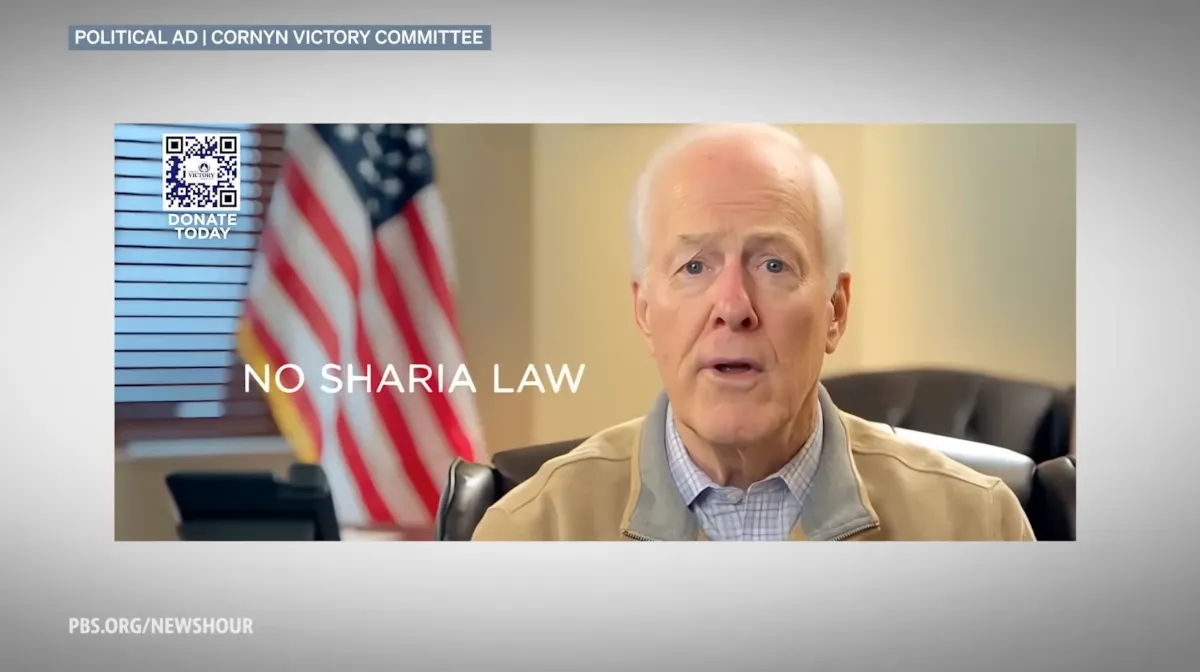
- Friendly Atheist, Hemant Mehta, today: Conservative Christians in Texas are trying to harass Muslims out of existence, subtitled “Their latest gambit? Legally redefining religion to exclude Islam, a move they think will let them ignore Muslims’ civil rights”
- Once again: conservatives think that by passing a law, redefining a word, or eliminating a database, you can change reality, and make their problem go away.
\

- Long piece, perhaps from next Sunday’s Magazine.
- NY Times, Maxine Joselow, posted today: How Trump Is Trying to Crush California’s Environmental Policies, subtitled “At least a half-dozen federal agencies have taken action against the state that has led the nation in environmental protections.”
- Of course he is.
\
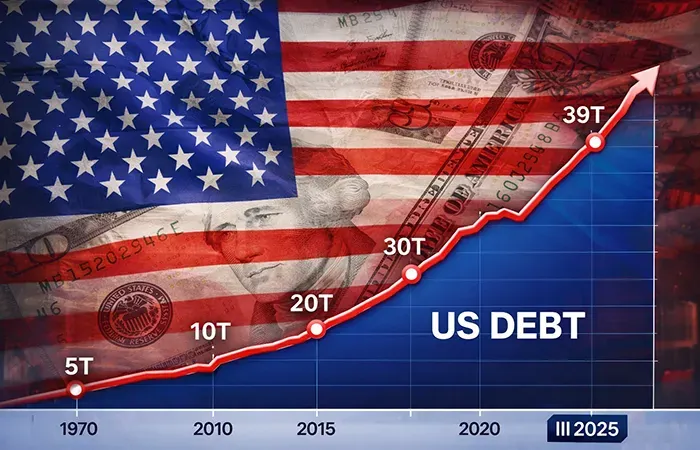
- Republicans complain about the national debt only when they are not in power. When they’re in power, anything goes.
- Robert Reich, today: Who’s Raking it in as the National Debt Explodes?
- Subtitled: “What the wealthy and powerful — and Treasury Sec. Scott Bessent — don’t want you to know”
- “The U.S. national debt has officially surpassed $40 trillion, months earlier than forecasters had expected — because of billions of dollars in lost revenue from Trump’s invalidated tariffs, Trump’s tax cuts (mostly to big corporations and the very wealthy), and the soaring costs of Trump’s war.”
\
Let’s see if this new image link works.

- Heather Cox Richardson, yesterday: August 19, 2026
- “The political world has been consumed over the past few days with a Republican meltdown about Trump’s aide Natalie Harp.”
- Should we care? Is there any there there? Perhaps there is.
\\\
This evening: