This is not a surprise. This is what authoritarian regimes do to hide their mismanagement and irresponsibility.

The Guardian, yesterday: Trump 2.0 has deleted or altered nearly 400 US datasets, endangering public health, education and more
Why? Short answer is in the subtitle: “Health data appears to be most affected by administration’s attempt to wipe findings that don’t align with its priorities, tracker shows”
Mostly about health. They don’t want to know about gay people or trans people. Ignore them, and they won’t exist; as I’ve said many times, conservatives think you can write a law or delete a database and change reality. Those people still exist.
\\
There are always new sycophants waiting in the wings. Several stories about her today.
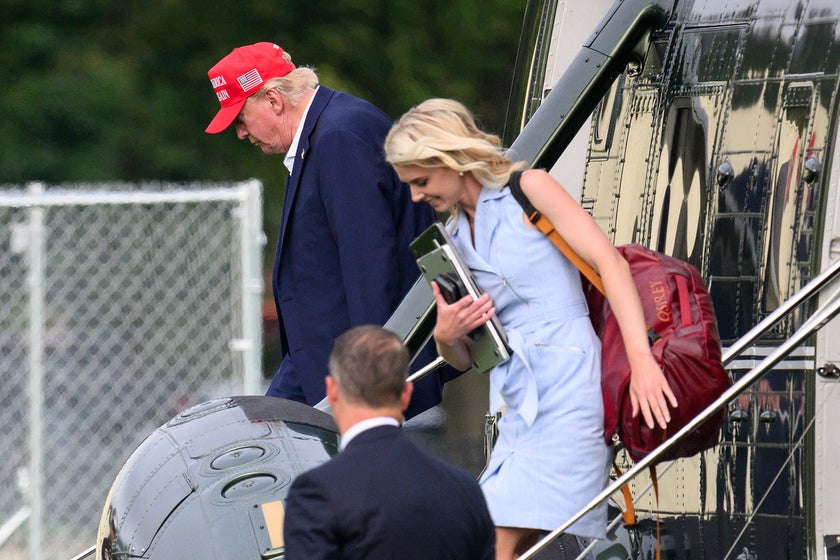
Slate, Heather Schwedel, yesterday: Why Did Trump Lose It Over Natalie Harp—and Who Is She, Anyway? Unfortunately, I’ve Learned Too Much., subtitled “It’s not an affair. It’s somehow worse.”
Jon Ossoff mentioned her and pissed off Trump. Who is she?
Natalie is Natalie Harp, but she’s better known as Trump’s so-called “human printer.” As an executive assistant in the White House, she follows him around with a wireless printer, supplying him with a steady flow of articles and memes about him for him to take in. If you’re wondering why such a position is necessary in the age of the smartphone and tablet, recall that our president, ever the boomer, prefers things in hard copy. (Who says he’s not creating jobs?) Harp also sometimes posts for Trump on social media; people on his team have in fact blamed her for some of his very worst, most racist posts. She makes a salary of $150,000 doing this, by the way.
Just another profile of the people running our country.
\
Also here:
CNN, today: Meet Natalie Harp, the aide so close to Trump she once rode in an SUV trunk to accompany him
\\\
Somehow this is consistent with Trump’s misogyny. And that of MAGA conservatives. It’s rote. They don’t think about it. Tribalist mentality.
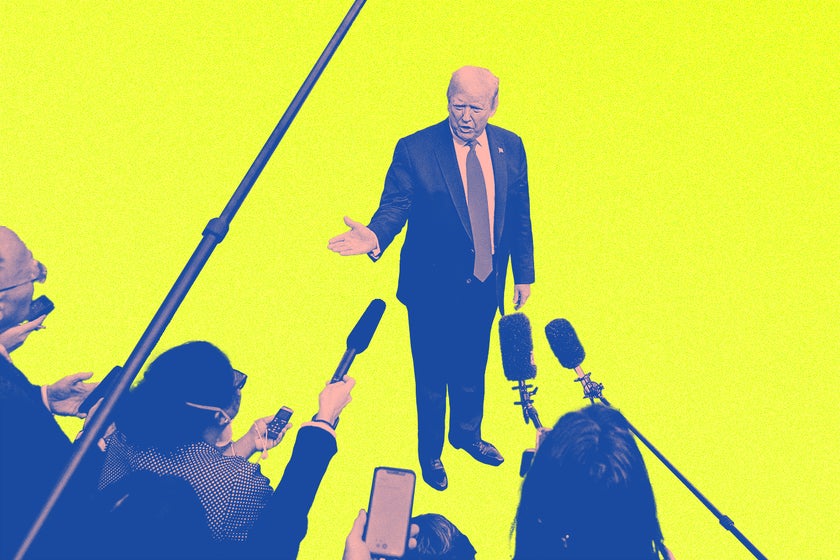
Slate, Ian Prasad Philbrick, yesterday: Donald Trump’s Trickle-Down Misogyny, subtitled “This outburst says a lot about how the president’s long history of misogyny is infecting the rest of his party.”
It’s perhaps not surprising that Donald Trump, a man who has many criticisms of the press and a long history of demeaning his female critics, reserves special rage for reporters who happen to be women. The latest example happened in the Oval Office yesterday, when Trump called CNN’s Kristen Holmes “a loud, boisterous person” and told her to “be quiet.” The president has attacked female journalists before, but it’s what happened next that really sets this outburst apart—and says a lot about how Trump’s misogyny is infecting the rest of his party.
With many similar incidents in the past.
\\
More base human nature.

NYT, Jamelle Bouie, today: Trump’s Lust for Vengeance Is Turning Into a Farce [gift link]
The principal aim of President Trump’s second term is revenge.
Trump is consumed by this lust for revenge. It defined the first moments of his second term. “Within hours of taking the presidential oath,” my news-side colleagues Maggie Haberman and Jonathan Swan report in “Regime Change: Inside the Imperial Presidency of Donald Trump,” the president “stripped protective details” from Gen. Mark Milley, a former chairman of the Joint Chiefs of Staff, “and others he had viewed as disloyal, including former national security adviser John Bolton, former Secretary of State Mike Pompeo and former Defense Secretary Mark Esper.”
Revenge against the aides and officials who restrained Trump’s worst impulses. Revenge against the bureaucrats and “deep state” agents who challenged his lawbreaking. Revenge against the prosecutors who pursued cases against him and against the judges who ruled in their favor. Revenge against the few Republicans who voted for his impeachment and conviction and against those who abandoned him after Jan. 6. And last, revenge against the American people, for rejecting him in 2020 and dealing a grievous blow to his ego.
Really, America, the greatest nation on Earth, this is the best you can do? These are highest moral aspirations to be elevated?
\\\
This is troubling because this isn’t just about conservative resistance, it’s about resistance of human nature to progress.
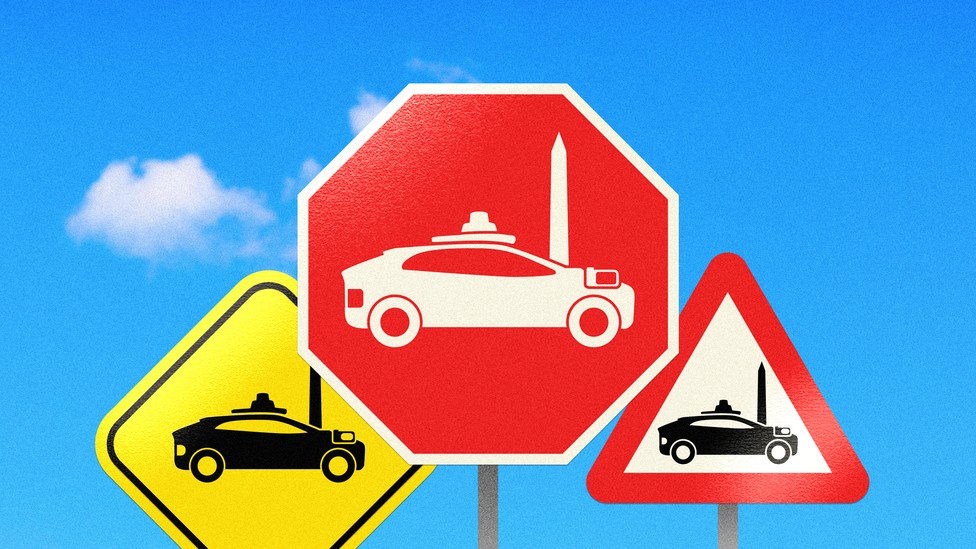
The Atlantic, Rogé Karma, today: Democrats Are Failing the Waymo Test, subtitled “Cities that say no to driverless cars are blocking a technology that would change their residents’ lives for the better. ”
The driverless future is here—but, to borrow from William Gibson, it’s not evenly distributed. Waymo’s self-driving robotaxis are available in cities in California, Arizona, Florida, Georgia, Tennessee, and Texas. Aside from California, where the technology originated, those are all red or purple states. In every other blue state, meanwhile, driverless taxis are still not allowed to operate. If you live in Miami or Dallas, you can summon a Waymo to get where you’re going. If you live in Boston or New York, you can’t.
They’ve been everywhere in the city, i.e. San Francisco, for a couple years now. They’ve been approved in Oakland and Berkeley, but are appearing here only gradually.
This is not an accident. In Democratic jurisdictions, a coalition of labor unions, anti-tech activists, and politicians have kept driverless vehicles off the streets. (Colorado, which passed a bill authorizing driverless vehicles in 2017, before the current backlash, is on track to become the exception later this year.) They argue that the new technology would make the roads more dangerous and throw millions of human drivers out of work, all to enrich a handful of tech oligarchs.
Actually, Waymo and similar cars have a far greater record of safe accident-free driving than do humans. The fear of putting humans out of work is familiar, and goes back to the the Luddites and fears of putting horse-whip makers out of work with the advent of mechanical automobiles. It never manifests; people find other, more productive things to do. That’s how civilization advances.
The article has many such examples.
At the same time, I’ve never taken a Waymo car. Perhaps I should, next time I’m in the city, just to see what it’s like.
The article ends:
One-hundred and fifty years ago, the United States was experiencing the advent of a brand-new transportation technology. Railroads reduced cross-country travel from months to days, turned the U.S. into an industrial powerhouse, and enabled the modern consumer economy. But they also displaced workers, such as canal operators and stagecoach drivers; led to skyrocketing inequality; and produced corrupt monopolies presided over by ruthless oligarchs. A new political movement formed in response. Its adherents passed legislation that protected workers, created novel regulatory agencies, broke up powerful monopolies, and developed safety standards. Neither techno-utopians nor luddites, they believed that technology could be a force for progress—but only if it was actively shaped and regulated by the public. They thus called themselves progressives. Their political descendants would do well to remember their example.
This is the perspective of history. We’ve been through all this before. Most people don’t learn.
\\\
I need to switch gears.