A Crisp, Sunny January Day

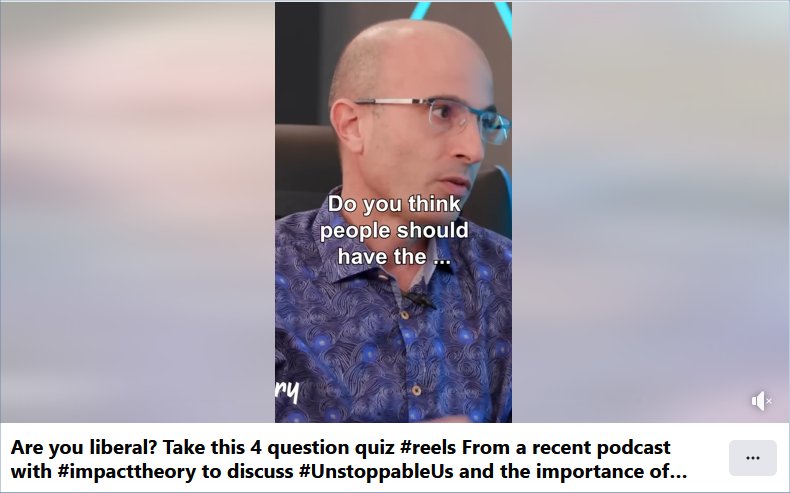
Topics for today: Why China’s decline in population is a good thing; Yuval Noah Harari on identity; Moral panic and the right-wing mind; How climate change has been covered in textbooks since the 1970s.

Continue reading

Posted in Conservative Resistance, Culture, Psychology, Religion, Science | Comments Off on A Crisp, Sunny January Day

Recent Science Matters

What fetal tissue actually looks like; how humans inbreed dogs to the point of their inability to survive in the wild; the discovery of the enormous universe and who did and didn’t get credit.

Continue reading

Posted in Cosmology, Science | Comments Off on Recent Science Matters

Feelings vs. Data, Political Items, and Awe

Today Paul Krugman counters feelings with facts, this time about the economy; also, items about DeSantis, red state murders, Truth Social ads. And a new book about awe.
Continue reading

Posted in Economics, Science, science fiction | Comments Off on Feelings vs. Data, Political Items, and Awe

Rural Rage and Republican Shenanigans

Paul Krugman responds to Thomas Edsall about the roots of conservative rural resentment, and how their three key perceptions are in fact wrong. Also, the GOP’s 30% sales tax idea; how religion would control or cut off the world; and some hypocrites and loonies.

And why politics and religion are the things we don’t talk about over dinner.

Continue reading

Posted in Conservative Resistance, Politics, Social Progress | Comments Off on Rural Rage and Republican Shenanigans

The Moral Arc and Animals, Animal Intelligence, and People Who Don’t Read Books

Just these three topics for today, one focusing on Ray Nayler’s SF novel The Mountain in the Sea.

Continue reading

Posted in Book Notes, Morality | Comments Off on The Moral Arc and Animals, Animal Intelligence, and People Who Don’t Read Books

More About the Evolution of a Political Party

Today’s items follow up from yesterday’s, about the growing extremism and commitment to things that aren’t true by one particular American political party. As I still wonder, how did we get here?

Specific items are about changes in the Republican party since the 1960s (via letters to the New York Times); a conservative claim of victory in voter suppression; DeSantis’ war on all state-unapproved books; reasons for resentment among Republicans; DeSantis’ strategy in fighting the cultural wars.

And as a lagniappe on another theme, how the scientist who discovered sperm was so grossed out he hoped his discovery would be suppressed.

With an endpiece on a personal note.

Continue reading

Posted in Politics, Science | Comments Off on More About the Evolution of a Political Party

Things That Are Not True, and Immorality

Catching up on interesting items from the past few days, about the Christian right’s embrace of a “lying libertine,” how faith healers who kill their children get away with it in some states, how Republicans who lose elections react to the point to shooting up Democrats, the need to find a villain behind COVID, and the mature idea of being able to change one’s mind based on changing evidence. All, today, filtered through Michael Shermer’s notion that false beliefs about the world lead to immorality.

Continue reading

Posted in Conservative Resistance, Morality, Science | Comments Off on Things That Are Not True, and Immorality

Michael Shermer: THE MORAL ARC

Subtitled: How Science and Reason Lead Humanity toward Truth, Justice, and Freedom

(Henry Holt, January 2015, 541pp, including 55pp of notes, 30pp of bibliography, and 15pp of acknowledgments and index)

This is Michael Shermer’s magnus opus, perhaps, culminating a running theme in his earlier books from WHY PEOPLE BELIEVE WEIRD THINGS in 1997 (reviewed here), HOW WE BELIEVE in 2000 (here), THE SCIENCE OF GOOD & EVIL (which I haven’t read yet), and THE BELIEVING BRAIN in 2011 (ditto). Not to mention WHY DARWIN MATTERS in 2006 (here) and other books about the territory between science and irrationality. Shermer was founder and editor of Skeptic magazine, and his perspective is interesting because for a while in high school he was a born-again-Christian until, as he put it in the Darwin book, “The scales fell from my eyes! It turned out that the creationist literature I was reading presented a Darwinian cardboard cutout that a child could knock down.” Also, he was a cross-country bicyclist for a while.

The book is spiritual kin to Steven Pinker’s THE BETTER ANGELS OF OUR NATURE (partial summary) and I even sat down to read this Shermer book soon after it came out, until seeing in the opening pages Shermer himself crediting Pinker’s book. Eventually I did read Pinker’s book, and its sequel, and so eventually just last month, despite not having read a couple of Shermer’s earlier books in that thread above, plowed through this one, his longest.

Continue reading

Posted in Book Notes, Morality, Science | Comments Off on Michael Shermer: THE MORAL ARC

Robert Lanza and Nancy Kress, OBSERVER

(The Story Plant, January 2023, 380pp)

This is a hard science fiction thriller that impressed me in many ways, though I’m not a regular reader of thrillers per se and perhaps am not in a position to judge the book as a thriller. (Just as SF novels written by literary writers often fail in ways literary readers don’t realize, not knowing the standards of SF.) But it does have many of the elements that have made Kress a preeminent hard SF writer for decades now, a point I made when I reviewed her 1991 novella “Beggars in Spain,” here. She does hard science, and she does characters and plot very well too.

Continue reading

Posted in Book Notes, science fiction | Comments Off on Robert Lanza and Nancy Kress, OBSERVER

A Fundamental Theological Question, via Jerry Coyne

Only time for a quick post today, again, ironically about a fundamental theological issue. What is the essential difference between science and religion, between a way of thinking and a way of not thinking but merely conforming to community traditions, or “believing’ whatever makes you feel good? (In a deep sense this difference, or conflict, comes from not asking the right questions. But that’s a subject for another time.)

Continue reading

Posted in Religion, Science | Comments Off on A Fundamental Theological Question, via Jerry Coyne