Today’s Odds and Ends: Conservative rejection of science; Christians’ perceived persecution; Dinesh D’Souza’s paranoia

There have been several articles in recent days about how people [conservatives] who don’t accept evolution or climate science don’t necessarily know less about those subjects than others… they do so because their “community” rejects such conclusions, by instinct.

New York Times: Brendan Nyhan on When Beliefs and Fact Collide.

Mr. Kahan’s study suggests that more people know what scientists think about high-profile scientific controversies than polls suggest; they just aren’t willing to endorse the consensus when it contradicts their political or religious views. This finding helps us understand why my colleagues and I have found that factual and scientific evidence is often ineffective at reducing misperceptions and can even backfire on issues like weapons of mass destruction, health care reform and vaccines. With science as with politics, identity often trumps the facts.

Jerry Coyne’s take: Do people who deny evolution know less about it than others?, with lots of graphs. Referring to his book Why Evolution is True [WEIT],

As I’ve been saying repeatedly, the way to eliminate creationism is not to teach people about evolution (as I tried to do in WEIT), but to get rid of the major factor that make them deny evolution: religion. Granted, WEIT was successful in changing some people’s minds (I have lots of emails attesting to that), but I suspect its main effect was simply to tell people who already accepted evolution about the kind and amount of evidence supporting it.


Another piece about how Christians, the dominate religious sect in the US, feel themselves persecuted. By the gays.

Slate: The Christian Persecution Complex Moves Into the Workplace

All of this is extravagantly silly, and I respect Dreher and George’s intellects too much to believe that they’re actually taking it seriously. But for the unhinged Ruse and his acolytes, I’m sure the story plays right into a developing narrative on the far right: LGBTQ people, they insist, are the true oppressors, and conservative Christians an embattled, discriminated-against minority.

This persecution complex—which actually began long before the Brendan Eich controversy—is so asinine that I almost regret wasting space refuting it. But the fear needs a rebuttal, because, daft as it may be, it’s also dangerous. Recasting a tiny, historically despised minority as a covertly powerful conspiracy of puppeteers is a time-honored smear tactic used to vilify Jews and other disfavored demographics. It’s a darkly clever strategy here, especially given Americans’ traditional love for an underdog. Suddenly, gays aren’t a small minority fighting for basic equal rights; they’re unduly influential string-pullers, using behind-the-scenes machinations to persecute Christians.


And finally, Salon on how right-wingnut Dinesh Di’Souza thinks the whole world is against him. Conspiracy! Between The New York Times, Costco, and Google!

Salon: Dinesh D’Souza’s paranoid nightmare: Everything is a vast conspiracy against him

Or maybe he’s just a paranoid religious franatic (like so many right-wing heroes are) who does not, in fact, and fortunately, have very many followers.

Posted in Culture, Evolution, Lunacy, Reviews, Thinking | Comments Off on Today’s Odds and Ends: Conservative rejection of science; Christians’ perceived persecution; Dinesh D’Souza’s paranoia

Sam Harris on Morality and the Christian God

I came across couple audio tracks from Sam Harris on how Christian morality not only makes no sense, but can be regarded as positively despicable.

I realize that a large majority of the American population subscribes to this morality (and reflexively despises anyone who does not), and can only think that they have not completely thought this morality through, but just accepted it because everyone else in their community accepts it. This has to be a prime example of the way human intelligence of too often subsumed to groupthink and tribal identity. We could do so much better. (And we will, eventually. But it will take so much longer than it might.)

http://www.samharris.org/blog/item/morality-and-the-christian-god

The text below is from the second reading “of a similar text”. This whole audio is about 6 minutes. Here’s just the opening, and the last bit. (Yes, his point here is about the ancient “problem of evil”, but there has never been a satisfactory answer to this question, to nonbelievers. Only to believers who seem to be able to explain anything away.)

It’s often argued that religion gives us the most secure foundation for morality, that without it questions of good and evil, right and wrong, simply cannot be answered. Or worse, without God such questions have no answers.

But what can we make of this notion that God is the basis of morality, in a world in which 9 million children a year die before the age of 5. Most of this death and suffering has nothing to do with the choices people make for which they could conceivably be held responsible. You can’t say that these children were bad of their own free will, or that they got what they deserved. We’re talking about children dying before the age of 5. We’re talking about disease and unclean water and accidents and natural disasters—death by bad luck, essentially. There are some very unlucky people in this world, but according to a religion like Christianity, this is all part of God’s plan.

[He goes on about such needless deaths, vs the Christian idea that a serial killer can get into heaven by simply accepting Jesus in the last moments before his execution.]

One thing should be crystal clear to us at this point: this vision of life has absolutely nothing to do with moral accountability. And notice the double standard that most believers use to exempt God from any accountability for this evil. We’re told that God is loving and kind and just and wholly good, but when someone points out the evidence that God is cruel and unjust, because he imposes suffering on innocent people on a scope and scale that would embarrass the most vicious psychopath, we’re told that God’s will is a mystery. God cannot be judged by mere human standards, don’t you know? And yet these merely human standards are what believers use to judge God to be good in the first place.

[and skipping until the last minute or two]

Consider the real moral framework that Christianity recommends. It’s rather startling when you think about it. Christianity is actually a cult of human sacrifice. God so loved the world that he gave his only son. John 3:16. The idea is that Jesus suffered the crucifixion so none need suffer Hell – except of course for those poor people in India, and billions like them throughout history.

Humanity has actually had a long fascination with blood offerings to imaginary gods. In fact it has been by no means uncommon for a child to be born into this world only to be patiently and lovingly reared by religious maniacs who believe that the best way to keep the sun on its course, or to ensure a rich harvest, is to lead him by a tender hand into a field or a mountaintop, and bury, butcher, or burn him alive, as an offering to an invisible god. Human beings, just like ourselves, actually buried their children alive in postholes, believing that this would keep invisible beings from knocking down their buildings.

These are the sorts of people who wrote the Bible. And it is atop this truly contemptible history, of scientific ignorance and religious barbarism, that Christianity now stands.

Christianity is not a religion that repudiates human sacrifice. It is a religion that celebrates a single human sacrifice, as though it were effective. Christianity amounts to the claim that we must love and loved by a God who approves of the scapegoating, torture, and murder of one man – His son, incidentally – in compensation for the misbehavior and thought-crimes of all others. But who has still created a circumstance in which most others end up in Hell for eternity. And Jesus himself will happily preside over this misery and terror on the Day of Judgment.

If there is a less-moral moral framework to be found anywhere, I haven’t heard of it.

Posted in Religion | Comments Off on Sam Harris on Morality and the Christian God

Another Apologetic

Slate has an article today, Know Nothing: The true history of atheism, that is an attack on the “new atheists” and a defense, i.e. an “apologetic”, for traditional Christian faith.

My fascination about such pieces is that they *invariably* assume that the sophisticated theology that they ridicule ‘new atheists’ and others for knowing nothing about is the theology of *their own particular* flavor of religion – i.e. Christianity. The faith they grew up with. What presumption! How do they know that perhaps one of the many *other* religious traditions around the world today, or throughout history, isn’t the right one?

Needless to say, evidence is not involved. Nor have these critics in any way indicated that they have studied the theology of all of those other religions before having concluded they can be dismissed. They’re only trying to defend their own traditions. I needn’t study theology, or investigate the arcane complexities of astrological methods, to dismiss both belief in gods, and astrology.

Because the effective way of understanding the universe, the one that works, that has generated our modern technological civilization, is inconsistent with both.

The second flaw in apologist arguments like this is that they ridicule atheistic dismissals of religion myths like the belief that the universe was literally created in 6 days. Pshaw, this writer says; sophisticated theologians haven’t thought this in millennia. Maybe not– but that ignores the evidence that a surprising percentage of the current American population *does* believe such literal Biblical myths. These apologists who criticize the atheists seem to think they can define what proper religion is. But it’s the religion of the masses, according to these polls, that writers like Dawkins are addressing.

There must be a term, one of those psychological biases perhaps, that applies to this – the lack of recognition that one’s own personal experience isn’t the default position for everyone else in the world to accept, lest they be charged ignorant of theology. I need to capture this bias; it is a principle theme of my own worldview, via science fiction, that the world, the universe, is vaster and more complex than any particular parochial point of view, and the likelihood of your childhood faith being the one true religion (or theology) is vanishingly small. For all practical purposes, dismissible.

Posted in Religion, Thinking | Comments Off on Another Apologetic

Literary SF authors

Thought of the day – is a characteristic of a ‘literary’ genre SF writer one who writes short fiction?

(By ‘genre SF writer’ I exclude those ‘outsider’ literary authors who happen to write books resembling SF. Like today’s example, Edan Lepucki. Or even the likes of Margaret Atwood, et al.)

There are many very popular SF authors who write only novels, and I realized today that they are not among my favorite authors, or those whom I consider the most important. (Having this thought after chatting with some neighbors who are “sci-fi” fans by very different standards than my own.)

From Andre Norton to David Weber to J.K. Rowling.

My favorite SF authors, from Robert Silverberg to Gene Wolfe to Kim Stanley Robinson, have published substantial bodies of short fiction.

So question for the proverbial Group Mind: are there SF authors who have substantially contributed to the genre and science-fictional thinking, only through novels, without having written much short fiction?

(Actually, Iain M. Banks jumps to mind. Others?)

Posted in science fiction | Comments Off on Literary SF authors

Parents and Children

On Sunday I posted this link and comment on Facebook:

Major New Study Finds Kids Raised by Same-Sex Couples Are ‘Healthier and Happier’

Contrary to the right-wing funded studies in the US, such as the debunked Regnerus study, that have financing and prejudice to conclude otherwise.

Of course, all scientific studies are provisional until confirmed by follow-ups, but I find this conclusion plausible, for this reason: gay couples who have children go to considerable effort (and sometimes expense) to do so. They do not take their children for granted. They do not get pregnant by accident. There is certainly a proportion of straight couples who cannot say the same. And that contrast is likely the difference in these results.


Today, Monday, there have been numerous other online articles covering this study, including this one on Slate by Mark Joseph Stern, who identifies another factor that might explain the results: that gay parents are not as constrained as straight parents are by rigid gender roles.

These reactionaries don’t care how much your silly peer-reviewed “studies” contradict their anti-gay views, since “the factors that really matter” are their own breathtakingly antiquated (and totally unscientific) views of gender stereotypes.

And Stern goes on to expose an irony: that children of gay parents are not disadvantaged by their parents; they are harmed when their interaction with the outside world exposes them to the animus of conservatives, who debase their families.

Gay parents don’t disadvantage their children—but conservatives’ smear campaigns against gay parents do. This insidious harming of children at the hands of conservatives is pretty easy to understand. Anti-gay activists debase gay families as a whole by opposing equal rights for same-sex couples, singling them out for disfavored treatment and thus marking them as inferior or defective. Children begin to wonder why their parents are subject to such opprobrium and legal impediments, and translate legal inequality into moral deficiency. Their status as children of gay parents hangs like an albatross around their necks, impairing healthy development and fostering grief, anger, and depression.

Note the Top Comment block, which echoes my first reaction: that gay couples value their kids because they (virtually) never have them by accident….

If conservatives were really concerned about *the children* — as so many arguments against same-sex marriage focus on — then they should lighten up and accept the reality that gay people do have children, have always had children — despite laws forbidding the legal recognition of their own relationships — and are as capable of raising their children as anyone.

My own contribution to this controversy is this: It’s not about whether the parents are of the same sex or not. It’s about there being two of them. An infant or child learns about the world through the interaction with those around them. Does an infant, toddler, or child, know or care about gender? The range of personality types among males and females is so broad that they overlap substantially; it’s magical thinking that a child must be exposed to some one iconic ‘male’ and another iconic ‘female’, in order to properly develop. (Added 8jul14: And as for sex itself– the last thing a child wants to think about is their parents having sex. This has always been true, about traditionally straight parents. Kids want to discover this for themselves. In this context, it doesn’t matter whether their parents are straight or gay — kids don’t dwell on how their parents have sex, no way, no matter.)

Two parents are better than one, because that exposes the child to multiple dimensions of human interaction. And for that matter, exposure to *more* adults in early childhood is even better, I would think. (Though it’s the two who have authority over the child who matter the most.)


A final irony, on a related subject but which I don’t think I’ve had a chance to mention on this blog.

Being gay may not be strictly genetic, but there is plenty of evidence that there is a genetic component. (There is much fascinating research about why this must be so.)

Throughout much of history (at least American history), gay relationships have not been recognized, and have even been criminalized.

This has obliged many gay people to conform to societal standards and marry people the opposite sex. And have children. (I have an uncle who did exactly this.)

This propagates their genes. To the extent that homosexuality is genetically based, this introduces into the next generation a propensity to be gay.

If conservatives who disapprove of gays, in their rigid biologically-compelled view of the world in which propagation of the species, rather than individual human happiness, is the ultimate goal, want to make gays go away — then they should *approve* of gay marriage. To the extent that that reduces the number of straight marriages that result in children (that pass on the genetic potential toward homosexuality), gay marriage would reduce the incidence of homosexuality in each generation.

It’s the disapproval of gay relationships, and the social obligation toward heterosexual relationships, that has promulgated the gay gene, such as it is.

I’ve had this thought for some years, and never seen it expressed anywhere. Ironically, these days, in our advanced technological civilization, this argument is being undercut by advanced fertilization technology. Because it seems — and I have commented about this before — that being gay is entirely independent of the desire to have children. And now that these fertilization and surrogacy technologies are available, more and more of the gays are having children, one way or another. So there.

Posted in Culture, The Gays | Comments Off on Parents and Children

We’ll ride on the rain… we’ll worship the wind

We watched Pedro Almodovar’s Law of Desire the other night, a 1987 film possibly set earlier, since there is a scene in which a famous 1960s pop song, “If You Go Away”, is sung [in Spanish] to a stage performance. This triggered a memory: that song is one that imprinted deeply on me, at age 10 or 15, and hearing it again, now in several versions on the web, it doesn’t strike me as corny or dated, but still quite beautiful… yearning, hopeful at the same time, though ultimately heartbreaking.

If you go away, on this summer day
then you might as well take the sun away
All the birds that flew in the summer sky,
When our love was new and our hearts were high;
When the day was young and the night was long,
And the moon stood still for the night bird’s song.
If you go away, if you go away, if you go away.

But which version did I hear? Which was the most famous? YouTube has dozens of recordings, and Wikipedia has this entry about the song and some of its most notable cover versions. (It was written by French composer Jacques Brel, and translated into English by Rod McKuen.)

But if you stay, I’ll make you a day
Like no day has been, or will be again
We’ll sail the sun, we’ll ride on the rain
We’ll talk to the trees, we’ll worship the wind.

Then if you go, I’ll understand,
Leave me just enough love to fill up my hand,
If you go away, if you go away, if you go away.

One of most popular according to Wikipedia was by Jack Jones — and this one has a nice video:

This doesn’t quite strike the exact memory chord, though I’m pretty sure the version I heard so many times as a kid was by a male voice. Wikipedia OTOH indicates that one female, Damito Jones, placed highest on the charts with it.

If you go away, as I know you will,
you must tell the world to stop turning
Till you return again,
if you ever do,
for what good is love without loving you
Can I tell you now, as you turn to go,
I’ll be dying slowly till the next hello,
If you go away, if you go away, if you go away.

Mm, I don’t think that’s what I heard over my parents’ radio in the mid or late ’60s.

But everyone from Nina Simone to Glen Campbell to Neil Diamond to Julio Iglesias has covered it.

But if you stay, I’ll make you a night
Like no night has been, or will be again.
I’ll sail on your smile, I’ll ride on your touch,
I’ll talk to your eyes that I love so much.

But if you go, go, I won’t cry,
Though the good is gone from the word goodbye,
If you go away, if you go away, if you go away.

Which version imprinted on me? Don’t know. In any event, Frank Sinatra, as always, does the song credit… if a tad sluggishly.

If you go away, as I know you must,
There’ll be nothing left in the world to trust,
Just an empty room, full of empty space,
Like the empty look I see on your face.

I’d have been the shadow of your shadow
If I thought it might have kept me by your side.
If you go away, if you go away, if you go away.

[updated 9jul14 with complete, rather than sampled, lyrics. though different versions of the song have slightly differently rearranged lyrics.]

Posted in Music, Personal history | Comments Off on We’ll ride on the rain… we’ll worship the wind

Grayling on Ehrenreich

Yet another review of a review.

There has been discussion on various sites in recent weeks, including Andrew Sullivan’s The Dish, of a recent book by staunch unbeliever Barbara Ehrenreich, Living with a Wild God: A Nonbeliever’s Search for the Truth about Everything. The book is about an experience she had during adolescence that she now perceives as some sort of mystical experience, outside rational thinking.

I haven’t read this book or anything earlier by Ehrenreich, but I suspect I would respond as does A.C. Grayling, in the Los Angeles Review of Books (via)

Ehrenreich is well known for her atheism as well as her other publicly-avowed stances. As a highly talented writer and a powerful advocate for social justice causes, she has a standing in American life that will make this spiritual — or quasi-religious — turn a subject for debate. The explanation she gives of what she means by her “animism” is only sketchily offered, for the reason mentioned: the difficulty of expressing the inexpressible. All those who report having the kind of experiences she has had have had to resort to poetry, allusion, hand-waving, or metaphor to convey what these experiences are like.

We should always remember that the mind is a great player of tricks: one can induce Ehrenreich-type experiences in the lab, or by popping certain kinds of pills, no Other and no Mystery required. It is accordingly a surprise and — let it be confessed — a disappointment to find so doughty a heroine of her causes sliding away from Athens to — well, if not to Jerusalem than to some other Eastern locus of the ineffable, the unnamable, and the smoky.

I repeat: it is a disappointment when a rational person’s thinking about the unusual, the unexpected, the extraordinary, the amazing experiences of transcendence and unity that many of us have at heightened moments of life, suffers a declension into quasi-religious or supernaturalistic vagueness. The human brain is complicated enough to produce all these experiences from its own resources; we need no fairies in the garden to explain how roses bloom.

All that said, Grayling concludes,

That disappointment registered, my admiration for Barbara Ehrenreich the author and campaigner remains, as it does for the book itself: it is so beautifully written, so full of pungent insights on matters other than a putative Other, and so fascinating as a portrait of an intense and hypersensitive mind, especially in its youth, that it must surely count as one of the best reads of the year.

Posted in Book Notes, Religion, Thinking | Comments Off on Grayling on Ehrenreich

Prothero on The Unpersuadables

Another review of a review: Donald Prothero (a geology professor at Occidental College in LA, and a lecturer at Caltech), has a review of a new book by Will Storr, The Unpersuadables: Adventures with the Enemies of Science, that develops the argument of recent months that evidence simply will not dissuade true believers from any number of dogmatic beliefs, from UFOs to homeopathy to Holocaust denialism to creationism.

According to the review, the author spends considerable time interviewing and hanging out with deniers of various sorts, letting them speak, and eventually – but let me quote his words:

He describes the events in a non-judgmental way, and lets the people speak for themselves—and hang themselves with their own words, especially as his questions lead them to say weirder and weirder things. This is especially apparent as he spends many days with Holocaust denier David Irving and his pack of neo-Nazis, watching them delude themselves as they spout one racist statement after another—and then they claim they’re not prejudiced or anti-Semitic.

And the author arrives at the current understanding that

As many other people have shown, despite our best efforts our brains are not “objective” or “rational” in any way. Instead, we form a “belief network” around ourselves, and use confirmation bias to resolve the inherit conflict caused by the cognitive dissonance of what we want to be true, and what the world shows us. We easily fall for anecdotal thinking.

What makes this review notable is that reviewer thinks the author goes a bit too far; the author is skeptical of the skeptics. The reviewer quotes the author:

His monoculture we would have, if the hard rationalists had their way, would be a deathly thing. So bring on the psychics, bring on the alien abductees, bring on the two John Lennons—bring on a hundred of them. Christians or no, there will be tribalism. Televangelists or no, there will be scoundrels. It is not religion or fake mystics that create these problems, it is being human.

Then everything is relative to personal preference and nothing is true? I am on the side of the reviewer, who concludes,

Storr seems to be saying that since no individual has a clear view of the world, therefore there is no reality out there, and any truth or view is as good as the next. Unfortunately, he misses a key point here. Yes, individual scientists are not perfect, and have a viewpoint limited by their backgrounds and assumptions. Yes, small communities of scientists could be wrong. But Storr never discusses the real reason that he (and most people in the world) accept that there is a scientific reality outside of us: because it works. Science is the only method we know to get past individual blind spots, and subject our cherished ideas to the harsh gantlet of peer-review. Scientific ideas are unlike anything that an individual believes, because they are scrutinized and tested and criticized by the rest of the scientific community. Scientific ideas lead to predictions about the real world that can be tested, which would not be true if the scientific world were only a construct of our brains (as some allege). Only if ideas survive this intense testing phase do they eventually become part of our canon of “scientific reality”—and thanks to that scientific reality, we can launch spacecraft into the unknown and predict what they will do; we can conquer most diseases and physical ailments; we can have technology and inventions that were not possible before the scientific revolution, and our world is vastly different since then.

Science is the way to overcome individual human imperfection. Because (again quoting the author):

We are all creatures of illusion. We are made out of stories. From the heretics to the Skeptics, we are all lost in our own secret worlds.

Except for those willing, and having demonstrated, that they are capable of changing their minds, because evidence. Says I.

Posted in Book Notes, Lunacy, Religion, Science | Comments Off on Prothero on The Unpersuadables

Rereading Gene Wolfe’s “The Fifth Head of Cerberus”

Gene Wolfe is one of the most intelligent, albeit ambiguous in effect, writers in science fiction (and fantasy). He was an industrial engineer, famously for having partly invented the machine that made Pringle potato chips, before he began writing in the late 1960s. He had early successes, including the short story “The Island of Doctor Death and Other Stories” in 1970, which famously lost the Nebula Award to “no award”. (You can look it up.)


Aside from that story and a couple others, Wolfe’s earliest big hit was the novella “The Fifth Head of Cerberus”, published in 1972, in the anthology Orbit 10, edited by Damon Knight. Wolfe later that year published a “novel”, The Fifth Head of Cerberus [cover image and link at right], which added two additional novellas to the first one, associated stories that played off the first one to achieve a more complex vision. Not exactly a novel; a trilogy of novellas that provided different perspectives on a common theme and subject.

The original novella, by itself, is still regarded as one of the best SF novellas of all time. As I’m reading through classic short fiction these past few months, it’s fascinating to revisit this story (some 40 years since I first read it!), since it both challenges and appeals to my current concerns, on this blog.

Here’s a rough summary [spoiler alerts, obviously].

The story is a first-person account by a young boy, whose name is avoided, who lives with his brother David in a big house in the city of Port-Mimizon, on a planet that has a sister planet, Sainte Anne. The opening line:

When I was a boy my brother David and I had to go to bed early whether we were sleepy or not.

Wolfe is a sophisticated, well-read writer, and this opening, as many have noted, is an obvious allusion to the opening of Marcel Proust’s A Remembrance of Things Past [in the traditional English translation]. Which isn’t gratuitous; it’s a nod to a theme in this story about memory.

The narrator and his brother have a tutor, Mr. Million, a robot who glides on wheels and whose screen displays a face like the narrator’s father’s. It develops that this large house is a brothel.

Wolfe’s narrative is brilliant, as it is in so many other stories, in that the main character describes his surroundings at face value, leaving it up to the reader to understand, or not, and make value judgments, or not.

This technique recurs through most if not all of his works, IIRC; a first person narrator, or at least central point of view character, from whose point of view we are told the story. And almost always, there is an *underlying* story, a ‘real’ story, that the pov character does not necessarily understand, but which Wolfe counts on the reader to being able to deduce.

Some readers have seen this as trickery, but today as I write, I think perhaps this is a very honest way of telling a story. Because all stories are about the experience of one person in the life that they lead. The ‘third person omniscient’ narrative of many authors is in some sense a fantasy; it does not replicate the real world experience of actual people.

It is difficult to find a paragraph in any of Wolfe’s works that is not both precise and poetic. I will page through this story and quote a paragraph almost at random:

This, then, was my world at seven of our world’s long years, and perhaps for half a year beyond. Most of my days were spent in the little classroom over which Mr Million presided, and my evenings in the dormitory where David and I played and fought in total silence. They were varied by the trips to the library. I have described or, very rarely, elsewhere, I pushed aside the leaves of the silver trumpet vine occasionally to watch the girls and their benefactors in the court below, or heard their talk drifting down from the roof garden, but the things they did and talked of were of no great interest to me. I knew that the tall, hatchet-faced man who ruled our house and was called “Maitre” by the girls and servants was my father. I had known for as long as I could remember that there was somewhere a fearsome woman — the servants were in terror of her — called “Madame”, but that she was neither my mother nor David’s, nor my father’s wife.

The narrator is summoned to a series of late-night interviews with his otherwise remote father, who dubs him “Number Five”, and who subjects him to drug-induced episodes to impress the father’s own episodes of memory. He meets his aunt, the “Madame” of the establishment, who tells him about “Veil’s Hypothesis”, the idea that the aboriginal natives of the sister planet Sainte Anne are perhaps shapeshifters, who killed off the earliest human settlers on these planets and took their places. (This is a reality-check hypothesis worthy of Philip K. Dick. What is real? How do we know who we really are?)

And then there is a visitor to the house, an anthropologist, Dr. Marsch, supposedly from Earth, who has come to investigate the rumor about the Sainte Anne aborigines. Near the end of the novella, the narrator accuses Marsch of being an abo from Sainte Anne–an imposter.

The reveal [again, spoiler alert], is that the narrator is a clone of his father, in fact the fifth generation clone of a series of ancestors [thus the title], generated to understand his family’s place in this society.

But why? For what purpose? When I first read this story, some 40 years ago (I have not re-read it again until now), I was left with the impression that the clone/guardian theme was in place to *protect* the human society on this planet from the aboriginal danger on Sainte Anne. Rereading it now, I don’t think that idea is in the text. Rather, I gather from various commentaries, the idea of the abos having replace humanity, or not, is deliberately left ambiguous. Which may or may not be clarified by the two subsequent novellas in the book of the same title.

The one exegesis I have at hand of this story is by Joan Gordon, author of a thin Starmont Press paperback about Gene Wolfe’s works, published way back in 1986. She has a whole chapter about this novella, and book. She focuses on the idea that the story depicts a family that has stagnated, that the reason for the repeated clones is to try to understand the family’s influence (or lack thereof) in society. The father, through the late-night drug sessions, tries to remove any aspect of individually from his clone, the narrator, “Number Five” — in order to replicate his own experience in life. Here is where the theme of memory is cued. Gordon goes on to explain how the novella’s theme of denying human individuality is underscored by small details in the text: the address of the house at 666… as one of several clues about what the author implies is evil, principally the denial of human individuality.

And I can appreciate this interpretation. The human motivation of parents is to reproduce exactly their life experience in their children; they don’t want them to learn, exactly, or to change; they’d rather overlay their children’s experiences with their own traditions. Religion! Thus the scenes in which Number Five’s father is instilling him with video and drug-induced impressions of the father’s own experiences.

This is a powerful theme, and certainly brings a closure to this novella. Yet I am still wondering… was I reading too much in to the idea that the generations of clones was built with the intent of protecting the colonists from the abo invaders?

Setting this aside for the moment, here is my take away, as Joan Gordon suggests. In Gene Wolfe — I think in general in his works, and not just in this one story — it’s not about absolute understanding. It’s about living with uncertainty, and ambiguity. And that’s a value that, in fact, is aligned with science and humanist values, more than the certain values of religions.

OTOH, it’s well known that Wolfe is a dedicated Catholic, and that his faith infuses his works, especially his grand four volume The Book of the New Sun, widely regarded as one of the great extended SF novels of all time.

Does this mean I am misinterpreting his works? Or more likely, as I’d like to think, that he is a skillful enough writer to leave his works ambiguous enough to allow themselves open to multiple interpretations?

And yet—I gather that Wolfe does have very specific ideas behind his works, yet likes to leave them ambiguous for readers. Is this a tease, or a challenge? Or an invitation to investigate, and explore? I remember that many SF readers in the ‘70s, when Wolfe’s best works were published, were frustrated and dismissive of his works. His is not the same style of story-telling as the plain-speaking texts of Asimov, Clarke, and Heinlein. And that is why Wolfe is perhaps a prime example of how science fiction can be literature, and not just a mere pulp genre.

For a perspective on Wolfe, by Kim Stanley Robinson, see his introduction to The Very Best of Gene Wolfe, at this NYRSF link.

Posted in science fiction | Comments Off on Rereading Gene Wolfe’s “The Fifth Head of Cerberus”

Two Books to Look Forward to

From reviews a couple days ago in Publishers Weekly.

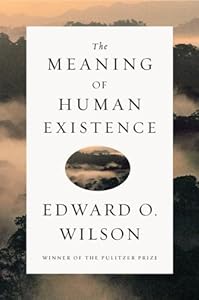
Coming in October: E.O. Wilson’s The Meaning of Human Existence.

Wilson, Harvard biologist, is one of the most intelligent people on the planet, author of On Human Nature, Consilience and many, many other books. I’m looking forward to a more philosophical summary of his worldview.


Coming in September: Steven Pinker’s The Sense of Style: The Thinking Person’s Guide to Writing in the 21st Century, from Viking.

Pinker is the Harvard evolutionary/cognitive psychologist and author of The Language Instinct, How the Mind Works, and most recently The Better Angels of Our Nature, which argues that the arc of human history is toward less and less violence, and humanity’s state is thus improving. It will be fascinating to see how he applies his intellect to ideas about effective writing.

Posted in Book Notes, Thinking | Comments Off on Two Books to Look Forward to