Trek vs Wars

A long Facebook post by David Gerrold a few days ago captures my own feelings about Star Trek vs Star Wars, and since I can’t figure out how to link it, I’ll quote it below, and hope he doesn’t mind.

Trek debuted was I was the magical age of 11 — remember the cliche “the golden age of science fiction is 12”, which is to say, you are most affected by things you experience at around that age. I watched Trek in original broadcasts when I could (and I especially remember which episode I saw on the hospital TV when I was recovering from my appendectomy in early 1969), and I became obsessed with the show when it went into syndicated reruns beginning in late ’69, with episodes rerun on local stations every weeknight. I compiled lists of episode titles, planet names, stardates, and anything else I could write down, long before all this information was available in books, let alone on the internet.

But I did outgrow it, or at least recognized how basic it was compared to the far more sophisticated works by SF writers. I watched the ‘Next Generation’ series in the ’80s religiously, though I think I did miss one episode, in the last season, which I’ve never bothered to catch up on; and I’ve never watched any of the episodes a second time. After that I never watched any of the later series at all. I’d moved on. (I was mortified when, at my father’s funeral 10 years ago, an old family friend, who hadn’t seen me since I was 15, described me as a ‘trekkie’. He may as well described by younger sister as a Monkees fan, which she was, once.)

Re: Star Wars. I saw the first movie twice, because Grauman’s Chinese Theater (as it was known then) in Hollywood did not clear the theater between showings, and the friends I was with wanted to see it again. So we sat through it again. I’ve seen the subsequent movies once each, even the recent ones, more out of duty than any enthusiasm. Doubt I will bother with any of the new ones.

Here is David Gerrold:

I’m not a Star Wars fan.

I loved the first movie, I enjoyed the next two, but after that … no.

Star Wars is a triumph of special effects over logic. Thought has been sacrificed to action and eye-candy.

It’s fantasy with spaceships and light-sabres and a mish-mash of stuff that ultimately defies logic.

By contrast, classic Star Trek was about exploring the universe, about finding our place in it, about discovering what it means to be a human being. Yeah, TOS was quaint, under-budgeted, and squeezed out through the filters of 1966-style television. But despite that, it was the most ambitious series in American television, because it invited the audience to think about ideas.

At its best, classic Trek was a faint intimation of what real science fiction could be — the books, the stories, the sense of wonder — but at least it aspired to invite the viewer into the genre.

Star Wars … meh. It’s a dead-end. It’s a self-indulgent exercise in toy sales.

Who’s the most notable figure in the Star Wars universe? Darth Vader — a guy who betrayed his Jedi training, murdered the younglings, was an accomplice to the destruction of Alderaan — and oh yeah, we forgave him all that because he saved his son from the evil Emperor. (Hitler loved dogs, but I’m still not going to forgive him for the Holocaust.)

Who’s the most notable figure in the Star Trek universe? Take your pick, Kirk or Spock. Spock, whose commitment to logic is unfailing — or Kirk whose commitment to justice is equally unconditional.

In the SW universe, a handful of rebels overthrows a vast sprawling empire with unlimited resources — it’s a universe of endless war where some species have been written off as terminal bad guys.

In the Trek universe, a federation of many races and species works together in partnership to build peace and partnership. Yes, there are battles, especially in all the reinvented versions of Trek — but the underlying commitment is still peace and partnership among all races.

Real science fiction is a literature of ideas — a literature of transformation. It’s a literature of possibilities. It’s a genre where the reader is invited to think about the very substance of life and what he or she wants it to mean.

Star Wars uses the scenery of science fiction, but it’s not designed to take us out beyond its own limits, out where the sense of wonder kicks in.

Posted in Films, science fiction | Comments Off on Trek vs Wars

Passage from Clarke, 1

Science fiction isn’t about prediction, of course, but some SF authors do take seriously the idea of projecting future possibilities. I’ve read several works by Arthur C. Clarke in the past month, and am rallying my notes on them for posts here; meanwhile, here’s a short passage from a very early Clarke novella called “The Lion of Comarre”. Our protagonist is walking across the African countryside, some 500 years or more in the future.

He carried with him that mist of unobtrusive music that had been the background of men’s lives almost since the discovery of radio. Although he had only to flick a dial to get in touch with anyone on the planet, he quite sincerely imagined himself to be alone in the heart of Nature, and for a moment he felt all the emotions that Stanley or Livingstone must have experienced when they first entered this same land more than a thousand years ago.

So here is Clarke, in 1946, anticipating the iPod.

Posted in Arthur C. Clarke, science fiction | Comments Off on Passage from Clarke, 1

What the Bible Says about Homosexuality

(Posted last night on Facebook)

The Bible backs same-sex couples: Point by point, why the haters are wrong

Matthew Vines has been around making his case about how the Bible does not in fact condemn same-sex couples for a couple years now. He’s not an ‘outsider’ to those he addresses: he’s an evangelical Christian who found his faith in conflict with his identity, and did some investigating and research. I’m not sure what his argument is evidence of: that the Bible is read superficially by most people, without understanding the historical and sociological context in which its pieces were written (not to mention the assumptions translators over the centuries have made about certain loaded terms); or that anyone can interpret selective passages of the Bible (or any other holy book) to support whatever case they want to make. Both, I think.

Posted in Religion, The Gays | Comments Off on What the Bible Says about Homosexuality

Blessed Are

This is an old Joan Baez song, from her 1971 album of the same title — an original song by her, after she had passed through her folk music phase and begun composing her own songs. Has some nice lyrics, e.g. “…and their personal acquaintance with pain”. And:

Rain will come and winds will blow,
wild deer die in the mountain snow.
Birds will beat at heaven’s wall,
what comes to one must come to us all.

(There’s no video to see, just that of a tape recorder.)

Brought to mind by this interesting item in Sunday’s New York Times: They Feel ‘Blessed’: Blessed Becomes a Popular Hashtag on Social Media.

Fascinating, because with a single familial exception, this is a phrase I never hear, not at work, not in SoCal social life, not at science fiction conventions, not in posts of any of the blogs or news sites I follow. And if I did hear it in any of these contexts, I would have to be careful not to raise my eyebrows…

The article’s take:

There’s nothing quite like invoking holiness as a way to brag about your life. But calling something “blessed” has become the go-to term for those who want to boast about an accomplishment while pretending to be humble, fish for a compliment, acknowledge a success (without sounding too conceited), or purposely elicit envy. Blessed, “divine or supremely favored,” is now used to explain that coveted Ted talk invite as well as to celebrate your grandmother’s 91st birthday. It is carried out in hashtags (#blessed), acronyms (#BH, for the Hebrew “baruch hasem,” which means “blessed be God”), and even, God forbid, emoji.

“ ‘Blessed’ is used now where in the past one might have said ‘lucky,’ ” said the linguist Deborah Tannen. “But what makes these examples humble-brags is not ‘blessed’ itself but the context: telling the world your fiancé is the best or that you’ve been invited to do something impressive. Actually I don’t even see the ‘humble’ in it. I just see ‘brag.’ ”

Posted in Cosmology, Music, Religion | Comments Off on Blessed Are

Hike to Parker Mesa Overlook

Today’s hike, a longer one, about two hours round trip: Parker Mesa Overlook.

http://www.hikespeak.com/trails/parker-mesa-overlook-in-the-santa-monica-mountains/

Same area as the Los Liones hike we did a few weeks ago, starting near the western end of Sunset Blvd near Pacific Coast Highway (PCH), climbing into the hills, ending at yet another spectacular mountain-top vista, with views to Saddle Peak (the hike two weeks ago) to the northwest, Malibu to the southwest, Santa Monica Bay directly south, and the towers of Century City and downtown LA to the southeast.

Two unusual events were part of this hike. At the top, on the mesa, was a group of 20 or so people apparently engaged in some sort of transcendental meditation ritual, seated on the ground in yoga poses. When they finished they got up and were all speaking Italian. Tourists, I’d guess.

On the way down we witnessed what must have been the beginning moments of a brush fire, at the bottom of the canyon to the east, along Palisades Drive — an area we drove through for our Skull Rock hike back in March. We could see flames, and the start of a column of smoke. As we continued the hike back down, we heard the sirens of fire trucks and police cars. Latest report is that the fire is under control, contained to about 5 acres, and no structures were damaged. (It is warm today in SoCal, but there was no wind, or it could have been much worse.)

http://www.nbclosangeles.com/news/local/Brush-Fire-Reportedly-Threatening-Homes-in-Pacific-Palisades-257866751.html

Posted in Personal history | Comments Off on Hike to Parker Mesa Overlook

Tonight’s favorite song: John Grant, Where Dreams Go to Die

Wikipedia has this post about the album.

There’s a lyric here — “I know you know I know you know that I know that you know…” * — that illustrates the idea that human minds are able to speculate on what other minds are thinking, to three or four orders (though not children; it takes a while for children to develop this ‘theory of mind’). It reminds me of the Ted Talk we were listening to this morning as we drove to the trail head of today’s hike. It’s a fascinating talk about the subjunctive, a grammatical ‘mood’ that exists in English and not in some other languages, like Vietnamese, and therefore an example of how different languages really do allow, or inhibit, different kinds of thinking. (And the subjunctive is, perhaps, the philosophical essence of science fiction.)

*Reminds me a bit of that punctuation challenge, to make sense of “John, where Sarah had had had had had had had had had had had the teacher’s approval.” Insert the right punctuation marks, and it makes sense.

Posted in Music, Thinking | Comments Off on Tonight’s favorite song: John Grant, Where Dreams Go to Die

Goonan Quotes

Like the meaty interview with Joan Slonczewski a couple months ago, Locus Magazine’s May interview with Kathleen Ann Goonan, of which I posted excerpts this afternoon, has several passages of particular interest to my theme here.

About science fiction:

At Georgia Tech, the student’s minds are prepared for science fiction because it’s one of the top engineering schools in the world, so I also taught ‘The Short Story in Science Fiction’ during my first semester there. Since then, I’ve taught the SF Novel, and used Neuromancer, The Female Man, Dawn, Do Androids Dream of Electric Sheep, The Lathe of Heaven, The Diamond Age, and Zendegi. It was a wild ride, a lot of reading, and very intensive. The student’s enthusiasm regenerated my interest in science fiction – its history, its long-running conversation, its boldness in bringing important issues to life.

About brain/mind/consciousness:

For a long time we had no tools to study the brain, so consciousness was a subject for religion and philosophy. I minored in philosophy because I was so interested in not only the mind, but in what is going on around us – everything. I started from the ground up, I suppose, since gaining the tools to see what is very small or very distant is what moved humanity from religion and philosophy as explanations for phenomena to careful observation – science. Philosophy and religion, disciplines that examine questions like what is free will, what is life, what is really going on? They fascinate me. That is why my own interests turned from pre-science philosophy and religion to science.

What we think of as ‘reality’ is the brain putting together an idea of what’s happening around us, and we base our behavior on that interpretation. We live in a shared reality. That’s what the title, This Shared Dream, means to me. What we think of as the familial past is actually a lot of different people’s versions of the past. Every child in a family has a different idea family history, depending on their birth order, because their very presence changes family dynamics. That’s another thing I wanted to explore, because it echoes the concept that consciousness has much to do with how we perceive time.

This resonates as I think back on my own personal history and how different that history must have been for my siblings.

One more, which I didn’t include in the post:

I am always struck by the idea people have that consciousness is just in the brain. They think, ‘Oh, we’ll freeze the brain and live forever.’ That’s a mostly discarded idea now, although Henry Markram, head of the European Blue Brain Project, wants to slice the brain really thin, including his own brain when he dies, with the idea that all the information of memory and consciousness will be there. But consciousness involves your entire body, and time. A lot of what happens in the body simply isn’t known by the conscious mind. These processes are totally mysterious, and we don’t even realize they’re happening. It’s counter-intuitive, but it’s true: we are not just our conscious state of mind. We are not only our brain. We are our whole bodies, our entire hormonal system. Everything is all one system. The history of humanity in religion and philosophy is about how the soul will survive: the idea that there is something in us that is not physical. But I don’t think that’s true. There’s not anything that isn’t physical, including consciousness. If you are going to preserve yourself, what self do you want to be, really? What a nightmare that could be. In 2005 I was totally depressed – what if that’s the age at which you’re preserved, by chance? Or, ‘I will be in a perfect digital world and everything will be fabulous.’ It’s a bit like the questions that might plague one about the possibilities of heaven.

Posted in Quote at Length, Science, science fiction | Comments Off on Goonan Quotes

Another Revised Ten Commandments

I’ve been collecting these. This is is from Facebook today.

https://www.facebook.com/photo.php?fbid=10152110608613553&set=a.32904403552.30927.597123552&type=1

Posted in Religion, Ten Commandments | Comments Off on Another Revised Ten Commandments

Amateur Astronomy and Cultural Mythology

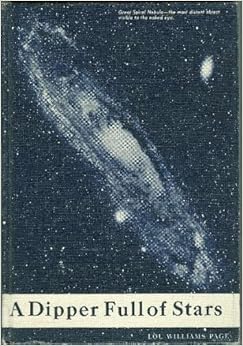
Since my post the other day about the my trigger to amateur astronomy in my youth, a grade-school textbook called A Dipper Full of Stars, I picked up the copy of that book I bought for a few dollars over the internet a few years ago and skimmed through it more than I had recently. It’s basically a guide to constellations, starting with the Big Dipper; from there, the North Star, then other constellations in the area; then other bright stars, like the three in the Summer Triangle, and their constellations, and so on and so on around the sky. With interludes about the planets, the ecliptic, why there are seasons, and so on. A good basic introduction to the fundamentals of what might be called spatial geography – how our planet is situated in space and how to understand what you see in the sky every night.

What struck me this time were the descriptions of various cultural myths that were applied to the various constellations, or groups of stars other than the constellations our culture currently recognizes. What various Indian tribes said about the stars we call the Big Dipper, what each star represents, what Alcor means in its attendance to Mizar, for example.

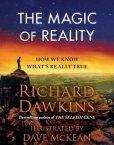
Cosmos is doing the same thing, to great effect, notably in this past week’s episode, which described various cultures’ myths about the Pleiades star cluster. And Richard Dawkins’ book The Magic of Reality did this quite well, in a book not just about the heavens and cosmos, but about all sorts of basic questions about reality – what are things made of? What is a rainbow? Who was the first person? Each chapter begins with a variety of ancient myths that attempted to answer such questions, and Dawkins mixes, without any particular emphasis, the myths that survive to our day with all the ones that have been discarded. For example, in the chapter about “Who was the first person?”, he points out that all peoples of the world have origin myths, and then goes on to describe one from the Tasmanian aborigines (a tale involving two rival gods, an absence of knees in the first created humans, and kangaroos); then a similar myth from a neighboring tribe (to suggest how tellings of such stories drift); then a tale from Hebrew tribes, about their single god, about Adam and Eve and the snake, and the resultant concept of ‘original sin’, a story “still taken seriously by many people”; and then a description of the Norse myth involving Odin and two tree trunks who were turned into the first man and woman. (The balance of the chapter is about the scientific answer to the question, which is of course that there was no *single* first person, because humans evolved from earlier species, and there’s never a single clear division between one species and another, and so on.)

What strikes me now about astronomy, at least in its amateur form, and as distinguished from most other branches of science I would think, is that it is imbued and colored by these ancient descriptive myths. (As well as reflecting the history of science in various cultures – at some point any astronomy enthusiast picks up the fact that most of our common star names have Arabic meanings, because during Europe’s Dark Ages (when Christianity ruled and there was no such thing as scientific investigation), it was the Arabs who preserved what astronomical knowledge survived from the Greeks and Romans, later to be passed back to reformed European cultures.)

It doesn’t take much extrapolation to suspect that the myths of one’s own culture are as fragile and ultimately evanescent as all those earlier ones.

P.S. As of this post I will turn on comments, just to see what happens. My experience with the various WordPress blogs that comprise the Locus Online site is that auto-generated spam outnumbers legitimate comments by 100 to 1, and it takes time for me to examine all the comment email to be sure what is spam and to find the very few legitimate comments. We’ll see about this blog.

Posted in Astronomy, Culture, Personal history, Science | Comments Off on Amateur Astronomy and Cultural Mythology

Cosmos and My Amateur Astronomy

I liked last Sunday’s episode of Cosmos for a couple reasons. The second reason is what the bulk of the show explored: the process of scientific data collection and analysis, the way simple classification can give way to insight about the reality of what the categories mean – in this case, how stellar spectra reveal both the temperatures of stars and also their chemical composition (or at least of their atmospheres), a crucial link in what has become a very long sequence of chains of evidence about the distance of the stars, their age, and the size of the entire universe. (As well as, of course, the often unsung role women have played in the history of science, a theme examined in Adam Lee’s review of this episode.)

But the first reason was the opening of the episode, about how all human societies invoke pattern recognition to see shapes in the stars (i.e. constellations), which reminded me of my own earliest interest in astronomy. In fact, when I think back on my life and try to identify the key events that led to my interest in science, and in science fiction, I can think of two key events, one for each (and I’m not sure which came first). The science trigger was this: in my sixth grade classroom, at Vanalden Avenue Elementary School in Reseda CA (a typical LA suburban school consisting mostly of bungalows), there was a cabinet beneath a coat closet that contained a row or 20 or 30 copies of a book called A Dipper Full of Stars, a very basic astronomy book. The multiple copies suggested they had been used as a class textbook, though it wasn’t used so during my 6th grade session. But I was curious and asked to borrow one copy and took it home and read it, and it was my first introduction to the sky, the constellations, the planets, and the vastness of the universe (it was up-to-date enough, in that era, to realize that the Andromeda ‘nebula’ was in fact a separate galaxy from our own Milky Way).

(I’ll save the science fiction trigger for another post.)

That led to The Sky Observer’s Guide, a little ‘Golden Guide’ book I must have bought through the school’s book ordering program, and my request as a birthday present for a basic telescope, which was granted. (A 3 1/2 inch refractor, if I recall correctly.) I remember setting it up in the driveway of our house in Reseda, pointing it up toward the sky, and being shocked by the apparent sizes of the stars, before I realized how to adjust the focus knob.

I think the most basic fact that one learns as an amateur astronomer is that the apparent brightness of anything you point your telescope at is no indication of its actual brightness or size; apparent brightness is a combination of actual brightness and *distance*. The planets are bright because they are near. Some stars are bright because they are relatively close (like Sirius). Others (like Deneb) are about as bright as closer stars because, even though they are very far away, they are really really bright. (How do we know they are very far away? A chain of evidence beginning with parallax.)

The Cosmos episode illustrated this nicely – showing how the stars in the sky are moving, how the constellations will change over millennia, how the stars of the Pleiades will drift through the galaxy over time.

Posted in Astronomy, Personal history, Space | Comments Off on Cosmos and My Amateur Astronomy