Climate Change, Denialism, and History’s Judgment: With a Prediction

I love Andrew Sullivan’s blog, The Dish, since he gathers comments about many topics as well as responses to them, and is willing to post long reader comments that challenge earlier posts. (Sullivan is gay, but he’s also a self-described conservative, and Catholic, so his blog’s content does not align along any simple left/right divide.) A recent thread about “science, climate, and skepticism” included this batch of reader responses, with some comments I’m inclined to quote. (Emphases mine; I think I’ll start doing this.)

From an unnamed reader:

I have to say that I was a bit miffed by your statement, “I favor maximal skepticism toward scientific theories that might prompt us to change our lives.” Of course you should be skeptical! It goes without saying. That’s the scientific method! So many deniers say, “Scientists disagree.” Of course we do! It’s our job! We are always challenging each other; it’s a service we provide to each other, as a way to keep us from slipping up. Knowing that my community will be skeptical, that they will challenge me as soon as I open my mouth at a conference, forces me to be as accurate and careful as possible.

But there are also a lot of things we do not disagree about. We all accept Newtonian mechanics as a means to describe dynamics in the physical world. That “theory” is used all the time: to design the suspension on your car, to keep the office you sit in from plummeting to the ground, and so on. The Navier Stokes equations of fluid mechanics are used to design better airplanes. We all fly around in planes and trust the Navier Stokes equations to describe lift and drag. Anybody who visits a doctor is accepting scientific knowledge.

What we disagree about are the smaller things at the very leading edge. No computer is powerful enough to predict climate, so researchers are forced to make simplifying assumptions. They argue about that – which assumptions are least inaccurate and so on. The fundamentals are not in question; it’s the details.

You wrote, “And of course there’s always a chance that we’ll stumble upon some new evidence or theory that would throw this entire edifice into doubt (it happens).” Umm, no. Not like that. The basics are too solid.

Other reader comments go after Republicans in general –

These people make a mockery of thought. They are 21st-century Luddites motivated by stupidity and greed.

–and George Will and Charles Krauthammer in particular.

If there’s any issue that everyone left, right, and center should be fighting to address, it’s climate change, and the tagging of the science as a liberal plot by such undoubtedly intelligent men is far too tragic to be even darkly funny.

Here’s my perspective: David McRaney, and many other psychologists, have identified numerous psychological biases that all humans are prone to. For example: it’s difficult for humans to take long-term changes personally; it’s easy to think that bad things won’t happen to you; and it’s too easy to align your opinions to your social groups’, for the sake of social cohesion, which is one reason (aside from the obvious) why politicians are motivated to appeal to their base.

Climate change is a perfect storm of a relatively imminent threat to human existence that is so (relatively) gradual, the humans, as a society, are apparently unable to recognize the threat in time to do anything about it, but will suffer the consequences within the lifetimes of those now living. (As some have remarked, it’s not the *planet* that’s threatened – it has undergone massive changes over the past hundreds of millions of years, including several mass extinctions. It’s our *species* that’s threatened.)

Here’s a prediction: climate change will bring about catastrophic effects (including the flooding of several coastal US cities over the next century) before any mitigating measures will be taken against it. And people a century from now will look back at all those denied that anything was happening for so long, or privately realized something was happening but didn’t do anything about it for fear of losing their social privilege, and pass their historical judgment on them, and on us, as a society.

Posted in Culture, Science | Comments Off on Climate Change, Denialism, and History’s Judgment: With a Prediction

Favorite Songs – Natalie Merchant

Listening the new, self-titled, album by Natalie Merchant, but haven’t listened to it quite enough to pick out a favorite song.

So here are two from her 1995 first solo album Tigerlily.

First, San Andreas Fault:

San Andreas Fault
Moved its fingers
Through the ground
Earth divided
Plates collided
Such an awful sound

O, promised land
O, wicked ground
Build a dream
Tear it down

A sentiment very much in the mind of anyone who lives in Southern California.

And the finale on the album, Seven Years:

How did I love you?
There was no measuring
Far above this dirty world
Far above everything
In your tower over it
You were clean

But for seven years
You were loved
I laid golden orchid crowns
Around you feet

For seven years
I bowed down
To touch the ground
So wholly your devotee

You were
All that I could see

Quoted lyrics, I realize, mean little, without hearing the song and placing them in that context. And then they mean everything.

Posted in Music | Comments Off on Favorite Songs – Natalie Merchant

Personal History, part 3 (photos)

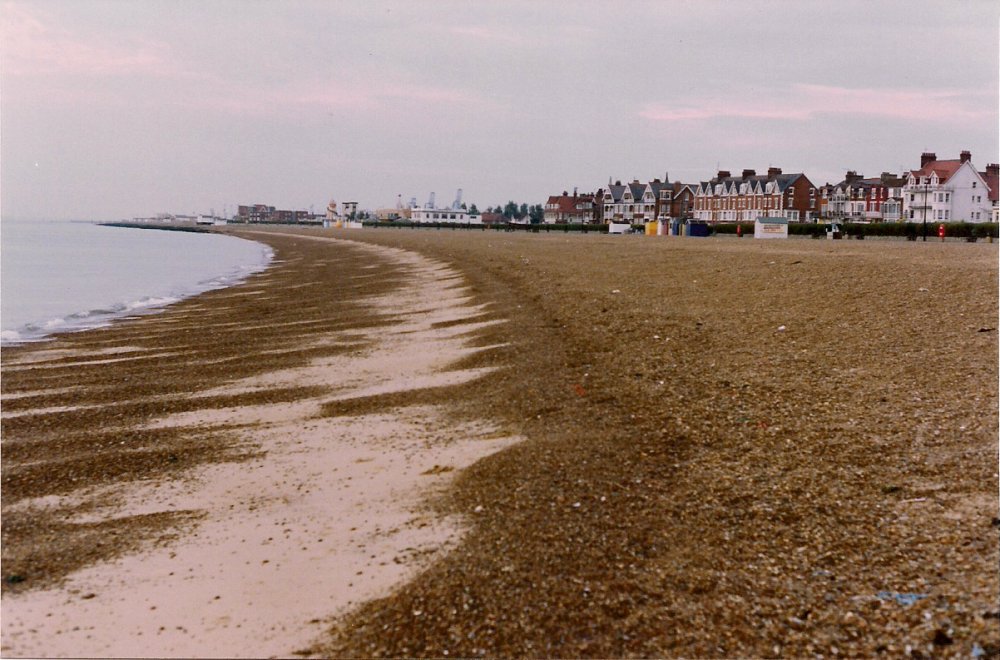
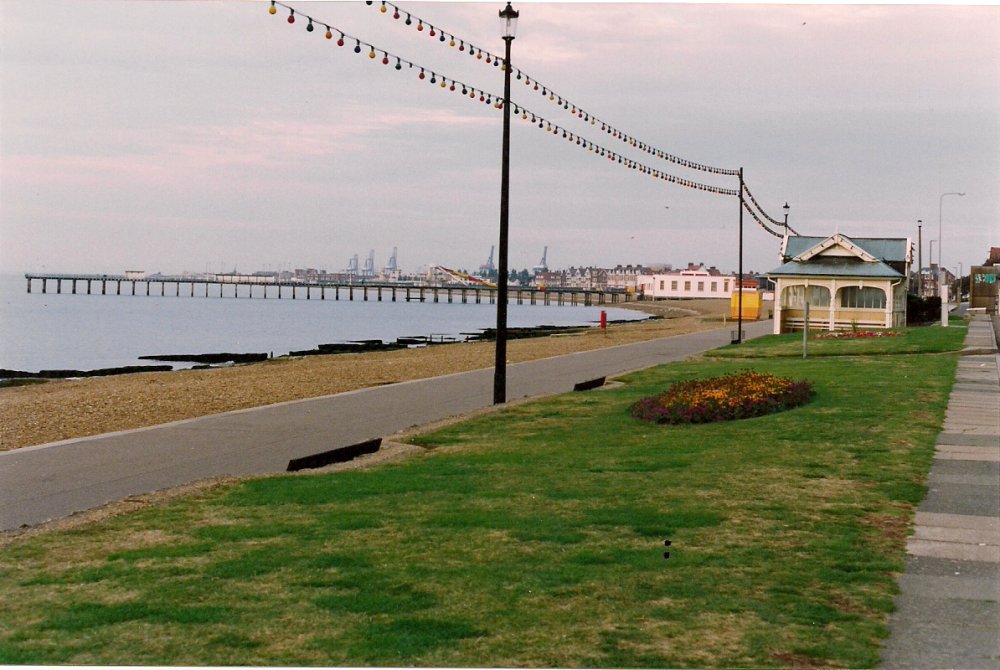
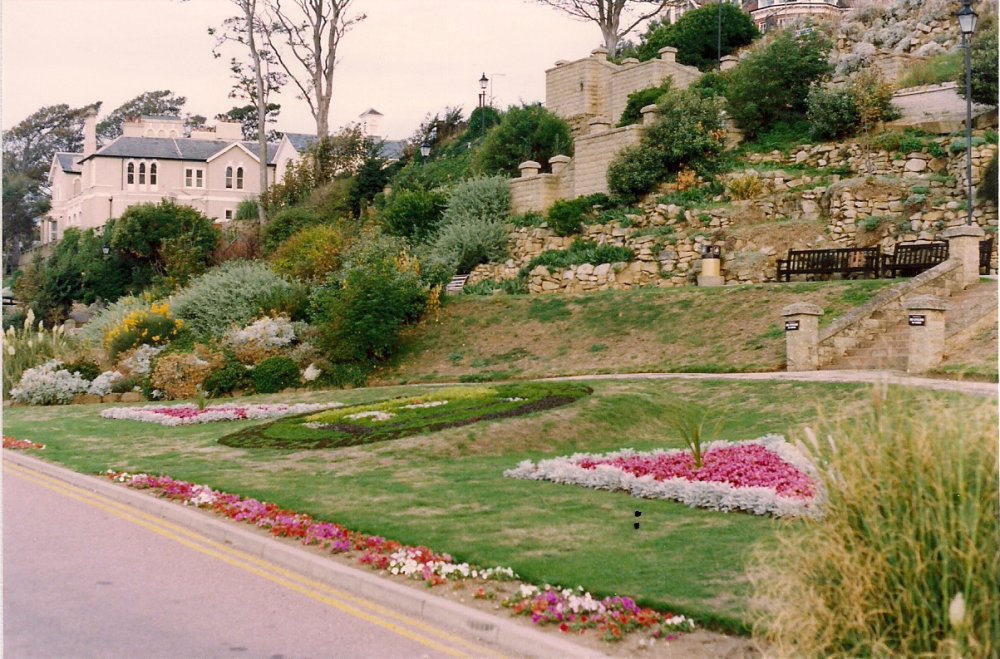
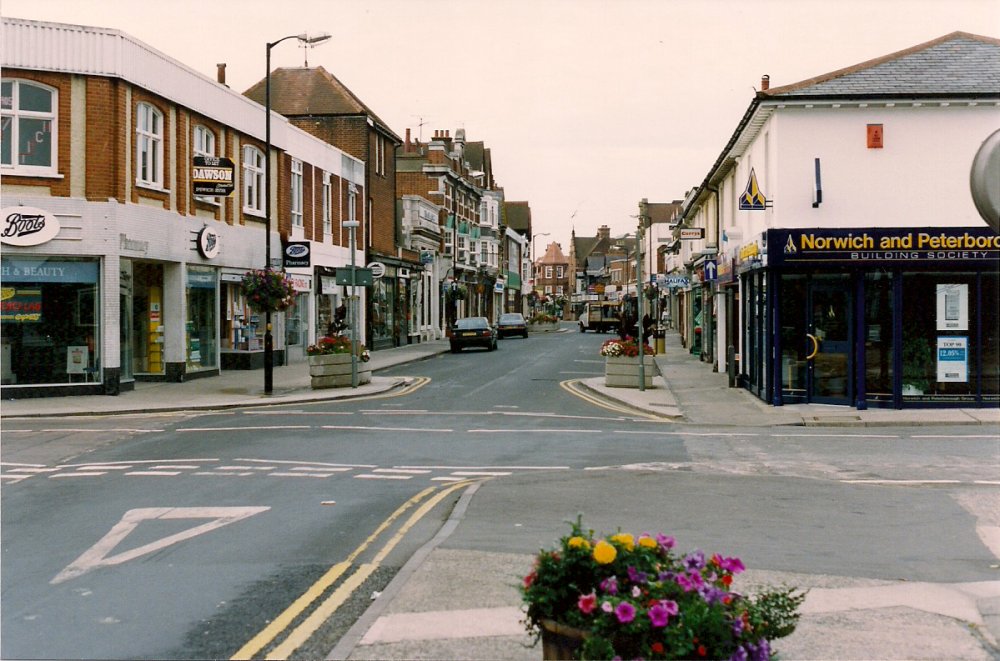
Again before moving on, let me mine my own photo albums for relevant print photos. As I said in the first installment of this personal history, I visited England for the first time (since my birth) in 1990, and made a point of renting a car (driving on the left!), and drove from London out to Felixstowe and that area to see what it was like. As I said, it looked pretty much identical to my father’s slides from nearly 40 years before. I have yet to mine his slides, but for now I’ll scan and post a few photos from my album.

For this first set of scanned photos from my own photo albums, I’ll save larger scans at 1000 pixels wide, and ‘thumbnails’ for display here at 500px wide. Click on the displayed images for the larger ones.

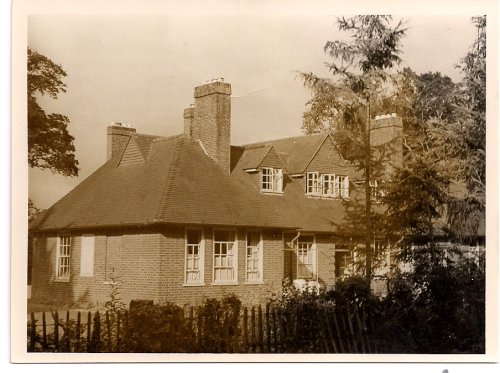
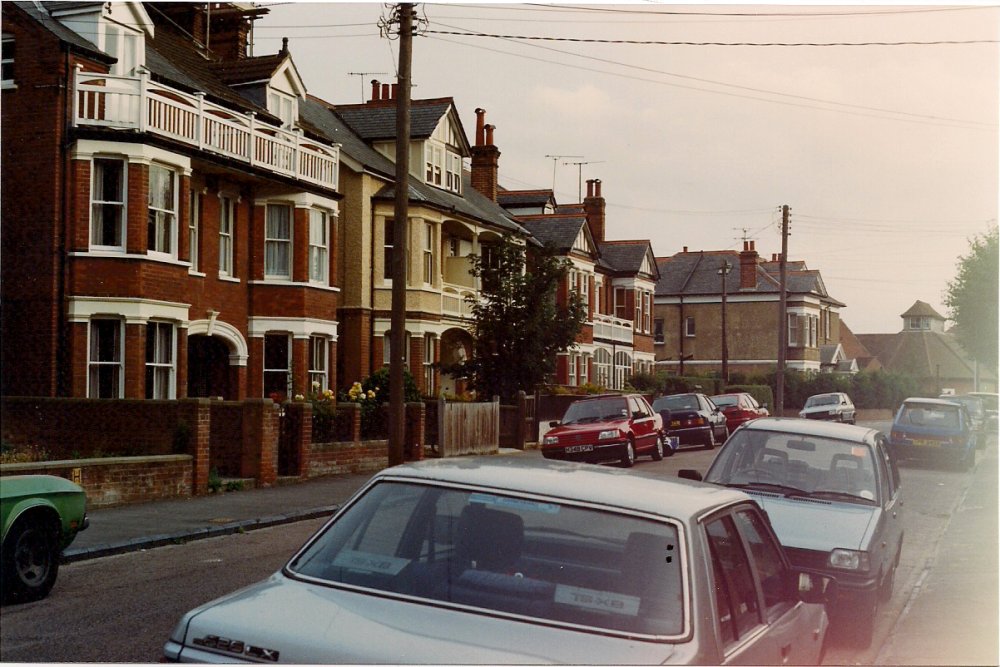
First: here’s the house where my parents lived in Felixstowe, England: 10 Bath Road. First a street view:

Then a front view:

Here’s a view of the pebble beach (what they call a ‘strand’?)

And then a pic of the grassy strip just above the beach, with those strings of lights. In the distance are the gantries of Felixstowe harbor.

The town sits on a bluff somewhat above the beach; here is a section of garden just above beach level, at the base of the bluff.

And here’s a section of downtown, very quiet on a Sunday morning.

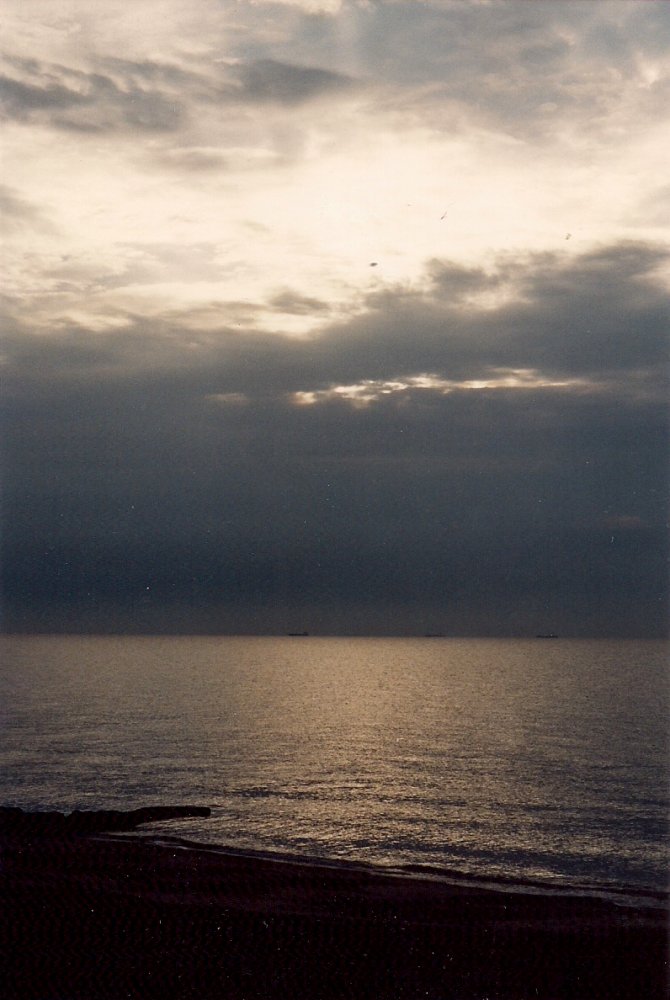
Then, a shot looking out over the North Sea. It must have been morning, since the view must have been the northeast.

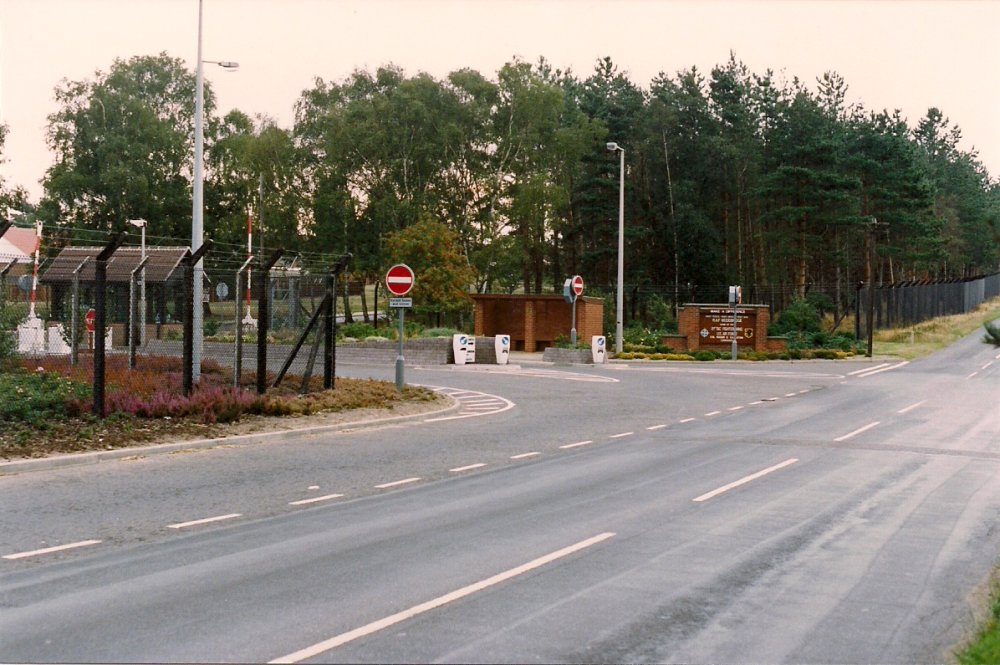
Two more. Driving north from Felixstowe, here is the entrance to R.A.F. (Royal Air Forcebase) Woodbridge, where my father worked as a weatherman in the early/mid 1950s.

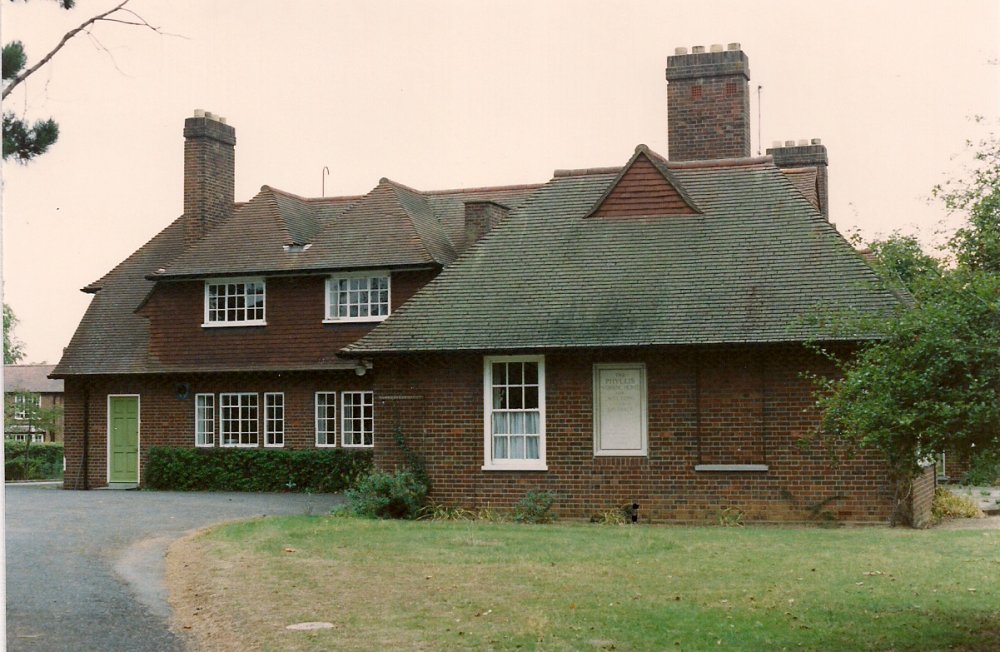
And then, Phyllis Memorial Home, my birthplace, looking unchanged since 1955.

Posted in Personal history | Comments Off on Personal History, part 3 (photos)

Personal History, Part 2

A bit more family history, as far as I can recall it, before I get to my personal memories of growing up in the high desert, and how that affected me.

In Felixstowe [England, where I was born], the family friend was a neighbor woman named Ruby. (When I delve into my half dozen metal boxes of family slides, I think I will find photos or her, and us at that time.) And one of the stories I remember [again: in a crucial sense, everything we remember about our past are stories, told over and over again in our minds or whenever we relate them to others, and not necessarily reliable as actual history — but nevertheless meaningful, as meaningful as anything from our past can be] is that my mother would leave me outside in a pram during the day, despite the weather being (since we were right on the coast) cool and damp. I have always attributed this to my relative tolerance of cool weather. I am the last one to put on a coat. In the mild SoCal weather, I can go a whole year without putting on a coat. (At the same time, given my high desert experience, I withstand dry heat easily as well. It’s hot humidity I have difficulty with.)

Thinking back, I think my father was not completely out of the Air Force when my family returned to the US. This was when I was about 1 ½ years old I’ve been told; late 1956 or early 1957. The reason we settled in Apple Valley (despite the name, a rather desolate desert town 100 miles northeast of Los Angeles) is that it was near George Air Force Base, just west of the larger town of Victorville, CA. (The base was decommissioned in 1992.) I think my father must have finished his Air Force commission there, and chosen to return there (as opposed to someplace in the Midwest, where he grew up) since it was relatively near the friend he’d met in the service, Rollin Bigbee, who lived in Burbank.

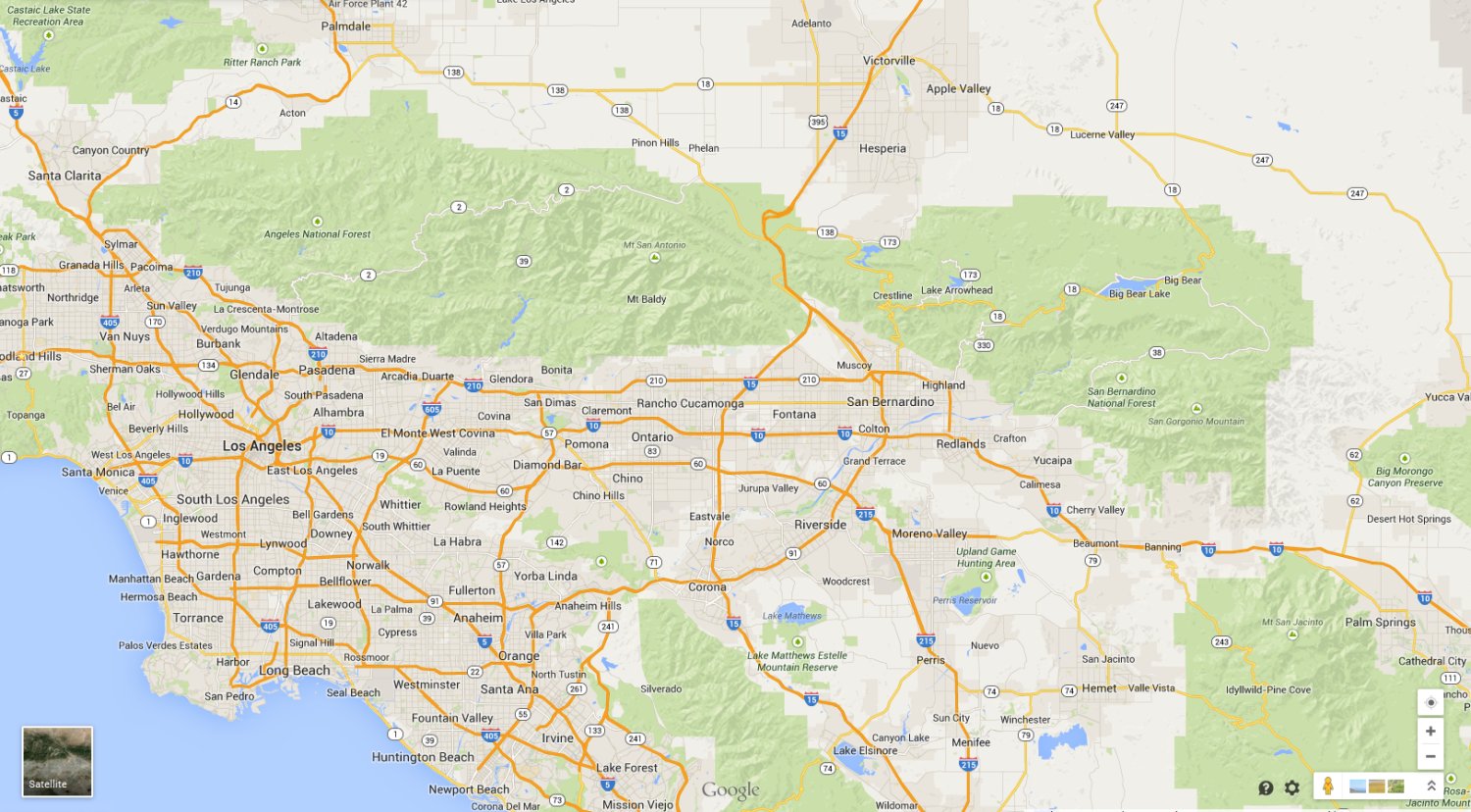
Let’s do a map. I’ve always been obsessed with maps, knowing where I am, knowing where places are. It’s common for me, reading a book, to check the atlas (I have several) or, these days, Google, to see where these places are. So, where is Apple Valley? It’s northeast of Los Angeles, thus:
SoCal map (Click on the image for a larger one.)

Apple Valley is in the upper right, near Victorville and Hesperia. The big green bands between there and Los Angeles below are the San Gabriel Mountains, with Big Bear Lake, Mt Baldy, the Angeles Crest Highway, and more. The world to the north is utterly different from the world to the south. It is an area of sand and rocky hills and vast expanses, at an elevation of roughly 3000 feet. The western end of that desert, between Victorville and Palmdale, is the area the rock band U2 took as the setting for their 1986 album “The Joshua Tree” – which included the song “Where the Streets Have No Names”. (This is true: all the roads out across the desert there have designations like Avenue F, or 152nd St east. No names.)

So: I believe my father finished out his Air Force commission at George Air Force Base. Then he got a job as a draftsman, for a man named John Blesch, who had an office in the area of Apple Valley called ‘the village’, about midway along the stretch of Highway 18 that runs straight west-east, in what is actually the southeastern end of the valley.

At first, we lived in what must have been a rented house, in the northeast corner of the valley, out by Fairview Mountain – a cinderblock house, and this is the place where I have my earliest memories… of lying in a crib with my parents in the other room; of a dog called Tammy running up the driveway. Everything was sand and scrub brush, alongside rocky hills.

In a pattern that was to be repeated, we moved from a rented house into a house that we bought: on Winnebago Road, to the southwest of the rented house and just north of what was then the small Apple Valley airport. This is the house where I lived for four years or so, through kindergarten and the 1st grade, and where later my maternal grandmother lived into her 80s. My family visited her many times over the years, and after they moved back east, I visited her over the years, until her death in 1984. My long-time connection to this place is why I list it as my hometown on Facebook. I have many pics, which I will scan and post eventually.

But a little bit more family background. My mother had one brother, Robert (my ‘Uncle Bob’), who I think must have also been in the service at some point, though I don’t think I ever knew the details, and who settled in the Los Angeles suburbs (the San Fernando Valley) afterwards. Because both he and my mother’s family settled in southern California, my grandmother on that side, who’d previously lived her entire life in a small northwestern Illinois town, relocated to southern California herself. For a time she lived in an apartment in Costa Mesa, down in Orange County. To get just a bit ahead of my personal timeline: when my own family moved from Apple Valley down to Santa Monica, when I was in 1st or 2nd grade, my grandmother moved in with us, in an apartment that was adjacent to the garage at the back of the property along the alley. And when, after 6 months, my father gave up that Santa Monica rental and bought a house in the San Fernando Valley… my grandmother moved out to Apple Valley, to take possession of the house my father had not been able to sell.

End of part 2.

Posted in Personal history | Comments Off on Personal History, Part 2

Thoughts About the Legal Profession

Aside from the occasional TV series about lawyers (I followed L.A. Law while it ran, and recently we’ve been watching DVDs of old Perry Mason episodes), I’ve never had much interest in the legal profession, intellectually, and find it hard to muster much respect for it. Let’s do bullets.

  • I’ve been called for jury duty 8 or 10 times in my life, and never gotten on a jury. They don’t want engineers. They don’t want people who think, they want people who are easily emotionally swayed. This rather throws the integrity of the process into doubt.
  • Law is different than science in that law defers to precedent, without any mechanism for re-confirming prior evidence or the possibility of rejecting once-accepted results.
  • Perhaps it’s just the point of history we are in right now, where changes the past decade or two with the internet and social media have so polarized the political and cultural landscape, but recent Supreme Court decisions so predictably divide along party lines that, again, the integrity of the legal process is cast into doubt. If different judges can read the letters of the same laws, and evaluate the same evidences at hand, and reach opposite conclusions, then what does the law, or evidence, mean?

Which lands me at two, current, events.

The most egregious example of the last bullet is the case where all the conservative judges decided that it’s OK for town council meetings to begin with *Christian* prayers because 1) it’s traditional, and 2) most the town’s residents are Christians. To me, this completely misses the point of the First Amendment, and equality under the law in general, which is to prevent the majority from oppressing the rights of those not in the majority. (The theme behind all civil rights movements.) The solution should be to eliminate prayers from government meetings altogether. That way the issue of any kind of establishment of religion by the government would be avoided.

The second current event is the remarkable string of decisions by Federal judges overturning state laws that, one way or another, prohibit the marriages of same-sex couples. The idea that one judge is merely following the precedents of earlier judges doesn’t apply, I think, because the states don’t defer to each other. [But I hasten to add I’m no legal expert and may be wrong about this.] Rather, it seems, the various judges do read the arguments from previous decisions and reach consistent conclusions, because the issue is the basic one of equality before the law, and the conspicuous lack of evidence that allowing same-sex marriages causes any actual harm to anyone. (Again, the Regnerus study has been thoroughly debunked — if it were even relevant; are straight marriages approved on the basis of a couple’s suitability to raise children?) My impression of the right-wing/conservative Christian outrage over these decisions is that these people don’t truly accept the freedoms and equality before the law provisions of our Constitution; they only cite them when they’re convenient for themselves, since they have for so long been in the majority and assumed the privilege of social status that is not shared by various minorities. Equality before the law is fine, in principle, they would say — but not for them!! (Women, blacks, gays.) It’s a theme that goes back for centuries. Social progress is the correction for such presumptions of privilege, and it is still in work.

(As an aside, it continually baffles me why religious conservatives campaign for the display of the Ten Commandments [which set exactly? See link] in public places, insisting that they are somehow the basis for western civil codes if not the entirety of western civilization. Obviously, they are not. To wit: how many of those ten are actually enshrined into law? Two? (About murdering and stealing.) You know, the US is not a theocracy, which again is sorta the point of the First Amendment. These advocates should rather display the Bill of Rights, which are in fact the basis of the law in the United States. [And support the ACLU, as I do, whose mission is to defend those rights, even in unpalatable circumstances.])

Posted in Religion, Thinking | Comments Off on Thoughts About the Legal Profession

Personal History, Part 1

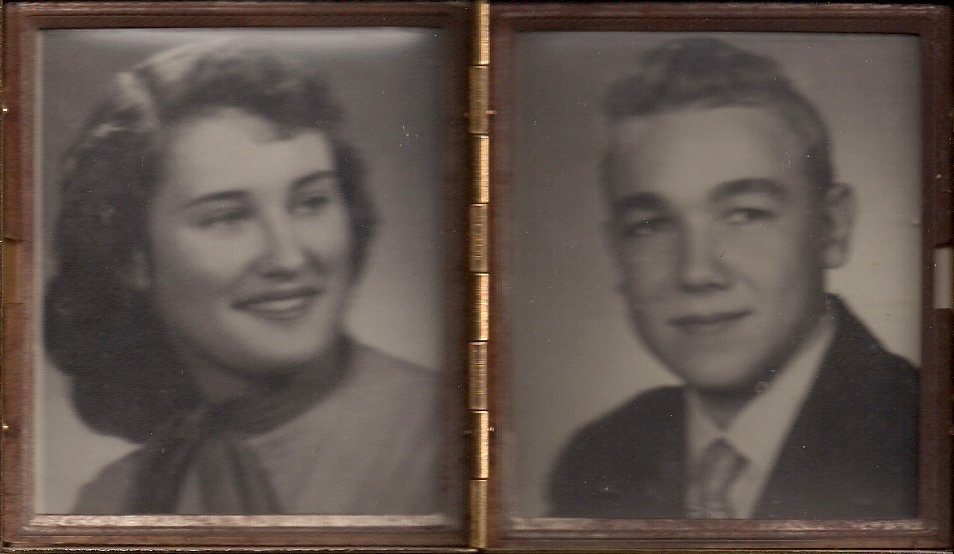
My parents were Robert Harry Kelly and Helen Elizabeth Pierce, born 1933 and 1934 respectively. They both grew up in small towns in northwestern Illinois – Cambridge and Kewanee, respectively.

Parents_200x115

(This entire post, and others to follow, are advised IIRC.)

(My mother, in later years, I realized was quite beautiful, and reminded me of the actress Veronica Hamel, who starred in the ’80s TV series Hill Street Blues. This link has a pic.)

My particular branch of the Kelly family derives from the Isle of Man, an island in between Great Britain and Ireland, and the earliest ancestors in the family tree that some of my relatives compiled several decades ago came over the US in the 1860s. The family coat of arms is a triskelion. My father’s side, the Kelly side, was roughly ¾ Swedish, and ¼ Manx. My mother’s side, I was given to understand, was a mix of French, German, Swiss, and English. So the result is that I am a mix of various European roots.

The Kelly family in America goes back to a Swedish ‘colony’ called Bishop Hill, again in northwest Illinois. I have early memories of visiting my great-grandmother there, in the early ‘70s; she lived into her 90s.

My father was from a relatively poor background, as far as I have gathered; his father, a farm hand, lived in a house at the northwest corner of Cambridge, Illinois, that was so basic it didn’t even have a fireplace. My mother was from a relatively well-off background. Her father was the sheriff of Henry County, Illinois, who was killed in the line of duty, in a shoot-out with some criminal, when my mother was about 10 or 12. The family story is that after this tragic event, my grandmother on that side was, according the law at the time, made temporary sheriff herself, until a special election could be held to elect another.

Two of my grandparents were long-lived, with two others being exceptions, the first being the aforesaid maternal grandfather, of an accident, and my paternal grandmother, who died of Parkinson’s Disease in the early 1970s, in her early 70s. All my grandparents were born around 1900.

Phyllis Memorial Home

Alas, I have no detailed records of my parents’ lives. I believe they married in about 1952. My father had gone to college, I think at the University of Illinois in Urbana-Champaign (or whatever it was called then), wanting to be an architect. But before he finished, he went into the US Air Force, became a meteorologist (or at least a weatherman), and was assigned to an American base in southeast England. He was married by then, and my parents lived in Felixstowe, near Ipswich, and in 1955 I was born in a maternal hospital, Phyllis Memorial Home, a bit north of there, in a small town called Melton. Because I was born off-base, I acquired British citizenship, as well as American citizenship because of my parents. So I had dual-citizenship until just before I was 18, when my parents had to file some papers to renounce my British citizenship in order to avoid my being drafted into the British military.

My parents returned to the US when I was only a year and half old (I’ve been told), via a long flight that landed half-way for refueling in Newfoundland. So I have no direct memories of England. I do have boxes of photo ‘slides’ [an antique term, now, which is why I put it in quotes] that I inherited from my father on his passing about 10 years ago, including a number of their apartment in Felixstowe, the beach strand with strings of multicolored lights, and even of the maternal hospital where I was born. I do intend to mine these and scan the best ones for uploading, for my family members at least.

On my first trip to Europe, back in 1990, I took a sidetrip to England, rented a car, and drove out to Felixstowe. It looked exactly the same as in my father’s slides. Though the pier was then a raucous late-night party scene, which, in our hotel along the beach, kept us awake long into the night.

When my father’s Air Force service was over, he came back to the US and settled in the high desert of southern California, because of a friend he met in the service, Rollin Bigbee, who lived in Burbank, a suburb of Los Angeles. And so my earliest memories are of the desolate high desert, and being far away from everyone else.

More to follow.

Posted in Personal history | Comments Off on Personal History, Part 1

ACE and False Witness

When my company was owned by Pratt & Whitney/United Technologies, we were obliged to implement an ‘operating’ system of process improvement procedures called ACE, “Achieving Competitive Excellence”.

From my browsing of favorite websites, I’ve gathered there is another ‘ACE’, Accelerated Christian Education, which is a school curriculum based in Tennessee designed to indoctrinate (it can’t be ‘educate’) children into a Christian worldview.

This post, What My Christian School Taught Me About Atheism, is pretty scary. Even English grammar lessons are taught via religious statements designed to constantly reinforce biblical fortitude. The post describes how ACE’s philosophy of education is based on four presuppositions, where are paraphrased thusly:

  1. Natural laws exist. These must have a cause. That cause can only be God. Therefore, God exists. (The premises are asserted without evidence.)
  2. The Bible contains no errors or contradictions, and many accurate prophecies. This is a miracle. The only explanation is that it is the Word of God.
  3. Evolution is impossible (they use ‘evolution’ as a catch-all referring to cosmology, biology, ‘progress’, and almost anything else they dislike). Therefore, God did it.
  4. See (3).

As the article notes,

If teachers are accepting these fallacious arguments, presumably they believe this is valid reasoning. If this is what they are modeling for their students, I worry about the impact on students’ ability to think rationally in other areas, too.

My interest in this isn’t to harp about religion, exactly, but to wonder, again, about hypocrisy. These four arguments are so obviously lame, having been defeated by reason and evidence for centuries, that you can’t help but wonder why there are still being deployed. What are the possible reasons? That ACE educators don’t *understand* the reasons that undermine these arguments? I.e., they are dumb? Or that they deploy them hypocritically to children under the age of reason, because it’s more important to inculcate children into a tradition of faith, no matter how irrational? (This is actually a very serious question about the potential for humanity to grow out of its evolutionary biased past of tribalism and superstition.)

Isn’t there a commandment about not bearing false witness? Isn’t propagating invalidated arguments false witness, i.e., lying?

Posted in Religion | Comments Off on ACE and False Witness

Varieties of Homophobic Experience

http://www.huffingtonpost.com/jessica-joseph/getting-up-close-to-homophobia_b_5264373.html

Fascinating essay by a woman who reacts to “an intensely homophobic part of the world: the Caribbean”, and describes how…

I’ve actually started engaging homophobes in deep conversation, looking for the reasons, spoken and unspoken, that they feel this total incomprehension, disgust and dislike when it comes to gay people, especially gay men. My findings have led me to a sort of classification of homophobia into seven (often overlapping) types based on its source: gender norms, religion, ignorance, misogyny, personal experience, sexual insecurity or what I’d deem sociopathy.

Several of her categories correspond with the comments I made a while back, at the bottom of this post, about why people object to homosexuality.

Her two most relevant categories are these:

Type G: This homophobe’s stance is primarily rooted in an unnatural, simplistic, narrow, binary conception of gender. These gender norms shape their identity, their sense of pride and their understanding of how much power they wield in the world. They believe that anatomy determines psyche, purpose and personality, and that all men are supposed to be one way, want the same thing and have the same range of expression, and likewise for all women.

When you look at a map of the most homophobic places in the world, those places also tend to be the most gender-oppressive places, where women are often not allowed self-determination or the ability to achieve their fullest potential. This is not a coincidence.

Type R: This type of homophobe can be seen as a subset of Type G. They just believe that the aforementioned rigid and narrow gender molds are ordained by God. They usually don’t believe in evolution or put much stock in science in general, so they don’t believe in naturally occurring diversity, complexity and anomalies. They believe that once upon a time, everything was uniformly utopian in a garden paradise somewhere in the Middle East. They see gay people the same way that people in medieval times saw left-handed people: as manifestations of an evil generational curse called “sin” and/or being possessed by some kind of sinister force.

Type-R homophobes often deeply resent being called “homophobes.” They may actually believe that they are loving gay people even while saying defamatory, demeaning and discredited things about us. They refuse to recognize that their words and actions actually cause serious harm. Type-R homophobes claim to know that God shares their exact views on homosexuality, so for them, rejecting homophobic religious views is akin to rejecting God.

She has other categories, including the notorious repressed gays who lash out at others in response to feeling they have but can’t acknowledge.

Posted in The Gays | Comments Off on Varieties of Homophobic Experience

Rainbows and the Afterlife

Notes for an idea.

Had thought the other day to pursue the metaphor about human life being a transient state of a vast collection of molecules that will eventually collapse and disperse, leaving nothing behind, rather analogous to the way a rainbow is a temporary pattern of water droplets and reflected light, that once dispersed, leaves nothing behind. There is no rainbow heaven.

And the naive notion that there must be something more to the human mind (or ‘soul’) than mere atoms.

And to the idea, as I mentioned in the blog once already, that this is like thinking the Bible (or any other book), is a mere collections of letters, and therefore needing some ‘extra’ substance or power to have meaning.

The exercise is this: compare the total number of words in the Bible to the total number of atoms in a human body – or the total number of molecules (proteins, etc.). Suspect the numbers in the human body are vastly higher by orders of magnitude. So if the arrangement of 26 letters can bring about such profound human meaning in a book, why is it not plausible that the arrangement of many more molecules and many more different kinds of molecules -– all of which are continually interacting with each other, at the speed of electricity, and interacting with the outside world at the same rate — cannot comprise what we pleasingly think is something profound and therefore non-materialistic?

Answers:
http://answers.reference.com/information/terminology/how_many_words_in_the_bible

That is a combined total of 774, 746 words in the Bible.

https://answers.yahoo.com/question/index?qid=20091023021908AAGOeL3

So if we take roughly 2.3 x 10^13 (23 trillion) as the number of molecules in a cell, and roughly 5 x 10^13 (50 trillion) as the number of cells in the human body, we get approximately 10 x 10^26, or 10^27, or one thousand trillion trillion molecules in the human body.

Better comparison might be the number of molecules in the human brain…
http://education.jlab.org/qa/mathatom_03.html

this says: 1.519*10^26 molecules
or about three times that many atoms..
That’s how many molecules in the brain for every word in the bible?

Posted in Religion, Science | Comments Off on Rainbows and the Afterlife

Trek vs Wars

A long Facebook post by David Gerrold a few days ago captures my own feelings about Star Trek vs Star Wars, and since I can’t figure out how to link it, I’ll quote it below, and hope he doesn’t mind.

Trek debuted was I was the magical age of 11 — remember the cliche “the golden age of science fiction is 12”, which is to say, you are most affected by things you experience at around that age. I watched Trek in original broadcasts when I could (and I especially remember which episode I saw on the hospital TV when I was recovering from my appendectomy in early 1969), and I became obsessed with the show when it went into syndicated reruns beginning in late ’69, with episodes rerun on local stations every weeknight. I compiled lists of episode titles, planet names, stardates, and anything else I could write down, long before all this information was available in books, let alone on the internet.

But I did outgrow it, or at least recognized how basic it was compared to the far more sophisticated works by SF writers. I watched the ‘Next Generation’ series in the ’80s religiously, though I think I did miss one episode, in the last season, which I’ve never bothered to catch up on; and I’ve never watched any of the episodes a second time. After that I never watched any of the later series at all. I’d moved on. (I was mortified when, at my father’s funeral 10 years ago, an old family friend, who hadn’t seen me since I was 15, described me as a ‘trekkie’. He may as well described by younger sister as a Monkees fan, which she was, once.)

Re: Star Wars. I saw the first movie twice, because Grauman’s Chinese Theater (as it was known then) in Hollywood did not clear the theater between showings, and the friends I was with wanted to see it again. So we sat through it again. I’ve seen the subsequent movies once each, even the recent ones, more out of duty than any enthusiasm. Doubt I will bother with any of the new ones.

Here is David Gerrold:

I’m not a Star Wars fan.

I loved the first movie, I enjoyed the next two, but after that … no.

Star Wars is a triumph of special effects over logic. Thought has been sacrificed to action and eye-candy.

It’s fantasy with spaceships and light-sabres and a mish-mash of stuff that ultimately defies logic.

By contrast, classic Star Trek was about exploring the universe, about finding our place in it, about discovering what it means to be a human being. Yeah, TOS was quaint, under-budgeted, and squeezed out through the filters of 1966-style television. But despite that, it was the most ambitious series in American television, because it invited the audience to think about ideas.

At its best, classic Trek was a faint intimation of what real science fiction could be — the books, the stories, the sense of wonder — but at least it aspired to invite the viewer into the genre.

Star Wars … meh. It’s a dead-end. It’s a self-indulgent exercise in toy sales.

Who’s the most notable figure in the Star Wars universe? Darth Vader — a guy who betrayed his Jedi training, murdered the younglings, was an accomplice to the destruction of Alderaan — and oh yeah, we forgave him all that because he saved his son from the evil Emperor. (Hitler loved dogs, but I’m still not going to forgive him for the Holocaust.)

Who’s the most notable figure in the Star Trek universe? Take your pick, Kirk or Spock. Spock, whose commitment to logic is unfailing — or Kirk whose commitment to justice is equally unconditional.

In the SW universe, a handful of rebels overthrows a vast sprawling empire with unlimited resources — it’s a universe of endless war where some species have been written off as terminal bad guys.

In the Trek universe, a federation of many races and species works together in partnership to build peace and partnership. Yes, there are battles, especially in all the reinvented versions of Trek — but the underlying commitment is still peace and partnership among all races.

Real science fiction is a literature of ideas — a literature of transformation. It’s a literature of possibilities. It’s a genre where the reader is invited to think about the very substance of life and what he or she wants it to mean.

Star Wars uses the scenery of science fiction, but it’s not designed to take us out beyond its own limits, out where the sense of wonder kicks in.

Posted in Films, science fiction | Comments Off on Trek vs Wars