- A remembrance of America before vaccines;
- How the DOGE-ing of the Humanities is being reversed, fortunately;
- Briefly noted: Trump’s intuitive thinking is wrong about vaccines and autism; a Republican who thinks racial discrimination is a thing of the past, as Tennessee redistricts on racial grounds; how Trump demands loyalty above all; and Rebecca Solnit on what it takes to be California’s governor.
People think the past was better than the present because they remember only the good parts. A recurring theme. Here’s an essay about the bad parts.

The Atlantic, Fran Moreland Johns, today: I Remember America Before the Measles Vaccine, subtitled “And I wish Robert F. Kennedy Jr. did too.”
(The writer was born the same year as my father.)
Lately, I’ve come to notice that the strangest and most terrible pieces of my childhood are roaring back. I was born in 1933, and much of what I remember as a little girl was defined by either the war or what we called, simply, sickness.
I myself was blessed with exceptionally good health, but my friends, family, and community were regularly struck with childhood diseases. Neighborhoods were frozen in fear when maladies suddenly erupted: pool closures during polio epidemics, quarantines when mumps or measles raged. I remember one particularly galling time when my older sister Mimi and I were confined to the house, morosely watching our friends playing on the construction site of a new house across the street. We were fine; they all had whooping cough. Whooping cough was often deadly for babies and toddlers but among the less debilitating of childhood diseases past for older children, thus the freedom to play while coughing. Neither Mimi nor I ever caught it—a fact I was grateful for 40 years later, when I met with a pulmonologist about my cigarette-compromised lungs and he remarked, “At least you never had whooping cough.”
More memories of such diseases. I recall having either measles, or chicken pox, or perhaps both, sometime around age 7 or 8; I associate being home from school for a week when the family lived in Santa Monica circa 1962. Later, my high school English teacher/college advisor was a childhood polio survivor. But evidence of such diseases has disappeared in recent decades. Because science, vaccines.
RFK Jr. would have liked my friend Jack, a rambunctious child given to sudden mischief. Jack was part of a foursome, the others being Mary Sue and Tommy and me. We bonded days after I arrived in Ashland, Virginia, having just turned 6. For several years we were inseparable, even when Jack developed rheumatic fever and was bedridden for weeks. We simply detoured from climbing trees and playing ball into spending afternoons staging battles with toy soldiers on his bed or listening, enraptured, to his favorite radio serials, including The Lone Ranger and Jack Armstrong, the All-American Boy. Jack was isolated even from the three of us when whooping cough rampaged through the town, but he still managed to catch that too. He died of heart failure at age 19; how much of that good young heart’s failure was due to those earlier illnesses, we’ll never know. That was more than half a century ago. I never forgot Jack. I wish I could tell Kennedy about him, and the pain his death caused everyone who loved him.
And I don’t recall friends who died of any of these diseases. But I’m 22 years younger than the writer, who also recalls living through the end of World War II.
Americans survived those years on kindness and collective effort. In the 1930s, when hunger, poverty, and despair were at levels hard to imagine today, you could have nothing and still be kind. As a child who never went hungry, I was spared the traumas suffered by many, but I witnessed hardship in the nation’s psyche. My father had a job that paid enough to feed four daughters and cover the mortgage on our tiny three-bedroom house, albeit just barely. Several times a week, men in worn coats and brown fedoras in search of food and work would knock on our back door. My mother would make peanut-butter-and-jelly sandwiches, hand them to me with glasses of milk, and instruct me to be very polite to “our visitors.”
Were the people of Tom Brokaw’s “greatest generation” better people than many today, who by comparison are selfish, tribal, willfully ignorant, and superstitious? The trouble is that the only people who mattered in those days were white, straight, Christians. And it’s probably not true anyway. Again, we remember only the good parts.
\\\
This is good news. A push-back against the willfully ignorant MAGA folks.
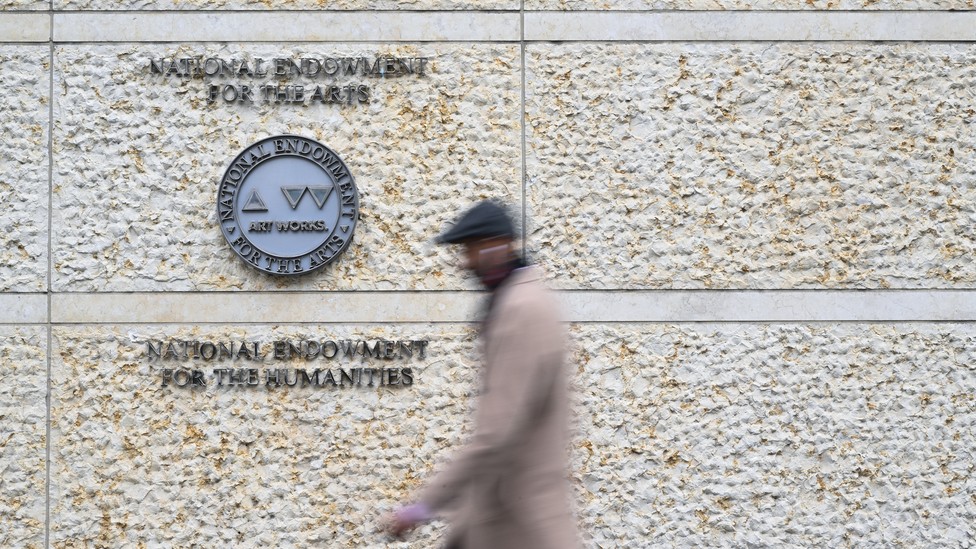
The Atlantic, Kelsey Ables and Janay Kingsberry, 9 May 2026: The DOGE-ing of the Humanities Is Being Reversed, subtitled “The Trump administration hastily canceled research grants last year—but just hit a roadblock in court.”
Winning a grant from the National Endowment for the Humanities can take months of preparation and can require multiple attempts. So last year, when DOGE officials with no humanities experience yanked the funds of hundreds of grantees using little more than a chatbot and a haphazard search for terms such as BIPOC and gay, it stung.
“The NEH, NEA, Guggenheim, and maybe one or two other grants are considered just the gold standard for your prestige in the academy,” Elizabeth Kadetsky, an English professor at Penn State, told us. Her grant to research stolen Indian antiquities for a nonfiction-writing project was canceled last year. “Can you imagine if you win the Pulitzer Prize or the Nobel and they’re like, Oh, I’m sorry, never mind, you don’t have it?”
What stung especially is that these grants were haphazardly cancelled by a couple 20-year-olds with no guidance but to look for keywords.
… McMahon’s 143-page ruling details how the two young Trump officials, Justin Fox and Nate Cavanaugh, scoured for cuts to humanities funding, relying on only their own biases and AI. Asked multiple times to define DEI in a January deposition, Fox struggled to articulate an understanding of it, repeatedly saying he would refer back to the executive order because he could not possibly capture the scope of DEI in his own words.
They’re analogous to the barbarians who burned down the Library of Alexandria, if not to that degree. But they are always no-nothings who resent people who know things, things they don’t understand and so think don’t matter.
\\\
Briefly noted.
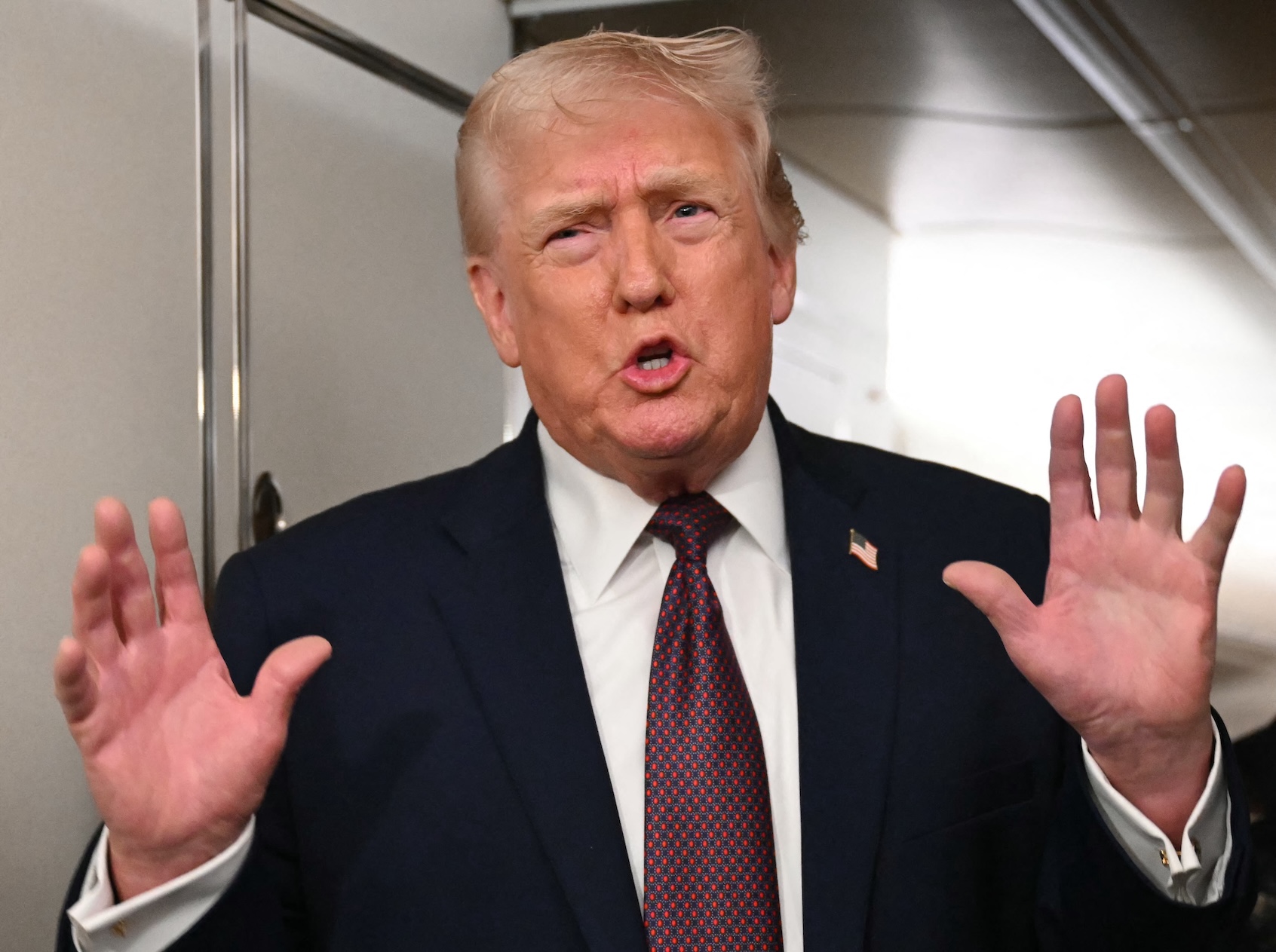
- Salon, Alex Galbraith, yesterday: “Much smaller shots”: Trump thinks vaccines are too “big” for babies
- Subtitle: The president thinks “smaller shots” will tamp down anti-vax paranoia and offer “much better results with autism”
- My comment: He has no idea what he’s talking about. He’s working off intuition, “common sense.” What’s “too many” and what’s “smaller”? Compared to what? This is not how you do science, or medicine.
- And JMG, today, from Daily Beast: Trump: “Every Person Around Is Gonna Have Autism”
- “Anything having to do with medical, I always bring in autism.”
- He’s fear-mongering to the willfully ignorant folks.
\

- JMG, today: Donalds: Racial Discrimination Is A Thing Of The Past
- No. Only Republicans, who *want* to discriminate — see Tennessee — say this.
\

- JMG, today: Trump Screams About Disloyal Supreme Court Justices
- He only understands “loyalty.” Not principles or law. Tribal thinking.
\
Rebecca Solnit on the California governor’s race.
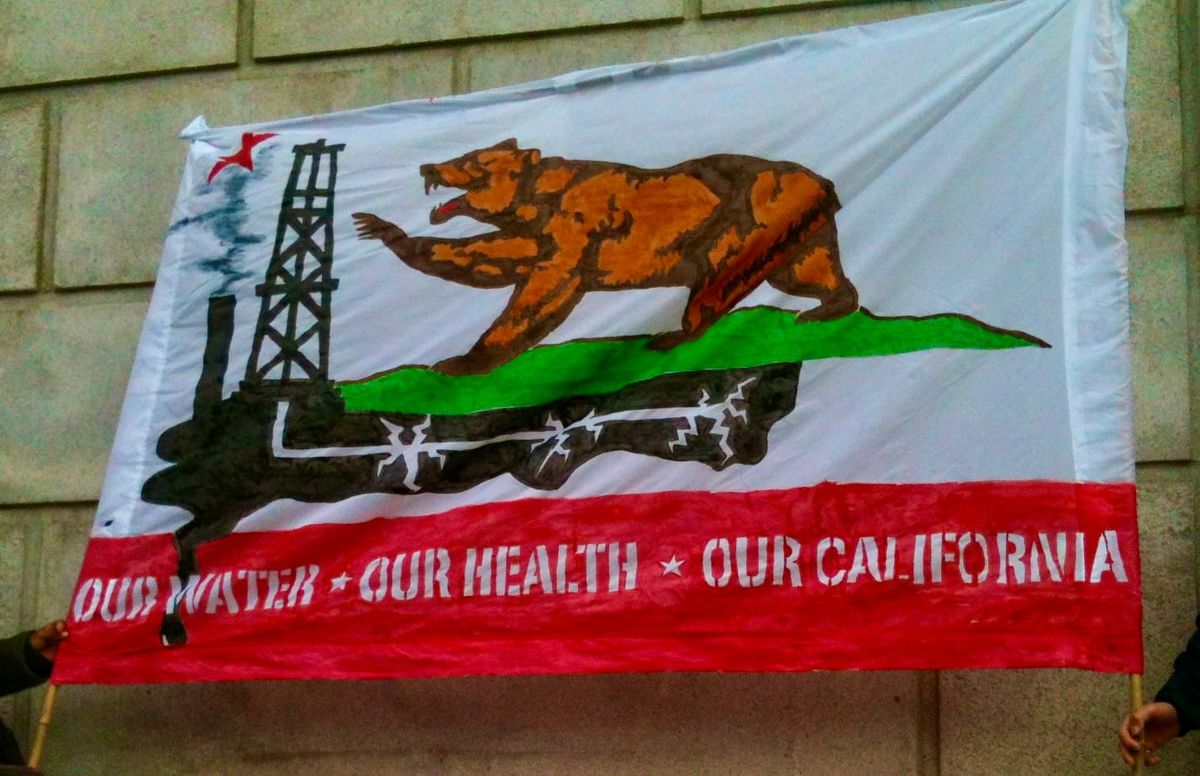
Rebecca Solnit, Meditations in an Emergency: Hey California! What Does It Take to Be Governor?
She delves into her support for Tom Steyer. But I think her opening comment is apt about politicians everywhere.
For decades most politicians who are not outright climate deniers have sounded like “oh yes, as you mention, the building is on fire and countless beings are trapped in it, and what if in a week or so I wander over and splash a little leftover lemonade on it?”
Which is the essence of how our current politics cannot address long-term existential threats.