- The Atlantic’s Yoni Applebaum on the idea of consensus history;
- A review of Steven Spielberg’s film history;
- How conservatives don’t understand how California voting works, and imagine conspiracies;
- Ennio Morricone, Marco Polo, and Canzone di Mai-Li.
- Activity today.
A couple essays.
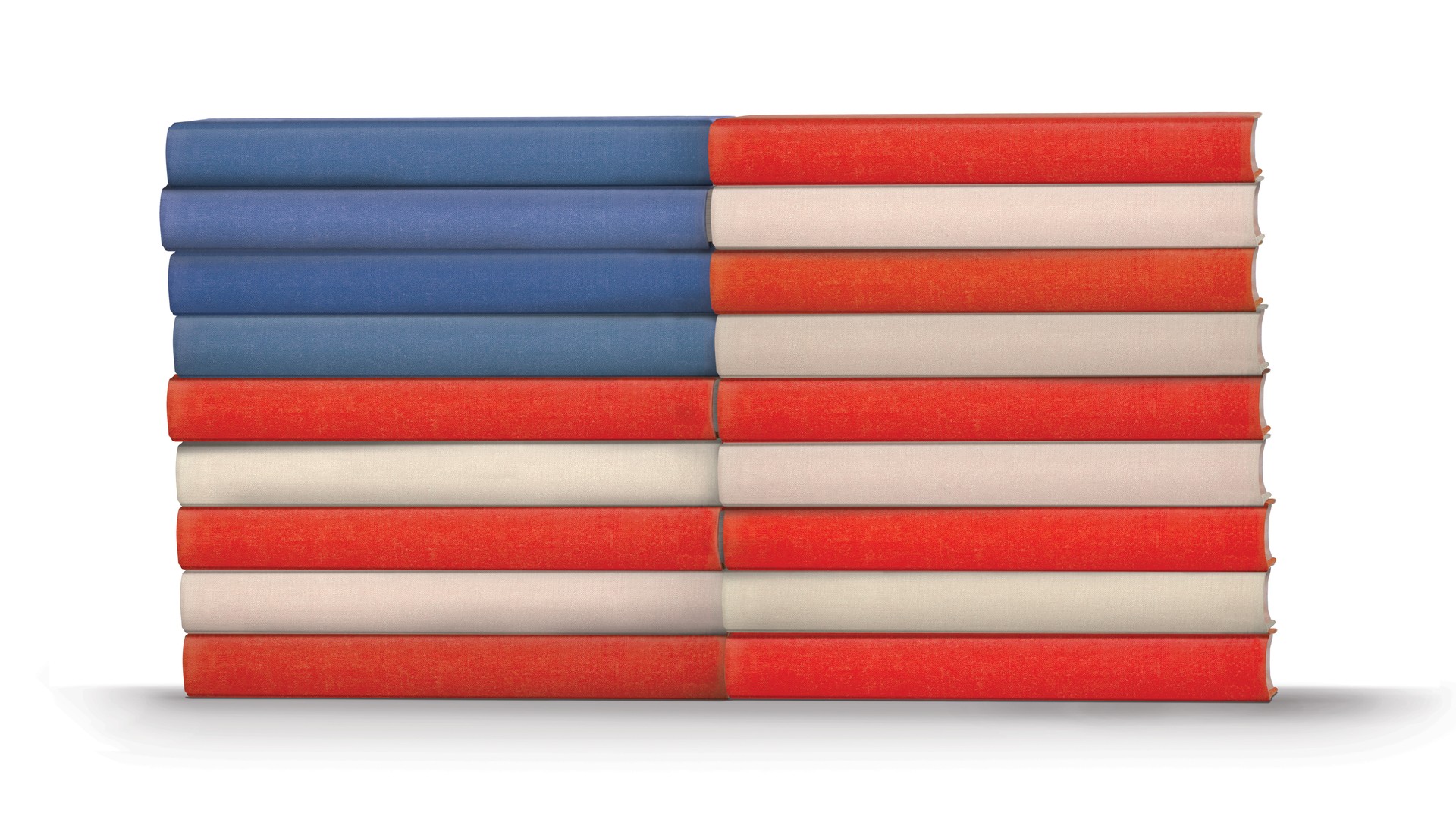
The Atlantic, Yoni Appelbaum, today: How America Gave Up on Its Own History, subtitled “Unable to agree on how to interpret the American story, the country’s schools, universities, and political institutions have stopped trying to tell it at all.”
My immediate thought:
all history is agreed-upon consensus, since it’s impossible to know what happened in the past with certainty. Especially since people today can’t agree on what’s significant from day to day. And America especially is a confluence of many different kinds of immigrants, over centuries, that there are many different kinds of stories to tell. We can tell and retell stories of American heroes like the founding fathers. Those stories are settling into myth, what with the current administration sanitizing unsavory details about them, and other aspects of history, in the name of cancelling “woke.”
Thus consensus on American history is difficult, and being avoided, according to this essay.
Americans, of course, have never exactly agreed on why this country was founded or what it stands for. Fierce arguments over those questions have long divided families and roiled politics, and even once produced a bloody civil war. But throughout the 19th century and well into the 20th, a simplistic patriotic narrative prevailed. “Providence designed that on this continent should be seen an example of democratic government,” a textbook explained to young students in 1872, “which means government ‘of the people, for the people, by the people.’ ”
Americans defined their nation in this way, by their commitment to a common creed—of equality, rights, and opportunity—and to a corresponding set of democratic ideals that they were modeling for the world. In practice, they generally fell short of those principles, sometimes seeming to pursue their abnegation more than their fulfillment. But the white men who built their fledgling republic around an idea, instead of around a common ancestry, opened the possibility that any who subscribed to its creed could become a citizen. Over time, other Americans demanded that the nation live up to its ideals and recognize their equality. For more than two centuries, our creedal nationalism has been a source of strength, binding together Americans of diverse faiths and backgrounds.
My take: immigrants from around the world are a good thing. America can become the first truly global society — a society where different people can live together without feeling threatened by others with different traditions and beliefs, as conservative so often are. We can lead the rest of the world, as we did for much of the 20th century. Which humanity will need if it’s to survive. (And as I mentioned in another post: this is what California is doing, and why white-supremacist MAGA hates California.)
\\\
Slate is doing a Steven Spielberg week, and this review of his career echoes some of my thoughts from yesterday.

Slate, Jack Hamilton, today: Steven Spielberg’s Annus Mirabilis, subtitled “He’s one of history’s greatest filmmakers, but for a long time, he was also a punching bag. One year changed everything.”
The article discusses how Spielberg was dismissed as an artistic lightweight, despite his popularity, until 1993.
…Steven Spielberg, who in June 1993 released his record-smashing adaptation of Michael Crichton’s Jurassic Park, then returned in December with the rapturously acclaimed Schindler’s List, a black-and-white, three-plus-hour Holocaust epic. Jurassic Park went on to surpass Spielberg’s own E.T. as the highest-grossing movie of all time worldwide, a distinction that it would hold until Titanic snatched it away in 1998, while Schindler’s List was immediately hailed as Spielberg’s artistic zenith, an instant classic that finally earned Spielberg his first Oscars for Best Director and Best Picture. (Even the modestly budgeted Schindler’s was also a blockbuster, grossing more than $300 million.) By the end of 1993, Spielberg had delivered, as the New York Times’ Janet Maslin put it at the end of her review of Schindler’s List, “the most astounding one-two punch in the history of American cinema,” one that, in the words of journalist and historian Michael Schulman, “crown[ed] him Hollywood’s undisputed king of art and commerce.”
\\\
Conservative conspiracy thinking.

- JMG, today (from The Hill): Johnson: California’s Election “Stinks To High Heaven”
- No. He’s *lying*. This pattern of how Republicans and Democrats vote is familiar and well-understood. Note that he cites no evidence, only “instinct.” Do not trust instincts.
- Also:
- JMG, today (from Democracy Docket): Top DOJ Official: You’re Right To Question CA Election
- JMG, today (from Townhall: Luna Claims Federal Government “Subsidizes” California.

- Once again, everything takes two weeks. It never happens.
- JMG, today: Fox Host: Trump Can “Finish” Iran War In Two Weeks
- Perhaps two weeks is the attention span of his supporters.
\\\
A couple days/posts ago I noted the Ennio Morricone score for a 1981 Italian TV series called Marco Polo, which I think is one of the more gorgeous sound tracks I know. For whatever reasons, it was released in the US only on a double LP, and has not been released on CD. Somehow, years ago, I acquired an Italian CD of the score, perhaps by special ordering it on some website. (Actually, Amazon still lists the CD I have, but says it’s “unavailable.”)
Today I found a link to the full score, and this particular track..
It’s part of the full score, though divided up on YouTube into individual posts.
\\\
Activity today. Monday morning is bestsellers morning. I’ve been doing this for 25 years. I inspect bestseller lists on the newspaper sites, and the Amazon sites, and compile the rankings of sf/f/h books into a Microsoft Access database I set up 25 years ago. This takes an hour or two, depending on how many new titles debut in any given week. Locus Magazine has always done a bestseller page compiled from genre bookstores, but given their lag, their list in any given issue shows bestsellers from two months before. And only from genre stores.
This afternoon I compiled the winners of the Nebula and Stoker Award into my database, and posted the results on sfadb.com. Spring is a busy awards season. I still have Seiun, Mythopoeic, Clarke, and Ignyte finalists to post.