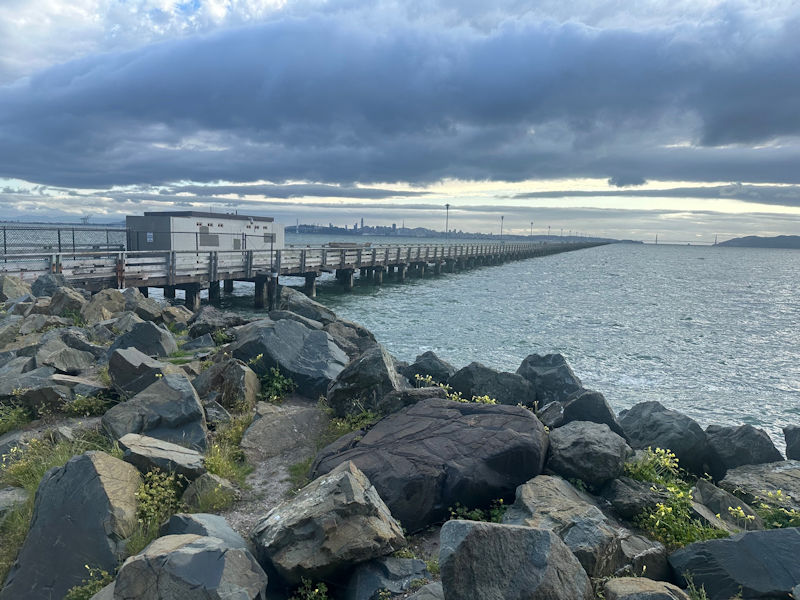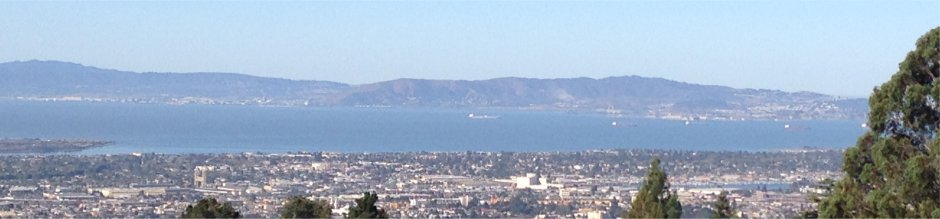
- How World Cup tourists are impressed by the US;
- And an earlier piece about tourists were impressed by San Francisco, in both cases despite right-wing apocalyptic propaganda;
- Amanda Marcotte on why MAGA buys Trump’s reflecting pool hoax;
- Hegseth reverses the vax mandate ban, and fires another top general;
- MAGA falls for satire;
- Todd Starnes doubles down on tribalism;
- Alan Greenspan admitted he was wrong: takes by Roger Lowenstein and Robert Reich.
- And John Williams: Schindler’s List.
People are, inevitably, most concerned about their personal lives, without needing to be aware of the outside world. To some extent this piece reveals the psychological bias that leads many people to think life is worse off today than it was in some imaginary glorious past. And it reveals how outside perspective are quite at odds with the apocalyptic take that Trump and MAGA have on America’s big cities, which borders on bigotry.

Washington Post, opinion by Jim Geraghty, yesterday: What’s America really like? Ask the World Cup tourists., subtitled “Foreign soccer fans marvel at features of U.S. life we take for granted.”
Sometimes it takes outsiders, seeing us with fresh eyes, to remind us of who we are and what we have.
By now, you’ve probably seen social media videos of foreign tourists coming to the United States for the World Cup — co-hosted with Canada and Mexico — and marveling at features of American life that we tend to take for granted. As the Japan Times put it, visiting fans are discovering “a distinctive culture of 24-hour retail, free soda refills, chicken wings dipped in ranch dressing and a warm welcome from Americans.”
…
At a time when our president can’t resist destroying his relationships with even the most like-minded European leaders, it’s wonderful for the world to interact with real Americans and enjoy our hospitality, and for us to be reminded of how the world sees us.
The implausible accusation that Americans are xenophobic always had to wave away little details, such as the fact that we welcome 650,000 to 1 million legal new citizens each year. (That’s not undocumented migrants coming over the border; that’s naturalized citizens.) In a xenophobic country, would the University of Kansas marching band welcome the Algerian World Cup team with its national anthem? Would Bostonians throw joint parties for Scotland’s visiting “Tartan Army” and the Haitian diaspora? Would Providence, Rhode Island, have welcomed the Ghanaian team by raising that country’s flag at city hall and holding a concert at a nearby park?
It’s only the MAGA conservatives who are xenophobic.
American wealth manifests in some expected ways — larger houses, more spread-out suburbs, bigger cars, wider highways — but also in unexpected ways, such as ubiquitous water fountains and free public restrooms, nearly universal air conditioning, free glasses of ice water when you sit down at a restaurant, complimentary chips and salsa at Mexican eateries. Europe has its own convenience stores attached to gas stations; it just doesn’t have anything like Buc-ee’s.
And
Oh, and gas prices. Americans are understandably disgruntled at the higher gas prices triggered by the U.S.-Israeli war against Iran. The national average is finally below $4 a gallon, but that still feels expensive when a year ago we were paying $3.22 per gallon. By European standards, however, American gasoline is unbelievably cheap. As of June 18, the average price in dollars for a gallon of gas in Europe ranged from $5.88 in Malta to $10.49 in Denmark.
\\
Here’s an earlier piece on the same theme.

NY Times, 6 Feb 2026: Super Bowl Visitors Find San Francisco Better Than Its Apocalyptic Image, subtitled “Problems with homelessness and open-air drug use have been widely broadcast, but many visitors this week said they found the city surprisingly pleasant.”
To right-wing influencers and conservative media outlets, San Francisco is a wasteland where the once-glimmering downtown mall is dead, the sidewalks are filled with homeless encampments and drug users are shooting up in the streets.
To San Franciscans and civic leaders, however, that caricature has never been accurate. And certainly not after a recent A.I. boom downtown and the redoubling of efforts to improve the quality of life.
San Francisco still has its share of down-and-out areas. And the city has not fully recovered its pre-Covid workweek energy. But local champions have insisted that much of the place remains vibrant, and that a sun-splashed walk along the Embarcadero and a Mission-style burrito can make anyone feel better about the city.
\
To some extent this is plain bigotry by conservatives. As is this piece. A clip from the Todd Starnes show.
Right-wing commentator Mary Walter says that liberals “are usually ugly,” which is why they hate Trump’s effort to beautify DC: “Their moods are ugly, their souls are ugly, they get up every morning and they hate life and that eventually starts to eat you up from the inside.”
\\
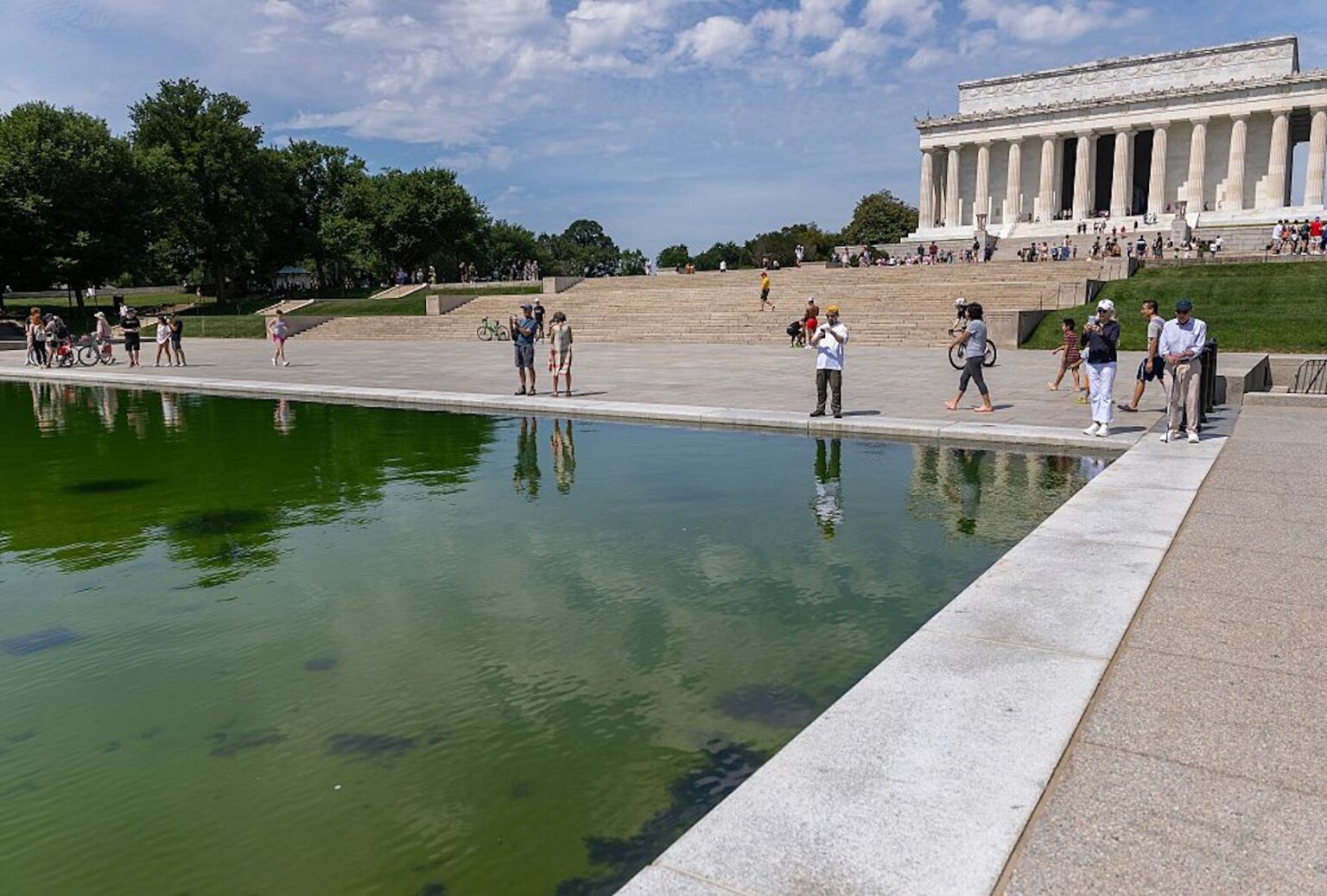
Salon, Amanda Marcotte, today: Why MAGA buys Trump’s Lincoln Memorial Reflecting Pool hoax, subtitled “The GOP base would love to arrest people who laugh at them”
The word “narcissist” comes from the Greek myth of Narcissus, which tells the story of a young man so enamored of his image in a reflecting pool that he is unable to look away. He eventually dies from his own egotism and turns into a flower.
Donald Trump is no doubt ignorant of this story, even as he loves to imagine himself connected to the glories of antiquity, so it’s fitting that he is reenacting the tale from Ovid’s poetry as a distorted, expensive farce. Like the mythical figure who gave name to Trump’s most prominent personality flaw, the president became fixated on the famous Lincoln Memorial Reflecting Pool, hoping to repaint it so that it mirrored his imagined brilliance. Instead, the algae-ridden water has turned into an on-the-nose metaphor for his own decrepitude, as tourists have begun swarming it so they can mock this totem of Trump’s failures.
\\
As I’ve said, conservative policies often clash with reality.

JMG, today, from ABC News: Pentagon Reinstates Flu Vax Mandate Amid Outbreak
\\
Is Hegseth a foreign saboteur?

The Atlantic, Nancy A. Youssef and Missy Ryan, yesterday: Another Top General Is Out at the Pentagon, subtitled “C. D. Donahue, the last American soldier to leave Afghanistan, is the latest in a long line of military departures.”
\\
These people are not very bright.

JMG, yesterday: MAGA Falls For Satire Post Claiming “FBI Raided Antifa Headquarters And Found Vats Of Paint-Stripping Algae”
Posted on a self-stated satirical site, then spread by the gullible.
\
Pure tribalism, sans values or principles or concern for results.
Right Wing Watch, Kyle Mantyla, yesterday: Todd Starnes Says Voters Must Support The GOP Regardless Of ‘How Bad The Republicans Have Betrayed You’
\\\
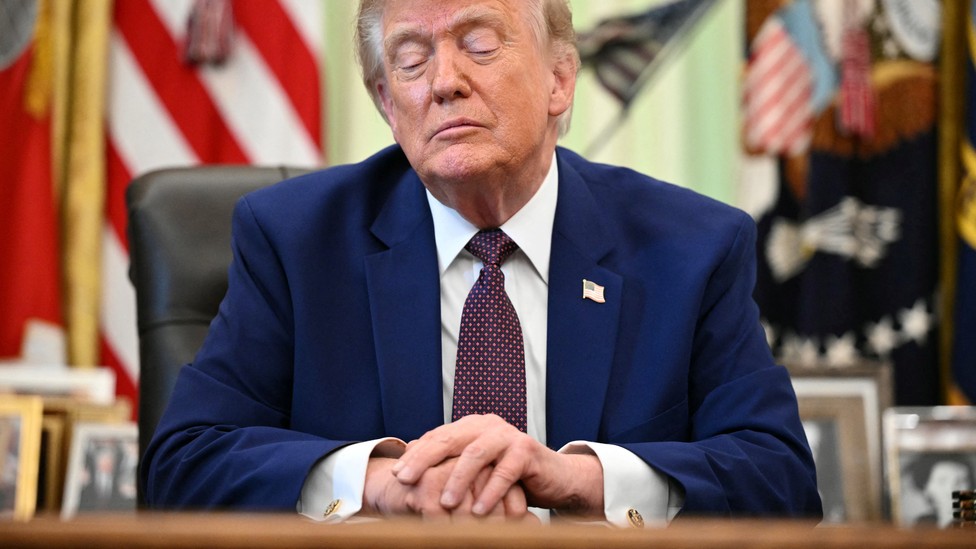
The Atlantic, David A. Graham, 22 Jun 2026: Trump Can’t Spin His Way Out of His Two Latest Crises, subtitled “He’s trying to defy the reality of a green Reflecting Pool and a lost war.”
The details are familiar.
\\\
The death of Alan Greenspan is notable for at least one reason. He was wrong, and admitted it. His policies enabled the 2008 economic crash.

NY Times, opinion by Roger Lowenstein, 22 Jun 2026: Alan Greenspan Was Wrong About One Thing. It Was a Big One.
He was anti-regulation.
Whatever else, Alan Greenspan should be remembered for what is surely the rarest virtue among public officials: admitting error.
The moment was Oct. 23, 2008. The American financial system was in tatters. Bear Stearns and Lehman Brothers were bust, and the government had taken equity stakes in private banks in a bid to arrest the crisis. Americans were swamped with mortgage debt and suffering through a brutal recession.
Mr. Greenspan, the former chairman of the Federal Reserve, had retired less than three years earlier. No one had championed the free market system or worked to block financial regulation, which he disparaged as both harmful and unnecessary, with more ardor than he had. As head of the most powerful of the agencies that regulated banks, he hadn’t used his authorities to quash the bubble in mortgage lending.
\
Here is Robert Reich’s take.
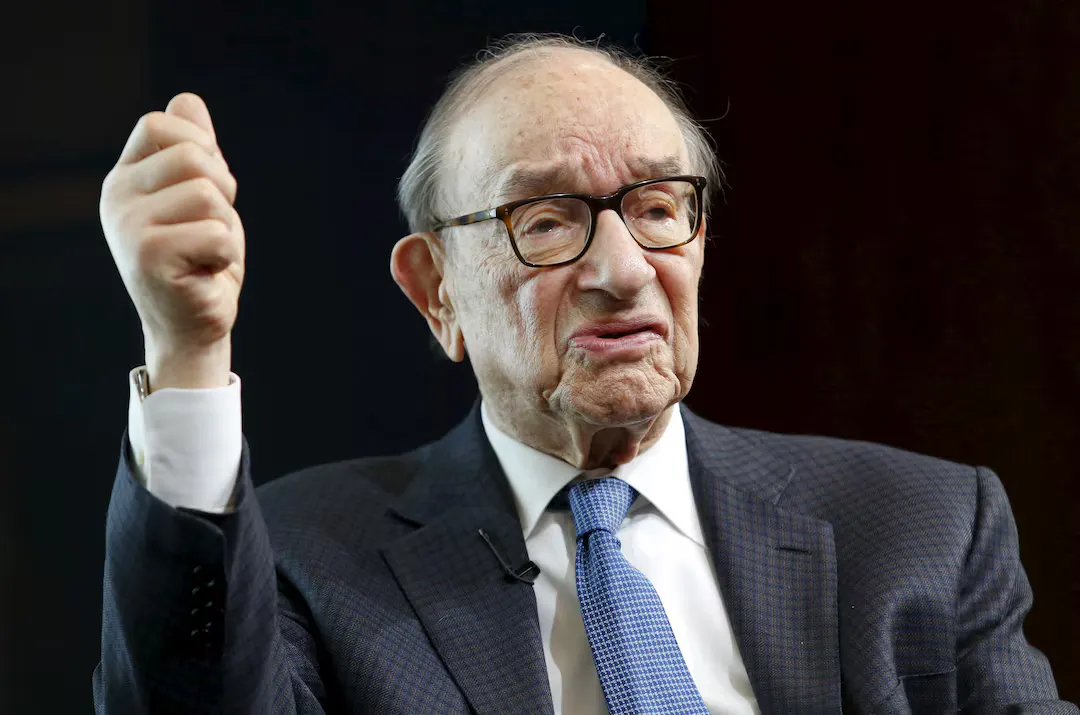
Robert Reich, 22 Jun 2026: R.I.P. Alan Greenspan: You were charming, thoughtful, powerful, and wrong, subtitled “His insistence on financial deregulation brought the economy to its knees”
Friends,
Alan Greenspan has died at the age of 100.
My students don’t recognize his name, but you probably do. When he was chairman of the Federal Reserve — for more than 18 years, from August 11, 1987 to January 31, 2006 — he not only ran the U.S. economy (and most of the world’s) but was also in many ways the most powerful person in America.
He maintained an iron grip over the Fed and almost single-handedly decided on interest rates. But that was just the start of his power. He essentially fired George H. W. Bush by raising interest rates so high (ostensibly to ward off the inflation then threatening the economy) that the economy took a dive, and voters blamed Bush.
This was enough to convince my boss, Bill Clinton, to do exactly what Greenspan wanted — which was to reduce the federal budget deficit and thereby destroy much of the agenda Clinton ran on (and I helped create). As I wrote in my memoir of those years, Locked in the Cabinet, “Greenspan has the most important grip in town: Bill’s balls, in the palm of his hand.”
I don’t want to speak ill of anyone who has passed. Greenspan was an extremely charming, intelligent, and thoughtful man.
But the truth must be told: If any single person was responsible for the financial crisis of 2008, it was Greenspan. That crisis — the worst collapse since 1929, which led to the worst recession in decades, in which millions of Americans lost their jobs, their savings, and even their homes — resulted from the deregulation of Wall Street that Greenspan advocated.
There’s a range. Most politicians never admit they are wrong, or apologize. Trump *never* does; he’s made it his policy; he blusters his way through, confidant that his base will believe whatever he says, no matter how irrational. In contrast, scientists, among which economists might be somewhat included, are generally happy to admit they were wrong, and change their positions. Though not all. Scientists are people too, and some defend pet theories long after they’ve been discredited. I see this idea is captured at Wikipedia at Planck’s principle: “Science progresses one funeral at a time,” in a later formulation.
\\
Here’s what I’m listening to this evening.