- No, Noah’s Ark has not been found, again;
- Evidence suggests Trump wanted the Kennedy Center to fall into ruin;
- Lenders around the world don’t trust the US;
- An example of how AI is making things worse, by claiming credit for mathematical results that cannot be easily confirmed;
- Thoughts about mathematics, AI, and the limits of human cognition.
This kind of story pops up every few years, and it’s no truer now than it has ever been. The searches have had 2000+ years. But gullible people feel confirmed by it every time.
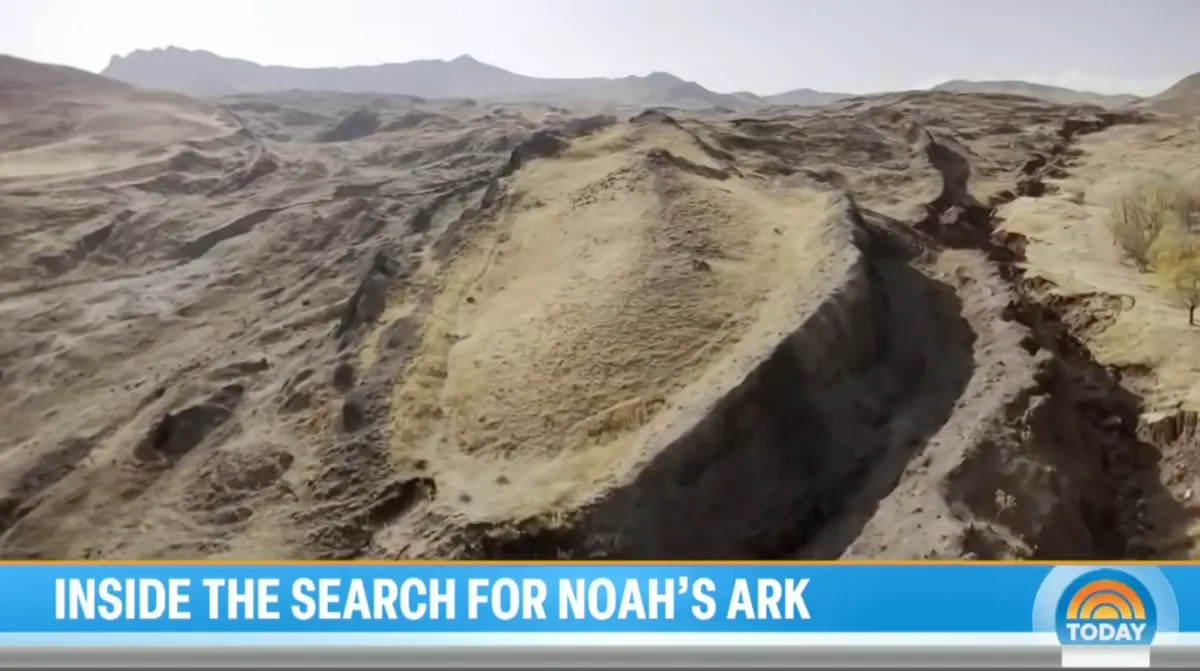
Friendly Atheist, Hemant Mehta, today: Scientists have not “100% confirmed” the resting place of Noah’s Ark, subtitled “The Daily Mail turned a Christian company’s dubious claims about Turkey’s Durupınar Formation into a wildly misleading story”
(The Daily Mail, says Google, is “a middle-market tabloid-size conservative newspaper” i.e. concerned more with gossip and scandal than objective news.)
Did you know Noah’s Ark was real and scientists just confirmed it?
That’s what you might think if you just read the headline from a Daily Mail article which says Noah’s Ark’s resting place has been “100% confirmed” after 4,300 years.
And
You’ll be shocked to learn the actual story doesn’t back any of that up. But will anyone read the story? Probably not. It doesn’t help that the article is behind a paywall, so most people will only ever be able to see the headline.
They also won’t learn that the group behind this story got NBC’s Today to cover the exact same story last year.
Needless to say, the only thing that has been confirmed is how easily Christian propaganda can spread.
Mehta goes on to describe how stories like this get promoted.
This isn’t about faith, or the gullibility of Christians. It’s about basic literacy about how the world works, and how therefore the whole Noah’s Ark story is absurd on its foundations. It’s completely implausible. That all the animals in the world were saved on the Ark and then propagated to their current positions? People searching for the remains of Noah’s Ark are wasting their time.
Mehta concludes,
So who the hell said this was Noah’s Ark and that’s “100 percent confirmed”? The Daily Mail. Which was spurred to do so by a Christian group with a vested interest in proving Noah’s Ark was real—or at least making people think it’s a possibility.
Not scientists.
The Christians here wanted headlines so they could raise money, and they knew exactly which tabloid would run with it.
Noah’s Ark isn’t real. But Christian grifting is still alive and well.
Are they that cynical to be merely trying to make money? Perhaps. I think they’re just grasping at straws, anything to confirm their faith.
\\\
Today’s paper.

NY Times, today, posted yesterday: Kennedy Center Shelved Repairs Now Cited for Closure, Whistle-Blowers Say, subtitled “In a letter to Congress, former employees say the center delayed a plan to address the leaks that its officials now cite as a serious safety risk.”
It’s almost as if they wanted a reason to demolish it.
\\\
Continuing a theme.
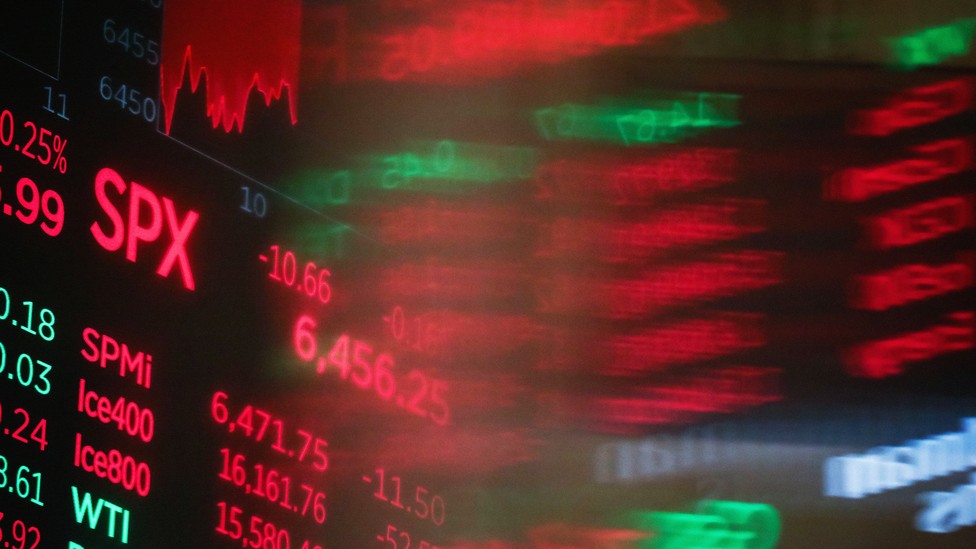
The Atlantic, David Frum, today: Lenders Don’t Trust the United States Anymore, subtitled “Blame Trump for rising borrowing costs.”
All over the world, lenders are demanding higher interest rates. The global bond market is extracting higher yields from every borrower, starting with the biggest borrowers of all: national governments. But not every government is paying equally.
Trustworthy borrowers with solid finances and honest leadership pay less. Distrusted borrowers with disordered finances and corrupt leaders pay more. In times past, the United States would have headed that first list. Under President Trump, the United States has tumbled onto the second one.
\\\
Here’s a rebuke to optimistic thinking about AI.

NY Times, guest essay by Zeynep Tufekci, yesterday in print, posted 22 Sep 26: This Is a Rare Arena in Which People Think A.I. Is Helping. It’s Making Things Worse.
This is about the AI proof of a certain mathematical conjecture.
It was one of the most famous challenges in the history of mathematics: the fluid dynamics problem known as Navier-Stokes, whose solution had proved so elusive that a million-dollar prize had been posted for the genius or geniuses who could finally crack it. Until the other day, that is, when OpenAI announced that one of its advanced models had found an answer at last. And it had taken only half a week.
The problems are, in a nutshell, is that OpenAI may have stolen the work the two human mathematicians working on the problem, and, that the claim of a solution is extremely difficult to verify.
\
So beware claims like this.
Scientific American, 24 Sep 26: AI solves 79-year-old mathematical mystery, subtitled “Can a six-dimensional sphere be described using imaginary numbers? For decades, experts puzzled over this question. Now an AI has apparently answered it”
He’s done it again: mathematician Levent Alpöge, at Anthropic, has solved yet another open math problem using artificial intelligence. He had already tackled the Jacobian conjecture and found two new elliptic curves. Now add to these the 1947 Hopf problem. It asks whether a six-dimensional sphere can be completely described using complex numbers, which include the (seemingly impossible) square root of –1. According to Alpöge, the answer is yes, though the result remains unverified.
OK, maybe. We need to temper our enthusiasm. I suggested here just recently that these AI results illustrate the limitations of human cognition. Perhaps they do. The difficulty we have verifying AI results may just be another illustration. Or perhaps we’re being fooled, fooling ourselves. AI only knows what we know, in a sense.
\
So maybe mathematics is the case study about the range of human cognition. At one extreme are those savants I’ve discussed. At the other are most folks who admit they’re “bad at math” or simply don’t like it, and have no intuitive understanding about sizes or ranges. But at the higher extreme are those problem humans can’t seem to figure out, but which may or may not are being solved by AI. Can AI reveal to humans a realm we cannot intuitively understand? That would be the optimistic possibility.