Science is asymptotic.
Scientific American, Sarah Scholes: 15 Sep 2026: The questions science may never answer, subtitled “Will some of the biggest mysteries in science remain forever unsolved?”
Science, at its best, is a striving toward truth. It is not, although we often think of it as such, the search for absolute truth. It’s more a process of systematically gathering and interpreting data about the universe to understand its past and present and predict its future. What results is the best approximation we can access at any given time with the information, methods and instruments we have.
And what counts as the best approximation of truth often changes. Isaac Newton began to devise his apple-falling theory of gravity in 1666. It worked well for everyone’s purposes in the 17th century. Then about 250 years later Albert Einstein stepped in with a better approximation: the general theory of relativity. Today some scientists are working to find ways to unite relativity with quantum mechanics, seeking a new approximation of the “truth” of gravity.
At the same time, there’s always a scientist somewhere ready to declare that this or that will *never* be answered. The famous example:
In 1835, for instance, philosopher Auguste Comte asserted that humans could never know what stars are made of. Then came spectroscopy, which allowed astronomers to parse stellar light for fingerprints of different chemicals.
This is a short piece that a promo for a new book.
New ways of thinking or measuring expand the boundaries of science. This idea is the thesis of scholar Alexander Krauss’s most recent book, The Engine of Scientific Discovery. Until radio antennas existed, for instance, astronomers didn’t know the universe emitted radio waves, so they didn’t wonder what powered the gigantic jets shooting at nearly light speed from the centers of galaxies.
And so on. The Amazon link to the book is this.
The bigger issue is one that’s been considered by science fiction, too.
Still, not all questions will find answers. Some will likely remain beyond scientific grasp, even with methodological and interdisciplinary advances. Some will be so beyond our imagination that they will remain unknown unknowns forever. That’s frustrating: science aims to understand the universe by observing, experimenting, interpreting, iterating. But that enterprise hits walls when there is nothing to observe or experiment on, when something lies past a fundamental barrier, or when observing or experimenting changes what is being observed or experimented on.
I don’t think this is about limitations of methodology or experimental techniques; it’s about the cognitive limitations of the human mind. The world is queerer than we can suppose, said Haldane. We already know that humans have no intuitive understanding of realms outside our ancestral experience. We understand, in a mathematical sense, quantum physics and special relatively, but not in any intuitive way. We know there are a few savants who *do* have such super-human intuitions, like those who can tell you what day of the week any particular date falls on, or what the product of two 10-digit numbers is, without seeming to think about it.
We also know that there is a substantial portion of humanity (not just Americans) who reject the complex and non-intuitive nature of scientific discoveries, in preference to superstitious intuitions and simplistic nationalistic and religious narratives. As a species, this is the limitation that may forever limit humanity’s advance, and may bring about its extinction, if we are unable to respond to existential threats because MAGA, e.g., doesn’t believe in them.
\\\
Taking David Brooks with a grain of salt, as always. But there’s some good stuff here.
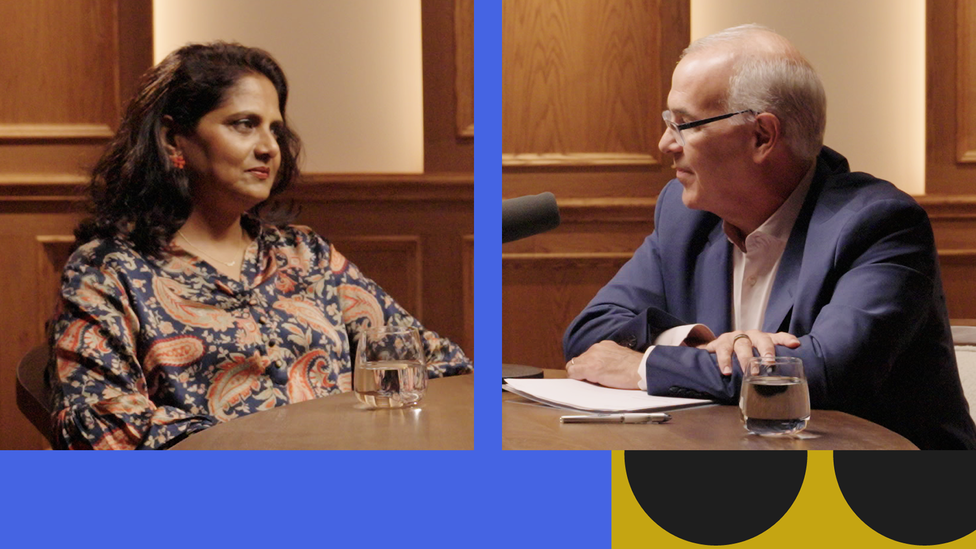
The Atlantic, David Brooks, today: What Is Humanity’s Place in the Cosmos? [gift link]
Subtitle: A lifelong fascination with terra incognita led the astrophysicist Priyamvada Natarajan to map out the universe’s most enigmatic phenomena.
For all of history, humans have been fascinated by the heavens above us. We’ve used the stars to navigate Earth, to predict the future, and to understand our place in the larger scheme of things. Changes in our view of the cosmos—from the Copernican revolution that “uncentered” the Earth to the discovery of the Big Bang and the recognition that the universe is expanding—have invariably changed our view of ourselves.
Of course this maturity of humanity parallels the maturity of a child who comes to learn that the world and universe do not revolve around them.
In this episode of The Permanent Questions, David Brooks speaks with the astrophysicist Priyamvada Natarajan about the latest scientific view of the universe and what it says about humanity’s place in the order of things. Natarajan is a world-renowned theoretical physicist who has made important breakthroughs in the study of black holes and dark matter; she is also a scholar of the history and philosophy of science and the author of Mapping the Heavens: The Radical Scientific Ideas That Reveal the Cosmos.
Long piece. Can I find the gist?
It’s curious that Brooks was fascinated by astronomy at an early age, then:
Later, I discovered astronomy involves math, and so it was not for me. But I never lost my taste for the poetry of the night sky.
My path was similar, but it wasn’t the math that bothered me, but the physics. I became a math major.
Moving along… Martin Rees! They discuss how the elements were made inside of stars. And Brooks acknowledges the multi-verse theory. And how Natarajan is uncomfortable with the word “believe.”
I believe, and the operative word here is believe, I believed in—believe in—the multiverse. Because it’s a very comfortable—I know it sounds really strange—but it’s a very comfortable place to intellectually be, because you have an infinity, and it’s the nature of infinity, right, that it’s so profound and deep that anything and everything is possible, and anything and everything can be produced.
Here’s the closest I can find for the gist:
Natarajan: As a theorist, a person who builds models, one of the great capacities I have is to sit on the fence. I can argue both sides, and I will let the data call out, right? So I think humans are simultaneously really significant and insignificant.
They’re insignificant, just as you say: In the grand scheme of things, we are one tiny planet, one solar system of billions and billions of them out there. But the way in which we are significant is that with this one kind of cantaloupe-sized gelatinous organ in our heads, we have figured all of this out.
And so it’s really hard to say we’re really utterly insignificant. We are significant. And I also like to think, when we think about the big problems that the Earth is facing with catastrophic climate change, I think we are really significant because we can do something about it.
I like this idea of cosmic stewardship and agency. I think we do have agency. We are not exercising it enough. So I do not wanna relegate us to being sort of insignificant. I think we’re very significant because we can actually shape our own realm, and we’ve had the intellectual capacity to figure out so much.
We can. We’re significant because we can, even though we might not.