
- How Jeffrey Epstein, obsessed with eugenics, was wrong;
- How Paul Ehrlich was not a villain, even though his predictions failed;
- John Pavlovitz wonders why anyone still supports Trump; I have another idea;
- Tom Nichols on no Plan B; the disappearing Charlie Kirk banner;
- Rufus Wainwright’s “Go Or Go Ahead”.
Evolution is the scientific topic about which even people who don’t reject it utterly still have more misconceptions about than any other branch of science. (Going back to Lamarckism, or the inheritance of acquired characteristics, that people like Lysenko and Stalin so much wanted to be true it became Soviet doctrine for decades.) I think it must reflect the teleological mode of most human thinking.
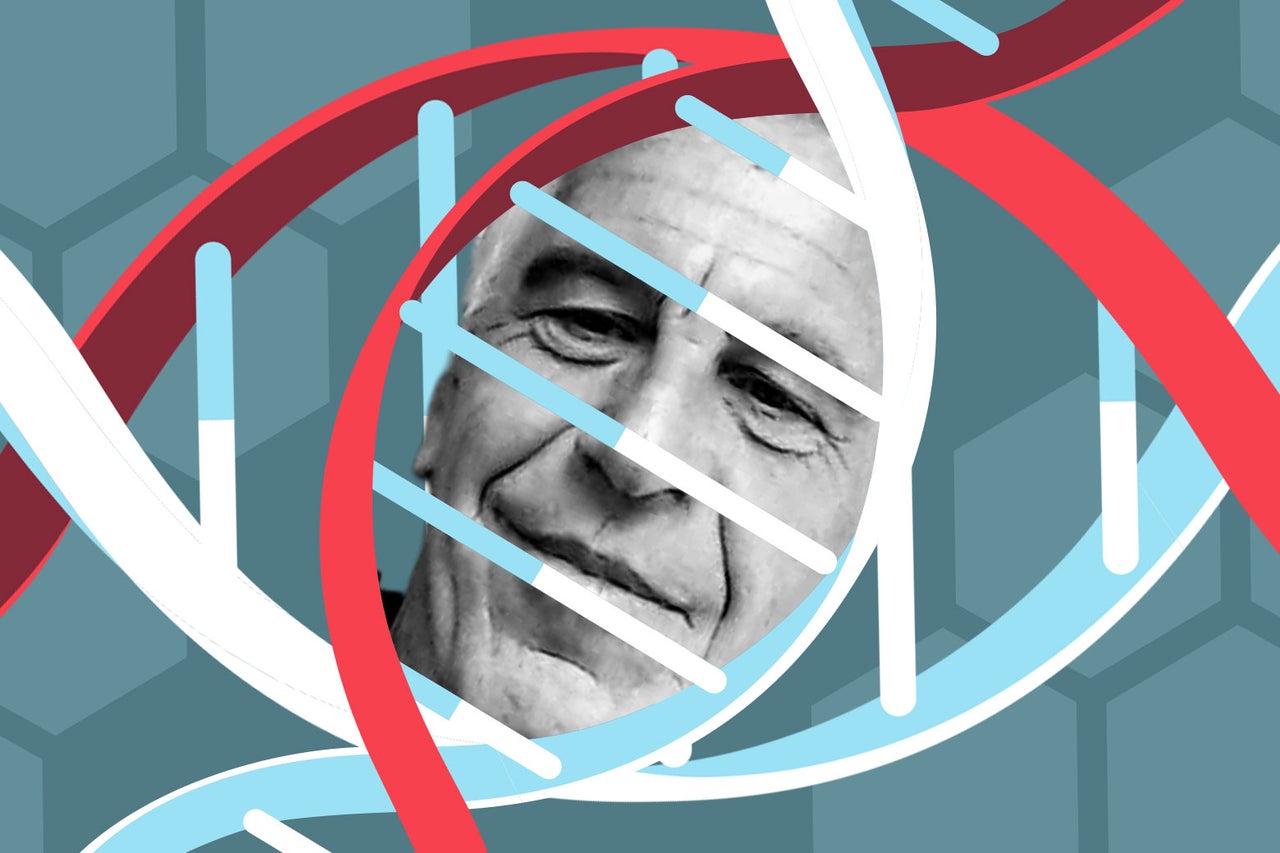
Slate, Susanne Paola Antonetta, 19 Mar 2026: Jeffrey Epstein, Eugenics Supremacist, subtitled “The files reveal his obsession with genetics. But genes don’t work the way he thought.”
Epstein, culpable for so much, was also a believer in eugenics, the manipulation of reproduction and of genes to create “better” humans. His focus on genes, as reflected in his correspondence, is remarkable. The files show that Epstein constantly asks if various random traits might be genetic, spends thousands on high-end DNA sequencing for himself, and has his assistants hand out 23andMe test kits the way most people hand out business cards.
…
Though, like many things Epstein, the man’s genetic interests were twisted, often revolting, and shockingly uninformed. He felt about genes the way grade-school kids might feel about Santa—genes are wondrous things, capable of delivering just about anything petitioners may desire. Epstein, in his musings in the files, credits genes with controlling things that range from the rear ends of people of Irish descent to honor killings, financial skill, and, weirdly, “Asian family structure.”
(Those links in the last sentence are to the Epstein Files themselves.)
Later in piece the writer explains how Epstein was wrong.
But genes don’t behave as Epstein imagined they do, like codes punched into a computer—they’re neither blueprints nor instructions, though pop culture often presents them that way. The ease with which genes pass on mechanical, protein-coded traits like eye color has misled even scientists into thinking that they pass on other traits straightforwardly as well. But qualities like family structure, math skills, and trivia come far more from life and environment than from protein structures (which are very good at giving you brown eyes). Genes can be expressed or activated, or not—more often they’re not; they mutate and can alter their own function and be altered by environmental forces. Few have any fixed function. As Philip Ball, who wrote How Life Works, puts it, looking to genes to explain who you are is like staring at the dictionary hoping to understand literature. And imagining you can simply add genes to people and create a specific type of person is like shaking up a box of all the letters used in Hamlet and expecting to create another play just as good. For that matter, Shakespeare had three brothers, who shared much of his DNA. One worked in haberdashery, one acted, and one’s path was uncertain—but none wrote.
(Because, I would add, our genes were not *designed.* They’re the result of millions, even billions of years of kludges. Whichever sequences of things worked out, even if entirely by accident, survived, no matter how clumsy they would have seen to any kind of ‘designer.’)
The writer concludes,
It’s not possible to tie even math skills firmly to genes, much less anyone’s family structure. Epstein fell into a historical trap, one in which “making things better for humanity” quickly slides into “better for me.” And terrible for those around you.
It’s a trap baited ultimately with contempt for other humans. I hope the Epstein case draws attention to this dark genetic path. We have seen what’s down that path, and the new genetic supremacists don’t promise any better.
\\\
I will mention, but not delve deeply into, the recent death of Paul Ehrlich, who became infamous, even notorious for his 1968 book THE POPULATION BOMB and his predictions of mass starvation due to overpopulation.
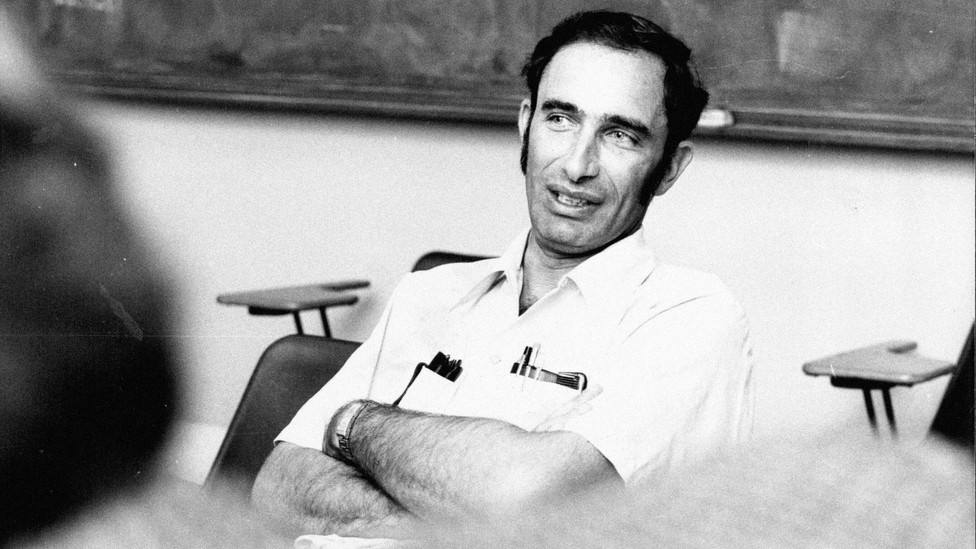
The Atlantic, Jacob Anbinder, 19 Mar 2026: What Paul Ehrlich’s Fear of Scarcity Did to American Politics, subtitled “Ehrlich’s lurid predictions of imminent planetary doom captivated the public, but they did not come true.”
When the Stanford biologist and science writer Paul Ehrlich died last week at 93, the obituaries that followed were a fascinating exercise in editorial balance. As usual, most hesitated to speak too critically of the recently deceased. But they needed to point out why Ehrlich was famous in the first place: the many bold claims in The Population Bomb, his 1968 best-selling book about the impending crisis of overpopulation. Ehrlich’s lurid predictions of imminent planetary doom captivated the public, but they did not come true. Today the world’s population is leveling off. If anything, Americans might be having too few kids rather than too many. Yet even though overpopulation is an issue as dated as Dacron pants or disco, Ehrlich helped give an imprimatur of scholarly authority to a new kind of politics—a politics of scarcity—that has proved enduring in American life.
In The Population Bomb and subsequent writings, Ehrlich popularized a fundamental concept of environmental science: Natural systems have natural limits that could reveal themselves in catastrophic ways as their “carrying capacities” are approached. Crucially, Ehrlich also believed that the United States and the planet itself were in grave danger of reaching those limits soon if steps were not taken to curb population growth.
My take: Ehrlich was wrong in the same way that Malthus was wrong: both failed to anticipate advances in technology (i.e. food production) and social forces which stemmed the expansion of the population — social forces also driven by science and technology, namely the improvements in health that led to families having fewer children.
What Ehrlich should be credited for, still, is bringing these topics to public attention. A large part of modern environmental consciousness was inspired by him, perhaps, and its relevance is not going away any time soon.
\
Jerry Coyne, 18 Mar 2026: Wednesday: Hili dialogue (scroll down)
He quotes NYT and LAT, and has just this comment:
Ehrlich was a good scientist (he studied butterflies) who became The Chicken Little of Biology, and perhaps in love with his fame. His predictions of overpopulations and famine were not met, but perhaps for reasons he couldn’t predict.
The LAT piece is by the notorious conservative Jonah Goldberg. It can also be said that the reason Ehrlich was always controversial, and why conservatives like Goldberg now take glee in claiming he was wrong about everything, is that his warnings implicated big business and its obsession with making money over every other concern. An obsession, and a denial of existential risks, which continues to this day.
\\\
Another cri de coeur …

John Pavlovitz, today: MAGAs Are Destroying America For Spite
How can anyone still support him?
Tens of millions of us still find ourselves asking this question, watching a staggering number of Americans somehow remain unflinching in their devotion to this President. Despite high crimes, sexual assaults, cognitive decline, reckless wars, and an authoritarian agenda, they remain seemingly giddy over his existence.
But Trump’s supporters aren’t necessarily pleased with the actual policies, tactics, or methods, but with the results: pissing off the people they don’t like.
Really? Some of them, I’m sure.
That is all that matters to them.
It’s the reason they vote the way they do.
It’s the reason their support is steadfast through pedophilia accusations and acts of treason and human rights disasters and wanton ignorance.
It’s the reason they remain emotionally infatuated with him despite his breaking every campaign promise.Trump supporters have always seen his ascendancy as a big “F— You” to his predecessor, to the identity politics that they feel has targeted them, and to an ever-diversifying nation that they see as a threat. More than affordable healthcare, unpolluted food, and economic opportunity, they want someone to stick it to the world on their behalf, and in their rage-addled state, they somehow believe he does that.
It’s a nationwide mental health crisis that seems both beyond repair and belief.
This is part of it, but I think there’s more, and I admit I’m basing my suspicion somewhat on the videos Facebook shows me of interviews with people in MAGA hats screaming about how crazy the Democrats are. Many of the MAGA folk believe that, based on the same selective and biased reporting that drives the news, even the relatively responsible news. This is another factor in how so many people think the world is worse now than it ever was. They think Democrats are obsessed with transgenders and trans athletes — even though in the whole nation there are only something like 10 such athletes. Republicans are obsessed with voter fraud, even though in the whole nation there have been only 70 or 80 instances of improper voting out of 10s and 10s of millions of votes cast. And the earlier classic examples: they’re terrified that Democrats are going to “take away their guns” even though that’s never been proposed (only restrictions on future sales of assault rifles). They’re worried about socialism and communism, even though none of them seem to have any idea of what those terms mean. And so on.
\\\
Briefly noted.
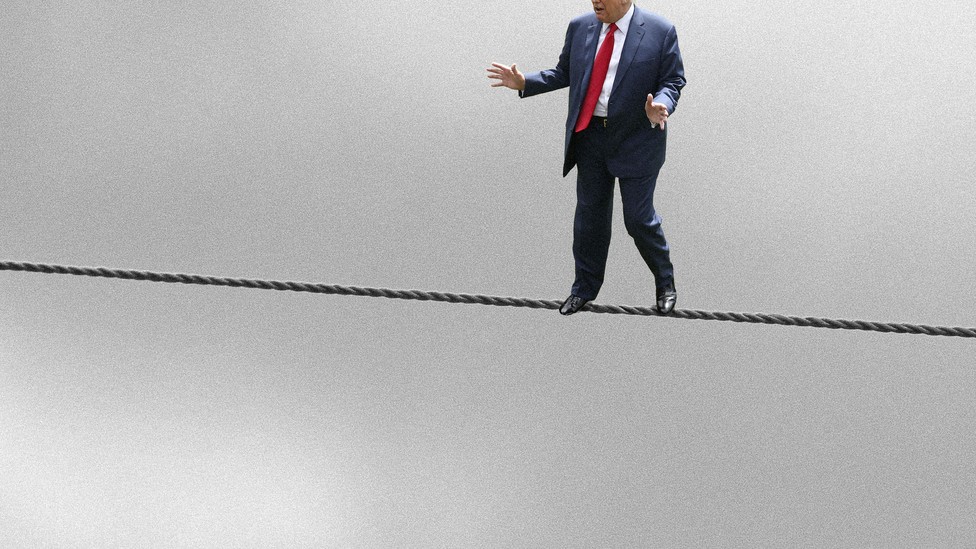
The Atlantic, Tom Nichols: Trump Had No Plan B for Iran, subtitled “And it shows.”
So it goes. It’s not getting any better.
\

Boing Boing, Jason Weisberger, 19 Mar 2026: Dept. of Education quietly yanks Charlie Kirk banner after people notice it exists
Unanswered question: what was it doing there in the first place?
For a brief and disgusting moment, the U.S. Department of Education decided that noted bigot, misogynist, and poor debater Charlie Kirk belonged on a banner alongside Martin Luther King Jr. and Booker T. Washington as part of a 250th anniversary display celebrating “heroes in American education.”
Then, just as quietly, the banner disappeared.
\\\
Working my way through my CD collection, I’ve come to the great Rufus Wainwright, and this song. From his album WANT ONE, here in a live version.