- Looking Up: Fareed Zakaria on human intelligence and artificial intelligence;
- Kevin Kelly thinks his 1994 book Out of Control is still mostly right; perhaps technology reached a kind of plateau 30 years ago;
- Ranked voting works, and people like it;
- Looking Down: Pete Hegseth and the immorality and incoherency of Christian nationalism;
- How Robert Jeffress supports Trump because he wants to be mean to non-Christians.
— Looking Up —

Washington Post, Fareed Zakaria, 7 Jun 2026: Human intelligence will win out over artificial intelligence, subtitled “The more machines can do, the clearer it becomes what only human beings can provide.”
Let me start by giving you a trigger warning. I’ve noticed in this commencement season, some graduation speeches have provoked a few boos from students. So, I should probably warn you that I am about to utter the two most provocative letters in the English language today: AI. Artificial intelligence.
But in fact, I don’t really want to talk to you about AI. I want to talk about HI: Human Intelligence.
Every generation has confronted transformative technologies that seemed destined to overwhelm humanity: the printing press, the steam engine, electricity, the internet. Each inspired wonder and panic in equal measure. And now comes the mother of them all: AI — able to write essays, compose music, diagnose diseases, do high-level math, generate videos, pass professional exams and converse with alarming fluency.
People naturally ask: “What will be left for human beings to do?” But perhaps that is the wrong question.
The better question is: “What does AI tell us about all the things that we humans already do, and do distinctively and irreplaceably?” The answer, I think, is profoundly hopeful.
Most of the fundamental questions that people ask, like “what is the meaning of life?”, are the wrong questions, I’ve concluded. They are category errors. They presume that the protocols of human existence apply everywhere and every place. I’m developing this theme.
Zakaria compares the human brain to those huge data centers.
A toddler can recognize a face instantly in poor lighting, understand tone and emotion, navigate a crowded room, learn language socially, infer intentions and grasp context — all effortlessly. Human beings can understand irony, ambiguity, affection, embarrassment, love, shame, humor and longing. We can read a room. We can sense tension in silence. We can detect insincerity in a smile.
And it took hundreds of thousands of years, maybe millions, for the human mind to evolve into such a skill-set.
A machine can write a sad poem, but it cannot weep at a funeral. It can generate a love letter, but it cannot fall in love. It can describe fear, but it cannot lie awake at 3 a.m. worrying about whether it has wasted its life. And this matters because the most important dimensions of being human are the experiences that we live.
The more powerful AI becomes, the more we may rediscover how much we value the distinctly human.
OK. All good points. But humans have a notoriously bad record of predicting the effects of new discoveries.
(And I still haven’t read the Ted Chiang piece from a week ago.)
\\
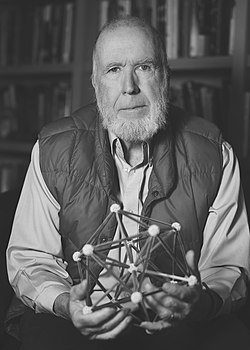
Kevin Kelly (not my brother) is a conservationist and futurist, founding editor of Wired and publisher of Whole Earth Review beginning in 1985.
Here he is, via Boing Boing yesterday, reflecting on his first book from 1994, on his Substack.
Kevin Kelly, 8 Jun 2026: Still Out of Control
I published Out of Control 32 years ago (1994). I started writing it in 1989, which is a long time in the past for a book that promises to talk about the future. A lot in our world has changed in that time, including our attitudes about the future. Far too much has happened in the world of technology to be summed up in this note. But it is fair to wonder: how well has my book held up for the past 32 years? Is Out of Control still valid? Is it worth reading today? And what might I have written differently given what I know today? What, if anything, would I change?
His biggest regret is the negative vibe of the title.
Beyond some typos in the text there is nothing I feel the need to retract or correct. The principles I labored so hard to describe and explain are still valid and still useful. In fact, I think they are more useful now than ever before.
What surprises him is that his book is not more out of date. My take: the understanding of emergence and complexity that were realized in the 1990s have become standard issue science, and have plateaued in recent decades. They explain how technology develops, and explain how evolution works, without a need for some divine interventionist.
And I have that book, in a crisp first edition. I will go through it.
\\
This is a positive too. I alluded to this recently.
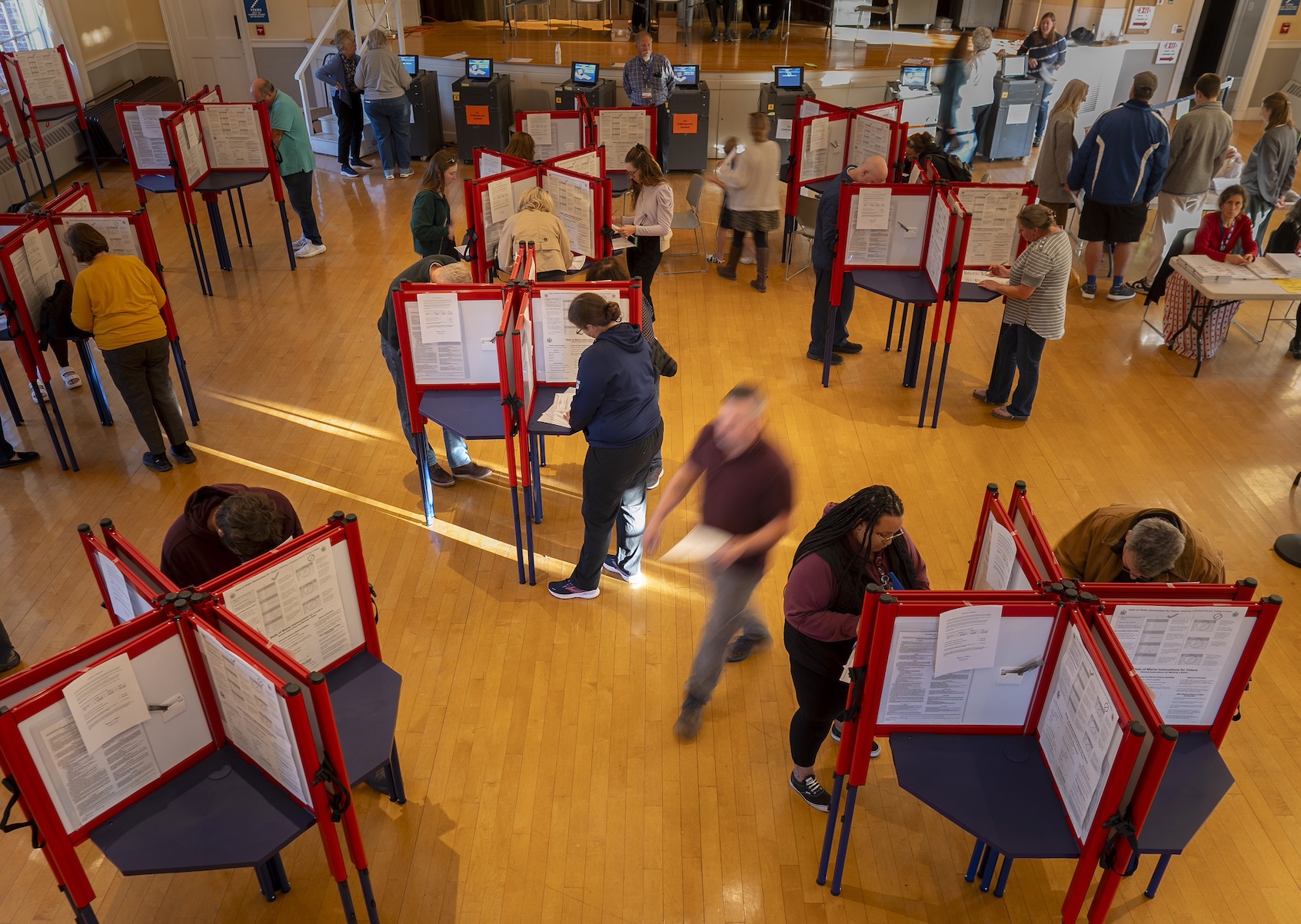
Salon, David Daley, yesterday: Ranked choice voting is working in Maine. It can work everywhere else too, subtitled “Maine voters offer real hope for democracy — and it’s got nothing to do with Graham Platner”
A decade ago, ranked choice voting was one of the most fiercely contested reforms in the colorful history of Maine politics. Now, as voters head to the polls on primary day in the Pine Tree State, RCV has become so accepted that candidates from both parties are openly encouraging voters to rank their rivals.
At a moment when many Americans struggle to imagine how our democracy can improve, Maine’s Democratic and Republican primaries offer a reminder that structural reform not only works, but can become a better form of politics as usual.
\\\\\\
— Looking Down —
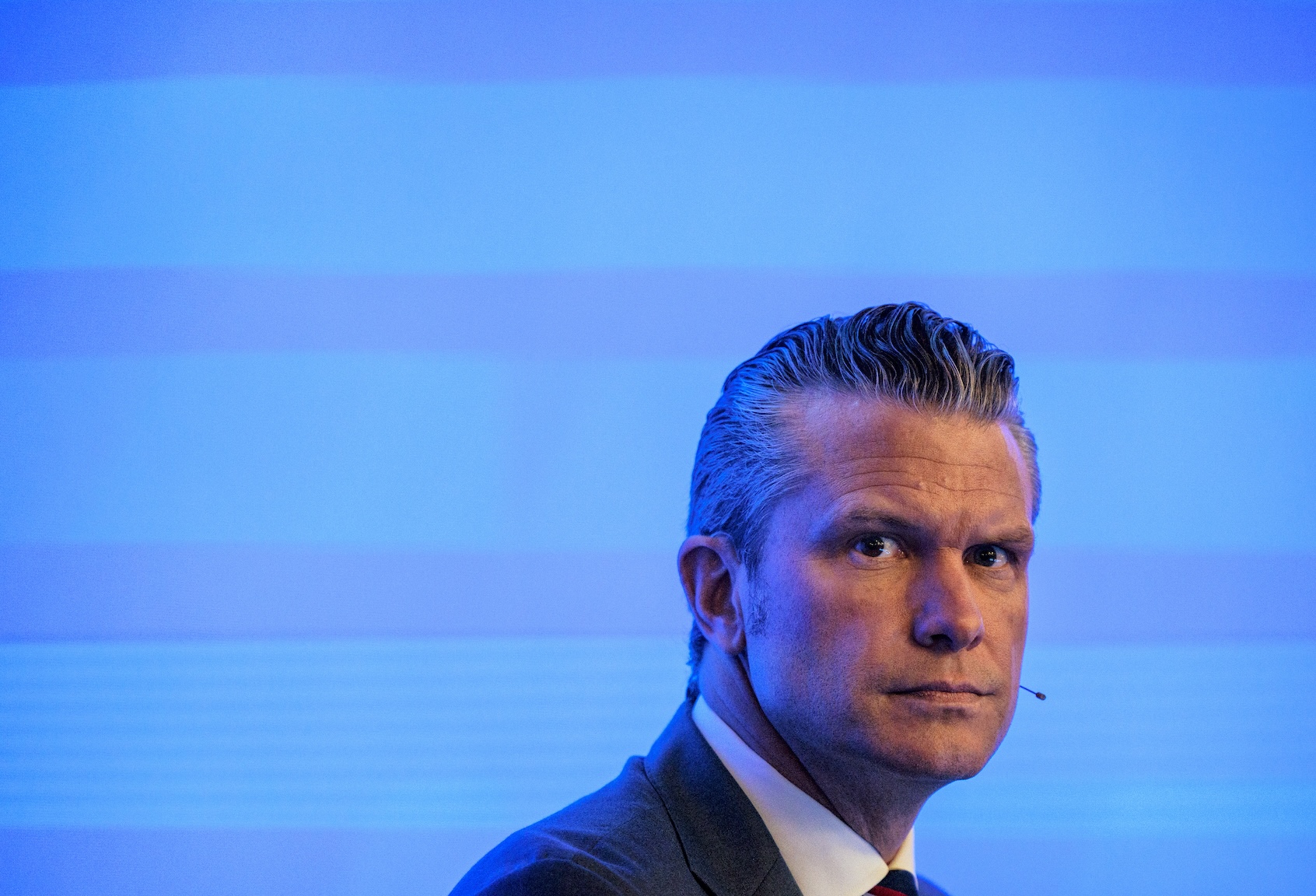
- Salon, Amanda Marcotte, today: Pete Hegseth’s Mormon diss explodes a MAGA myth
- Subtitled “Christian nationalism isn’t just immoral — it’s incoherent”
- This is about the kerfuffle over Hegseth’s list of recognized religions, reduced to 31, and the response from Mormons, who if their official name “Church of Latter Day Saints” wasn’t so long might have been prefixed by “Christian” on that list. Or maybe not.
-
Anyone who looked at the new list, however, could see that Hegseth’s unsubtle goal was signaling the superiority of Christians to everyone else. The new list gives Christians 21 subcategories to choose from, but Jews, Muslims and other major religious groups only get one option, ignoring the diversity within those faiths. Atheists, humanists, Wiccans, pagans and other belief systems that the Christian right believes are demonic, were erased entirely.
But, as religious freedom activists point out, once the purge starts, the circle of who is considered an insider tends to shrink. If this is going to be a Christian nation, eventually the leaders will have to decide which flavor of Christianity it will follow. It can’t be all of them, because there’s some pretty serious theological differences that invariably bleed into politics.”
\

- The Atlantic, Peter Wehner, today: American Christians Face a Choice
- Subtitled “The faithful can still repair the wreckage they have wrought.”
- About things Robert Jeffress has said. He *wants* to be mean to non-Christians.
-
By his own account, one reason for his loyalty is that Trump embodies an ethic—cruel, vengeful, and mendacious—that Jeffress and many millions of evangelicals and fundamentalists not only tolerate but welcome.
More of these items tomorrow. Or maybe not. I should focus on the positive.