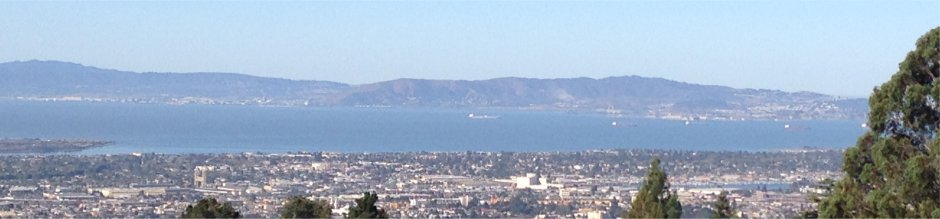
- Rand Paul and Tulsi Gabbard, still out to discredit Dr. Fauci, only reveal their scientific illiteracy;
- The difference between science and science’s pretenders, pseudoscience and science denial;
- A crude but apt characterization of Christian theology;
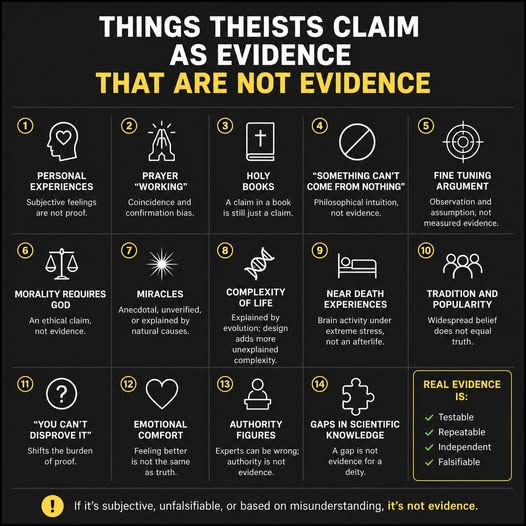
- Things theists claim as evidence that are not evidence;
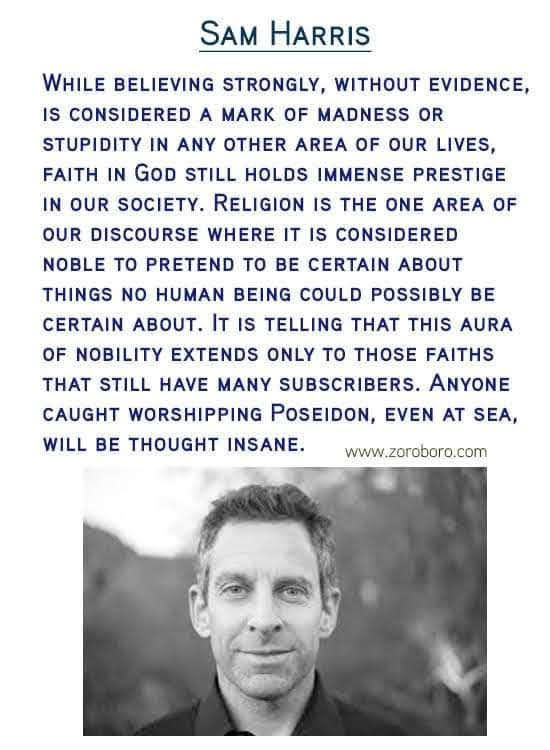
- Sam Harris on the credence given religion (but only modern ones) that would be given to any other discourse;
- Two examples of science illiteracy: sunny today, so the moon will be brighter tonight; confusion about whether 1 times 1 equals 1.
Some of these are a bit abstruse, but I’ll try not to belabor them.
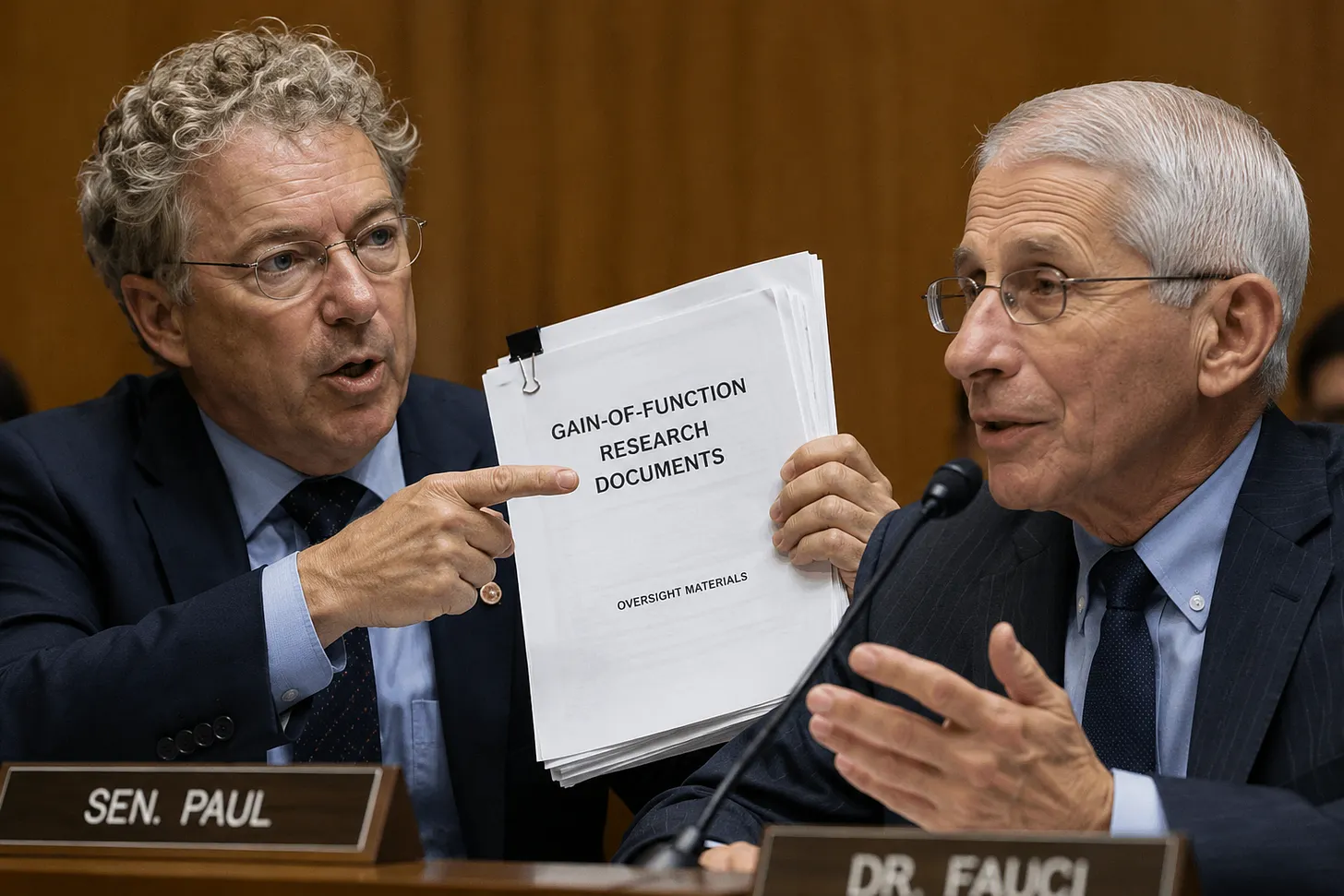
Unfiltered M.D., Dr. Terry Simpson, 26 Jun 2026: Making Sense of the Madness: Why Scientific Literacy Matters More Than Ever
Over the past week, Senator Rand Paul has again held up stacks of documents that he says explain the origins of COVID-19 and raise new questions about Anthony Fauci. Tulsi Gabbard has released a four-page presentation describing U.S.-funded laboratories around the world, and social media has been flooded with declarations that “the evidence is finally out.”
So Dr. Simpson read the documents. Gist:
The real issue is that many people don’t have the scientific background to understand what they’re reading. That’s not a criticism. Reading a grant proposal isn’t like reading a newspaper article, and interpreting a molecular biology paper isn’t the same as listening to testimony before Congress. Scientific documents require context, and without that context, it is remarkably easy to mistake routine laboratory science for something sinister.
Then in some detail, he talks about smallpox, what scientists mean by gain-of-function, and how the documents did not say what Rand Paul and Tulsi Gabbard claimed they said.
A key comment:
One habit medicine teaches you is to decide in advance what evidence would change your mind. If you don’t answer that question before reading controversial material, confirmation bias can fill in the gaps.
And scientists in general, I would say. And of course, Rand Paul and Tulsi Gabbard obviously seem motivated to discredit Dr. Fauci.
\\\
This is obvious, Science 101 stuff, or Philosophy 101 stuff, and yet so many people do not understand this, or refuse to understand it. Like Paul and Gabbard.
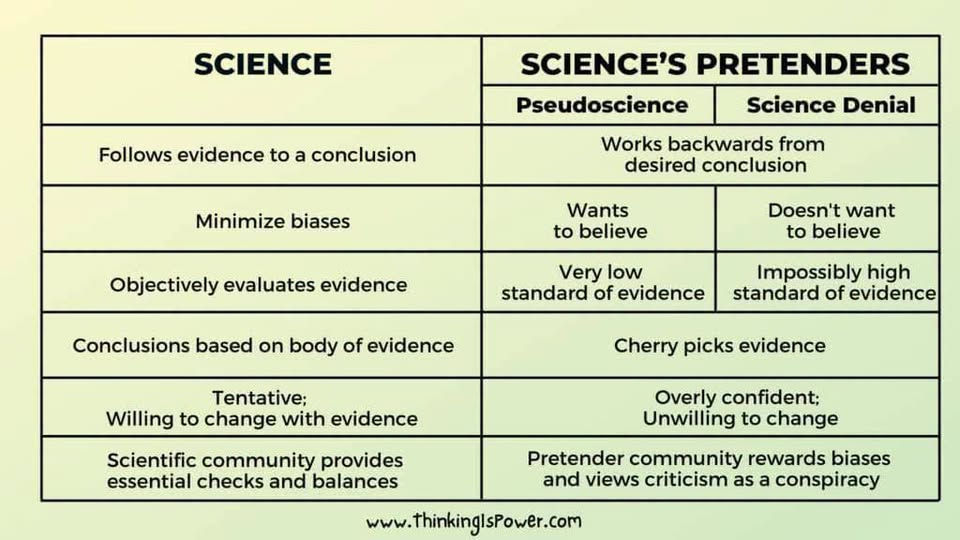
Thinking Is Power, Melanie Trecek-King (apparently), no date: Science and Its Pretenders: Pseudoscience and Science Denial
The human brain is a fascinating thing. It’s capable of great things, from composing symphonies to sending people to the moon. Its ability to learn and solve problems is truly awe-inspiring.
But the brain is also capable of Olympic-level self-deception. When it wants something to be true, it masterfully searches for evidence to justify the belief. And when it doesn’t want to believe, its ability to deny or discount evidence is (unfortunately) unsurpassed.
With other interesting charts further down.
\\\
Another graphic about the gap between science and faith. Again, Reality 101 stuff, very basic.
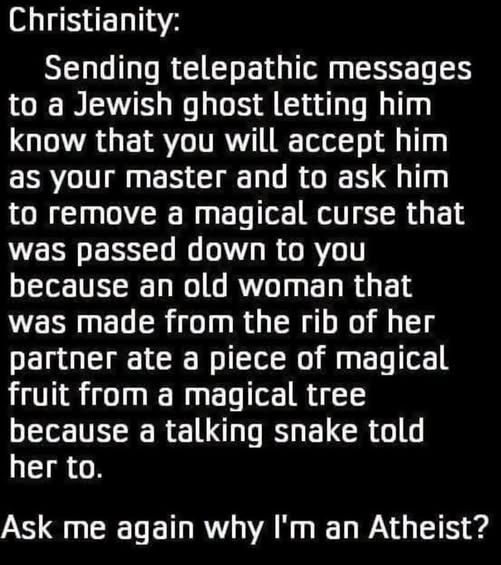
Facebook, Atheists Community, 19 Jun 2026.
\\\
It’s so easy to parody the basics of religious faith. Does that make religious truth untrue? Or does it reveal something about human nature?
\\\
And along these same lines.
\\\
I’ve thought to compile examples of intuitive thinking by adults, gone lunatic. These are similar to the ways infants and small children interpret the world in ways that become intuitive, because they work in the tiny world they live in. As they grow up, they learn those intuitions don’t always work. Some people who become educated in science — in the collective understanding of thousands of years of human history — come to understand why those intuitions are untrue. Many people, even uneducated, simply through experience, come to understand how the world is more complex and subtle than what children think. But others don’t.
Here are a couple.
Comic Sands, 14 Jul 2026, via George Takei on Facebook, 31 May 2026
“She said, ‘The moon is going to be really bright tonight.'”
“I asked what she meant, and she said since it’s so sunny, the moon is absorbing all the light and will illuminate brighter when it’s dark…”
No.
\
How Flat Earthers, when challenged, don’t understand what it means to ask whether 1 times 1 equals 1. Listen to it; he quotes people responding who apparently don’t even understand basic arithmetic.
\\