Apophenia, Religious Apologists, No True Scotsman

I maintain a Word document where I compile links and quotes from online articles I intend to comment on in this blog, and as I post each one, I gray out the text of that section of the Word doc. Here are a couple from September that I don’t seem to have yet posted.

Slate: It’s All Connected: What links creativity, conspiracy theories, and delusions? A phenomenon called apophenia.

Apophenia is the human tendency to see patterns in random events. It’s the tendency to see patterns in clouds, or to see Jesus or Mary in tree stumps and tortillas, for example — to detect whatever one is already culturally attuned to, in the random patterns of nature. It has an evolutionary explanation.

This interesting Slate article sees this tendency as an element of creativity.

In statistics, a problem akin to apophenia is a Type I error, or false positive. It means believing something is real when it isn’t, based on a misleading pattern in the data. The equal and opposite misstep, a Type II error, involves attributing a true relationship to chance. Defaulting to Type I thinking may have once conferred a survival advantage: Assume every rustle in the grass is a tiger, and you’ll last a lot longer than the carefree naïf who chalks each disturbance up to the wind. So, the theory goes, human brains evolved into “belief engines” and “pattern-recognition machines,” keen to organize jumbled sensory inputs into meaningful data.

Yet apophenia can also lure us into false and damaging convictions. Take the gambler’s fallacy, which states—erroneously—that in a sequence of random events, past outcomes will affect future outcomes.

So apophenia cuts both ways—it’s a profoundly human habit of mind that can underlie adaptive behaviors and reward flights of fancy, or induce all kinds of paranoia and silliness.

And then a long post by Jerry Coyne about how religious apologists — including President Obama — discount ISIS, or the Islamic State, or whatever it’s called, as not “true Islam”. It’s a variation of the no true Scotsman fallacy. Coyne points out how there is no “true” religion…

Everyone who is religious picks and chooses their morals from scripture.  And so, too, do religious apologists pick and choose the “true” religions using identical criteria: what appeals to them as “good” ways to behave. The Qur’an, like the Bible, is full of vile moral statements supposedly emanating from God. We cherry-pick them depending on our disposition, our politics, and our upbringing.

In the end, there is no “true” religion in the factual sense, for there is no good evidence supporting their truth claims. Neither are there “true” religions in the moral sense. Every faith justifies itself and its practices by appeal to authority, revelation, and dogma. There are just some religions we like better than others because of their practical consequences. If that’s what we mean by “true,” we should just admit it. There’s no shame in that, for it’s certainly the case that societies based on some religions are more dysfunctional than others. Morality itself is neither objectively “true” nor “false,” but at bottom rests on subjective preferences: the “oughts” that come from what we see as the consequences of behaving one way versus another. By all means let us say that ISIS is a strain of Islam that is barbaric and dysfunctional, but let us not hear any nonsense that it’s a “false religion”. ISIS, like all religious movements, is based on faith; and faith, which is belief in the absence of convincing evidence, isn’t true or false, but simply irrational.

This issue has gotten much hotter in recent weeks, with controversy about Bill Maher’s comments about Islam. Is criticizing the tenents of a religion tantamount to racism against its adherents? I say no. My inclination is that *ideas*, including the ideas of Islam, or Christianity, or any other ideology, or for that matter any scientific thesis or tenant, are always open to criticism, without necessarily impugning those who, for the moment, subscribe to any one of them. We should all be constantly re-examining our ideas and beliefs, against the evidence of reality, and making corrections as we can.

Posted in Culture, Evolution, Religion | Comments Off on Apophenia, Religious Apologists, No True Scotsman

Weekend in Oakland

Back from another weekend in the Bay Area, looking at potential new homes and hanging out — dinner at The Terrace Room on Lake Merritt, in downtown Oakland, Friday evening after I flew up; a nice dinner with unexpected entertainment, Halloween costumes and a jazz band with dancers on a dancing floor.

Saturday: another round with our Peninsula realtor Denise, to see several new homes, including a lovely potential place on Winding Way (we’ve asked Denise to make an offer — though since properties on the peninsula are so competitive and typically sell with multiple bids and for over listing price, we’re not holding our breaths for a successful outcome).

That evening, a Halloween party with friends Jeff and Emily in Campbell, just outside of San Jose, with their 2-year-old boy Caiden, with whom I was happy to play with and follow around and keep out of trouble…

Sunday: an hour-long hike from the Sibley Volcanic Regional Preserve trail head off Skyline Drive, to the Huckleberry Path trail head just south. A moist, hilly, forested path, quite unlike the dryer hillside hiking trails in SoCal. Then, a visit to a couple Open Houses along Skyline Drive. And then a trip into The City, San Francisco, for the afternoon and evening: Union Square, Chinatown, the Castro area. Dinner at Catch, on Market Street. Then a drive north on Castro up to Geary, past the Japanese Pavilion, and then down to the 101 and back across the bridge to the Oakland Hills.

http://www.theterraceroom.com/go/
http://www.ebparks.org/parks/sibley.htm
http://www.catchsf.com/

Posted in Personal history, Uncategorized | Comments Off on Weekend in Oakland

SFADB bug fixed, with a hyphen

About a month ago I was updating sfadb.com and browsing around the site and happened to click on Richard Cowper’s page, http://www.sfadb.com/Richard_Cowper, and got a ‘file not found’ error message. Huh? Also for the following page in the alphabetical sequence of Names, David Cowperthwaite. Aside from those two, everything seemed fine.

At the time I rebuilt and uploaded the Cowper and Cowperthwaite pages to make sure they hadn’t been overlooked somehow, but still got the error messages. Didn’t have time to investigate further.

Tonight I updated several pages on the site with award winners announced this past month, which went pretty quickly since updating records already compiled does not involve a lot of text entry, verification of book and story titles, and so on — just tagging certain records as winners, and re-assembling and -building the affected Name and Listing pages. Updated five awards in under an hour, though that did include tracking down English language titles for finalists in the foreign novel category of the Deutsche Phantastik Preis…

And then returned to this bug. Did it affect any other pages than those two? I stepped through the entire set of Co Name pages and found no other problems. So, then what?

Well, the likely suspect was the ‘htaccess’ page that manages redirects, i.e., that converts visible URLs, like “http://www.sfadb.com/Richard_Cowper”, to the actual URLs of files on the site. When I set the site up in early 2012, I spent a lot of time figuring out how to implement simple, clean URLs, like the Cowper link, without the “.php” extension, and even though all those files are actually located with a /db subdirectory off the main sfadb.com domain. (Thus, the actual Richard Cowper page is http://www.sfadb.com/db/Richard_Cowper.php.)

This involves an ‘htaccess’ file — a text file with no extension — that instructs the server how to process requests for URLs. It consists of a series of ‘rewrite’ conditions and one key instruction, which is this:

RewriteRule (.*) /db/$1 [L]

This says anything like sfadb.com/filename, replace by sfadb.com/db/filename, and process that URL request and supply that page.

This is preceded in the htaccess file by a long list of *exceptions*, individual files names, or file name rules, that are exempt from this rewrite instruction. For example,

RewriteCond %{REQUEST_URI} !/graphics

In this case the ! means ‘no’, and the instruction means any URL request such as www.sfadb.com/graphics/filename should *not* be mapped to sfadb.com/db/graphics, per the rewrite rule. Because the graphics subdirectory is a top level subdirectory at the same level as /db.

So… was there an exception to the rewrite rule that somehow affected Richard Cowper…?

Well, yes. It was this:

RewriteCond %{REQUEST_FILENAME} !wp(.*)

Designed to exclude the rewrite rule for those WordPress-installed files in the top level directory, which all begin with ‘wp’.

I fixed the Cowper problem by changing this rule to:

RewriteCond %{REQUEST_FILENAME} !wp-(.*)

since all of the WordPress-installed files are named things like wp-activate.php, wp-config.php, and so on. They all have that hyphen.

The original rule found the ‘wp’ in ‘Cowper’ and ‘Cowperthwaite’. By adding the hyphen, it still avoids redirecting the wp- files, but not the Cowper and Cowperthwaite files. So Richard Cowper’s pages are visible again now.

I think I didn’t anticipate any problem with the original rule because… you’d think !wp(.*) would apply only to file names *beginning* with ‘wp’.

Apparently not.

It took less time to fix this problem than it’s taken me to write it up. I do so because it’s another example of my philosophy about computer science and programming: you can *always* figure out and solve any problem. And fellow geeks might be interested.

Posted in Website Issues | Comments Off on SFADB bug fixed, with a hyphen

Arthur C. Clarke: Two Religious Explorations

Arthur C. Clarke is, of course, the British SF writer (who lived much of his life in Sri Lanka) most famous for the novel and film 2001: A Space Odyssey, as well as several other of the most popular and influental SF novels of the 20th century: Childhood’s End (1953), The City and the Stars (1956), Rendezvous with Rama (1973), The Fountains of Paradise (1979). He also wrote many short stories, a couple of which are also among the most popular of all time. And both explore implications of religious ideas.

It’s my thesis in this blog that science fiction can be a useful way to examine alternatives to religious and philosophical and cultural assumptions, in ways that would never occur to people who live within those assumptions. (Most people, I think, absorb these assumptions without thinking about them; they have no reason to, and they live comfortably with others who have the same assumptions. That’s culture. And that’s why there are so many different cultures, with different implicit beliefs about the nature of the world. The people within them aren’t dumb; they just don’t get out much, intellectually.)

The two Clarke stories are “The Nine Billion Names of God”, published in 1953, and “The Star”, published in 1955.

Following are summaries of each story, with commentary. To provide spoiler alerts, I will simply set the last paragraph of summary for each story in white text. If you want to see them, just left-click your mouse and drag it over the apparently blank area, and the ‘hidden’ text will appear.

\\

“The Nine Billion Names of God”, first published in 1953, has just three scenes.

Scene One: A Dr. Wagner, in a New York City office, interviews a Tibetan lama about the purchase of an “Automatic Sequence Computer.” The lama explains they have a long-standing project to compile a list of all the possible names of God. They have devised a special alphabet for this purpose, which they have concluded needs no more than nine letters for any possible name. Generating all possible names (combinations of letters) was to have taken 15,000 years; with the computer, it will take 100 days.

Scene Two: Two technicians from the computer company, on location in Tibet to support the project, converse. One of them confides to the other that he’s discovered the purpose of this project. The monks believe that when they’ve listed all possible names of God – which they reckon amount to about nine billion – God’s purpose will have been served and “there won’t be any point in carrying on. Indeed, the very idea is something like blasphemy.” Not just the end of the world – “nothing as trivial as that”, the monks say. The technicians worry about the monks’ reaction when the project finishes and nothing does happen; will they react violently? Or like the end-of-the-world cults who, when the end of the world doesn’t happen, presume the calculations were wrong and go on with their lives?

Scene Three:
The project is about to finish and the two technicians are ducking out early, riding ponies down to the airport where they will fly home. Darkness falls, and the sky is clear — “ablaze with the familiar, friendly stars” — and they realize the computer should just about have finished its run. And then they look up, and see: “Overhead, without any fuss, the stars were going out.”

\\

God works in mysterious ways. Religious apologists are always dismissing the senseless tragedies and accidents in the world, which would seem to challenge the idea of an omniscient, benevolent God, with this phrase. If you pray and your desire comes true, you thank God; if it doesn’t come true, well, then, God works in mysterious ways.

But the corollary of this is that the mysterious ways of God might easily be something completely independent – in fact, seems to be – of human health and happiness (not some hidden scheme to make up for current tragedies with some eventual overall good, which seems to be the implicit belief of those who invoke this defense). Clarke suggests, what if God’s mysterious purpose for humanity is the seemingly trivial task of aggrandizing Himself with all his possible names? And nothing more? Anyone who invokes the mysterious ways defense for God’s apparent disregard for human well-being should be willing to accept this explanation as well as any other.

————

“The Star”, first published in 1955.

The first-person narrator is on a spaceship, now some 3000 light years from the Vatican, as he puts it. He is a Jesuit astrophysicist on board a ship full of a mostly atheistic crew, to explore the Phoenix Nebula, the remains of an exploded star, a rare supernova. The crew has treated him good-naturedly; they’ve had friendly debates. The remains of the supernova is a white dwarf star, with one surviving planet, on which they discover a Vault – a repository designed to be found, left by a civilization that knew it was about to die. A bid for immortality, a vault that will take years to fully explore. The narrator wonders for what reason this civilization was destroyed. His colleagues say the universe has no purpose or plan, it was a random event.

But then the narrator does the calculations, and figures out exactly when the light of this supernova would have reached Earth. And has the revelation that casts his faith into question:

[Spoiler]
“There can be no reasonable doubt: the ancient mystery is solved at last. Yet, oh God, there were so many stars you could have used. What was the need to give these people to the fire, that the symbol of their passing might shine above Bethlehem?”

\\

Collateral damage. The implicit premise here is that, as according to the traditional religions, Earth and mankind are truly the center of the universe, and all those millions of galaxies and billions of light years of space that we have recently perceived are incidental, at best decoration. So, if the creator God wanted to stage a lightshow for the birth of his ‘child’ [a problematic concept at best], why worry about the consequences of an entire non-human civilization cast to the fire of a supernova? Mankind is all that counts.

Any problem with that? It’s a legitimate implication of this belief.

Clarke anticipated the consequences of this conclusion, in the final paragraphs of this story.

I know the answers that my colleagues will give when they get back to Earth. They will say that the Universe has no purpose and no plan, that since a hundred suns explode every year in our Galaxy, at this very moment some race is dying in the depths of space. Whether that race has done good or evil during its lifetime will make no difference in the end: there is no divine justice, for there is no God.

Yet, of course, what we have seen proves nothing of the sort. Anyone who argues thus is being swayed by emotion, not logic. God has no need to justify His actions to man. He who built the Universe can destroy it when He chooses. It is arrogance — it is perilously near blasphemy — for us to say what He may or may not do.

This I could have accepted, hard though it is look upon whole worlds and people thrown into the furnace. But there comes a point when even the deepest faith must falter, and now, as I look at the calculations lying before me, I know I have reached that point at last.

It’s worth noting a comment by J.B.S. Haldane, whom Clarke quotes in the introduction to “The Nine Billion Names of God”, in his short story collection of the same title:

You are one of the very few living persons who has written anything original about God. You have in fact written several mutually incompatible things. If you had stuck to one theological hypothesis you might have been a serious public danger.

Ha.

Posted in Arthur C. Clarke, Atheism, Religion | Comments Off on Arthur C. Clarke: Two Religious Explorations

Heroic Individuals and Magical Thinking

Two interesting article from today’s Science section of The New York Times.

From science writer Dennis Overbye: The Leaky Science of Hollywood. The subject is the upcoming film The Theory of Everything, a biopic of Stephen Hawking, which is getting good advance buzz for its performance by Eddie Redmayne [whom I admired in the film version of Les Miserables, a couple years ago, in my Facebook review of the film]. It opens November 7th. Overbye remarks:

Instead of showing how he undermined traditional notions of space and time, it panders to religious sensibilities about what his work does or does not say about the existence of God, which in fact is very little.

And more to his point:

…And in telling the story this way, the producers have cheated themselves out of what was arguably the most dramatic moment in his scientific career. …

None of this, alas, is in the movie. That is more than bad history. The equations on the blackboard appear to be authentic — the movies are always great at getting the design details right — but as usual it misses the big picture, the zigzaggy path of collaboration, competition and even combat by which science actually progresses. By leaving out people like Dr. Bekenstein and Dr. Starobinsky, the movie reinforces the stereotype of the lone genius already ingrained by the media and the Nobel Prizes.

There is a tendency in Hollywood movies, and in certain types of literary science fiction and fantasy (especially, I daresay, YA fiction), to over-simplify real life and attribute dramatic changes to single heroic individuals. In fact, scientific discovery, especially in the past century or so, is almost never the result of a single individual’s insight and work. It is the result of dozens or hundreds of collaborators, often across many countries but all within the collaborative scientific community, all working to generate experimental results that prove or disprove some thesis — a thesis that might be the idea of a single person, but an idea that that one person could never substantiate on his or her own.

\\

Next, an essay on magical thinking by C. Nathan DeWall: Magic May Lurk Inside Us All.

This is yet another essay about the human mind’s tendency toward magical thinking — with an example about throwing darts at pictures of babies. An overly familiar subject in recent years, perhaps, though one that bears repeating, since it seems not to have filtered down to the general population — or maybe it has, given evidence of the rise in recent polls of the non-religiously affiliated “nones” (e.g. see this post by Jerry Coyne).

We may have evolved to be this way — and that is not always a bad thing. We enter the world with innate knowledge that helped our evolutionary ancestors survive and reproduce. Babies know mother from stranger, scalding heat from soothing warmth. When we grow up, our minds cling to that knowledge and, without our awareness, use it to try to make sense of the world.

Again and again. One of themes of this blog is to explore the ways these biases affect our thinking, and by being *aware of them*, try to perceive a more fundamental truth, a greater reality.

We can’t overcome magical thinking. It is part of our evolved psychology. Our minds may fool us into thinking we are immune to magical thoughts. But we are only fooling ourselves. That’s the neatest trick of all.

Posted in Culture, MInd, Psychology, Religion, Thinking | Comments Off on Heroic Individuals and Magical Thinking

Journey to the Beginning of Time

I got two responses to my query late last week on Facebook about a film I’d seen in the mid-1960s and only vaguely remembered, a film about boys in a rowboat going back in time — responses from Alan P and Gary W. The answer is “Journey to the Beginning of Time”, and it’s rather a more significant film than I’d thought (considering how in my earlier Google searches for this, 5 and 10 years ago, I’d not found a trace). It was originally a 1955 Czech film, noted for its depiction of ancient animal species — it did not, as I’d thought, repurpose old Ray Harryhausen stop-motion animation — and was later adapted and partly refilmed to the US version that I saw in 1966.

And as Gary Westfahl remarked (“The Internet is amazing”) the full move is right here on YouTube. (With very weird opening title graphics.)

http://www.youtube.com/watch?v=O8FIhq4VGi8

What I found remarkable watching it again this morning is how academic it is. The opening scenes (in the refilmed US version) take place in New York’s American Museum of Natural History, with the four boys viewing skeletons of ancient dinosaurs, and graphic diagrams of family trees of life across the history of Earth, in which the narrator goes into great detail (as he takes notes in his diary) about various types of dinosaurs. (Note that these scenes, filmed for the US version, don’t show the boys’ faces, only their backs, since the US filmed scenes needed to match the earlier Czech scenes, and presumably used different actors.)

For its time, this is a pretty sophisticated depiction of our understanding of the evolution of life on Earth. (They knew then that lizards descended from dinosaurs, though the realization that *birds* descended from dinosaurs came a decade or two after this film was made — though this film has even a suggestion of that.) Key insight: “And the farther you go back in time, the simpler life becomes.”

For the most part, watching this film again this morning confirmed my remembrance. The boys are on a rowboat, go through a cave in the lake in New York’s Central Park, and when they come out into an ice-crusted lake, they realize they are somewhere else — they realize that somehow they are traveling back in time. (As they proceed, they somehow have supplies for camping that one wouldn’t have thought they’d have had just renting a rowboat in Central Park… but never mind.) The narrative travels back through the broad periods of Earthly history — early mammals, dinosaurs, primitive worms… all the way back to barren rocks, and the edge of a sea they realize is the primal sea, where life first began. We see scenes of volcanic rock with biblical narrative about the “beginning”… and then — ****spoiler alert**** — they wake up back in the American Museum of Natural History. They fell asleep, under the hypnotic spell of a wooden statue of an American Indian shaman in the museum, whose icon they saw on the cave entrance in their ‘dream’…

But then there is a big reveal, of the sort that must have some essential term in (I would guess, without looking it up, in Clute and Grant’s ENCYCLOPEDIA OF FANTASY) — which is to say, the boys wake up in the museum, but on the bench next to them is the water-damaged diary that the narrator wrote on their supposedly dream-journey. So: did it really happen, or was it a dream?? The films ends. How many Twilight Zone episodes can you remember that had the same analogous ending…?

Wikipedia

The American Museum of Natural History

Posted in Evolution, Films, Personal history | Comments Off on Journey to the Beginning of Time

Right Wing paranoia; Conservative propoganda; coming out Smart like coming out Gay

Interesting links the past few days, with comments.

5 Years After Passage Of Hate Crimes Law, Religious Right’s Dire Predictions Still Haven’t Come True

Well, of course not. This is just another example of the Christian Right’s paranoia, and an example of the Jack Smith Rule — psychics’ predictions, and religious fundamentalists’ predictions of the end of the world, the downfall of Western civilization, and so on, not to mention the imminent Second Coming of Christ, keep not coming true again and again.

\\

Better, this week, is this essay on Alternet, and Salon, by Amanda Marcotte: Why Conservatives Opt for Propaganda Over Reality

This in response to a Pew Research study about how relative liberals get their news from NY Times, CNN, NPR, and other sources, while relative conservatives overwhelmingly prefer Faux, er, Fox News. Key quote:

Conservatives are becoming more conservative because of propaganda, whereas liberals are becoming more liberal while staying very much checked into reality.

The article has much detail.

File this under Reality has a liberal bias.

\\

And here is a cute, well-acted video: What if you had to come out SMART the way you come out GAY?

It covers all the cliches that alarmed parents ask their gay kids who come out to them. And it’s not an inappropriate comparison; there are in fact ways in which smart kids have had to hide their status for fear of repercussions, and social disapproval. I’ve been there. Though actually, I had it relatively easy, compared to the many stories.

Posted in Culture, Religion, The Gays | Comments Off on Right Wing paranoia; Conservative propoganda; coming out Smart like coming out Gay

Skiffy Flix: Assignment Outer Space

There was a period in the mid to late 1990s when I watched a whole bunch of 1950s and ’60s science fiction films, via a video store around the corner from my house then, back in the days when there were video stores. A couple of these films I’d seen growing up, notably Invaders from Mars, at a neighbor’s house at around 6th or 7th grade, and The Time Machine (which oddly was shown in 20-minute segments during lunch breaks at the junior high school I attended in 7th grade — Sequoia Junior High in Reseda CA).

But most of these older films, even relative classics like Invasions of the Body Snatchers, Forbidden Planet, and The War of the Worlds (not to mention Frankenstein and Dracula), I didn’t see until years later, in adulthood, when I sought them out. My attitude about science fiction movies, which I implicitly deride as ‘skiffy flix’, is that they are far inferior to the best of science fiction literature, in virtually every case. The lone exception, unto this day, is Stanley Kubrick’s 2001: A Space Odyssey, though even that requires Arthur C. Clarke’s novel to fully explicate and appreciate, lest its final scenes be dismissed as some sort of ’60s drug trip…which is not at all the intent.

Tonight I watched another of these primitive early ’60s skiffy flix, based on a comment by Gary Westfahl in one of his reviews — the film is Assignment Outer Space, from 1960 — which Gary suggested was a precursor to 2001.

It’s excruciatingly primitive in terms of production values. It betrays a typical misunderstanding of the size and scope of the universe — mentioning initially that a spaceship’s destination is a galaxy, M82 (IIRC), but the subsequent plot concerns a space station within the solar system and trips between Mars, Venus, and Earth. The plot concerns an Earth journalist who is assigned to a ship which, eventually, has to seek out another ship, named Alpha Two, which threatens to wipe out life on Earth. One in a million chance of success. Of course, they succeed. The renegade ship is controlled by an electronic computer, which our journalist hero has to disable; thus the allusion to 2001 (a comment on the IMDB page for this movie, linked above, defends this film’s influence on 2001).

The film does have its moments. There are several interesting, and for its time rather plausible, spaceship designs. (OTOH when they show spouts of flame emitting from the bottom ends of spaceships, why do they always seem to be blowing to the side..??!) The enactment of zero gravity in the one ship is, I daresay, rather better than what Kubrick bothered to do in 2001 — think of the scenes with Bowman and Poole on the pod deck. The film’s version of Mars is grotesque; sharp mountains and boiling lava spouts. Yet there is a decently mature love interest, with a female crewman who is loved by the captain, but who falls in love with the journalist… a situation which plays out in the plot development.

The theme of the renegade electronic computer turns out to be almost incidental — nothing like the mind games with HAL in 2001. All our hero has to do is cut the cables.

What amazes me on watching this film, which I realize had a very low budget, is how far production values advanced in just the next few years in the 1960s. Consider the TV series Lost in Space, 1965, with production values far advanced from this film; consider the early seasons of Star Trek, beginning 1966; and again, consider the pinnacle of SF film to this day, 2001, released in 1968.

Assignment Outer Space

Posted in Arthur C. Clarke, Films, science fiction | Comments Off on Skiffy Flix: Assignment Outer Space

The Most Beautiful Unknown Music

Listening again tonight to The Most Beautiful Music in the World, by Zbigniew Preisner, as I blogged about three years ago.

Yes yes, there are passages by Mahler and Debussy and Tchaikovsky that are as beautiful as any music ever written. But I think this music by Preisner is just as beautiful, and I blog about it since it’s relatively unknown. In fact, after a productive decade of beautiful film scores in the ’90s, Preisner seems to have gone quiet, with nothing new from him in recent years.

Update 23Oct14: I did a post about a similarly relatively unknown film score last night on Facebook; here is that post:

And here is one of my favorite film scores — by Wojciech Kilar, for the 1996 film The Portrait of a Lady. As always with film scores, for me it’s not about the film or the novel by Henry James or the film’s star Nicole Kidman; it’s about the music unto itself. In this case, a fascinating blend of the romantic and the minimalist, with some interludes by Schubert.

The reason I’ve been listening to this in the past couple days is that I have this strong affinity for music and the places I’ve been when listening to certain pieces of music. There is an REM album [the one with “Walk Unafraid”…] that I will forever associate with driving along a stretch of route 101 along the coast north (actually west, before it turns north) of Santa Barbara, on one of my trips to the Bay Area. A Richard Einhorn album I associate with a road trip across the Mojave desert.

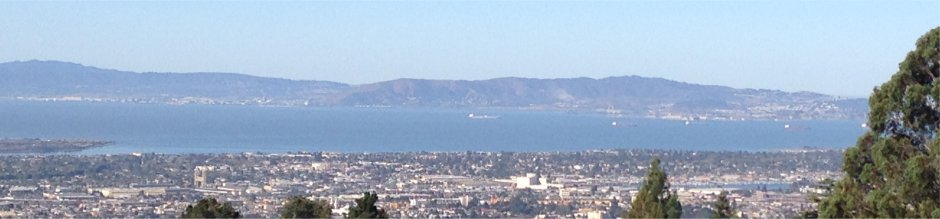
And this soundtrack album by Kilar, which I listened to as I left Charles Brown’s house, now the Locus house, some years ago, probably in the late 1990s, on a lovely sunny morning. As you drive down Colton Blvd from his house down to Montclair Village and the 13 freeway, there are one or two spots on the road where you glimpse a fantastic view of the San Francisco Bay with the Bay Bridge and the city of San Francisco in the distance…. So as I left the Locus House this past Monday morning, I listened to this again.


www.imdb.com/title/tt0117364/

Posted in Music | Comments Off on The Most Beautiful Unknown Music

Savage Garden / Darren Hayes

Guilty Pleasure: the Australian group Savage Garden and its lead singer Darren Hayes, who’s gone on to a solo career.

Here is one of Savage Garden’s best songs: https://www.youtube.com/watch?v=dtQ7n_wG_pE.

Cool breeze and autumn leaves
Slow motion daylight
A lone pair of watchful eyes
Oversee the living

Feel the presence all around
A tortured soul
A wound unhealing
No regrets or promises
The past is gone

But you can still be free ….

(lyrics)

Though there are many others; their popular earlier songs were “I Want You”, “To the Moon and Back”, and “Truly Madly Deeply” — and my favorite by far of their earlier songs, This Side of Me

I want to move in time with you
I want to breathe in rhyme with you…

For this one time, one time, let my body do what it feels
For just this one time, one time, let this fantasy become real

(There is a certain irony, if not duplicity, in the song, especially the video, since when they were released Darren Hayes had not yet come out as a gay man.)

As with many other groups and singers, e.g. REM and Bruce Springsteen, and as opposed to general popular opinion, I actually like Darren’s later albums better than the earlier albums. I like REM’s later albums better than the earlier ones; I like Bruce’s albums, roughly from Nebraska onward, better than his earlier ones. For Darren Hayes, I prefer his albums The Tension and the Spark, This Delicate Thing We’ve Made, and Secret Codes and Battleships, over any of the earlier pop-catchy Savage Garden albums.

Though this particular Savage Garden album, Affirmation, displays a pattern I’ve noticed in more than one REM album: the last three songs on the album are the best; they raise the bar for the entire album, even if the songs are the least catchy. (Think REM’s Automatic for the People: “Man on the Moon”, “Nightswimming”, “Find the River”.)

On Savage Garden’s Affirmation, it’s the song linked above, and then Gunning Down Romance

Love and other moments are just chemical reactions in your brain, in your brain

And feelings of aggression are the absence of the love drug in your veins, in your veins…

–and then I Don’t Know You Anymore

I would like to visit you for a while
Get away and out of this city
Maybe I shouldn’t have called but someone had to be the first to break
We can go sit on your back porch
Relax
Talk about anything
It don’t matter
I’ll be courageous if you can pretend that you’ve forgiven me

A gentle, cautious, loving song about trying to make up after a break up…

Posted in Music | Comments Off on Savage Garden / Darren Hayes