Thoughts of a Thursday Afternoon: After the Apocalypse

Every human being starts from scratch: he or she comes equipped with a mind honed by evolution for survival, prone to superstitious, self-interested thinking for the same reason, but ill-equipped to accurately perceive reality, the reality that can be deduced by observation and logic.

Here is a general conclusion I would make based on all the recent evidence I’ve seen from psychology and religious practice…

Suppose a big reset button was hit on the human race. This could be the standard nuclear war in science fiction stories (Walter Miller, Pat Frank, that Twilight Zone episode), in which a few survive but without the technology and accumulated knowledge of past generations.

The same could apply to a group of people shipwrecked on a remote island, without any resources.

Humanity would eventually build a new civilization. This civilization would create lots of new religions — but none of them exactly like any of the religions we know today (any more than their languages would be exactly like those we know today), though similar to those we know, and to each other in the usual broad parameters. (Still, each religion would no doubt insist it’s the one true faith, unlike all the others.) These broad parameters, of course, are driven by the cognitive biases of the human mind, and the tribalistic nature of small human societies, and not by anything ‘true’ in religious claims — because the details of the factual claims of religions are generally easily dismissed, for complete lack of evidence, or disproven in the case of those claims about the nature of the world and the universe.

Science, too, would eventually be recreated. And it would be pretty much the same, given the contingencies of historical circumstance in terms of what gets discovered where or first or by whom, as the science we know. Because science is answerable to the real world. It’s about reality.

Every child and every family is to a degree a replay of that reset-humanity button. The accumulated knowledge of humanity, alas, does not pass automatically to each new member. If parents keep a child isolated from the rest of the world, through home-schooling or by denying access to books or TV or the internet or radio or movies, they can channel the child’s mind in whatever direction they like. And give it a few years, that direction will likely stick, throughout their lives. As the Catholic Church says…”Give me a child until he is seven and I will give you the man” (And Lenin said “Give me a child for the first 5 years of his life and he will be mine forever”). Or Proverbs: “Train up a child in the way he should go and when he is old he will not depart from it.” This is because, we can now understand, there are cognitive biases in all of our minds that make it difficult to acknowledge threatening information, or challenge the standards of our tribe/community, or damage one’s ego by recognizing that you might have been wrong about something.

The way around this is science, the process which is the essence of science — if you can handle it, and think independently. If you’re interested in what really is true, and not merely content with the traditions of your tribe/community or with the illusions projected by your mind. You can’t escape those biases and illusions, which affect scientists’ minds too. But you can try to think around them, and participate in a discipline which functions to check and double-check and challenge every new claim, and correct things that are wrong.

The existence of our technological world is testament that science works. There is a noticeable lack of historical progress by religion.

Tradition may make you happier. I’m more curious about what is real, and true.
Posted in Culture, Philosophy, Religion, Space | Comments Off on Thoughts of a Thursday Afternoon: After the Apocalypse

Motivated Reasoning and Religion

Applying motivated reasoning [or confirmation bias] to religion…

http://www.salon.com/2013/09/27/why_are_so_many_christians_so_un_christian_partner/

As much as liberals would often wish it otherwise—and no matter how much conservative Christians may claim their beliefs all come from the Bible—the truth of the matter is there’s no real relationship between what a person believes and what their religion ostensibly teaches them to believe. In practical terms, the word “Christian” is an empty term that can basically mean whatever the believer wants it to mean. Christians decide what they want to believe first and then, after they’ve chosen their beliefs, search for any excuse, no matter how thin, to claim that their belief is consistent with their chosen religion.

It’s a process called rationalization or motivated reasoning, and to be perfectly fair, it’s how most people think about most things most of the time: They choose what to believe and then look for reasons to explain why they believe it. Huge reams of psychological research show this is just how the human brain works. Almost never do we look over a bunch of arguments and choose what to believe based on reasoning our position out.

While most people engage in motivated reasoning most of the time, injecting religion into a situation only makes this process worse. That’s because, unlike most other belief systems, religion is impervious to empiricism. …
With religion, however, there’s no limits about what you can claim to believe. Jesus is a mythological character: he believes whatever the person speaking for him says he believes. For one person, Jesus believes we should feed the hungry and clothe the naked. For another, Jesus didn’t really mean it when he said that stuff; he was just handing out goodies in order to recruit new believers. We weren’t there (and it probably didn’t even happen), so the sky’s the limit when making up reasons why what you believe counts as “Christian.” If you want to believe Jesus was actually a space alien brought here by Martians to teach us how to fly, you have as much right as anyone else to believe what you want. It all has equal amounts of evidence to back it up.

The point here reminds me of an essay I read somewhere by the author of How to Create Your Own Religion (http://www.amazon.com/Create-Your-Own-Religion-Instructions/dp/1938875028/ref=wl_it_dp_o_pd_nS_nC?ie=UTF8&colid=33YD48C1GB6Q6&coliid=IV58JTSMAS2DI) — the point in the article (and presumably the book) being that no religious person endorses every single passage of whatever Holy Book they claim to follow. They pick and choose. (So many obvious examples…) In effect creating their own, unique, personal religion.

Posted in Culture, Religion | Comments Off on Motivated Reasoning and Religion

Odds and Ends, 23Sep13

Scientific American has this Michael Shermer essay about struggling with motivated reasoning–

http://www.scientificamerican.com/article.cfm?id=why-we-should-choose-science-over-beliefs

Give him credit — he struggles with ideological convictions in the light of evidence, and changes his mind. But finds that others at a Libertarian conference are not so flexible.


Here’s a nice essay on Huffington Post by Matthew Hutson, author of a book called The 7 Laws of Magical Thinking. It strikes me as a rather simplified version of the argument in Jesse Bering’s The Belief Instinct, currently the best case I’ve seen for taking the human mind’s reasoning biases as explanations for the basic religious/spiritual inclinations of all human cultures.

www.huffingtonpost.com/matthew-hutson/all-paths-lead-to-magical-thinking_b_3942656.html

I recently re-read Jesse Bering’s book, but will wait to blog about it until I finish David McRaney’s second book — since his psychological cases serve as clinical bases for Bering’s argument.


Andrew Sullivan links to a post about gun control, which quotes Jared Diamond’s Collapse, about why societies persist in irrational policies…

Most of the time, he points out, the simple sunk cost of the irrationality helps it persist: we have always believed this, and to un-believe it is to lose our faith in ourselves.

Which principle applies to say many things about current US policies.


And to unsettle philosophical certainties…

http://io9.com/9-philosophical-thought-experiments-that-will-keep-you-1340952809@AnnaleeNewitz
 

Posted in Philosophy, Science, Thinking | Comments Off on Odds and Ends, 23Sep13

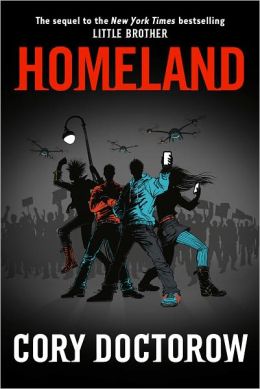
Review of Cory Doctorow’s Homeland

I’d meant to write more reviews on this blog, so let me catch up with a review of a novel I read a few weeks ago – Cory Doctorow’s Homeland. I confess that after the longueurs of his novel Makers, which was preoccupied by theme parks, I didn’t immediately jump on Cory’s subsequent novels, even though I’m generally a fan and admire him greatly as a really smart person doing really good work. But finally I read Homeland, and I’m glad I did.

It’s a sequel to his well-received Little Brother, in which Bay Area teenager Marcus Yallow is subject to DHS — Department of Homeland Security – interrogations following a terrorist attack on San Francisco.

In this book Marcus is attending the annual Burning Man event in Nevada, and runs into a DHS operative he met earlier, Masha, who hands him a UBS stick containing all sorts of incriminating files. In passing.

Marcus explores the files on this UBS stick, meanwhile getting a job as webmaster for an independent California senate candidate. The files on the UBS stick reveal government atrocities – torture by waterboarding and the like – and he decides to release the files to the web before having examined all of the 800K+ documents.

This results in attention from thugs, and demonstrations across the country. Marcus is caught up in one demonstration in San Francisco, and spends an unpleasant night in a detention facility.

As Gary Wolfe mentioned in his Locus Magazine review, one attraction of this book are the elaborate asides; Cory is a geek about so many things. The first 60 or so pages of the book describe Burning Man in great detail, fascinating for anyone like me who’s never been there (or frankly never had any interest in going). Later there are detailed passages about how to defeat lie detectors (p188ff), about software defined radio (p268), about randomness (p153ff), and the miracle of cold-brewed coffee (p56-58).

More significant perhaps are passages that are political. When Marcus first contacts the senate candidate, Joe Noss, he gets an earful (p85-86) about what’s wrong with both parties – though the Republicans are “dunces”—

There are important movers and shakers in the RNC who believe that the Earth is five thousand years old. And these are the people who made their fortunes pumping sweet crude in Texas!

Much later near the end of the book Marcus reflects about whether it really matters who’s elected or not; you get the sense that Doctorow is disillusioned with the current administration.

After all, wasn’t the system the problem? No matter who we voted for, the government always seemed to win. What was the point of living out my little fantasy of democratic change and justice when the real action was being fought out in secrecy, with anonymous envelopes of cash, encrypted whispers, secret bunkers, and secret deals?

So while there’s a definite political subtext to this novel (and Doctorow’s others), it is moderated by other attractions – the geekery, and the remarkable emotional scenes that he provides in scenes with Marcus and his girlfriend. I’m currently half-way through his novel Pirate Cinema, and will have more to say about his range when I cover that book.

The spoiler isn’t quite the point, but I’ll mention a bit below the link.

[ show/hide spoiler discussion ]

The files on the UBS stick reveal how a government contractor, Zyz [read Blackwater] got into the business of selling bonds and buying student loans (which never expire), acting like a mafia to collect on loan payments, to the point of claiming parents’ and grandparents’ estates and ruining their lives. The Zyz guys were the thugs mentioned in the summary. At the end of the book, Masha returns and helps him resolve the threat from Zyz.

Posted in Reviews | Comments Off on Review of Cory Doctorow’s Homeland

Law v. Science

Nice essay by Jesse Bering — an excerpt from his forthcoming book — about ‘age of consent’ laws and their variation over time and across different countries, whose cutoffs range from 12 to 21. (And in olden times, some US states had the cutoff as low as age 7 -!) A fine example of the conflict between law and science.

http://www.thestranger.com/seattle/age-of-consent/Content?oid=17715319

Either some societies have the one true age of consent and every other has therefore got it wrong, or any given society’s age of consent is based on what its citizens have simply chosen to believe about human sexuality and psychological development.

Posted in Culture, Science | Comments Off on Law v. Science

Matthew Shepard and confirmation bias

A new book about Matthew Shepard suggests the story of his murder was far more complex than the gay-bashing narrative that has been assumed. Turns out it can be seen as a prime example of confirmation bias,

http://dish.andrewsullivan.com/2013/09/16/challenging-the-myth-of-matthew-shepard/

Comparable, says a senior editor for The American Conservative, to the narrative that led so many to initially support the Iraq war.

The story of Matthew Shepard as a martyr struck a deeply resonant chord within many gays and their supporters in the media, who created the hagiography and, as this review acknowledges, was fiercely defended by leading gay activists in the face of contrary evidence reported at the time. The thing is, I wouldn’t be quick to accuse these activists and their media allies to have been conscious liars. I know what it’s like to want to believe something so badly that you close your mind to the possibility that things aren’t what they appear to be — and, in turn, you conceal your motives from yourself. This describes the way I responded to 9/11 with regard to the case for the Iraq War, though I didn’t recognize it until years later. There were liberals and a minority among conservatives — including the founders of this magazine — who didn’t buy the pro-war narrative. People like me considered them gutless, or, infamously, “unpatriotic.” We did not grasp the extent to which we were captive to confirmation bias. We thought we were seeing things with perfect lucidity. But we were very wrong.

This is not a left-wing or a right-wing thing. It is not a gay or straight thing, it is not a religious versus atheist thing. It’s a human thing. …

Since I’ve been reading about confirmation bias recently, I’m seeing discussions of it everywhere!

Posted in Culture, Thinking | Comments Off on Matthew Shepard and confirmation bias

Sunday Links and Commentary, 15Sep13

Salon:
Inside the conservative brain: What explains their wiring?

Chris Mooney wrote a whole book on this subject (http://www.amazon.com/The-Republican-Brain-Science-Science/dp/1118094514), and it’s fascinating to wonder — setting aside precise partisan divides — to what extent different attitudes about the world are due to underlying assumptions that reside, ultimately, in brain chemistry.

The quick takeaway from this article is:

But first, a very brief tour of more recent political leaders and movements reveals a notable trend: conservatives tend to view human nature as competitive, while liberals are more prone to perceiving human nature as cooperative.

More:

In addition to believing in a competitive human nature and a dangerous world, right-wingers are also more likely to perceive that the world and its morality are increasingly degenerating. The term “conservatives” itself implies a desire to keep what is good and prevent it from deteriorating into something worse. The political left, in contrast, is more prone to thinking that human nature can evolve into something better. The term “progressives” implies this belief that the advancement of morality is possible and desirable.

The sensation of deteriorating social morality is not merely an artifact of the modern Western world; people in ancient Greece, Israel, China, Rome, and nineteenth-century Europe have expressed similar concerns, according to the research of social psychologist Richard Eibach. Likewise, many Americans commonly point to a perceived rise in teenage pregnancy as proof of moral decay. A 2003 poll revealed that 68 percent of adults thought teen pregnancy was on the rise—even though teen births had fallen by 31 percent over the last decade.

This meshes with my impression that right-wing commentators (think, Rush Limbaugh) are in general *angry* and *furious* and *afraid* of all the terrible things happening in the world; while left-wing commentators (think, Rachel Maddow) are in contrast merely bemused with the rantings of the other side.


Nice SF Signal interview with veteran SF writer James Gunn, whose new novel Transcendental seems right up my alley, and theme.
http://www.sfsignal.com/archives/2013/09/interview-james-gunn-talks-about-transcendental-the-history-of-science-fiction-and-how-it-can-save-the-world/


Salon wonders if we can dismiss the rantings of Pat Robertson and his like, of if we should be more worried that their views reflect a substantial portion of the US population…

http://www.salon.com/2013/09/12/yes_weird_christian_beliefs_do_influence_america_partner/

…right-wing, apocalypse-obsessed Christians are not marginal characters who have little power in the world. They constitute a huge percentage of Americans, and just as disturbingly, they have influence over another huge number of Americans. They actually don’t want attention drawn to their wacky beliefs a good deal of the time. On the contrary, the preferred fundamentalist right-wing communication strategy is to use their own spaces—spaces that are often far from the prying eyes of the larger world—to talk about their lurid fantasies, and they prefer to show a more sensible, moderate face to the larger world.


Slate’s posts about longevity:

http://www.slate.com/articles/health_and_science/science_of_longevity/2013/09/life_saving_inventions_people_and_ideas_cotton_shoes_fluoride_the_clean.html

I particularly appreciate the posts on ‘unconscious bias’, ‘government regulations’, and ‘goodness’.

In a way my career in the aerospace/software engineering industry has been about building processes that channel behavior in ways that avoid issues of ‘unconscious bias’ — e.g. peer reviews, that are designed to avoid groupthink.


An article in The Atlantic speculates that fiction has served humankind in an evolutionary way. This dovetails very nicely with David McRaney’s ideas about our ‘narrative bias’, and my own central theme for the book I might write about science fiction as a heuristic for understanding life, the universe, and everything.

http://www.theatlantic.com/entertainment/archive/2013/09/the-evolutionary-case-for-great-fiction/279311/

Among the many things that set humans apart from other animals is our capacity for counterfactual thinking. At its most basic level, this means we can hypothesize what might happen if we run out of milk; in its most elaborate form—we get War and Peace. Stories, then, are complex counterfactual explorations of possible outcomes: What would happen if I killed my landlady? What would happen if I had an affair with Count Vronsky? How do I avoid a water buffalo?

Posted in Atheism, Culture, Evolution | Comments Off on Sunday Links and Commentary, 15Sep13

Resource: The Dummy’s Guide to the One True God

Over the past couple years I’ve collected numerous links to interesting sites or posts, which I bookmark as ‘resources’ for future reference, and which perhaps I should add to my sidebar links on this blog.

For now, this. Whenever I heard some politician’s platitude about how “we all worship the same god”, I recall this chart, posted earlier this year.

The Dummy’s Guide to the One True God

Posted in Religion | Comments Off on Resource: The Dummy’s Guide to the One True God

The One Book I’d Have Every College Student Read

If I could pick one book that I think every college freshman should read, it would be…

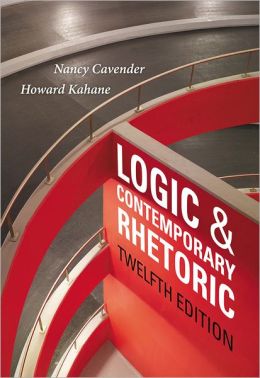
LOGIC AND CONTEMPORARY RHETORIC, by Howard Kahane.

logicetc_140x200Subtitled, “The Use of Reason in Everyday Life”. It covers principles of reasoning, invalid and fallacious types of arguments, and it illustrates these ideas with actual examples from advertising and news (politics). Not to make you cynical about advertising or politics — just to make you understand how these businesses work; how to be an informed citizen, to not be gullible, to not take anything for granted.

This had a great influence on me when I first read it, at age 19 or 20. Though I’d done pretty well in high school, UCLA obliged me to take a ‘freshman’ English course, which I took over the summer at Valley College in Van Nuys. The instructor included this book in his curriculum, and I remember nothing else from the course. It’s one of the few textbooks I’ve kept all these years.

I thought about this book today, and looked up the title on Amazon to see if it was still in print.

 
Why, yes it is. In fact it’s in its 12th edition, now bylined Nancy Cavender and Howard Kahane, it’s nearly 400 pages (my 3rd edition was 280 pages), and as a textbook, it’s priced $127. Glancing through the index via Amazon’s “Look Inside” function, the later editions have obviously been updated with current examples of news reporting, advertising, and contentious social issues.

So it’s a standard. I’m glad. I just wish everyone would read it.

Posted in Thinking | Comments Off on The One Book I’d Have Every College Student Read

Sunday Links and Commentary

PZ Myers compares the atheist movement to the plight of World SF Conventions — in terms of their resistance to being open to interests of younger members.

http://freethoughtblogs.com/pharyngula/2013/09/06/the-future-will-not-be-the-past/


Alternet: http://www.alternet.org/former-christian-fundamentalist-how-science-made-me-lose-my-religion?paging=off

When an engineer raised in a fundamentalist Christian community sees a computer simulation of natural selection working,

It was the beginning of the end. After discovering the practical value of evolutionary computation, Suominen began reading about evolutionary biology. The Genesis story fell apart and frayed the fabric of his Christian belief.

ES: “I saw it happening right in front of me on my computer screen. As an engineer with lots of software experience, I understood what the computer was doing. Simulated organisms were evolving remarkable abilities to move, swim, etc., and nobody was designing them to do that. Random mutations and genetic crossover between the fittest individuals in the population produced a new, slightly more evolved population. Repeated over hundreds of generations, it worked.

“My reading did nothing but confirm this. All of the arguments I saw against evolution were made by believers in defense of their faith. I tried to look at both sides of the story, but it became obvious that there was only one side with any credibility. The other was just wishful thinking and denial.”

The most robust attempt to reconcile the irreconcilable may well be Philip Gosse’s “omphalos” idea that the universe was created recently with the appearance of great age. Of course, God created Adam with a navel and trees with rings! They wouldn’t be recognizable without those “retrospective marks,” after all. (Christians are faced with the same issue concerning Jesus and his magic Y chromosome.) It’s ridiculous and reduces God to a cosmic cosplayer, but at least it doesn’t try to dismiss all of the Bible’s clear teachings about a young earth and special creation, or fancifully reinterpret 2,000 years of Christian theology.

Or the idea that the world was created last Tuesday, not just with (phony) evidence of a universe billions of years old, but also our (phony) memories of having lived for years and years. It’s the intellectual equivalent of Creationism.


Jerry Coyne: http://whyevolutionistrue.wordpress.com/2013/09/06/another-canard-dispelled-is-science-a-faith/

This comments on an essay on HuffPo by one Jeff Schweitzer, Science Is Not Religion, a familiar enough theme but worth repeating.

Science is not a “belief system” but a process and methodology for seeking an objective reality. Of course because scientific exploration is a human endeavor it comes with all the flaws of humanity: ego, short-sightedness, corruption and greed. But unlike a “belief system” such as religion untethered to an objective truth, science is over time self-policing; competing scientists have a strong incentive to corroborate and build on the findings of others; but equally, to prove other scientists wrong by means that can be duplicated by others. Nobody is doing experiments to demonstrate how Noah could live to 600 years old, because those who believe that story are not confined to reproducible evidence to support their belief. But experiments were done to show the earth orbits the sun, not the other way around.


Slate: Life expectancy doubled in the past 150 years. Here’s why.

http://www.slate.com/articles/health_and_science/science_of_longevity/2013/09/life_expectancy_history_public_health_and_medical_advances_that_lead_to.html

Clean water. Moving wastewater. Washing hands (germ theory of disease). Better housing. Better nutrition. Preventing contamination of food. Fighting epidemics through quarantine, etc. And, of course, vaccinations.

The essayist provides examples of how a person 100 years ago might have died, in ways that would not cause death today. I’m a prime example– I had a burst appendix at age 13.


Salon: Another prime example of how your brain tricks you.
http://www.salon.com/2013/09/05/study_proves_that_politics_and_math_are_incompatible/

So maybe we can give climate deniers the benefit of the doubt. They’re not stupid, they’re just psychologically committed to their beliefs, in the same way that environmentalists are committed to their own ideology. And it means that just showing them the numbers is never going to be enough to convince them that climate change is real.

–Yet isn’t there some way to be conscious of such a bias and find the ability to reach a correct solution? Or is a correct solution less important than sustaining one’s ideology?

More on this at
http://www.motherjones.com/kevin-drum/2013/09/politics-destroys-math-ability

And from Chris Mooney:
http://www.motherjones.com/politics/2013/09/new-study-politics-makes-you-innumerate


Alex Pareene on who Republican politicians follow on Twitter..
http://www.salon.com/2013/09/04/the_congressional_republican_twitter_bubble/

If you’re following Sean Hannity and Michele Malkin because you think they are worthwhile voices or useful sources of information, you’re a terribly misinformed far-right kook. If you’re following them because you have to keep on top of whatever Sean Hannity and Michele Malkin are screeching about today, because you know that your constituents consider them worthwhile voices or useful sources of information, that’s just as bad. Because whether the Republican Party is full of true-believing kooks or merely people forced to act like true believing kooks in order to keep their seats, the result is the same: a party that can’t be negotiated with because it exists in an alternate media universe with its own history and set of facts.

Hannity invited a notorious anti-Semite on his show as part of his years-long campaign to push the most absurd Obama conspiracies imaginable and Malkin wrote a book defending Japanese internment during World War II. These two both regularly fear-monger over the imagined specter of widespread black mob violence. It’s not just that these two have toxic beliefs and live in feverish fantasy lands, though they do, it’s that taking these two seriously is a dumb thing to do in a country that just elected Obama twice, while also voting for Democrats for Congress in greater numbers than for Republicans. They’re … not quite in touch with the actual mood of the country now, to say nothing of where it’s heading. That may be hard to grasp in the right-wing media bubble, especially for people representing districts made up primarily of angry white people, but it’s true.

Posted in Culture, Quote at Length, Religion, Science | Comments Off on Sunday Links and Commentary