The pundits (and the Democrats) have been warning people about the potential consequences of Trump’s planned policies for months, if not years. Most people see higher grocery prices and don’t care about all those theoretical consequences.
- Paul Krugman explains why Trump’s deportations will drive up grocery bills;
- How there really is a deep state, but not what Trump says it is, and my take on the “deep state”;
- How America’s allies around the world are hedging.

NY Times, Paul Krugman, 11 Nov 2024: Why Trump’s Deportations Will Drive Up Your Grocery Bill [gift link]
For the past few years, over and over, voters have told pollsters and pundits that they’re hopping mad about inflation. Well, we just elected a president who, if he follows through on two of his central campaign promises — across-the-board tariffs and mass deportation of undocumented immigrants — will probably cause soaring inflation.
How will voters react?
I’ve written about the likely inflationary impact of Donald Trump’s policies. All of that still stands. But there’s an issue that I haven’t stressed as much as I probably should have: the specific effects of his proposed deportations on grocery and housing prices, both of which have been political flashpoints.
First, a word about deficits to set the stage: The nonpartisan Committee for a Responsible Federal Budget estimates that Trump’s tax plans would add almost $8 trillion to the debt over the next decade.
Trump has claimed that he can make up for tax cuts with revenue from tariffs and huge cuts in government spending, but those claims are wildly unrealistic.
He goes on in some detail; read the essay yourself, the link above bypasses the subscriber log-in. One more quote:
If you’re upset about grocery prices now, see what happens if Trump goes after a huge part of the agricultural work force; immigrants are around three-quarters of agricultural workers — and roughly half of them are undocumented. (And do you really doubt that many workers legally here will be caught up in Trump’s threatened dragnets?) Undocumented immigrants also play a large role in food processing. For example, they account for an estimated 30 to 50 percent of workers in meatpacking.
If these workers are deported, the food industry will probably have great difficulty replacing them. Even in the best case, the industry will have to offer much higher wages — and, of course, these higher wages will be passed on in higher prices.
Of course, all the pundits are working on their “we told you so” lists.
\\\
The world is more complex and interrelated than Trump, or conservatives, realize.
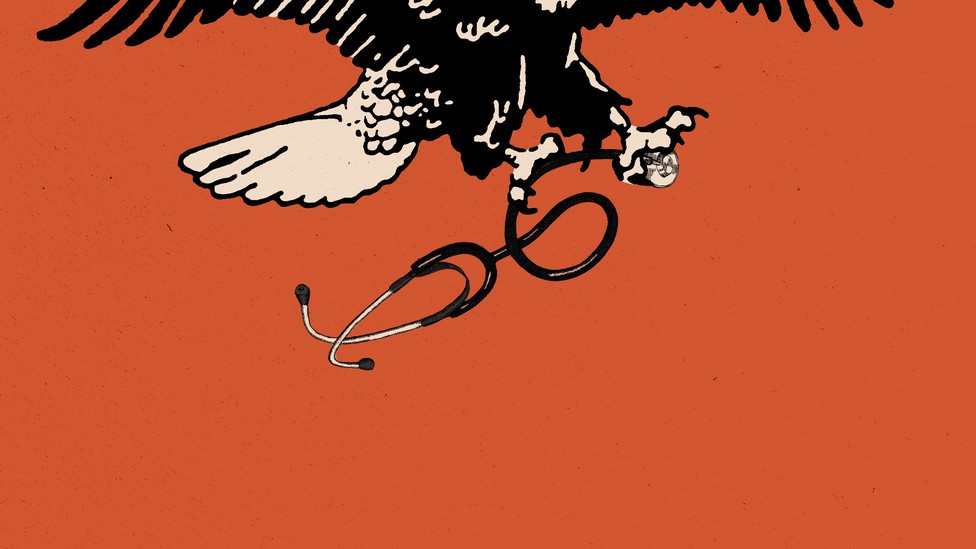
The Atlantic, Nicholas Florko, 11 Nov 2024: There Really Is a Deep State, subtitled “It’s nothing like what Donald Trump says it is.”
A running theme in Trump’s first administration, and now his planned second, is that he appoints people to be in charge of agencies those people don’t actually believe in, and would dismantle if they could. Betsy DeVos. Trump doesn’t actually believe in government; he believes in absolute rule, and simple-minded common sense. (This article speaks to why DeVos didn’t actually manage to dismantle the Department of Education.)
The phrase deep state might trigger images of tinfoil hats. After all, Trump has spent much of the past eight years falsely claiming that Democratic bureaucrats are unfairly persecuting him. But operating within the federal health agencies is an actual deep state, albeit a much more benign and rational one than what Trump has talked about. And he might not be able to easily tear it down.
And:
Whether you know it or not, you’ve likely seen this deep state in action. It was the reason Trump’s preferred treatment for COVID during the early phases of the pandemic, hydroxychloroquine, was not flooding pharmacies. And it was why COVID vaccines were not rushed out before the 2020 presidential election. Both of those efforts were stopped by civil servants, despite overt pressure from Trump and officials in his administration.
Public-health officials didn’t buck Trump to sabotage him. They did so because both measures were scientifically unsolid. Vaccines weren’t authorized before the election because FDA officials knew that they had to wait at least two months after the clinical trials were completed to make sure the vaccines didn’t cause dangerous side effects. And the FDA blocked use of hydroxychloroquine for treating COVID because of the drug’s unproven efficacy and spotty safety record.
My take: the “deep state” is merely the infrastructure of government officials who do all the routine work of carrying out the government’s responsibilities, and of enforcing laws and regulations. For the 330 million people who live in the United States. Every time you contact the IRS or the DMV or the Post Office or deal with real estate regulations, you are dealing with that infrastructure, that “deep state”. It’s what keeps the nation, and the economy, going. Despite the term, it’s not a nefarious system of agencies trying to rule the world, and taking away your rights. Getting rid of that “deep state” would result in anarchy. But conservatives who want to eliminate the “deep state” only reveal themselves to be simple-minded.
\\\
America does not exist in a vacuum, despite what conservatives think; we live in a world in which decisions by nations as big as the US affect everyone worldwide. By re-electing Trump, America has stepped away from being a global leader, and instead turning a self-obsessed, insular nation. And stepping away from its responsibilities to the world.

NY Times, Sarang Shidore, 11 Nov 2024: The Quiet Development Shaking America’s Power
With the stunning comeback of Donald Trump as president, America’s allies are scrambling. Behind their sober messages of congratulation is a palpable anxiety that Washington will soon treat them as mere pawns on the global chessboard. It would be quite a change. Under President Biden’s leadership, the United States — sharpening its rivalry with China and seeking to counter Russia’s invasion of Ukraine — put great store in strengthening its alliances and partnerships.
With details about Turkey and Thailand. And how Trump is a transactionalist. And the idea of “hedging” — seeking opportunities in all directions.
Concluding:
Hedging, it’s true, is still an emergent rather than a dominant trend among America’s allies and security partners. But the United States should be ready for more of it. Instead of exclusion and subtraction, Washington in response could try a new math: addition. This will require it to give up the idea of American exceptionalism — America as the leader of civilization itself, fighting barbarism — and to adopt a hedging strategy of its own.
Transactionalism comes easily to Mr. Trump. But moving the United States from hegemony to hedge-money will require the president-elect to rise above the sugar high of impulse and figure out how to turn multi-alignment to America’s benefit. It’s a tall order, but a changing world demands nothing less.
\\