- Conservatives against empathy: excuses for selfishness;
- Another piece about boarding houses, once banned, perhaps now more appropriate than ever;
- Recalling a 50-year-old thesis about how human stupidity drags societies down;
- Quotes from Thomas L. Friedman and Paul Krugman about Donald Trump;
- Reading the Jared Huffman book.
What does it say about conservatives that lately they’re against empathy?
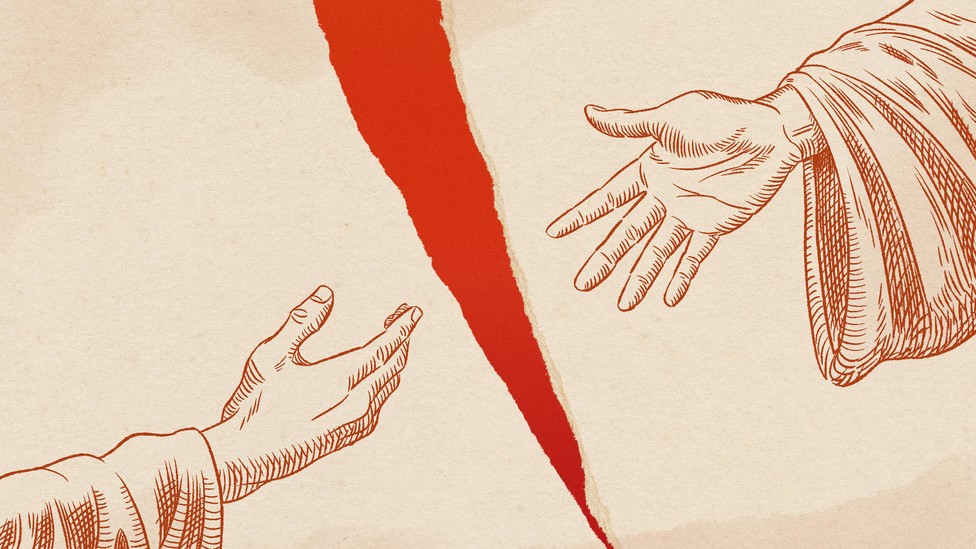
The Atlantic, Elizabeth Bruenig, 27 Sep 2026: Why Empathy Is Now ‘Toxic,’ ‘Suicidal,’ and a ‘Sin’, subtitled “According to Gad Saad and his powerful acolytes, compassion is a recipe for ‘the collective suicide of the West.'”
A crusade against empathy is sweeping through the right. In sometimes apocalyptic terms, prominent conservatives are denouncing that feeble human capacity to understand the feelings of others. This is a trend I’ve written about before, but I’ve been intrigued by the way these figures have lately been adopting the language of the Canadian marketing professor Gad Saad and his influential book, Suicidal Empathy, released earlier this year. According to Saad, suicidal empathy is when otherwise positive impulses are “hijacked and used to make policy decisions that are best tackled via a sober analysis”—a phenomenon that will lead to nothing less than “the collective suicide of the West.”
The arguments seem to be excuses for why conservatives need not be concerned with the less-fortunate. A justification for selfishness.
But his reasoning seems more political than spiritual. Suicidal Empathy and books like it are aimed not at liberals, but at conservatives who may be struggling with a conflict between their politics and their conscience. Arguments about the harms of empathy help justify personal and political behavior that might otherwise seem wrong or feel bad, such as cutting food-stamp benefits for poor people or tearing immigrant mothers away from their children. By claiming that an excess of compassion is in fact a social blight, Saad’s book and others offer a theoretical framework for selfishness.
Is there a wider picture here? Apparently Saad tries.
By empathy, Saad means “a noble and evolutionarily selected virtue, a central feature of our humanity” which, he says, is correlated with kindness. What he means by suicidal is less clearly defined, but the overarching idea is that when people—typically woke liberals—advocate certain actions or policy positions out of empathy for other people, rather than based on Saad’s idea of objective reasoning, they undermine the societal values of security and cohesion.
Well that first bit is true enough; it’s what’s made us a social species able to cooperate with other tribes, and grow into a global civilization. But the writer here, Bruenig, sees the core motives of this movement.
To the degree that books such as Saad’s are meant to help conservatives resolve their internal conflicts and ignore their consciences, they are basically right-wing self-help guides. Stuckey’s Toxic Empathy seems especially targeted at conservative Christians who feel torn about subjects such as immigration and welfare. Stuckey is at pains to reassure her readers that any dissonance they might feel between their religious duties and political interests is a treacherous mirage generated by the left. The goal of “toxic empathy,” she says, is “to get us to suppress our opposition to a particular issue or point of view by playing upon our desire to be a good person.” By this account, liberals are emotionally exploiting feelings of guilt or shame in conservatives to persuade them to support left-wing goals.
A couple more bits:
And, like much self-help literature, the anti-empathy genre does not have to make sense to change minds. In Saad’s imagination, seemingly any personal or political cost, such as paying high taxes, or halting human encroachment on the habitat of endangered animals, is a form of individual or collective suicide.
… Suicidal Empathy is not really a theoretical text, but rather a guidebook for ignoring human suffering. Saad and his ideological colleagues may be helping conservatives resolve the tension between their political positions and their moral values, but only by compromising the religious principles at the heart of the Western civilization they purport to defend. And unlike the exhortation to love thy neighbor, this kind of thinking merely reinforces the idea that might makes right.
\\\
We’ve seen this next subject recently. And coincidentally, we watched an episode of The Waltons (yes) in which John-Boy stays in a rooming house in the town near his university, and my partner asked, what kind of place is that? It looks nice. And I am reminded against the 1950s movie The Day the Earth Stood Still.

Vox, Rachel Cohen Booth, 28 Sep 2026: America’s empty bedrooms are up for grabs, subtitled “A 20th-century backlash banned a popular affordable housing option. It’s now seeing a revival.”
The authors of ABUNDANCE discussed this; review here.
Key takeaways
- Cities spent much of the 20th century banning cheap rented rooms, and a 1974 Supreme Court ruling still lets them decide who counts as a “family” under zoning law. That’s now being challenged on two fronts.
- A Kansas lawsuit asking the Supreme Court to revisit that precedent, and “Golden Girls” bills that have already passed in four states and are spreading.
- The next few years will determine whether co-living stays a niche workaround or becomes a normal option, with more states set to take up the issue in 2027.
\\\
Well, I wouldn’t call it human stupidity… exactly.

The New Republic, Ross Rosenfeld, today: Trump Personifies the Basic Laws of Human Stupidity, subtitled “How a 50-year-old treatise by an Italian economic historian makes sense of our utterly senseless moment”
Fifty years ago, in his most famous work, the prolific intellectual Carlo Cipolla argued that stupid people, as a group, are “much more powerful than the mafia, or the military industrial complex.”
Today, as we witness one of the dumbest wars in history unraveling in Iran, an inept health and human services secretary working to bring back measles and polio, a Republican Party wherein only 20 percent view the January 6 attack on the U.S. Capitol as a violent insurrection but 71 percent deny Joe Biden won the 2020 election, and an administration that refuses to properly regulate AI and crypto industries that threaten the economic well-being and safety of all, Cipolla’s contention is as apt now as when he first proposed it in The Basic Laws of Human Stupidity, in 1976—an era when the country, and indeed the world, was similarly roiled by sociopolitical rage and seemed on the brink of a catastrophe.
Is this really about human stupidity? My current thesis is about a range in human nature, from tribal to cosmopolitan, along which anyone can be stupid. A lot of people don’t think through the things they claim to believe, but instead accept by rote.
Still, this is another categorization that I will consider:
Cipolla divided people into four groups: the helpless, whose actions harm themselves but benefit others; the intelligent, whose actions benefit themselves and others; the bandits, who enrich themselves while harming others; and the stupid, whose actions harm others while producing no benefit to themselves.
But he was writing 50 years ago, before modern understanding of human nature emerged.
\\\
Another trenchant quote. And wonder how so many people in the US support this guy, even against overwhelming evidence. Maybe they are really stupid.

NY Times, opinion by Thomas L. Friedman, yesterday: Trump Is Going Viral in the Worst Ways
President Trump is such an awful human being that just writing about him feels degrading. What president would denigrate his predecessor in front of China’s leader the way Trump mocked Joe Biden, now suffering from cancer, by pointing out that a framed picture of an autopen was hanging in the White House instead of Biden’s portrait?
Alas, though, when someone as morally warped as Trump — whose first secretary of state called him a “moron” — assumes this much unchecked power at the dawn of the Age of Artificial Intelligence, he can’t be ignored. Because right now Trump is leaving America exposed to dangerous viruses: digital, biological and diplomatic. Something bad is going to happen to us as a result. We and our children are going to pay for this, and not only at the gas pump.
\
Another good take here.
Paul Krugman, yesterday: The Beclowning of Scott Bessent, subtitled “Another Trump enabler pays the price”
One iron law of current politics is that nobody who associates themselves with Donald Trump emerges with a shred of credibility.
Perhaps I should leave it at that. But I’ll quote on:
For some, that’s not a big loss — it’s not as if anyone respected Pete Hegseth even before he decided that the key to military success in an age of drones and AI was more testosterone. For others, however, the costs are real. I’m old enough to remember when Marco Rubio was widely considered a reasonable, thoughtful politician.
Right now, however, my candidate for the biggest loser is Scott Bessent, the Secretary of the Treasury.
And he goes on.
\
I’m currently reading a book by Jared Huffman, the one member of Congress who has come out as a non-believer, and his take about Christian nationalism. No Prophets: The Fight to Save Democracy from Christian Nationalism. And he recounts the factions of Christian nationalism, and how Hegseth, among others, aligns with factions who would happily take down democracy in favor of Biblical literalism. And how you don’t hear much about this from main-stream media. Will write up the book when I finish.