- Two items from Steven Pinker: One about modernism and beauty;
- The other about a Thomas Sowell book about human nature and human reason.
Yes, we’ve been doing it for some time.
Two items today via Steven Pinker on Facebook.
Facebook, today, Steven Pinker’s post
Pinker writes:
In The Blank Slate, I suggested another cause: the denial of human nature, including appreciation of beauty. Elites assumed that human tastes are infinitely malleable and so the masses would learn to overcome their bourgeois prejudices and appreciate brutalism, authoritarian high modernism, & other flauntings of ugliness. The idea has recently been elaborated by the MIT linguist Samuel Jay Keyser in The Mental Life of Modernism.
And here’s the page for the book:

The Mental Life of Modernism, Why Poetry, Painting, and Music Changed at the Turn of the Twentieth Century, by Samuel Jay Keyser.
An argument that Modernism is a cognitive phenomenon rather than a cultural one.
At the beginning of the twentieth century, poetry, music, and painting all underwent a sea change. Poetry abandoned rhyme and meter; music ceased to be tonally centered; and painting no longer aimed at faithful representation. These artistic developments have been attributed to cultural factors ranging from the Industrial Revolution and the technical innovation of photography to Freudian psychoanalysis. In this book, Samuel Jay Keyser argues that the stylistic innovations of Western modernism reflect not a cultural shift but a cognitive one. Behind modernism is the same cognitive phenomenon that led to the scientific revolution of the seventeenth century: the brain coming up against its natural limitations.
Sounds fascinating. There are many aspects to consider. Maybe the cultural accumulation of pretty music and pretty rhymes and lifelike paintings just got *boring.* And the arts, not just until the 20th century, have always been about pushing boundaries, learning the rules and then breaking them, in a kind of evolution. And, It’s been shown that humans actually like a bit of asymmetry, and dissonance. And I, for one, like the difficult, weird music of Ligeti and Schnittke and others just as much, if in different ways, as the music of the classical composers like Beethoven and Brahms. Pinker seems conservative in these matters, as if only intuitive human nature counts. I’m intrigued by this line of the publisher’s description: “Behind modernism is the same cognitive phenomenon that led to the scientific revolution of the seventeenth century: the brain coming up against its natural limitations.”
Humanity has gradually learned to overcome its natural limitations.
\\\
Because humans can learn.
Facebook, today: Steven Pinker’s post
Pinker writes:
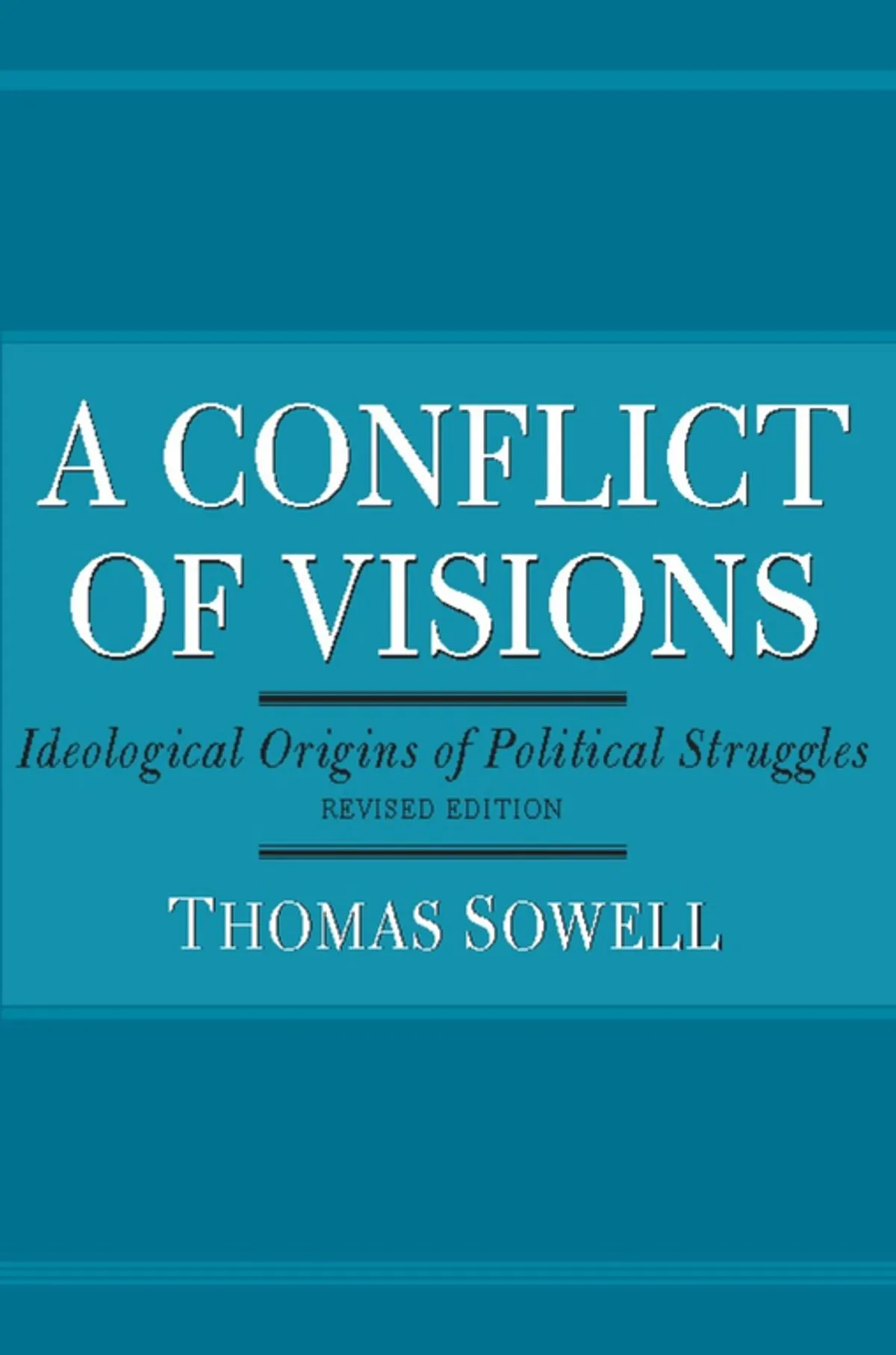
Thomas Sowell, in A Conflict of Visions, proposed a theory of the conflicting convictions about human nature that underlie the standard left-wing and right-wing views on economics, politics, & culture. (I discussed his ideas in the chapter on politics in The Blank Slate). Dan Williams @danwilliamsphil probes Sowell’s theory in a new post: “We Are Stuck With Human Nature, Not Human Ignorance”
Here’s post about Thomas Sowell’s book, at a blog run by one Dan Williams:
We Are Stuck With Human Nature, Not Human Ignorance, subtitled “Why a tragic view of human nature need not imply a pessimistic view of human reason”
Here’s the Amazon page for this book: A Conflict of Visions: Ideological Origins of Political Struggles.
This is a book from 2007! Which is to say, these ideas have been around for decades.
The issue here is conflicting ideas about human nature. Quoting Williams:
The central thesis of Thomas Sowell’s ‘A Conflict of Visions’ is that an enduring conflict between two competing visions of human nature and society drives much of the high-level disagreement we observe in politics.
According to the “constrained” (or “tragic”) vision, humans are deeply and permanently morally and intellectually limited. We are self-interested, biased, and ignorant of most things outside the scope of our own concerns and experiences. So, we must build societies around these constraints of human nature, either by making them too costly to act on or by harnessing them for beneficial ends. This, argues Sowell, is why proponents of the constrained vision prefer free, competitive markets to central planning of the economy: not only do market incentives channel the self-interest of butchers, brewers, and bakers into delicious dinners, but market prices coordinate dispersed knowledge that no humans, no matter how intelligent, could ever possess in full.
And
Those who embrace this tragic vision are not surprised by poverty, conflict, disorder, or ignorance. Given our moral and intellectual limitations, these are the default conditions of humanity. Instead, the deep challenge for social theory is to explain how fallen creatures such as us could ever escape these conditions and achieve order, peace, and prosperity.
Whereas
The “unconstrained” (or “utopian”) vision takes a more optimistic view of human potential. Its advocates do not deny that humans can be—and, in the present state of political development, often are—selfish, immoral, and ignorant. However, they ascribe these outcomes not to permanent limitations of human nature but to contingent institutions, specific false beliefs, or a curable lack of moral and intellectual enlightenment.
Exactly. Then this:
Instead of resigning ourselves to human self-regard and ignorance, the task of politics is therefore to apply our rational and moral faculties to the design of societies that cultivate and harness our potential. Hence, those with this vision are liable to dream of abolishing not just the profit motive and other competitive social institutions but also, one day, the police and prisons. To the extent that self-interest, and hence conflicts of interest, are products of specific social arrangements or an immature stage of intellectual and moral development, crime and violence would simply disappear in a world of true enlightenment, abundance, and equality.
Here the article ventures into what are now called “social democratic” policies. I will stop here. I think their ideas are ahead of their time. And they probably won’t win elections anytime soon by promoting those policies. Someday they will make sense.