
- Conservatives attacking Fauci aren’t interested in learning;
- Paul Krugman on how a bad-faith government is also an incompetent government;
- MAGA prophet is sure God is going to start killing people he doesn’t like;
- Democratic policy goals are hard sells against the GOP’s need for instant gratification.
Two items on the Senate hearings with Anthony Fauci. Needless to say, conservatives are not interested in learning, just in accusing.

Washington Post, Editorial Board, 6 Aug 2026: The contempt vote against Fauci was a stunt, subtitled “Congress could learn many lessons from the pandemic response, but Thursday’s vote doesn’t help.”
The essay summarizes events, then:
Anthony S. Fauci should have been forthright during his Senate appearance last week, offering a full explanation of his past misstatements and reflecting on lessons learned during the pandemic. But he had legitimate reasons — and constitutional protections — for staying tight-lipped.
…
Fauci explained that he would not cooperate with the committee because its chair, Sen. Rand Paul (R-Kentucky), had an “obvious obsession” with trying to engineer his prosecution.
As with so many things Republicans do, the inquiry was disingenuous.
In any case, this will do nothing to help the public understand the origins of the coronavirus or what went wrong in the government’s response. That’s a shame, because Fauci has a lot to answer for: He was slow to accept the airborne transmission of the coronavirus, and his guidance kept millions of kids out of school for far longer than was necessary. There are also questions about whether the agency he led at the National Institutes of Health supported research that altered coronaviruses in Wuhan, China, where the pandemic began.
Covid was hugely disruptive for society, and it is fair game for Congress to exercise oversight. Indeed, lawmakers should have done so years ago in a bipartisan way. But this contempt vote was clearly less about illuminating what happened than about exacting revenge.
The questions should be, were the decisions Fauci made fair at the time. Circumstances were changing quickly.
\
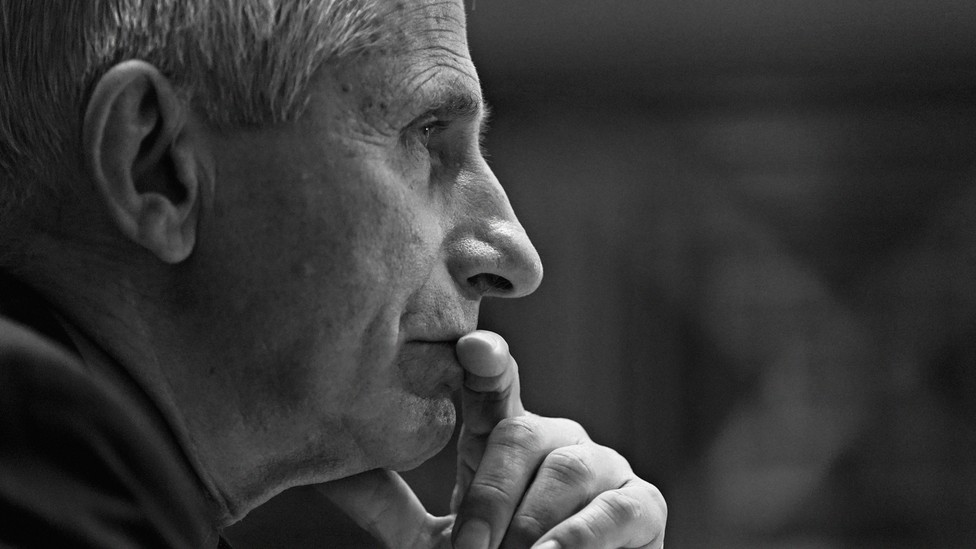
The Atlantic, Peter Wehner, today: Why MAGA Is So Obsessed With Fauci, subtitled “In the aftermath of pandemics, people either try to forget them or find others to blame for them.”
The usual great divide: some want to understand what happens so we can do better when the next pandemic comes along; others just to blame someone for their inconvenience.
Half a dozen years ago, Anthony Fauci was as popular as he would ever be. A respected physician and researcher for decades, he became in 2020 the public face of the pandemic response—calm, confident, and reassuring, a symbol of scientific authority. And the country turned him into a folk hero. He was on the cover of Time, named one of People magazine’s People of the Year, and played by Brad Pitt on Saturday Night Live. Vendors sold Fauci votive candles and bobbleheads. In April of that year, Kim Kardashian convened three dozen movie stars and athletes on a private video call so he could talk to them about masks and crowds—an hour of his time, he later explained, to reach millions of their fans.
Then it all came apart.
Last week, Fauci testified before the Senate Committee on Homeland Security and Governmental Affairs, chaired by Senator Rand Paul—a fierce Fauci critic who has said that the American people want the 85-year-old retired scientist “behind bars.” Acting on his lawyer’s advice, Fauci invoked his Fifth Amendment right against self-incrimination more than 100 times, citing what he called Paul’s “unhinged obsession” with him. Yesterday, the committee voted along party lines to hold Fauci in contempt of Congress for refusing to answer questions.
Too many people can’t keep their eye on the ball to solve actual problems, and instead retreat to tribal accusations.
After reviewing Fauci’s distinguished career, the article addresses the reasons behind this rage.
So what explains the rage directed at one of the most distinguished scientists of his generation? Some of it is the result of an era in which a major political party—in this case, the Republican Party—has become deranged and captive to conspiratorial thinking. It draws energy from the dark passions. Many people within the party, especially within its leadership and the right-wing ecosystem, delight in destroying institutions and individuals. Fauci has a target on his back because during the pandemic, he refused to live in the Twilight Zone. He called out those who did. And for MAGA world, that is unforgivable.
This echoes the item about Fauci’s greatest sin being that he challenged the MAGA god Trump.
Some of the fury aimed at Fauci may also be unprocessed grief and anger about the pandemic and its painful memories. My colleague David Brooks, then at The New York Times, wrote in 2020 that pandemics—unlike some other natural catastrophes—tend to drive people apart. In the aftermath of pandemics, people either try to forget them or find others to blame for them. Viruses can’t be punished; people can. Attributing the pandemic to fate or random chance isn’t all that satisfying; a lot of people need a villain, even if, in this case, the villain is one of the men who helped end the pandemic that was ravaging the world.
With a comparison to Albert Camus’ The Plague (the link is to a free PDF of the novel’s text).
At the conclusion of the novel, Rieux concludes that plagues ultimately teach us that “there are more things to admire in men than to despise.” There is much more to admire in Anthony Fauci than to despise. The same cannot be said of many of his critics.
\\\
More generally.

Paul Krugman, yesterday: Lying Liars Lie to Each Other Too, subtitled “A bad-faith government is also an incompetent government”
There is no longer a presumption of regularity
Lately Donald Trump has been raging against several of his own appointees. He has publicly raged against the attorney for DC Jeannine Pirro, for admitting that the failure of the Reflecting Pool was due to shoddy work by Trump’s chosen contractors, and for dropping charges against David Hearn and supposed saboteurs. He has raged at RFK Jr. for not making a stronger case for the false link between vaccines and autism. And according to the Washington Post, Trump has privately raged at Pete Hegseth, the defense secretary, for misleading him about the state of U.S. munitions, which have been critically depleted by his failed war on Iran.
These may sound like unrelated stories, linked only by the fact they all involve presidential tantrums. In a larger sense, however, they are part of the same story — what happens when a government operates entirely in bad faith, never telling the truth about what it is doing or why. Inevitably, officials in such a government don’t merely lie to the public: they lie to each other too. As a result, they can’t govern effectively, even in the pursuit of evil.
Legal scholars have a term of art, the “presumption of regularity,” which means that one assumes that the government is generally honest when undertaking legal proceedings.
Going on with examples. Of the government lying to itself.
It’s liars all the way down. The fact is that it isn’t possible for an administration to be completely dishonest with the courts and the general public while being honest with itself. Do you believe that when Trump boasts about $18 trillion in foreign investment, Kevin Hassett, the administration’s top economist, quietly tells him, “Just between you and me, Mr. President, that number comes out of nowhere, and even the investment promises we have received are vaporware”?
Of course not. This is an administration in which to serve is to abase yourself constantly, rendering fealty to Dear Leader, lying to your colleagues and lying to the American people. And if this administration doesn’t like the official government reports that are detailing the many disasters it has caused, it just quashes them .
A key theme here is the difference between arguing in good faith vs arguing in bad faith. The former involves taking evidence at face value and drawing conclusions from such evidence. The latter involves citing evidence selectively to support one’s previously drawn conclusion.
So let me make this broad generalization. All the flat-earthers and anti-evolutionists are arguing in bad faith. They are not interested in debating actual evidence about the shape of the world or the age of the universe. Their not-so-hidden agenda is arguing against anything that might challenge their scale-blind intuitions (about the shape of the earth) or their religious stories about humanity’s special place in a universe created by a obviously human-inspired god.
\\\
A couple more items along similar lines.
Religion as a projection of rank tribalism.
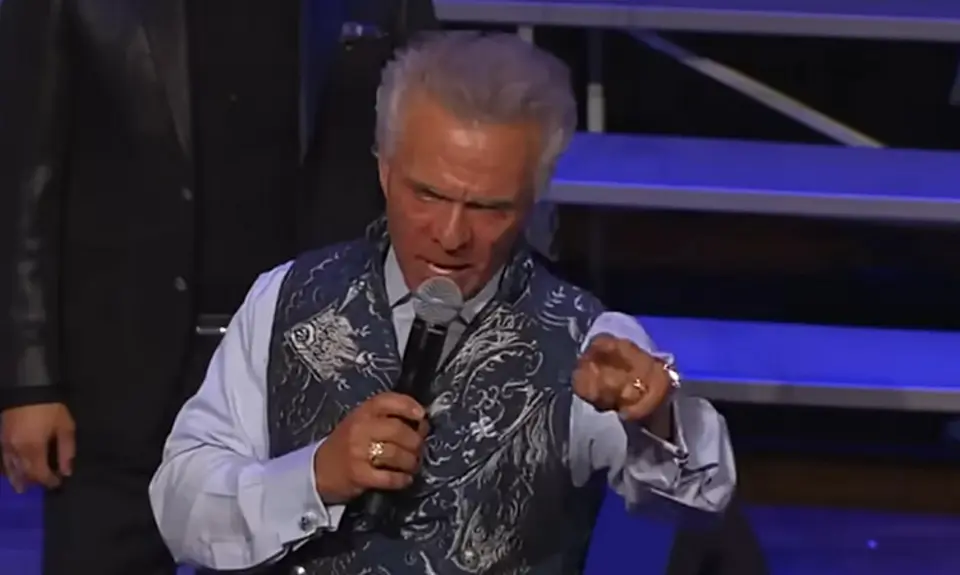
- Right Wing Watch, Peter Montgomery, yesterday: MAGA ‘Prophet’ Kent Christmas Keeps Saying God is Gonna Start Killing a Bunch of People
- JMG states it more plainly: MAGA Prophet: God Will Soon Kill People I Don’t Like
- Don’t people notice that religion is about projecting one’s own preferences and behaviors and prejudices onto… the creator of the universe!? How puerile.
\

- And about the scope of the world conservatives and progressives live in. Or more correctly: it’s about the range across all of human nature about how people approach and understand the world.
- LGBTQNation, Faefyx Collington, yesterday: Buttigieg’s long-term policy goals are a hard sell against the GOP’s instant gratification
- Subtitled “Buttigieg is right about long-term planning but it’s an uphill fight against the GOP’s destructive policies.”
- I don’t need to quote. Title makes the point. I’ve provided many, many examples in the past, about the short-term thinking of conservatives, and how conservatives defy attempts at long-term thinking to stave off existential threats.